
Main Courses
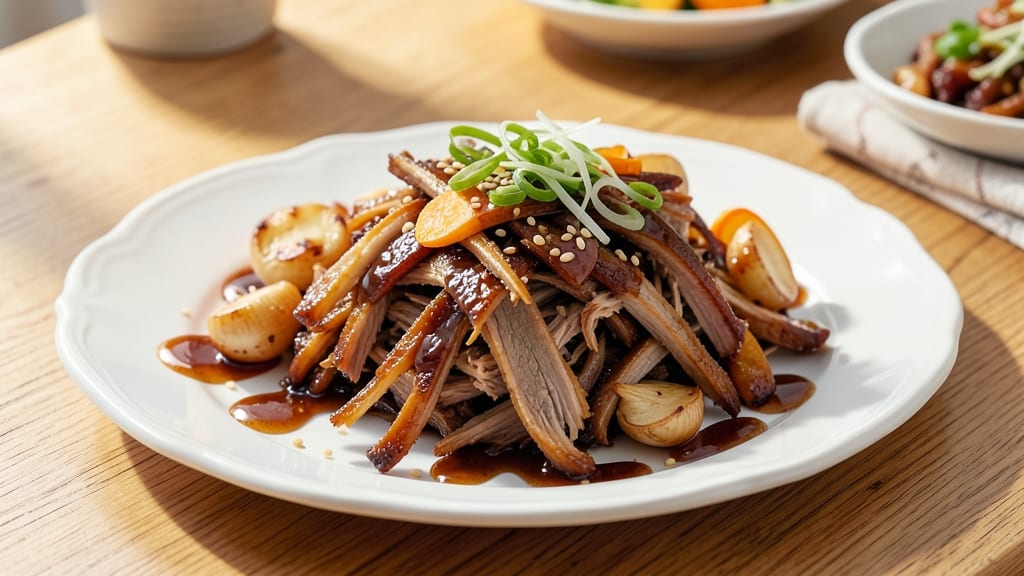
This Asian pulled pork recipe transforms tough pork shoulder into tender, fragrant shreds using just one pan and the warmth of your oven. 🔥 The secret lies in a fragrant five-spice marinade that infuses deep, aromatic flavors while the slow oven cooking breaks down the meat effortlessly.
I've perfected this method after years of testing, ensuring every bite delivers that perfect balance of sweet, savory, and umami that makes Asian pulled pork so irresistible.
The beauty of this recipe is its simplicity—no fancy equipment or complicated techniques required. A simple marinade of soy sauce, brown sugar, garlic, ginger, and five-spice powder works its magic while the pork cooks low and slow in the oven.
The result? Meat that practically falls apart at the touch of a fork, ready to be tossed in a glossy glaze or served as-is over steamed rice or noodles.
What makes this version truly special is the authentic Asian flavor profile. The five-spice blend adds warmth and complexity, while the oven cooking ensures the meat stays moist and tender. No need for a smoker or complicated methods—just one pan, one oven, and a few hours of hands-off cooking time.
The final result is restaurant-quality pulled pork that's perfect for meal prep or feeding a crowd.
Serve with steamed jasmine rice, pickled vegetables, or fresh herbs for a complete meal. The leftovers reheat beautifully, making this an ideal recipe for busy weeknights or special gatherings. Let's get started on creating your fragrant, five-spice pulled pork masterpiece!
Ingredients for asian pulled pork recipe oven
Six aromatic ingredients transform tough pork into tender, fragrant oven-shredded perfection.
| Ingredient | Amount | Notes |
|---|---|---|
| Pork Shoulder (Bone-In) 🥓 | 4 lb | With fat cap intact for flavor |
| Five-Spice Powder 🌶️ | 2 tbsp | Authentic blend for depth |
| Soy Sauce 🥄 | ½ cup | Low-sodium preferred |
| Brown Sugar 🍯 | ½ cup | Light or dark works |
| Garlic Cloves 🧄 | 6 cloves | Minced for marinade |
| Fresh Ginger 🌿 | ¼ cup | Grated, aromatic |
| Honey 🍯 | ¼ cup | For glaze balance |
| Sesame Oil 🫒 | 1 tbsp | Toasted for aroma |
| Rice Vinegar 🍶 | 1 tbsp | For brightness |
| Jasmine Rice 🍚 | 2 cups | Uncooked, long-grain |
| Green Onions 🧅 | ¼ cup | Sliced for garnish |
| Sesame Seeds 🌾 | 1 tbsp | Toasted for crunch |
| Salt 🧂 | 1 tsp | Kosher or sea salt |
| Black Pepper 🌶️ | ½ tsp | Freshly ground |
The pork shoulder is non-negotiable—bone-in with fat cap intact for maximum flavor. Costco or Whole Foods carry excellent cuts, but any grocery store's butcher section works. Look for a piece with good marbling—this fat renders down during cooking, keeping the meat moist. The five-spice powder should be authentic (not the generic blend)—Penzeys or Trader Joe's carry reliable options. Fresh ginger is ideal, but if you're using dried, reduce to one-third the amount. The soy sauce should be low-sodium to avoid over-salting the final dish.
No five-spice powder? Substitute 1 tsp each of cinnamon, cloves, fennel, and star anise—it's not identical but works in a pinch. Short on sesame oil? Avocado oil at half the amount maintains neutral flavor. The honey can be swapped for maple syrup if you prefer. For extra depth, add 1 tbsp of grated apple to the marinade. The green onions can be omitted if you're sensitive to their sharpness—just add more garlic for flavor. If you're prepping ahead, make the marinade 2 days in advance—the flavors meld beautifully.
Store the raw pork in the fridge for up to 2 days before cooking. Once cooked, the pulled pork keeps for 4 days in the fridge or 3 months in the freezer. For reheating, use low heat or a microwave with a splash of water to prevent drying. The jasmine rice reheats well too—just add a splash of water and cover. For meal prep, portion the pulled pork into containers with rice and store separately. The sesame seeds and green onions can be toasted and sprinkled fresh when serving for maximum crunch.
Why You'll Love This Recipe
- One-Pot Magic: I swear by this—just toss the bone-in pork shoulder, garlic, and five-spice mix on a sheet pan, then let the oven do the work. No chopping, no fuss, and that bone-in magic keeps it juicy without extra effort.
- Sweet-Savory Crunch: The brown sugar caramelizes into a sticky, glossy glaze while the five-spice powder adds warmth that lingers. That crispy edge on the pork? Absolute perfection—like a hug from a food truck.
- Meal Prep Hero: Between us, this is my go-to for lunches all week. Shred it, pack it in rice bowls, or toss it in wraps—it’s that versatile. Honestly, I’ve even fed a crowd with just this one recipe (yes, even on a Tuesday night).
- Budget-Friendly Feast: Pork shoulder is cheap, and this recipe stretches it into multiple meals. The soy and sugar make it feel special, but the cost stays low. My wallet and my family thank me every time.
Step-by-step instructions for Asian pulled pork oven cooking
Here's the method for tender, aromatic pulled pork with crispy edges—all in one pan.
🔥 Step 1: Marinate and Prep the Pork Shoulder
In a large bowl, combine the 4 lb pork shoulder (bone-in), 2 tbsp five-spice powder, 0.5 cup soy sauce, 0.5 cup brown sugar, 6 cloves minced garlic, 0.25 cup grated fresh ginger, 0.25 cup honey, 1 tbsp sesame oil, 1 tbsp rice vinegar, 1 tsp salt, and 0.5 tsp black pepper. Use your hands to work the marinade into the meat, coating every surface thoroughly. The fat cap should be well-coated but not submerged—this preserves flavor while cooking.
Cover the bowl with plastic wrap and refrigerate for at least 4 hours (overnight is ideal). This resting period allows the five-spice blend to penetrate deeply, creating that signature aromatic depth. When ready, remove the pork from the fridge and let it sit at room temperature for 30 minutes before cooking—this ensures even heat distribution during the long cook.
🔥 Step 2: Sear the Pork for Flavor and Texture
Preheat your oven to 325°F. Heat a large oven-safe skillet (I recommend cast iron) over medium-high heat. Place the marinated pork shoulder fat-side down in the skillet and sear for 5-7 minutes until the fat begins to render and the exterior develops a deep golden-brown crust. You'll see the fat bubbling vigorously—this is your signal to flip.
Flip the pork and sear the other side for another 5-7 minutes until golden brown. The goal here is to create a flavorful crust that locks in moisture while cooking. Transfer the skillet to the preheated oven and cover tightly with aluminum foil. The foil traps steam and helps tenderize the meat as it cooks slowly.
⏰ Step 3: Slow Cook Until Fork-Tender
Cook the pork for 3 hours at 325°F, then reduce the heat to 275°F and continue cooking for another 2-3 hours until the internal temperature reaches 195-200°F and the meat pulls apart easily with two forks. This low-and-slow approach breaks down the connective tissue, resulting in melt-in-your-mouth tenderness.
Here's the thing—don't rush this step. The pork needs time to transform from tough to tender. If you peek too early, the meat will dry out. Instead, trust the thermometer and the probe test. When the meat is fork-tender, remove it from the oven and let it rest in the juices for 15 minutes before shredding. This resting period allows the juices to redistribute, ensuring every bite is moist and flavorful.
🥘 Step 4: Shred and Glaze the Pork
While the pork rests, remove the skillet from the oven and increase the heat to medium-high. Discard the foil and use two forks to shred the pork directly in the skillet, breaking it into ¼-inch thick strands. The rendered fat and caramelized marinade will create a sticky, flavorful base for the glaze.
Add 2 tbsp honey and 1 tbsp rice vinegar to the skillet and stir to combine, allowing the mixture to simmer for 2-3 minutes until it thickens slightly and coats the pork strands. The glaze should be glossy but not syrupy—this balances the sweetness with the tangy brightness of the vinegar. Taste and adjust seasoning with additional soy sauce or salt if needed.
🍳 Step 5: Cook the Jasmine Rice and Assemble
While the pork glazes, rinse the 2 cups jasmine rice under cold water until the water runs clear. In a separate pot, combine the rice with 3 cups water and bring to a boil. Reduce heat to low, cover, and simmer for 15 minutes. Then reduce heat to lowest setting and let it steam for another 10 minutes until all liquid is absorbed. Fluff the rice with a fork and keep it warm.
To serve, divide the rice among plates and top with the shredded pork. Garnish with 0.25 cup sliced green onions and 1 tbsp toasted sesame seeds for texture and visual appeal. The contrast of the fragrant rice with the sweet-savory pork creates a harmonious balance of flavors in every bite.
Pro Tips For Making Asian Pulled Pork Recipe Oven
- CRANK THE HEAT FIRST: The oven’s first hour should be 425°F—no excuses. I learned this the hard way when my pork shoulder turned out dry because I started at 300°F. That initial blast gets the crust locked in before it slows down to 275°F for the long haul. (Yes, even if you’re impatient like me.)
- SMEAR THE GARLIC: Instead of mincing garlic cloves into the marinade, crush them into a paste and smear it directly on the pork shoulder. The skin absorbs flavor better this way, and you avoid that weird "floating garlic" taste in the final sauce. I was skeptical until I tried it—now it’s non-negotiable.
- SKIP THE WATER BATH: If your pork shoulder feels dry or you’re worried about sticking, resist the urge to add a water bath. The fat in the bone-in cut renders enough moisture, and a water bath just dilutes the sauce. Instead, tent it loosely with foil after the first hour—just enough to let steam escape but keep it from drying out.
- BROWN THE SUGAR FIRST: Before tossing the pork in the oven, caramelize the brown sugar in a dry pan until it’s deep amber and sticky. This adds a richer, deeper sweetness to the sauce that just mixing it into the marinade can’t match. I skip this when I’m lazy, but the dish is noticeably better when I don’t. (Your future self will thank you.)
Troubleshooting this recipe
Dry Pork Issue
If your pulled pork turns out dry, it’s usually because the oven temperature fluctuated or the meat cooked too long after reaching the target temperature. I’ve found that keeping the oven at a steady 275°F during the final phase prevents overcooking.
Also, avoid peeking at the pork too often—every time you open the oven, moisture escapes. If you notice the meat drying out, add 2 tbsp of water or broth to the skillet when glazing to restore juiciness. 💫
Uneven Cooking
Uneven cooking often happens when the pork isn’t fully submerged in its marinade or if the oven isn’t preheated properly. To fix this, make sure the pork is coated evenly and let it sit at room temperature for 30 minutes before cooking.
If you’re using a cast-iron skillet, place it on the middle rack in the oven for even heat distribution. For stubborn cold spots, rotate the skillet halfway through cooking. Trust me, this small step makes a huge difference!
Flavor Too Mild
If your pulled pork lacks depth, it might be under-seasoned or the marinade didn’t penetrate enough. I recommend marinating the pork for at least 4 hours (overnight is best) to let the five-spice powder and soy sauce work their magic.
For extra flavor, add 1 tbsp of hoisin sauce or 1 tsp of fish sauce to the marinade. If the flavor is still weak after cooking, toss the shredded pork with 1 tbsp of soy sauce and 1 tsp of sesame oil while glazing. 🌶️
Glaze Too Sweet
If the glaze tastes overly sweet, balance it with acidity. Add 1 extra tbsp of rice vinegar or a splash of lime juice to cut through the sweetness. For a more complex flavor, stir in ½ tsp of grated ginger or a pinch of red pepper flakes while glazing.
Taste as you go—this helps you adjust the balance perfectly. I’ve also found that reducing the honey to 1 tbsp instead of 2 tbsp keeps the glaze from being too cloying.
Pork Not Shredding
If the pork isn’t falling apart easily, it likely didn’t cook long enough. Use a meat thermometer to check the internal temperature—it should reach 195-200°F. If it’s still tough, return it to the oven at 275°F for another 30-60 minutes, covered with foil.
For extra tenderness, add ¼ cup of chicken or pork broth to the skillet while glazing to help break down the fibers. Patience is key here—rushing leads to chewy pork! ⏰
Sauce Too Thin
A thin glaze usually means the pork didn’t render enough fat or the skillet wasn’t hot enough. To thicken it, remove the skillet from heat and let it sit for 2-3 minutes to reduce naturally.
If it’s still too runny, simmer uncovered for another 1-2 minutes until it coats the back of a spoon. For a thicker glaze, reduce the honey to 1 tbsp and add 1 tsp of cornstarch mixed with 1 tbsp water to the skillet while stirring vigorously. 💡
Nutrition facts
Frequently asked questions
Can I use boneless pork shoulder instead of bone-in?
Yes, but expect slightly faster cooking since boneless pork cooks about 15-20 minutes quicker. The flavor will be just as good, but you may need to reduce the oven time to 250°F during the final hour to prevent drying. The fat cap is what keeps pulled pork juicy, so if using boneless, add 1 extra tbsp of oil to the skillet when searing.
How do I make this recipe in a slow cooker instead?
Transfer the marinated pork to a slow cooker and cook on low for 8 hours or high for 5-6 hours until fork-tender. Skip the searing step and add ¼ cup of water to prevent burning. For glaze, transfer pork to a skillet and proceed with the same glazing method. The texture will be slightly different but still delicious!
What's the best way to reheat leftovers?
Reheat in a skillet over medium-low heat with 1 tbsp of water or broth to restore moisture. Avoid microwaving—it makes the pork dry. For meal prep, store portions with sauce separately and reheat together. If using, add ½ tsp of sesame oil when reheating for extra flavor. Leftovers keep for 4 days in the fridge.
Can I substitute five-spice powder with something else?
For a similar flavor, mix ½ tsp each of cinnamon, cloves, fennel seeds, and star anise (toasted and ground). For a more modern twist, use 1 tsp smoked paprika + ½ tsp cumin. The five-spice blend is key for that authentic Asian warmth, but these substitutes work in a pinch. If you omit it, increase the garlic and ginger to 8 cloves and ⅓ cup respectively.
Is this recipe gluten-free?
Not traditionally, but you can easily adapt it! Use tamari or coconut aminos instead of soy sauce, and ensure your five-spice powder is gluten-free (some blends contain wheat). The brown sugar can be swapped for maple syrup or coconut sugar. All other ingredients are naturally gluten-free. Always check labels on commercial spice blends.