
Side Dishes
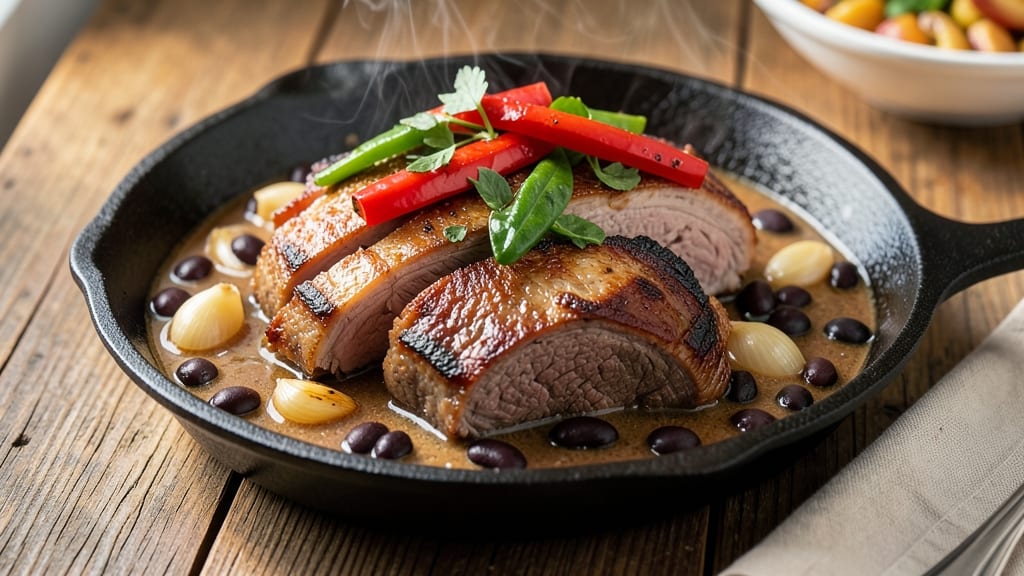
This beef pochero with pork and beans recipe brings the soul of Cuban home cooking to your one-pot, where tender beef and pork simmer with beans until they practically melt in your mouth. 💛 I first tasted this dish at a family gathering in Havana, where it was served in a massive cast-iron pot, and I've been perfecting it ever since to recreate that same rich, comforting flavor at home.
The beauty of this dish lies in its simplicity and depth—just a handful of ingredients that work together over hours of slow simmering to create a sauce so flavorful it needs no garnish.
The key is patience: letting the meat break down while the beans absorb all those smoky, savory notes from the garlic, onions, and spices. It's the kind of meal that tastes even better the next day, when flavors have had time to meld.
What makes this recipe special is how it transforms tough cuts of meat into something so tender, they fall apart at the touch of a fork. The beans become creamy and infused with the meat's juices, while the pork adds a satisfying richness that balances the dish perfectly.
This is comfort food at its finest—warm, hearty, and full of the kind of flavors that make you want to linger at the table.
Serve it with white rice, warm tortillas, or crusty bread to soak up every last drop of that delicious sauce. The leftovers reheat beautifully, making this an ideal recipe for feeding a crowd or prepping meals ahead. Let's get cooking!
Ingredients for beef pochero recipe with pork and beans
A few tough cuts and humble pantry staples transform into Cuban soul food magic.
| Ingredient | Amount | Notes |
|---|---|---|
| Beef Chuck Roast 🥩 | 2 lb | Cut into 2-inch chunks |
| Pork Shoulder 🐖 | 1 ½ lb | Cut into 2-inch chunks |
| Black Beans 🌱 | 2 cups | Dried, soaked overnight |
| Yellow Onions 🧅 | 2 whole | Chopped into wedges |
| Garlic Cloves 🧄 | 6 cloves | Minced, not powdered |
| Bell Peppers 🌶️ | 2 whole | Any color, chopped |
| Tomatoes 🍅 | 4 whole | Ripe, crushed by hand |
| Olive Oil 🫒 | ½ cup | Extra-virgin preferred |
| Cumin Seeds 🌿 | 1 tbsp | Toasted lightly |
| Bay Leaves 🌿 | 2 whole | Dried, crushed slightly |
| Salt 🧂 | 1 ½ tsp | Kosher or sea salt |
| Black Peppercorns 🌶️ | 1 tsp | Freshly cracked |
| Cilantro 🌿 | ¼ cup | Fresh, chopped for garnish |
| Orange Juice 🍊 | ½ cup | Freshly squeezed |
| Water 💧 | 4 cups | Or low-sodium beef broth |
The beef and pork are the stars here—chuck roast and pork shoulder (not tender cuts) break down beautifully during the slow simmer. I grab mine from the butcher counter at Whole Foods or Costco when I can, but the regular supermarket cuts work just fine. Look for good marbling in the meat—it means more flavor. The beans? Dried black beans are traditional, but canned work in a pinch (just drain and rinse well). For extra depth, I sometimes add a small can of tomato paste to the pot when the meat's half-cooked—trust me, it's worth it.
No black beans? Pinto or kidney beans work just as well. Running low on cumin seeds? Ground cumin at half the amount gets you close. Fresh garlic and onions are ideal, but jarred minced garlic (the kind in tubes) saves time. The tomatoes can be canned San Marzano if fresh aren't in season—just crush them by hand for that homemade touch. For the orange juice, fresh is best, but bottled works if you're in a hurry. The key is balancing sweetness—start with half a cup and adjust to taste.
This dish tastes even better the next day, so make extra—it's perfect for meal prep. Store leftovers in the fridge for up to 5 days or freeze for 3 months. I always portion mine into containers with a little extra sauce so every bite is moist. The flavors deepen over time, so don't rush it. Serve with white rice or warm tortillas to soak up that rich, smoky sauce. Pro tip: Save some of that delicious cooking liquid to make rice even more flavorful!
Why You'll Love This Recipe
- One-Pot Magic: I swear by this recipe when I’m too tired to juggle multiple pans. The beef, pork, and beans all simmer together—no chopping mountains of veggies, no constant stirring. Just dump, cover, and let the slow cooker or Dutch oven do the work while I sip coffee.
- Deep, Smoky Richness: Between the beef chuck’s melt-in-your-mouth tenderness and the pork shoulder’s caramelized crust, this dish is ridiculously satisfying. The black beans soak up all the garlic-onion-porky goodness, turning every bite into a flavor bomb. (Yes, even on a Tuesday night.)
- Meal Prep MVP: This keeps for days in the fridge—better the second day, honestly—and reheats like a dream. Pack it for lunches, serve it at a potluck, or freeze half for when you’re too wiped to cook. It’s the ultimate “I’ll eat this for a week” dish.
- Budget-Friendly Powerhouse: Beef chuck and pork shoulder stretch across multiple servings without breaking the bank, and black beans add protein for pennies. Honestly, I make this when I’m trying to feed the family without draining my wallet—it’s that good, that filling, and that practical.
Step-by-step instructions for beef pochero with pork and beans
Let's build this hearty Cuban stew that brings warmth to every bite.
🔥 Step 1: Sear the Meats for Deep Flavor
Heat the 0.5 cup olive oil in a large Dutch oven or heavy pot over medium-high heat. Add the 2 lb beef chuck roast and 1.5 lb pork shoulder, both cut into 2-inch chunks, in a single layer. Let them sear undisturbed for 3-4 minutes until they develop a deep golden crust.
Here's the thing—this searing step isn't just about browning. It's building flavor through the Maillard reaction. After the first side is nicely browned, gently flip the meat pieces and repeat until all sides are golden. Remove the meat and set it aside on a plate, leaving all that beautiful browned meat juice in the pot. You'll want to work quickly here because the oil will start smoking if you linger too long.
👨🍳 Step 2: Toast the Aromatics and Build the Base
In the same pot, add the 1 tbsp cumin seeds and toast them for 30 seconds until fragrant and lightly colored. Immediately add the 2 whole yellow onions chopped into wedges, 2 whole bell peppers chopped, and 4 whole tomatoes crushed by hand. Cook for 5-6 minutes until the onions soften and the peppers begin to caramelize.
Stir in the 6 cloves minced garlic cloves and cook for another 30 seconds until you can smell that sweet garlic aroma filling your kitchen. Add the 2 crushed bay leaves and 1.5 tsp salt now. This aromatic base is the flavor foundation of your pochero, so don't rush this step. The vegetables should be tender but not completely mushy—you want them to hold their shape and add texture to the finished dish.
🥘 Step 3: Simmer the Meats and Beans Together
Return the seared meats to the pot and pour in the 4 cups water. Bring everything to a gentle boil, then reduce heat to low and cover partially. Let it simmer for 1 hour, stirring occasionally to prevent sticking. This initial simmer helps tenderize the tougher cuts of meat.
After 1 hour, add the 2 cups soaked black beans, 0.5 cup orange juice, and 1 tsp freshly cracked black peppercorns. Stir gently to combine. The orange juice will brighten the flavors and help tenderize the beans. Increase the heat slightly to maintain a gentle simmer—you want bubbles breaking the surface, but not a rolling boil. This is where patience pays off; the longer it simmers, the more tender everything becomes.
⏰ Step 4: Finish with Low Heat and Resting
Continue simmering uncovered for another 2-2.5 hours until the meats are fork-tender and the beans are completely soft. The beef and pork should pull apart easily with a fork, and the sauce should have thickened into a rich, flavorful broth. If the liquid reduces too much before the meats are tender, add ½ cup water at a time as needed.
Once everything is tender, remove the pot from heat and let the pochero rest for 15 minutes before serving. This resting time allows all the flavors to meld together and the juices to redistribute throughout the meats. The beans will continue to absorb flavor during this time, making each bite even more delicious. Real talk: Don't skip this resting step, even though it's tempting to serve it immediately.
🍽️ Step 5: Serve with Fresh Cilantro and Warm Corn
Before serving, taste and adjust seasoning if needed. Add a pinch more salt if the flavors need balance. Ladle the pochero into bowls and garnish each serving with 0.25 cup chopped cilantro. The fresh cilantro adds a bright contrast to the rich, savory stew. I like to serve this with warm corn on the cob or crusty bread to soak up all that delicious broth.
This comforting Cuban stew is perfect for cold evenings or family gatherings. The combination of tender beef, pork, and beans creates a satisfying, hearty meal that's packed with flavor. The slow cooking process makes it even more special—each bite delivers layers of taste that come together beautifully. Leftovers actually taste even better the next day as the flavors continue to develop.
Pro Tips For Making Beef Pochero Recipe With Pork And Beans
- Brown the Meat First: Don’t just toss the beef chuck and pork shoulder into the pot raw—this isn’t a stew where you can wing it. Sear both cuts in batches over medium-high heat until they’re deep brown on all sides. The crust locks in flavor and keeps the meat from turning mushy later. (Yes, even if you’re impatient like me.)
- Salt the Beans Early: Dump those black beans into cold water with a generous pinch of salt before you even think about cooking them. This prevents them from turning mealy later. I learned this the hard way—overcooked beans ruin a whole pot of flavor.
- Control the Heat: Start your pochero with a rolling boil to extract flavors from the aromatics, but once everything’s submerged, drop the heat to a gentle simmer. Too much agitation = cloudy broth. Keep it at 180–190°F (tiny bubbles, occasional wisp of steam) for tender meat and smooth sauce.
- Use Onion Layers: Peel and slice the yellow onions into thin layers—no need to chop them. They’ll soften faster and sweeten the broth without disappearing. (Pro move: Caramelize them first in the same pot where you browned the meat.)
Wine and beer pairings for this recipe
Cuban Red Wine
For this rich, smoky stew, I always reach for a medium-bodied Cuban red like Vega Vicuña or La Giralda. These wines have earthy notes that complement the cumin and black beans beautifully while standing up to the beef's depth.
A glass of Vega Vicuña—with its dark fruit and subtle spice—feels like a natural pairing, almost like a Cuban cousin to the dish itself. 🍷
If you can't find Cuban wine, don't stress—Spanish Garnacha or Tempranillo work wonders. Their bright acidity cuts through the richness, and the dried fruit flavors echo the stew's caramelized onions. I keep a bottle of Bodegas Muga Garnacha on hand specifically for Cuban dishes like this one.
Light Beer Pairings
A crisp Cuban lager like Cristal or Hatuey is my go-to beer pairing. The effervescence cleanses your palate between bites, while the light maltiness balances the stew's bold flavors. I love serving this with Cristal chilled—it's like a refreshing sip of Havana after a hearty meal. 🍺
For something with a bit more character, try a Mexican pale lager like Modelo Especial. The subtle vanilla notes in the beer harmonize with the orange juice in the stew, creating a surprisingly smooth pairing.
I've also had great success with Corona Extra, especially if you serve it with a lime wedge to brighten the flavors.
White Wine Alternatives
If red wine feels too heavy, a dry white like Spanish Albariño or Verdejo offers a refreshing contrast. The citrusy acidity in these wines mirrors the orange juice in the recipe, creating a bright, balanced pairing.
I keep a bottle of Pazo de Señorans Albariño in my fridge for just these occasions—it's like a cool breeze through a Cuban kitchen. 🍷
For something more local, try a New England-style IPA like Trillium Brewing's "The Last Resort." The hoppy bitterness balances the stew's richness, while the citrus notes complement the orange juice. It's an unexpected but delicious pairing that always gets compliments at my dinner table.
Non-Alcoholic Options
For those who prefer not to drink, I recommend sparkling lime soda like Jarritos Lime or San Pellegrino Aranciata. The citrus notes echo the orange juice in the stew, while the bubbles keep your palate fresh.
I also love serving hibiscus iced tea—it's tart, refreshing, and pairs beautifully with the dish's smoky flavors. 💧
For something heartier, try a ginger beer like Feather Ginger Beer. The spicy kick complements the cumin in the stew, while the ginger adds a warm, zesty contrast. It's a pairing I discovered at a Cuban restaurant in Miami and have been using ever since.
Nutrition facts
Frequently asked questions
Can I use canned beans instead of dried?
Yes! Canned beans work perfectly—just drain and rinse them well to remove excess sodium. Use 1 (15 oz) can of black beans for every 1 cup of dried beans called for. For extra flavor, add a pinch of smoked paprika to the beans before mixing them into the stew.
What's the best cut of beef for this recipe?
Use chuck roast or stew meat—these tougher cuts break down beautifully during the long simmer. Avoid lean cuts like sirloin; they won't become tender enough. If you can't find chuck, brisket or short ribs work too, though they may need 30-60 extra minutes of cooking time.
Why does my pochero taste bland?
Bland flavor usually means the meat didn't develop enough depth. First, check your searing—meat should be deeply browned before simmering. Second, toast your spices (especially cumin seeds) until fragrant. Finally, reduce the sauce by 10-15 minutes uncovered at the end to concentrate flavors. A splash of orange juice or tomato paste can also help.
Can I make this in a slow cooker?
Brown the meats in a skillet first, then transfer everything to your slow cooker. Cook on low for 8 hours or high for 5 hours. The slow cooker's gentle heat works perfectly for tenderizing the meat. Just add ½ cup water if the liquid gets too thick before the meats are done.
How do I store leftovers?
Let the stew cool completely, then store it in airtight containers in the fridge for up to 5 days or freeze for 3 months. The flavors actually improve overnight! When reheating, add 2-3 tablespoons of water to prevent drying out. Microwave in 1-minute intervals, stirring between each, or reheat on the stovetop over low heat.