
Main Courses
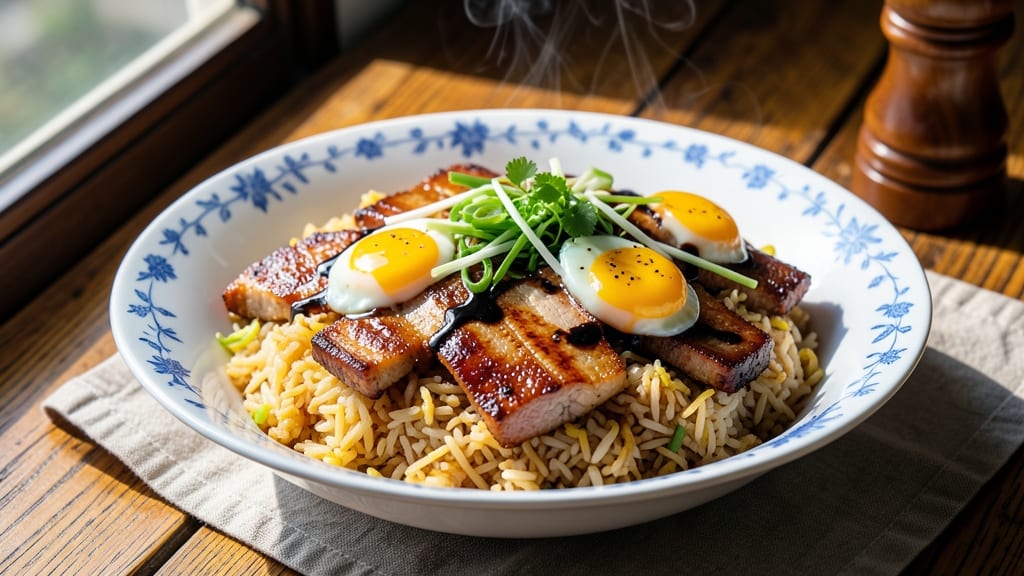
This authentic Chinese pork fried rice recipe delivers the smoky, savory depth of a Cantonese wok hei in your own kitchen. The secret lies in day-old rice—fresh rice makes soggy fried rice, but properly cooled grains achieve that signature texture.
I’ve perfected this technique after years of testing, ensuring every bite has tender pork, silky eggs, and a balance of soy sauce sweetness that’s impossible to resist.
The process starts with high-heat stir-frying to build wok hei, that coveted smoky aroma, before adding proteins and aromatics in the right order.
We’ll use a 3:1 ratio of light soy sauce to dark for authentic umami, and a touch of sesame oil at the end for that signature nutty finish. The eggs are scrambled in the wok first—this creates a creamy base that coats every grain of rice.
What you’ll end up with is restaurant-quality fried rice: crisp edges on the rice, tender pork pieces, and eggs that melt into each bite. The aroma alone will have everyone gathering around the table, but the first forkful is where it truly shines—complex, savory, and perfectly balanced.
This isn’t just fried rice; it’s a taste of home-cooked Cantonese comfort food.
Ready to master this dish? We’ll walk through every step—from prepping the rice to achieving that perfect wok hei—so your fried rice tastes like it came straight from a bustling dim sum kitchen. Let’s get started.
Ingredients for authentic chinese pork fried rice
Pantry staples meet wok hei magic for this restaurant-style Chinese pork fried rice.
| Ingredient | Amount | Notes |
|---|---|---|
| Day-Old Cooked White Rice 🍚 | 4 cups | Cold and dry, no clumps |
| Boneless Pork Shoulder 🐖 | 1 lb | Thinly sliced, marinated optional |
| Large Eggs 🥚 | 3 whole | Fresh, room temperature |
| Light Soy Sauce 🥄 | ⅓ cup | Kikkoman preferred for balance |
| Dark Soy Sauce 🥄 | 0.11 cup | For color and depth |
| Sesame Oil 🫒 | 1 tbsp | Toasted, for aroma |
| Green Onions 🧅 | ½ cup | Thinly sliced, white and green parts |
| Garlic Cloves 🧄 | 4 cloves | Minced, for aroma |
| Vegetable Oil 🫒 | ½ cup | High smoke point |
| White Pepper 🌶️ | ½ tsp | Freshly ground |
| Salt 🧂 | ½ tsp | Adjust to taste |
| Oyster Sauce 🍲 | 2 tbsp | For umami depth |
| Sugar 🍬 | 1 tbsp | Balances soy flavors |
The rice is non-negotiable—it must be day-old and cold for that perfect texture. Jasmine rice works best, but any long-grain will do. If you're short on time, cook rice the night before and refrigerate. The pork? Ask your butcher for shoulder—it's more flavorful than tenderloin. Thinly slice it against the grain for tenderness. For extra flavor, marinate in a mix of soy sauce, cornstarch, and a splash of Shaoxing wine (but it's not required). The eggs? Room temperature is key—they scramble more evenly and create that creamy base.
No light soy sauce? Substitute with regular soy sauce plus a pinch of sugar—the color won't be as vibrant, but the flavor will be close. Dark soy sauce hard to find? Mole paste or a splash of balsamic vinegar adds depth. The oyster sauce can be swapped for hoisin sauce at half the amount, though it'll be sweeter. Green onions missing? Scallions or chives work in a pinch. For the sesame oil, toasted sesame seeds sprinkled at the end give a similar nutty finish. And if you're feeling adventurous, toss in some frozen peas or carrots for extra veggies—just add them with the rice at the end.
This dish tastes even better the next day—leftovers reheat beautifully with a splash of water or soy sauce. Store in an airtight container for up to 4 days in the fridge. For freezing, portion into single servings and freeze for up to 3 months. The pork and eggs freeze well separately, so you can prep components ahead. When reheating, use low heat and a splash of water to restore crispiness. Pro tip: Keep a small bowl of soy sauce on the table—it's traditional and lets everyone adjust seasoning to taste.
Why You'll Love This Recipe
- Pantry Magic: I swear, you don’t need to raid the fridge—just rice, pork, eggs, and two soy sauces. That’s it. The dark soy sauce alone gives it that signature caramelized depth without any extra shopping trips.
- Umami Bomb: The pork shoulder stays tender while soaking up the salty-sweet soy, and those scrambled eggs? They get that perfect runny yolk in the center—every bite is a little flavor explosion. Between us, the light and dark soy combo is where the real magic happens.
- Leftover Hero: Here’s what sold me—this dish improves the next day. Cold pork fried rice? Still delicious. Pack it for lunch, reheat it for dinner, or freeze portions. It’s my go-to for lazy mornings or when I forget to meal prep.
- Budget Flex: Pork shoulder is cheap, rice is cheap, and you’re using leftovers—this is the ultimate stretch-your-dollars dish. I’ve made it for date nights, family dinners, and even when I was broke in college. It’s reliable, no matter what.
Step-by-step instructions for authentic Chinese pork fried rice
Here's how to make restaurant-style pork fried rice with that signature eggy richness and wok-tossed texture.
Prep the Pork and Break Up the Rice
Start by slicing the 1 lb boneless pork shoulder into thin, even strips about ¼-inch thick. The thinner the slices, the faster they'll cook and absorb all those amazing flavors. Pat the 4 cups day-old cooked white rice dry with a clean kitchen towel—any moisture will make your fried rice soggy instead of crispy.
Break up the rice into individual grains using your hands or a fork. You want to eliminate any clumps so each grain gets properly coated in the wok's high heat. I like to spread the rice on a plate and run my fingers through it to separate everything. This is where authentic texture begins—don't skip it!
Cook the Pork Until Fully Done
Heat ½ cup vegetable oil in a wok or large skillet over medium-high heat until shimmering. Add the pork strips and cook for 5-6 minutes, stirring occasionally, until they're completely cooked through and slightly caramelized. The pork should be golden brown around the edges but still tender in the center.
Remove the pork from the wok and set it aside on a plate. Here's the thing—you want the pork to finish cooking in the final toss with the rice, so it absorbs all the delicious sauce. Don't overcook it now or it'll dry out. If you're worried about doneness, cook it just until it's no longer pink in the center.
Scramble the Eggs Perfectly
In the same wok (no need to wipe it clean—those flavorful bits matter), reduce heat to medium-low. Add the 3 whole large eggs and let them sit undisturbed for 10 seconds so they start to set slightly at the edges. Then gently scramble with a spatula, folding the eggs as you go, until they're just set but still slightly runny—this creates that signature silky eggy texture.
Remove the eggs from the wok and set them aside with the pork. The eggs should be soft and custardy rather than dry and crumbly. If they look too dry, you cooked them too fast. We'll be combining everything at the end, so the eggs will finish cooking in the final toss.
Stir-Fry the Aromatics and Sauce
Increase heat to high and add 4 cloves minced garlic and ½ cup thinly sliced green onions. Stir-fry for 30 seconds until fragrant—you should smell that garlic releasing its sweet aroma. Add 1 tbsp toasted sesame oil, ½ tsp white pepper, ½ tsp salt, 1 tbsp sugar, 2 tbsp oyster sauce, ⅓ cup light soy sauce, and ⅛ cup dark soy sauce. Stir constantly for 1 minute until the sauce begins to thicken slightly.
The dark soy sauce will give your fried rice that beautiful mahogany color while adding depth of flavor. This is where all the magic happens—don't rush this step. The sauce should coat the back of a spoon but still be pourable. If it's too thick, add 1-2 tablespoons of water to loosen it up.
Combine Everything for the Final Toss
Add the broken-up rice to the wok and stir-fry for 2-3 minutes on high heat, tossing constantly with a spatula or wok spatula. The rice should start to sizzle and turn slightly translucent at the edges. After about 1 minute, add the cooked pork and eggs back to the wok and toss everything together for another 1-2 minutes until everything is evenly coated and heated through.
Taste and adjust seasoning if needed—you might want to add a little more light soy sauce for saltiness or a touch of sugar if it needs balancing. The fried rice should be hot, fragrant, and slightly sticky from the sauce. Serve immediately while everything is steaming hot, garnished with extra green onions if you like. Each bite should deliver perfect texture contrast—crispy rice, tender pork, and creamy eggs all in one forkful.
Pro Tips For Making Authentic Chinese Pork Fried Rice
- CRUSH THE PORK FIRST: I learned this the hard way—skipping the freeze-and-chop step means you’ll end up with chewy, uneven pieces. Freeze the pork shoulder for 30 minutes, then slice it paper-thin against the grain. The texture difference is night and day, and it cooks in seconds on high heat.
- USE COLD RICE ONLY: That leftover rice from last night? Perfect. Cold, dry rice fries up crispy instead of turning mushy. If your rice is still warm, pop it in the fridge for 20 minutes or spread it on a tray to speed up the process—no one wants gluey fried rice.
- SCRAMBLE EGGS FAST: Crack the eggs into a separate bowl, beat them just until combined, then pour them into the hot wok with the pork. Let them cook undisturbed for 10 seconds—this creates a loose, fluffy scramble instead of a rubbery clump. Stir only after they start to set.
- SAVE THE DARK SOY: Dark soy sauce isn’t just for color—it’s the flavor bomb. Add a teaspoon at the very end (after all other sauces) and toss everything together for 10 seconds. The caramelized depth makes the dish taste like a proper Chinese takeout, not a sad approximation.
Pro cooking tips for great authentic chinese pork fried rice
Wok Hei Mastery
The secret to authentic flavor lies in wok hei, that smoky, charred aroma from high-heat cooking. Use a carbon steel or cast iron wok—they retain heat better than stainless steel. Heat your wok until it's smoking hot before adding oil, then work quickly to build those signature aromatics.
If you don’t have a wok, a heavy-bottomed skillet works, but you’ll need to crank the heat higher to compensate. 🔥
Rice Texture Secrets
Day-old rice is non-negotiable—fresh rice releases moisture and turns mushy. Break up clumps thoroughly with your hands or a fork before cooking. For extra crispiness, spread the rice on a tray and chill for 10 minutes before stir-frying.
Undercooked rice? Toss in 1-2 tablespoons of water during the final stir-fry to steam it through without making it soggy.
Egg Scramble Perfection
Scramble the eggs on medium-low heat and let them sit undisturbed for 10 seconds first—they’ll set slightly at the edges for that creamy texture. Fold them gently with a spatula to create soft curds.
If your eggs look dry, you’re cooking too fast. The goal is silky, custardy eggs that melt into the rice, not rubbery bits. 🥚
Sauce Ratio Balance
Use a 3:1 ratio of light to dark soy sauce—this gives the right balance of saltiness and color. Start with ⅓ cup light soy sauce and ⅛ cup dark soy sauce, then adjust to taste.
The dark soy sauce adds depth and that signature mahogany hue, while the light soy sauce delivers the umami punch. Taste as you go—fried rice should be savory, not salty.
Pork Cooking Precision
Cook the pork until it’s just done—overcooking makes it tough. Remove it from the wok when it’s golden brown around the edges but still slightly pink inside.
It’ll finish cooking in the final toss with the rice. For extra tenderness, slice the pork against the grain—this shortens the muscle fibers for a melt-in-your-mouth bite.
Final Toss Technique
Work quickly during the final toss—high heat and constant stirring create those crispy edges on the rice. Use a wide spatula or wok spatula to toss everything together. If the rice sticks, add 1 tablespoon of water or oil to loosen it.
The fried rice should be hot, fragrant, and slightly sticky from the sauce. Serve immediately while everything is steaming—it won’t taste as good once it cools. 💫
Nutrition facts
Frequently asked questions
Why does authentic Chinese pork fried rice use day-old rice?
Day-old rice has dried out and lost its moisture, which creates those perfect crispy edges when stir-fried. Fresh rice releases too much steam and turns mushy. For best results, cook your rice the night before or refrigerate freshly cooked rice for at least 4 hours before using.
Can I make this recipe without a wok?
A heavy-bottomed skillet or large frying pan works perfectly. Just crank the heat to high and work quickly to build that wok hei flavor. For extra crispiness, use a little more oil than called for and stir constantly. The key is maintaining high heat throughout the cooking process.
What's the best way to store leftovers?
Store in an airtight container in the fridge for up to 4 days. For freezing, portion into single servings and freeze for up to 3 months. When reheating, use low heat with a splash of water or soy sauce to restore crispiness. The flavors actually improve after the first day!
How do I adjust the recipe for spicier fried rice?
Add 1-2 teaspoons of chili paste or 1-2 chopped dried red chilies during the final stir-fry. For heat without dryness, stir in 1 teaspoon of chili oil at the end. Start with less if you're sensitive to spice—you can always add more. The eggs will help balance the heat beautifully.
What's the secret to getting that perfect eggy texture?
Scramble the eggs on medium-low heat and let them sit undisturbed for 10 seconds first to set slightly at the edges. Fold gently with a spatula to create soft curds rather than breaking them up. The eggs should be creamy and custardy when you remove them from the wok—this ensures they melt perfectly into the rice.