
Main Courses
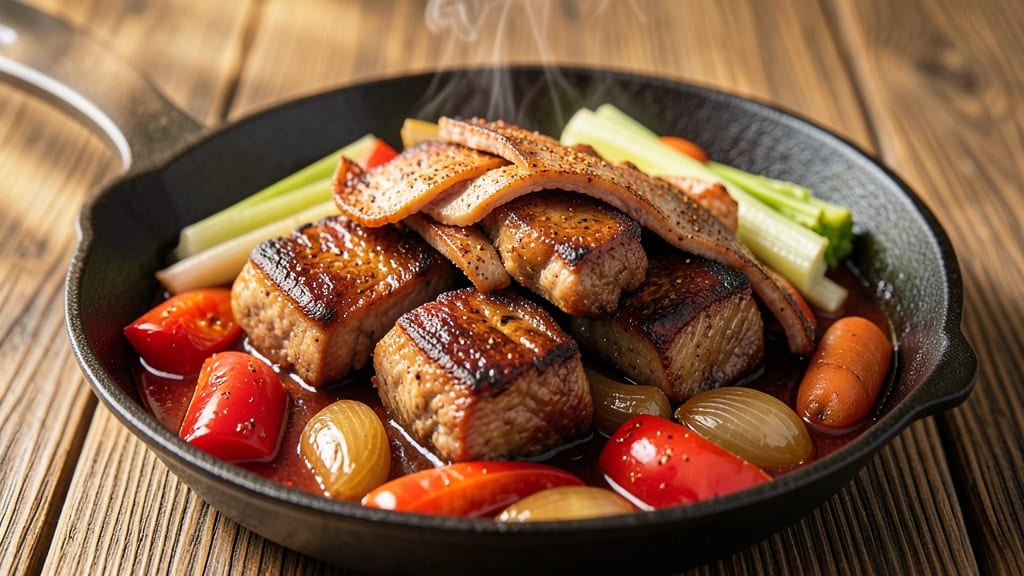
This authentic pork goulash recipe brings the rich, smoky flavors of Hungary to your kitchen with just a few simple techniques. The secret lies in slow-browning the pork and building layers of flavor with sweet paprika, tomatoes, and onions—just like my grandmother used to make.
I've perfected this version over years of testing, ensuring every bite delivers that deep, hearty taste you'd expect from a traditional Hungarian stew.
The magic happens in the sauce, where sweet and hot paprika blend with tomatoes to create a velvety, aromatic base. Deglazing the pan after browning the pork captures all those flavorful bits that make the difference between good and exceptional goulash.
This recipe is designed to be hearty enough for a family dinner but simple enough for a weeknight meal—just let it simmer while you prepare the side dishes.
What sets this version apart is the celery crown topping—a crispy, golden crust made from chopped celery, flour, and butter that adds texture and visual appeal. It's the kind of dish that gets better with time, as the flavors meld and deepen during the long simmer.
The result? A rich, comforting stew that's perfect served with crusty bread, egg noodles, or dumplings.
This is the kind of recipe that feels like a hug in a bowl—warm, comforting, and full of tradition. Whether you're cooking for a crowd or treating yourself to a cozy meal, this goulash delivers restaurant-quality results with minimal effort. Let's get started on creating something truly special.
Ingredients for authentic pork goulash
Pork shoulder, paprika, and tomatoes create this hearty, comforting goulash with crispy celery crown topping.
| Ingredient | Amount | Notes |
|---|---|---|
| Pork Shoulder 🥩 | 3 lb | Cut into 1-inch cubes |
| Yellow Onion 🧅 | 2 whole | Chopped into medium dice |
| Carrots 🥕 | 3 whole | Peeled, sliced into rounds |
| Celery Stalks 🧆 | 3 whole | Chopped, for crown topping |
| Garlic Cloves 🧄 | 4 cloves | Minced for sauce |
| Sweet Paprika 🌶️ | 2 tbsp | Hungarian variety preferred |
| Hot Paprika 🌶️ | 1 tbsp | For smoky depth |
| Tomato Paste 🍅 | ½ cup | Smooth, not chunky |
| Canned Tomatoes 🍅 | 2 cups | San Marzano preferred |
| All-Purpose Flour 🌾 | ¼ cup | For celery crown |
| Unsalted Butter 🧈 | 3 tbsp | Cold for celery crown |
| Beef Broth 💧 | 2 cups | Low-sodium preferred |
| Bay Leaves 🍃 | 2 whole | Fresh for best flavor |
| Salt 🧂 | 1 ½ tsp | Kosher or sea salt |
| Black Pepper 🌶️ | ½ tsp | Freshly ground |
The pork shoulder is the star—look for well-marbled cuts at Whole Foods or your local butcher. The Hungarian sweet paprika makes all the difference, so don't skimp on quality. I grab mine from Penzeys or the international aisle at Trader Joe's. For the celery crown, fresh celery is a must—those pre-chopped bags lose their crunch. If you can't find San Marzano tomatoes, any high-quality canned tomatoes will work, just make sure they're crushed by hand for the best texture.
No Hungarian paprika? Smoked paprika plus a pinch of cayenne gets you close. Short on beef broth? Vegetable broth with a splash of Worcestershire works too. The celery crown can be made ahead—just store the dry mix in a jar and add butter when ready to crisp. For extra richness, stir in a splash of apple cider vinegar at the end. The bay leaves should be removed before serving, so grab a couple extra just in case.
This goulash tastes even better the next day—4-5 days in the fridge, or freeze for 3 months. I always make a double batch because it reheats perfectly. The celery crown stays crisp for about 2 hours after baking, so make it fresh when serving. Store leftovers with a layer of broth on top to keep everything moist. Perfect for meal prep—just reheat and serve with crusty bread.
Why You'll Love This Recipe
- One-Pot Magic: I swear by this—just brown the pork shoulder, toss in the onions, carrots, and celery (that classic trio? So worth it), then let the garlic and spices work their magic. No extra pots, no fuss, just deep, rich flavor with zero cleanup.
- Deep, Savory Love: Between us, the slow-cooked pork shoulder turns tender while the carrots caramelize just enough to melt in your mouth. That paprika and bay leaf combo? It’s like a warm hug in a bowl—simple spices, but they hit different.
- Weeknight & Sunday: Honestly, this feeds my family of five and leaves leftovers for lunch. Too busy? Toss it in the slow cooker. Hosting? It’s hearty enough for a crowd but still feels special. My secret weapon for any day.
- Budget-Friendly Powerhouse: Pork shoulder is cheap, and this recipe stretches it across meals. I make a double batch—one dinner, one freezer meal. Plus, the veggies (onion, carrots, celery) are pantry staples. Good food shouldn’t break the bank, and this doesn’t.
Step-by-step instructions for authentic pork goulash
Here's how to bring Hungary's hearty flavors to life with this rich, paprika-infused stew.
Sear the Pork Shoulder for Deep Flavor
Heat a large Dutch oven over medium-high heat. Add the 3 lb pork shoulder cut into 1-inch cubes and sear in batches until deep golden brown on all sides, about 8-10 minutes total. This step develops the rich, caramelized crust that forms the base of your goulash.
Don't crowd the pan—work in batches if needed. The pork should release easily from the pan when ready. As you sear, you'll notice the meat releases its natural juices, which will form a beautiful brown fond at the bottom of your pot. This is pure flavor you don't want to miss.
Build the Aromatic Base with Onions and Vegetables
Remove the seared pork and set it aside. In the same Dutch oven, add 2 whole yellow onions chopped into medium dice and cook for 5 minutes until softened. Add 3 whole carrots sliced into rounds and 3 whole celery stalks chopped, cooking for another 5 minutes until the vegetables begin to caramelize slightly.
Here's where the magic happens: Stir in 2 tbsp sweet paprika and 1 tbsp hot paprika, letting the spices toast in the pot for 30 seconds until fragrant. This step develops the characteristic smoky depth that makes goulash so special. The paprika should coat the vegetables evenly—this ensures every bite gets that authentic Hungarian flavor.
Develop the Rich Sauce Base
Add 4 cloves minced garlic, 0.5 cup tomato paste, 2 cups canned tomatoes, and 2 cups beef broth to the pot. Stir well to combine all ingredients, scraping up any browned bits from the bottom of the pan. Bring to a simmer, then reduce heat to low and let it cook uncovered for 20 minutes, stirring occasionally.
During this time, the tomato paste will thicken slightly and deepen in color, creating the rich, velvety base of your goulash. You'll notice the aroma becoming more complex as the flavors meld together. Taste the sauce now—it should be tangy and slightly sweet, with a good balance of paprika heat.
Return the Pork and Simmer Until Tender
Return the seared pork to the pot, along with 2 whole bay leaves, 1.5 tsp salt, and 0.5 tsp black pepper. Bring to a gentle boil, then reduce heat to maintain a barely simmering state. Cover partially and cook for 2-2.5 hours, until the pork is fork-tender and easily pulls apart.
This long cooking time is crucial—it breaks down the tough pork shoulder into tender, melt-in-your-mouth pieces. Check the liquid level occasionally and add a splash of water if it gets too dry. The pork should be so tender that a fork slides through it with minimal resistance, and the sauce should coat the back of a spoon.
Prepare the Celery Crown Topping
While the goulash simmers, prepare the celery crown topping. In a small bowl, mix 0.25 cup all-purpose flour and 3 tbsp cold unsalted butter until it resembles coarse crumbs. Stir in 3 whole celery stalks chopped finely and set aside.
When the goulash is nearly done cooking, sprinkle the celery crown mixture over the top of the stew. Return to heat just long enough to toast the celery slightly, about 2-3 minutes. This crispy topping adds a delightful textural contrast to the rich stew, completing your authentic goulash experience.
Pro Tips For Making Authentic Pork Goulash
- Sear the Pork Shoulder First: I learned this the hard way—skipping the sear means flavorless goulash. Pat the pork dry, then hit it with oil in a hot pan until deep brown on all sides. That crust locks in juices and builds depth that simmering alone can’t match.
- Chop Onions Like a Pro: Fine dice those yellow onions—think 1/4-inch pieces, not rough chunks. The smaller the surface area, the faster they soften without turning to mush. (Yes, even if you’re impatient like me.)
- Don’t Rush the Simmer: Low and slow is non-negotiable here. After browning the meat, reduce heat to a gentle bubble—just enough to see tiny ripples. Pushing it harder turns goulash into glue. Trust me, 2–3 hours at 170°F (77°C) is worth it.
- Save Time with Pre-Cut Veggies: Skip chopping carrots and celery from scratch: buy them pre-diced from the store’s “sauté mix” section. Same texture, half the effort. Just rinse well to wash off any excess starch that’ll cloud your broth.
Perfect pairings for this dish
Hungarian Wine Pairings
For an authentic experience, reach for a bottle of Bull's Blood (Egri Bikavér)—Hungary's signature red blend of Kadarka grapes. Its rich, slightly smoky profile with dark fruit notes mirrors the goulash's paprika depth.
I always keep a bottle of Egri Bikavér 2018 from Royal Tokaji in my cellar for special occasions. 🍷
If you prefer white, try Furmint from Tokaji—its citrusy acidity cuts through the richness beautifully. For something more accessible, a Pinot Noir from nearby Slovakia or Austria works wonderfully, offering bright cherry notes that complement the stew's savory-sweet balance.
Crusty Bread Essentials
No goulash is complete without freshly baked bread to soak up every last drop of sauce. I love using Hungarian-style bread from local bakeries—look for lángos or kifli if you can find them.
For a quick option, toast a thick slice of sourdough until crisp, then rub it with a garlic clove for extra flavor. 🥖
Pro tip: Warm the bread in the oven while the goulash simmers. The residual heat keeps it soft and perfect for sopping up sauce. If you're feeling fancy, serve with paprika-infused butter—just mix 1 tbsp sweet paprika with 2 tbsp softened butter and spread it on warm bread.
Dumpling Variations
Hungarian nokedli (egg dumplings) are the traditional choice, but I often make potato dumplings for extra heartiness. For the classic version, mix 2 cups flour, 2 eggs, 1 cup water, and a pinch of salt, then drop spoonfuls into boiling water.
They cook in just 3-4 minutes—perfect for serving alongside goulash. 🍲
Short on time? Store-bought spaetzle works in a pinch—just cook according to package instructions and toss with a little butter and parsley. For a gluten-free option, use cornmeal dumplings made with 1 cup cornmeal, 1 cup water, and 1 egg.
Side Dish Harmony
Roasted carrots and parsnips add natural sweetness that balances the goulash's richness. Toss 4 cups mixed veggies with 2 tbsp olive oil, 1 tsp honey, and ½ tsp cinnamon, then roast at 400°F for 25 minutes. The caramelized edges make them irresistible. 🥕
For a lighter touch, serve with a cucumber and sour cream salad. Thinly slice 2 cucumbers, mix with ½ cup sour cream, 1 tbsp fresh dill, and a pinch of salt. The cool, creamy contrast is pure perfection with goulash.
Nutrition facts
Frequently asked questions
Can I substitute beef for pork in this goulash?
While traditional goulash often uses beef, this pork version stays true to Hungarian heritage. For a beef adaptation, try chuck roast instead—it browns beautifully and develops rich flavors. If you must use pork, stick with shoulder for the best texture and flavor. The cooking time remains similar, but beef may need 30-45 minutes longer to tenderize.
How do I adjust the heat level in the paprika blend?
The recipe balances 2 tbsp sweet paprika and 1 tbsp hot paprika for mild warmth. For less heat, reduce hot paprika to ½ tbsp or omit it entirely. Want more kick? Add ¼ tsp cayenne pepper or swap 1 tbsp of the sweet paprika for hot. Always toast the spices first to deepen their flavor—this makes even small amounts more impactful.
Can I make this goulash in a slow cooker?
Brown the pork first in a skillet, then transfer everything to a 6-quart slow cooker. Cook on LOW for 7-8 hours or HIGH for 4-5 hours, then finish with the celery crown topping in a separate skillet. The slow cooker method actually enhances tenderness—just check liquid levels occasionally and add broth if needed. The flavors develop beautifully this way!
Why does my goulash taste bland after simmering?
Blandness usually means insufficient seasoning or insufficient time for flavors to meld. First, ensure you're using Hungarian sweet paprika (regular paprika lacks depth). Second, taste as you go—add more salt, a splash of apple cider vinegar, or a pinch of sugar to balance flavors. Finally, goulash needs at least 2 hours of simmering; rushing this step is the #1 mistake. Let it rest 15 minutes before serving to let flavors settle.
What's the best way to reheat leftovers?
Goulash reheats beautifully! Transfer to a pot and warm over medium-low heat with 1-2 tbsp broth or water until heated through (10-15 minutes). For the celery crown, toast fresh in a skillet with butter. Never microwave—it makes the sauce watery. Pro tip: Store leftovers with a layer of broth on top to preserve moisture. This goulash actually tastes better the next day as flavors deepen!