
Main Courses
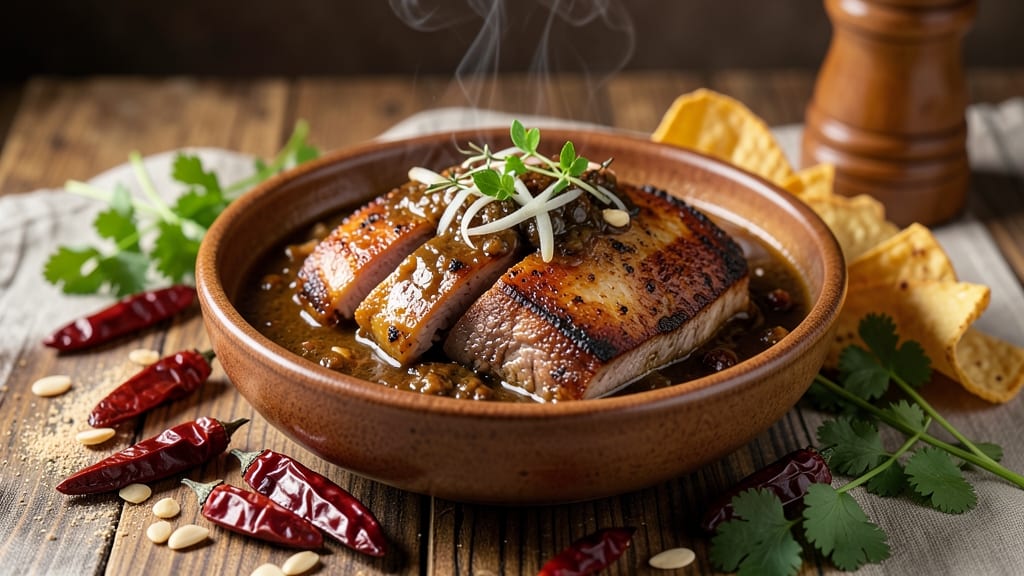
This authentic pork mole recipe brings the smoky, chocolatey depth of Mexican tradition to your kitchen—where warm cinnamon and toasted spices create a sauce so complex, it feels like a hug in every bite. 🌟 I've spent years perfecting the balance between sweet, spicy, and earthy notes that define this iconic dish, and this version delivers restaurant-quality results with traditional techniques you can trust.
The foundation of great mole lies in the dry spice toast—chiles, nuts, and spices roasted until aromatic and fragrant. We blend these into a rich paste, then simmer it with broth until it develops that signature velvety texture.
The pork, braised low and slow, absorbs all those layers of flavor, resulting in tender meat that practically melts in your mouth.
What you'll achieve is a dish that's rich yet balanced, with deep smoky undertones from the chiles and a subtle sweetness from the chocolate. The sauce clings to every bite of pork, creating a harmony of flavors that's both comforting and sophisticated.
Serve it over steamed rice or with warm tortillas to capture the full experience.
This recipe honors the traditions of Mexican cuisine while making it accessible for home cooks. Whether you're preparing mole negro or poblano, the techniques remain the same—just the ingredients vary. Let's create something truly special together.
Ingredients for authentic pork mole
Sixteen ingredients blending smoky chiles, toasted nuts, and chocolate for restaurant-quality mole.
| Ingredient | Amount | Notes |
|---|---|---|
| Pork Shoulder 🥩 | 3 lb | Bone-in for flavor, cut into 2-inch chunks |
| Ancho Chiles 🌶️ | 4 whole | Dried, stems and seeds removed |
| Pasilla Chiles 🌶️ | 4 whole | Dried, stems and seeds removed |
| Garlic Cloves 🧄 | 8 cloves | Peeled, lightly toasted |
| White Onion 🧅 | 1 whole | Quartered, charred |
| Almonds 🥜 | ½ cup | Raw, lightly toasted |
| Pecans 🌰 | ½ cup | Raw, lightly toasted |
| Sesame Seeds 🌿 | 2 tbsp | Toasted until golden |
| Ground Cinnamon 🌿 | 1 tbsp | High-quality for depth |
| Mexican Chocolate 🍫 | 4 oz | Tableta or chopped chocolate |
| Chicken Broth 💧 | 4 cups | Homemade or low-sodium |
| Extra-Virgin Olive Oil 🫒 | ½ cup | For roasting spices |
| Salt 🧂 | 1 ½ tsp | Diamond Crystal preferred |
| Black Peppercorns 🌶️ | ½ tsp | Freshly cracked |
| Cloves 🌿 | 4 whole | Lightly toasted |
The chiles are the soul of mole—Anchos bring sweetness while Pasillas add depth. Grab them from the Latin market section at Whole Foods or Trader Joe's—they keep for months if stored properly. Toast them whole in a dry skillet until fragrant, then peel off skins. The nuts? Raw almonds and pecans from the bulk bin toast faster and add incredible richness. For chocolate, Mexican tableta (like Abuelita) delivers that authentic bittersweet profile—avoid Dutch-process cocoa powder. Pork shoulder? Bone-in, cut into 2-inch chunks—it stays tender while braising.
No ancho chiles? Mulato chiles work at double the amount. Short on pecans? Walnuts or cashews add a different but still delicious texture. Mexican chocolate unavailable? Dark chocolate (70% cocoa) plus 1 tsp cinnamon gets you close. The broth matters—homemade or low-sodium store-bought prevents salt overload. For extra smokiness, char the onion and garlic right in the skillet you toast the spices in. Want more heat? Add a dash of cayenne with the spices. The sesame seeds? Toast them last so they stay crisp.
Toasted spices lose potency fast, so grind them fresh—store in an airtight jar for up to 2 weeks. The finished mole reheats beautifully—simmer gently for 5-10 minutes to restore its velvety texture. Keeps 5 days refrigerated or 3 months frozen. I always make double batches—freeze half in ice cube trays for quick future meals. Serve over steamed cilantro-lime rice to complete the experience.
Why You'll Love This Recipe
- One-Pot Magic: I swear by this—just toss the pork shoulder, toasted chiles, and garlic into the same pot. No chopping boards, no extra dishes. The onions caramelize right in the sauce while you stir, and honestly? That’s my kind of cooking.
- Smoky Depth Bomb: Between the ancho’s earthy heat and pasilla’s smoky sweetness, this mole tastes like a hug from a Mexican abuela. The pork shoulder melts into the sauce, so tender it falls apart at the touch—no dry bites here.
- Weeknight to Dinner Party: Same recipe, different vibes. Serve it over rice for a quick weeknight meal or drizzle it over chicken for a fancy dinner. My college roommate’s first taste made her ask for the recipe—now it’s her go-to for guests.
- Leftovers That Don’t Suck: This sauce actually improves the next day. I make a double batch, freeze half, and reheat it for tacos or quesadillas. The flavors meld even better, and the pork stays juicy—no sad, dry leftovers here.
Step-by-step instructions for authentic pork mole
Here's how to build layers of smoky, chocolatey depth—just like Oaxacan cooks do.
🔥 Step 1: Char the Chiles and Aromatics for Deep Flavor
Heat a dry skillet over medium-high heat and toast the 4 whole ancho chiles and 4 whole pasilla chiles for 30 seconds per side until fragrant and slightly blistered. Watch carefully—they burn fast! Transfer to a bowl and cover with 4 cups hot chicken broth to soften while you work.
In the same skillet, add the 1 whole white onion (quartered) and char over medium heat until blackened in spots—about 8-10 minutes. Flip occasionally so it browns evenly. The deep caramelization here is what gives mole its rich, complex base. Remove and set aside with the chiles.
🍳 Step 2: Toast Nuts and Spices for Nutty Warmth
In a separate skillet, dry-toast the 0.5 cup almonds and 0.5 cup pecans over medium heat for 5-6 minutes, stirring constantly until golden and fragrant. Remove immediately—they'll keep toasting and burn if you walk away. Let cool slightly, then pulse in a food processor until finely chopped (not powdered).
In the same skillet, add 0.5 cup extra-virgin olive oil and toast the 8 cloves garlic cloves, 4 whole cloves, and 0.5 tsp black peppercorns for 1 minute until garlic is golden. Add the 2 tbsp sesame seeds and toast for another 30 seconds until they darken slightly. This step unlocks their aromatic oils.
🥘 Step 3: Blend the Mole Paste for Silky Texture
Drain the soaked chiles and add them to the food processor with the toasted nuts, garlic-spice mixture, 1 tbsp ground cinnamon, and 1.5 tsp salt. Blend until completely smooth, scraping down the sides as needed. This paste is the soul of your mole—don't rush it. The texture should be velvety, like thick pudding.
With the processor running, slowly drizzle in 0.5 cup extra-virgin olive oil to emulsify the mixture. This creates a stable base that won't separate when cooking. Taste and adjust seasoning—you want a balance of smoky, sweet, and slightly spicy notes.
🔥 Step 4: Cook the Pork Until Fork-Tender
In a Dutch oven, sear the 3 lb pork shoulder (cut into 2-inch chunks) over high heat until browned on all sides—about 8-10 minutes. Remove and set aside. In the same pot, add the blended mole paste and cook over medium heat for 5 minutes, stirring constantly, until it darkens slightly.
Return the pork to the pot, add 4 cups chicken broth (from soaking the chiles), and bring to a simmer. Cover and cook at 325°F for 2.5-3 hours, turning the pork occasionally, until it's fork-tender. The sauce should reduce to a thick, glossy consistency—this is where patience pays off.
🍫 Step 5: Finish with Chocolate for Rich Depth
When the pork is tender, remove it from the pot and strain the sauce through a fine-mesh sieve into a clean pot. Return the sauce to medium heat and whisk in the 4 oz Mexican chocolate until completely melted and smooth. Simmer for 5-7 minutes until the sauce thickens to a luxurious, coatable consistency.
Return the pork to the sauce and simmer together for another 10 minutes to let the flavors meld. Taste and adjust seasoning—you might need a pinch more salt or cinnamon to balance the chocolate. Serve immediately over warm rice or with warm tortillas for the full experience.
Pro Tips For Making Authentic Pork Mole
- Char the Chiles Right: Don’t just toast those ancho and pasilla—char them over an open flame or under a broiler until they’re blackened in spots. I learned this the hard way: under-toasted chiles taste flat, but properly charred ones release that deep, smoky sweetness that defines mole. (Yes, even if you’re impatient like me.)
- Render the Pork Slow: Start your pork shoulder in a cold pot, barely simmering, and resist the urge to rush. After 2 hours, when it’s finally rendered enough fat to self-baste, crank the heat to medium-high and let it brown—this builds flavor faster than low-and-slow alone. I skip the foil tent here; the crust matters.
- Strain Twice, Once Carefully: After blending the chiles, garlic, and onions into a paste, strain it twice—first through a fine-mesh sieve to catch skins, then through cheesecloth for a silky texture. I used to skip this, and the sauce always tasted gritty. (Your future self will thank you.)
- Toast the Garlic Low: Add whole garlic cloves to the pot after the pork has rendered, and cook them on low heat until golden, not brown. Burned garlic turns bitter, and that’s the last thing you want in mole. I was skeptical until I tried it—now I never skip this step.
Common mistakes when making great authentic pork mole
Skipping the Toast
One of the biggest mistakes I see is skipping the essential toasting step for chiles, nuts, and spices. Toasting unlocks their natural oils and deepens their flavors—charred ancho chiles taste completely different from raw ones.
I’ve seen home cooks soak chiles directly without toasting, resulting in a flat, one-dimensional mole. Toast your chiles and nuts until fragrant, even if it takes a few extra minutes. The aroma alone tells you when it’s ready. 🌶️
Rushing the Blend
Another common error is blending the mole paste too quickly or not smoothly enough. If you rush this step, you’ll end up with a grainy, uneven texture that separates when cooking.
I always blend until the paste is completely smooth—like thick pudding—and emulsify it with olive oil to prevent separation. Take your time here; this is the foundation of your sauce. 🥘
Undercooking the Pork
Pork mole requires slow, low-and-slow cooking to achieve tender, fall-apart meat. I’ve seen people pull pork too soon, resulting in tough, chewy bites. Use a meat thermometer and cook until the internal temperature reaches 203°F.
The sauce should reduce to a glossy, coatable consistency—this takes patience, but it’s worth it. 🥩
Ignoring the Chocolate Finish
Many recipes skip the chocolate step or add it too early, which can make the sauce bitter or uneven. Chocolate should be added after the pork is tender and the sauce has reduced.
I recommend using Mexican tableta chocolate for that authentic bittersweet depth. Simmer it just until melted and smooth—5-7 minutes—to let it blend seamlessly with the other flavors. 🍫
Overcrowding the Pot
When braising the pork, don’t overcrowd the Dutch oven. Too much pork in one layer can steam instead of sear, leading to uneven cooking and a duller flavor.
I cut my pork into 2-inch chunks and cook them in batches if needed. This ensures each piece gets properly browned and absorbs the mole’s rich flavors. 🔥
Skipping the Strain
Straining the sauce before adding chocolate is a pro move I can’t stress enough. Without straining, you risk a chunky, uneven texture. After cooking the pork, strain the sauce through a fine-mesh sieve to remove any bits.
This creates a silky, velvety finish that’s restaurant-quality. Trust me, your guests will notice the difference. ✨
Nutrition facts
Frequently asked questions about authentic pork mole
What's the difference between mole poblano and mole negro?
Mole poblano is the classic version you're making here—rich with chocolate, nuts, and chiles. Mole negro (black mole) uses more chiles like mulato and less chocolate, giving it a deeper, earthier flavor. The key difference is the balance: poblano is sweeter and smoother, while negro is smokier and bolder.
Can I make this recipe without a food processor?
Yes, but you'll need to be extra careful with texture. Toast and grind your spices in a spice grinder or mortar and pestle, then blend with broth until smooth. For the nuts, toast them well and chop them finely by hand. The sauce will be slightly less velvety but still delicious.
How do I store leftover pork mole?
Store in an airtight container in the fridge for up to 5 days. For longer storage, freeze in portions—it reheats beautifully! When reheating, simmer gently with a splash of broth or water to restore its velvety texture. Never microwave directly from frozen.
What's the best way to serve authentic pork mole?
Traditionally, it's served over steamed rice with warm corn tortillas on the side. For extra authenticity, add sliced avocado and pickled onions. You can also serve it with warm flour tortillas for dipping. The key is to keep everything warm—mole tastes best when served family-style.
Can I substitute chicken for pork in this recipe?
While possible, pork is traditional for its rich, fatty flavor that carries the sauce beautifully. If using chicken, choose bone-in pieces and braise for 20-25 minutes less since it cooks faster. The sauce will still be delicious, but the texture will be slightly different. For best results, stick with pork.