
Main Courses
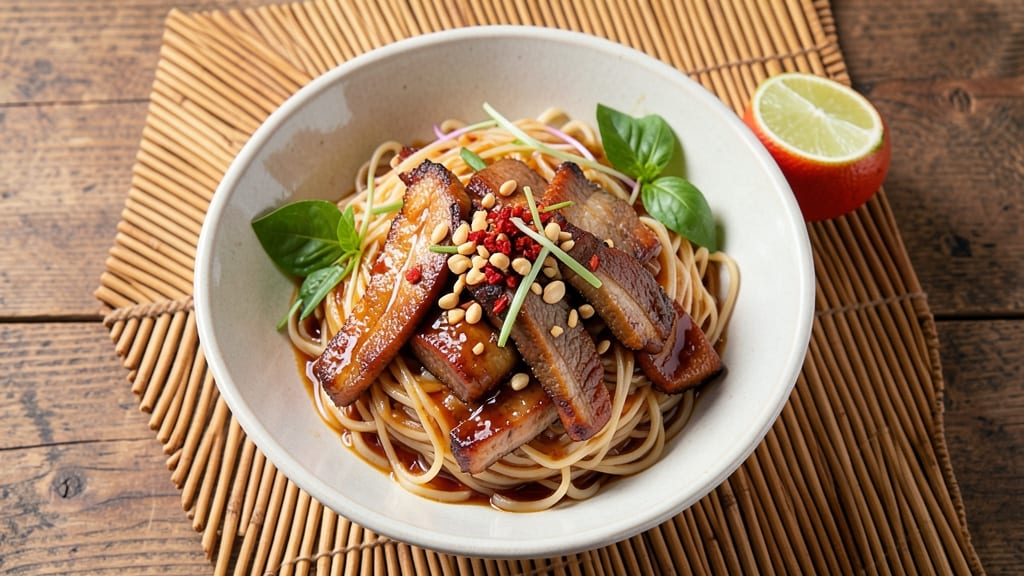
This authentic pork pad Thai recipe brings the vibrant flavors of Thailand to your kitchen with a perfect balance of tangy tamarind, bright lime, and savory pork.
After years of perfecting this dish—from the delicate rice noodles to the fragrant sauce—I’ve created a version that delivers restaurant-quality results in just 30 minutes. The secret lies in marinating the pork just right and building layers of flavor through precise timing and technique.
What sets this recipe apart is its authenticity—no shortcuts, no substitutes. We start with a homemade tamarind-lime sauce that’s both sweet and sour, perfectly balanced with fish sauce and palm sugar.
The pork is marinated in a blend of garlic, soy sauce, and a touch of coconut milk, ensuring it stays tender while absorbing deep, aromatic flavors.
Every ingredient plays a crucial role, from the fresh bean sprouts and crushed peanuts to the fragrant cilantro and lime wedges that elevate each bite.
By the time you’re done, you’ll have a dish that’s as visually stunning as it is delicious—golden-brown pork strips, glossy rice noodles, and a sauce that clings perfectly to every strand. The contrast of textures—crispy peanuts, tender pork, and silky noodles—makes this pad Thai irresistibly satisfying.
It’s the kind of meal that transports you to a bustling Bangkok street market with every forkful.
This recipe is designed to be approachable yet authentic, with clear instructions for marinating, stir-frying, and plating like a pro. Whether you're cooking for a weeknight dinner or a special gathering, the balance of flavors and textures will leave everyone asking for seconds.
Let’s get started on creating your perfect bowl of pad Thai.
Ingredients for authentic pork pad thai
These vibrant ingredients bring Bangkok street flavors to your kitchen in 30 minutes.
| Ingredient | Amount | Notes |
|---|---|---|
| Thin Sliced Pork Shoulder 🥩 | 1 lb | Thinly sliced, 1/4-inch thick |
| Rice Noodles 🍜 | 8 oz | Flat rice noodles, medium width |
| Tamarind Paste 🍈 | 2 tbsp | Unadulterated, block-style preferred |
| Fish Sauce 🍶 | 2 tbsp | Red Boat brand recommended |
| Palm Sugar 🍯 | 2 tbsp | Or substitute brown sugar |
| Fresh Lime Juice 🍋 | ½ cup | About 4-5 limes, freshly squeezed |
| Garlic Cloves 🧄 | 6 cloves | Minced, for marinade |
| Soy Sauce 🍶 | 1 tbsp | Light soy sauce preferred |
| Coconut Milk 🥥 | ¼ cup | Full-fat for richness |
| Bean Sprouts 🌱 | 1 ½ cups | Fresh, not canned |
| Crushed Peanuts 🥜 | ½ cup | Roasted, unsalted |
| Fresh Cilantro 🌿 | ¼ cup | Chopped, stems removed |
| Lime Wedges 🍋 | 4 whole | For garnish |
| Vegetable Oil 🫒 | 2 tbsp | High smoke point |
| Salt 🧂 | 1 tsp | To taste |
The pork is everything here—Thai-style pork shoulder from the Asian market makes all the difference. Look for thinly sliced cuts (about 1/4-inch thick) at H Mart or 99 Ranch—their pre-sliced pork is perfect. If you can't find it, slice your own with a sharp knife. The tamarind paste? Maesri brand is my go-to, but any unadulterated block-style paste works. Just be sure it's 100% tamarind—no added sugar or preservatives. The fish sauce should smell funky but clean; Red Boat is the gold standard, but any reputable brand will do.
No tamarind paste? Lime juice plus 1 tbsp brown sugar gets you close, though it won't be quite as complex. Swapping palm sugar for brown sugar is fine—just add a pinch of salt to balance. The coconut milk can be lightened with water if you prefer a less rich sauce. Fresh bean sprouts are a must (the canned kind is sad), but if you're in a pinch, julienned carrots or cabbage work. For the peanuts, Trader Joe's has the best crushed variety—roasted and unsalted, perfect for topping. The cilantro should be bright green; if it's yellowing, toss it and grab fresh.
Soak the rice noodles in warm water for 15-20 minutes—they should be pliable but not mushy. The pork marinade keeps for 2 days in the fridge, so prep ahead if you're short on time. Store the crushed peanuts in an airtight container; they'll stay fresh for 2 weeks. The sauce can be made a day ahead—just reheat gently before using. For leftovers, pack the noodles and sauce separately to keep them from getting soggy. This dish reheats beautifully—honestly tastes better the next day once everything melds together.
Why You'll Love This Recipe
- No-Fuss Prep: I slice the pork thin myself—no butchering skills needed—just pound it with a rolling pin and knife. The noodles soak while I stir-fry, and honestly? That’s the hardest part of the whole thing.
- Tamarind Magic: That tangy paste? It’s the soul of the dish. One spoonful balances everything—sweet, sour, umami—without overpowering. Trust me, the first time you taste it, you’ll reach for more.
- Leftover Goldmine: Pad Thai actually tastes better the next day. Reheat with a splash of water, toss in some peanuts, and boom—lunch or dinner solved. My freezer’s always stocked with portions.
- Budget-Friendly Feast: Pork shoulder stretches thin, noodles are cheap, and a little tamarind goes far. For under $10, I feed four with leftovers—no fancy ingredients, just real flavor that doesn’t break the bank.
Step-by-step instructions for authentic pork pad Thai
Here's how to balance that perfect tangy-sweet harmony—just like street vendors in Bangkok.
Marinate the Pork for Maximum Flavor
In a small bowl, combine the 1 lb thin sliced pork shoulder, 6 cloves minced garlic, 1 tbsp soy sauce, and 1 tsp salt. Mix well with your hands until the pork is evenly coated. Let it sit for 15-20 minutes at room temperature—this ensures the marinade penetrates the meat and gives you that authentic umami depth.
I know it seems like a short time, but don't rush this step. The garlic and soy sauce need that time to work their magic. If you're short on time, at least let it sit for 10 minutes—you'll still notice a difference in flavor.
Prepare the Tamarind-Lime Sauce Base
In a medium bowl, whisk together the 2 tbsp tamarind paste, 2 tbsp palm sugar, 2 tbsp fish sauce, and 0.5 cup fresh lime juice. This is the heart of your Pad Thai—where the authentic tangy-sweet balance begins. The tamarind paste should dissolve completely, creating a smooth, slightly sticky sauce.
Taste it now—it should be pleasantly sour with just a hint of sweetness. If it's too tart, add a pinch more palm sugar. If it's too mild, add a splash more lime juice. This is your flavor foundation, so get it right here. The sauce should coat the back of a spoon with a glossy sheen.
Cook the Pork and Set Aside
Heat 2 tbsp vegetable oil in a large wok or deep skillet over medium-high heat until shimmering. Add the marinated pork in a single layer and let it sear undisturbed for 1-2 minutes until the edges begin to crisp. Stir-fry for another 2-3 minutes until the pork is fully cooked through but still tender.
Remove the pork from the wok and set it aside on a plate. Don't drain the wok yet—those flavorful bits are about to become your sauce. If the pork releases easily from the pan, it's ready. If it sticks, it needs just a few more seconds. Overcooking will make it tough, so keep an eye on it.
Stir-Fry the Noodles and Vegetables
Return the wok to medium heat and add the 8 oz rice noodles. Pour in 0.25 cup coconut milk and toss everything together for 1-2 minutes until the noodles are pliable and beginning to soften. Add 1.5 cups bean sprouts and stir-fry for another 1 minute until they just begin to wilt.
Here's the thing—rice noodles cook fast once they hit hot oil. Watch them closely. They should be tender but still have a slight bite. If they're sticking, add a splash of water to help them cook evenly. The bean sprouts should stay crisp—just softened enough to eat.
Combine Everything and Finish
Pour the tamarind-lime sauce over the noodles and toss everything together for 1-2 minutes until the noodles are fully coated and the sauce has thickened slightly. Return the cooked pork to the wok and stir to combine. Cook for another 30 seconds to heat everything through.
Taste and adjust seasoning if needed. You might need a little more fish sauce for saltiness or a squeeze of lime for tang. The dish should be perfectly balanced—sweet, salty, sour, and umami all at once. Serve immediately while hot, garnished with 0.5 cup crushed peanuts, 0.25 cup chopped cilantro, and 4 lime wedges on the side.
Pro Tips For Making Authentic Pork Pad Thai
- Cook Pork Shoulder First: Pork needs time to render its fat and tighten—don’t toss it in raw. Sear it in a dry wok or skillet until just cooked through (about 2-3 minutes), then set aside. I used to try to cook it with the noodles, and it always ended up greasy and underdone.
- Soak Noodles Cold, Not Hot: Cold water preserves texture better than hot. Soak rice noodles in room-temperature water for exactly the time on the package (usually 10-15 minutes), then drain and rinse with cold water. Hot water makes them mushy—trust me, I’ve ruined batches.
- Balance Tamarind and Fish Sauce: Start with 1:1 ratio of tamarind paste to fish sauce, then adjust. Tamarind is sour; fish sauce is salty. Taste as you go—add a splash of water if it’s too thick. I once overdid the tamarind and ended up with a dish that tasted like a pickle.
- Upgrade with Lime and Chili: Skip the bottled sweet chili sauce—fresh lime juice and crushed dried chilies make a real difference. Add them at the end while tossing the noodles. It’s the finishing touch that turns good pad thai into authentic pad thai. (Yes, even if you’re impatient like me.)
Perfect pairings for this authentic pork pad thai
Thai Iced Tea
No pad Thai experience is complete without Thai iced tea—its creamy, sweet, and slightly spiced profile cuts through the richness perfectly. I use Tiger Brand Thai Iced Tea concentrate (available at Asian markets) mixed with 2% milk for that signature balance.
Serve it ice-cold in a tall glass with a straw—it’s the drink I reach for every time I make this dish. 🥤
Spicy Chili Lime Drink
For a refreshing twist, try a spicy chili lime drink made with muddled jalapeños, lime juice, and a splash of club soda. Add a pinch of Tajín seasoning on the rim for that tangy kick.
This drink mirrors the pad Thai’s heat and acidity while keeping things light. Perfect for balancing the meal’s richness.
Crispy Spring Rolls
Serve alongside crispy spring rolls filled with shrimp or pork to add variety to the meal. I love Trader Joe’s frozen spring rolls for convenience, but homemade versions with rice paper wrappers and a filling of ground pork, carrots, and bean thread noodles are even better.
A side of sweet chili sauce completes the pairing. 🥟
Fresh Fruit Platter
A light mango and papaya platter adds a refreshing contrast to the savory pad Thai. The natural sweetness of these fruits balances the dish’s tangy and umami flavors. Arrange slices on a platter with a drizzle of honey-lime dressing (mix 1 tbsp honey with 2 tbsp lime juice).
It’s a simple yet elegant way to end the meal on a bright note.
Garnish Upgrade
Elevate your pad Thai with extra garnishes like pickled radishes or quick-pickled cucumbers. Thinly slice daikon radishes and soak in a mix of rice vinegar, sugar, and a pinch of red pepper flakes** for 15 minutes.
The tangy crunch adds another layer of texture and flavor that complements the dish beautifully. ✨
Nutrition facts
Frequently asked questions
Can I substitute pork with another protein?
While pork is traditional, you can use chicken thigh (thinly sliced) or shrimp (peeled and deveined) for a seafood twist. For chicken, marinate it for 20 minutes in the same soy-garlic mix. Shrimp cooks in just 1-2 minutes—add it at the very end with the bean sprouts. Avoid lean meats like breast; they dry out quickly.
How do I make the sauce less sweet?
Reduce the palm sugar to 1 tbsp and increase fish sauce to 3 tbsp for a more savory balance. For extra tang, add 1 extra tbsp lime juice. The key is adjusting in small increments—taste after each addition. Authentic pad Thai has a delicate sweet-sour harmony, so don't eliminate sweetness entirely.
Why are my noodles mushy?
Over-soaking or using cold water causes this. Soak noodles in warm water (not boiling) for exactly 15-20 minutes, then drain and rinse with cold water to stop cooking. For stir-frying, use medium heat and toss constantly—they cook in 1-2 minutes once in the wok. If they stick, add 1 tsp oil to the pan.
Can I make this gluten-free?
Yes! Swap soy sauce for tamari (gluten-free soy sauce) and ensure your fish sauce is certified gluten-free. Check tamarind paste labels—some brands add wheat. For extra umami, add 1 tsp coconut aminos to the marinade. All other ingredients are naturally gluten-free, including rice noodles (just verify the package).
How do I store leftovers?
Store components separately: noodles in an airtight container with a damp paper towel to prevent drying, sauce in a separate jar. Reheat noodles in a dry pan over medium heat for 2-3 minutes, then toss with reheated sauce. Add fresh garnishes (peanuts, cilantro, lime) after reheating. Leftovers keep for 3 days in the fridge or 1 month frozen (freeze sauce separately).