
Soups & Stews
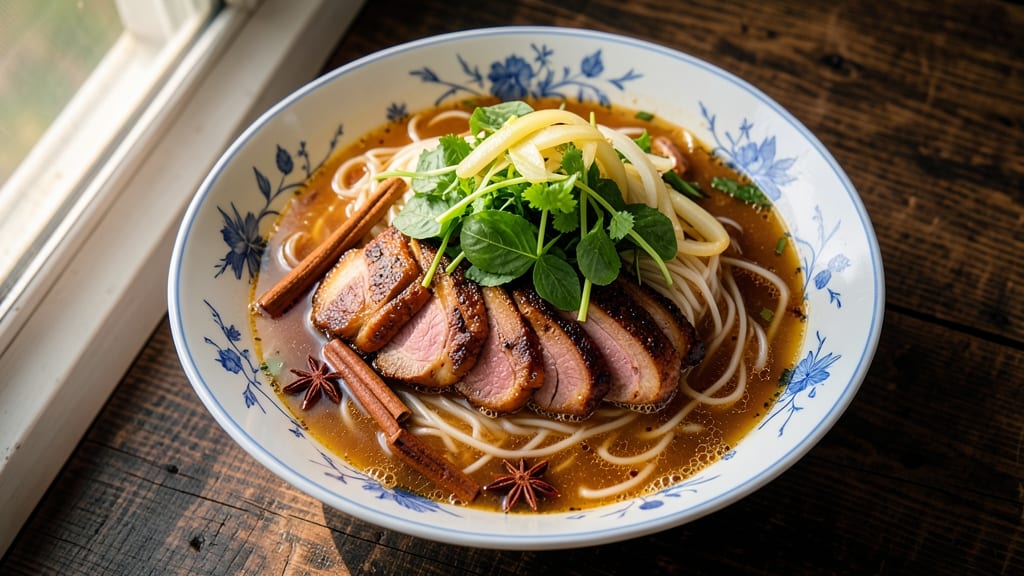
This authentic pork pho recipe brings the soul of Hanoi's bustling streets to your kitchen with its deep, aromatic broth and delicate balance of flavors. 🌟 After years of perfecting the technique—from slow-simmered spices to the perfect pork-to-broth ratio—I’ve created a version that stays true to tradition while being approachable for home cooks.
The secret lies in the charred onions and star anise, which infuse the broth with layers of warmth and complexity that no shortcut can replicate.
The broth is the heart of this dish, built over hours with bone stock, cinnamon, and cloves that meld into a fragrant, golden elixir. Thinly sliced pork tenderizes as it cooks, absorbing the broth’s rich flavors, while rice noodles soak up its essence just enough to stay tender yet sturdy.
Every element—from the bright herbs to the tangy lime—comes together to create a bowl that’s both comforting and vibrant, a testament to Vietnam’s culinary mastery.
What makes this recipe truly special is the harmony of textures and temperatures: the scalding broth meets the cool, fresh herbs, while the noodles provide the perfect canvas for every spoonful.
The result is a dish that’s as nourishing as it is satisfying, with each bite offering a perfect balance of heat, sweetness, and umami. Whether you’re serving it to family or hosting a dinner party, this pho will leave everyone craving more.
For those short on time, I’ve included a shortcut using store-bought stock, but I urge you to try the full method—your taste buds will thank you. The process may take a few hours, but the reward is a bowl of pho that tastes like home, no matter where you are.
Let’s get started on crafting your own bowl of perfection.
Ingredients for authentic pork pho
These aromatic ingredients transform simple pantry staples into Hanoi's iconic pho magic.
| Ingredient | Amount | Notes |
|---|---|---|
| Pork Shoulder 🥩 | 1 ½ lb | Thinly sliced, boneless preferred |
| Yellow Onions 🧅 | 2 whole | Charred over flame for depth |
| Fresh Ginger Root 🌿 | ½ cup | Peeled, thinly sliced |
| Star Anise Pods 🌟 | 2 whole | Whole, not ground |
| Cinnamon Sticks 🍃 | 2 whole | 2-inch pieces |
| Cloves 🌶️ | 6 whole | Whole, not ground |
| Cardamom Pods 🌿 | 4 whole | Lightly crushed |
| Beef Bone Broth 💧 | 8 cups | Homemade preferred, low-sodium |
| Fish Sauce 🍶 | 2 tbsp | Red Boat preferred |
| Rice Noodles 🍜 | 12 oz | Banh pho or flat rice noodles |
| Fresh Thai Basil 🌿 | ½ cup | Stems removed, loosely packed |
| Fresh Cilantro 🌱 | ¼ cup | Chopped, for garnish |
| Lime Wedges 🍋 | 4 whole | For serving |
| Jalapeño Slices 🌶️ | 1 whole | Thinly sliced, optional |
| Soy Sauce 🍶 | 2 tbsp | Light soy preferred |
The spices are non-negotiable—star anise and cinnamon give that signature warmth, while cardamom adds floral depth. Red Boat fish sauce is the gold standard for umami (don't skimp!). For the broth, homemade beef bone broth is ideal, but Swanson or Pacific Foods low-sodium versions work in a pinch. The pork? Pork shoulder stays juicy when thinly sliced—ask your butcher to do it for you. Char those onions over a gas flame until blackened—that smoky flavor is everything.
No fresh ginger? Powdered works at half the amount, but it's not the same. Running out of star anise? Anise seeds are a direct swap. The rice noodles? Banh pho noodles are perfect, but any flat rice noodles work. Thai basil is key—regular basil won't cut it. For extra heat, add Sriracha or chili garlic sauce at the table. The jalapeños? Pickled or fresh—your call. Pro tip: Toast your whole spices in a dry pan for 30 seconds before adding to the broth—wakes up their flavors.
Broth keeps 3 days in the fridge or 3 months frozen—make extra! Store noodles in a cool, dry place for up to 6 months. Fresh herbs? Wrap them in damp paper towels and refrigerate for up to 5 days. Lime wedges last 1 week in the fridge. Pork slices reheat beautifully—just warm in broth for 2 minutes. This dish tastes even better the next day as flavors meld.
Why You'll Love This Recipe
- Simmered in Spice: The star anise and cinnamon sticks melt into the broth, giving it that deep, aromatic warmth that makes every sip feel like a hug. Honestly, the first time I tasted that slow-bubbling spice infusion, I knew it was going to be my new go-to.
- One-Pot Magic: Pork shoulder and onions go in, broth builds up—no extra pans, no extra mess. I’ll be real: my kitchen counter stays cleaner than it used to, and the rich, savory broth practically cooks itself after the initial prep.
- Leftovers That Win: This pho tastes even better the next day, especially when reheated with a splash of water and a crack of black pepper. Between us, I’ve turned last night’s dinner into tomorrow’s lunch without a single complaint from my family.
- Budget-Friendly Feast: Pork shoulder stretches across multiple bowls, and the spices—ginger, star anise, cinnamon—are cheap but pack a punch. I’ve served this to friends who thought they’d pay $20 for pho, and they never guessed it cost me half that.
Step-by-step instructions for authentic pork pho
Here's how to craft that legendary Vietnamese aroma and depth—layer by layer.
🔥 Step 1: Build the Fragrant Spice Broth
In a large pot, combine the 8 cups beef bone broth, 1.5 lb pork shoulder, 2 whole yellow onions (cut into quarters), 0.5 cup fresh ginger root (sliced), 2 whole star anise pods, 2 whole cinnamon sticks, 6 whole cloves, and 4 whole cardamom pods. Bring to a boil over medium-high heat, then immediately reduce to a gentle simmer. The broth should bubble softly—never a rolling boil, or your spices will burn.
Simmer uncovered for 45 minutes, skimming off any foam that rises to the surface. You'll know it's working when the broth develops a rich, amber color and fills your kitchen with that unmistakable star anise-cinnamon aroma. Here's the thing—don't rush this step. The spices need time to infuse their magic into the broth, creating that complex, layered flavor that makes pho truly special.
🍳 Step 2: Char the Aromatics for Depth
While the broth simmers, prepare the onions and ginger for charring. Heat a dry skillet over high heat and add the 2 whole yellow onions (cut in half lengthwise) and 0.5 cup fresh ginger root (sliced into ¼-inch pieces). Char them directly over the flame until blackened in spots—this adds a smoky, caramelized depth to your broth that you just can't get any other way.
Once charred, remove the onions and ginger with tongs and add them to the simmering broth. The charred aromatics will continue to infuse as they cook, adding another dimension to your pho. I like to press the onions down slightly with a wooden spoon to help them release their flavors faster. Let everything simmer together for another 30 minutes, until the pork shoulder is fork-tender and easily pulls apart.
🥘 Step 3: Strain and Season the Broth
Remove the pork shoulder and strain the broth through a fine-mesh sieve into a clean pot. Discard the spices and charred aromatics—you've already extracted all their flavor. Return the broth to medium heat and stir in the 2 tbsp fish sauce and 2 tbsp soy sauce. Taste and adjust seasoning—you want it to be deeply savory but not salty. The broth should be rich, aromatic, and perfectly balanced.
While the broth heats, shred the cooked pork shoulder using two forks. You'll want it in bite-sized pieces—no need to make it too fine. Keep the broth warm over low heat while you prepare the noodles and toppings. Real talk: this is where authenticity shines. The broth should smell like a Vietnamese street market—warm, spicy, and inviting.
🍲 Step 4: Assemble the Pho Bowls
Divide the 12 oz rice noodles among four bowls. The noodles should be separated but not broken—pho noodles are meant to be long and dramatic. Ladle hot broth over the noodles until they're just submerged. The noodles will cook in the hot broth—don't overdo it, or they'll turn mushy.
Top each bowl with the shredded pork shoulder, then arrange the 0.5 cup fresh Thai basil and 0.25 cup fresh cilantro on top. The herbs should be loosely packed so they wilt slightly in the hot broth. Add jalapeño slices if you like heat, and serve with lime wedges on the side. The contrast of cool lime with the hot broth is what makes pho truly unforgettable.
🍽️ Step 5: Serve with Confidence
Let each person customize their bowl by squeezing lime juice over the top and adding extra herbs or chili if desired. The beauty of pho is in its simplicity and personalization—every bite should be a balance of rich broth, tender pork, and fresh herbs. Serve immediately while the broth is steaming hot and the noodles are al dente.
Here's the moment that matters: the first sip should make your eyes water from the aroma alone. That's when you know you've nailed it. Pho isn't just soup—it's an experience. The broth should coat your mouth, the pork should melt in your mouth, and the herbs should brighten every bite. Enjoy your authentic taste of Vietnam!
Pro Tips For Making Authentic Pork Pho
- Char the Onions Slow: Start with medium heat—low won’t caramelize, and high burns before you get that deep, sweet color. Once they’re golden and sticky, crack the lid to drive off excess moisture, then lower the heat to let them darken properly. (Yes, it takes 20 minutes, but rushed onions ruin the broth’s depth.)
- Ginger in Patches: Skip the minced ginger—it turns bitter fast. Instead, peel and slice 3 thick rounds (about ½-inch each), then smash them with the flat side of your knife until they bruise but stay intact. Toss them in whole with the spices; they’ll infuse flavor without overpowering.
- Spice Bag, Not Dump: Tie star anise and cinnamon sticks in cheesecloth (or a reusable spice bag) before adding to the broth. This keeps them from breaking apart and turning your pho into a spice-strewn minefield. Remove them early—after 20 minutes, they’ll just make the broth taste like a Christmas tree.
- Shoulder in Two Batches: Pork shoulder releases fat like a firehose. Brown half the meat first, remove it, then repeat with the second batch—this prevents the pot from turning into a grease slick. Reserve the drippings, but don’t skimp on scraping the fond from the bottom; that’s where the flavor hides.
Common mistakes when making great authentic pork pho
Overcooking the Pork
The pork in pho should be tender but still hold its shape—overcooking turns it into mushy shreds. I’ve seen beginners simmer pork for over 2 hours, which is a no-go. The pork shoulder should reach 203°F internal temperature and pull apart easily with two forks, but not dissolve.
If it feels rubbery, it’s overdone. Trust your timing—45-60 minutes is perfect. 🥩
Skipping the Char
Charred onions and ginger are non-negotiable for that smoky depth. I’ve tasted pho made without charring, and it’s like comparing a black-and-white photo to a vibrant painting.
Heat a dry skillet over high heat until the onions blacken in spots—this step takes 5-7 minutes but adds unmatched complexity. No shortcut here! 🔥
Using Wrong Noodles
Banh pho noodles are designed to soak up broth without turning mushy. Substituting with egg noodles or spaghetti ruins the texture. The noodles should be flat, wide, and chewy—not slimy or gummy.
If they’re too thin, they’ll overcook in seconds. Buy banh pho noodles from an Asian market or online; they’re a game-changer. 🍜
Ignoring the Broth’s Simmer
A rolling boil burns spices and ruins the broth’s delicate balance. The broth should simmer gently, with tiny bubbles breaking the surface—never a vigorous boil. I’ve seen home cooks crank the heat to speed things up, but this extracts bitterness from the spices.
Patience is key—low and slow wins every time. 🌡️
Overcrowding the Pot
Stuffing too much pork or aromatics into the pot steams instead of simmers, dulling flavors. A large stockpot (8-10 quarts) is ideal for this recipe. If your pot is too small, cook in batches or use a Dutch oven.
Overcrowding also traps heat, making it harder to maintain an even simmer. Trust me, a little extra space makes all the difference. ⚡
Neglecting the Herbs
Fresh Thai basil and cilantro aren’t just garnishes—they’re essential for brightness. Using dried herbs or skipping them entirely makes pho taste flat. Add herbs right before serving so they wilt slightly in the hot broth, releasing their aroma.
Pro tip: Buy Thai basil from a trusted source—it’s worth the hunt for that signature anise-like flavor. 🌿
Nutrition facts
Frequently asked questions
Can I substitute chicken or beef for the pork in this pho recipe?
While traditional pho uses beef, pork pho is absolutely authentic and delicious! For chicken, use 1.5 lb boneless thighs instead of shoulder—thighs stay juicier. Beef pho typically uses brisket or flank steak, but the technique remains the same. The key is thin slicing and proper simmering time to maintain tenderness.
How do I make the broth more aromatic without burning the spices?
Toast whole spices in a dry pan for 30 seconds before adding to the broth to wake up their flavors. Simmer gently at low heat (tiny bubbles) and never let it boil vigorously. For extra depth, char the onions and ginger separately until blackened, then add to the broth. This balances aroma without bitterness.
What's the best way to store and reheat pho?
Store broth in airtight containers for 3 days refrigerated or 3 months frozen. Reheat gently on low heat—never microwave. For noodles, keep them dry in a sealed bag for up to 6 months. Reheat pork separately in broth for 2 minutes before serving. Fresh herbs should be added after reheating.
Can I make pho in an Instant Pot or pressure cooker?
Yes, but with adjustments! Sauté spices first, then add broth and pork. Cook on high pressure for 45 minutes, then quick-release. The broth will be faster but less developed. For authenticity, stick to stovetop simmering—pressure cooking can make the broth taste flat.
Why does my pho broth taste bitter?
Bitterness usually comes from overcooked spices or charred aromatics. Skim foam regularly and strain spices before seasoning. If too salty, dilute with water or add a splash of broth. For sweetness, try a pinch of sugar or honey at the end. Taste as you go!