
Main Courses
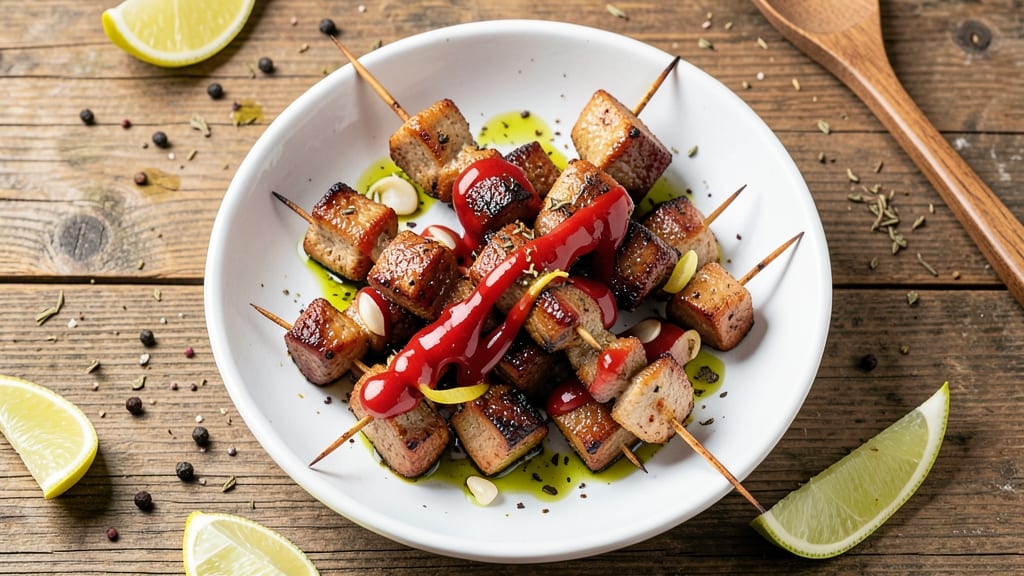
This authentic pork souvlaki recipe brings the flavors of a bustling Greek taverna to your grill, where tender pork skewers meet charred perfection and bright lemon-garlic tang.
After years of perfecting skewers at Atlanta's Smoky Pig, I've distilled the secrets of juicy, restaurant-quality pork that falls off the bone—no shortcuts, just technique honed over thousands of pounds of meat.
The magic starts with a marinade that balances bold flavors: garlic, oregano, and lemon juice work together to tenderize while building layers of aroma. What sets this apart is the high-heat grilling method I developed—quick searing over hot coals creates that signature charred crust while keeping the interior juicy.
The key? Preheating your grill to 450°F and using 1-inch pork cubes for even cooking.
By the time those skewers hit your plate, you'll have perfectly charred edges with tender, juicy pork that practically melts in your mouth. The lemon-garlic marinade infuses every bite, creating a balance of savory, tangy, and herby notes that's pure Greek taverna magic.
Serve with warm pita, tzatziki, and a Greek salad for the full experience—this is the kind of dish that turns weeknight dinners into special occasions.
Pro tip: Let the pork marinate for at least 4 hours (overnight is even better) for maximum flavor penetration. The same technique works for chicken or shrimp too—just adjust the cooking time. Here's how to make it happen step by step.
Ingredients for authentic pork souvlaki
Greek taverna flavors in your backyard—just these 12 ingredients transform simple pork into restaurant-quality skewers.
| Ingredient | Amount | Notes |
|---|---|---|
| Boneless Pork Shoulder 🥩 | 1 ½ lb | Cut into 1-inch cubes |
| Fresh Garlic Cloves 🧄 | 8 cloves | Minced for marinade |
| Fresh Lemon Juice 🍋 | ¼ cup | From 2 large lemons |
| Extra-Virgin Olive Oil 🫒 | ½ cup | For marinade and grilling |
| Dried Oregano 🌿 | 2 tbsp | Greek oregano preferred |
| Ground Black Pepper 🌶️ | 1 tbsp | Freshly cracked |
| Kosher Salt 🧂 | 1 ½ tbsp | Diamond Crystal preferred |
| Wooden Skewers 🪵 | 8 whole | Soaked in water 30 mins |
| Red Wine Vinegar 🍷 | 1 tbsp | For tangy depth |
| Fresh Dill 🌿 | ¼ cup | Chopped, optional garnish |
| Pita Bread 🍞 | 4 whole | Warm for serving |
| Tzatziki Sauce 🥛 | ½ cup | Store-bought or homemade |
The pork shoulder is non-negotiable here. Look for well-marbled cuts at Whole Foods or your local butcher—they'll cut it for you. I always ask for the bone-in shoulder (cut off the bone later) because it stays juicier. If you can't find Greek oregano, Italian dried oregano works, but it's subtly different. The lemon juice should be freshly squeezed—bottled juice lacks that bright tang. For the olive oil, Kalamata olive oil adds a fruity depth that's perfect for this dish. Prep the pork cubes first—they should all be exactly 1-inch for even cooking.
No fresh dill? Skip it—this isn't a dealbreaker. Short on red wine vinegar? Lemon juice works 1:1, though it'll be slightly sweeter. The skewers must soak for at least 30 minutes—this prevents burning. If you're using metal skewers, skip the soaking. For the tzatziki, store-bought is fine (check for no added garlic powder), but homemade with Greek yogurt and cucumber is ideal. The marinade should smell like a Greek summer—if it's missing that bright, herby aroma, add more lemon or oregano. Pro move: Marinate overnight for maximum flavor infusion.
Pork marinates beautifully—keep it covered in the fridge for up to 24 hours. The skewers can be prepped ahead and grilled straight from the fridge. Tzatziki keeps 3-4 days in the fridge, while pita stays fresh 2 days wrapped in a towel. For leftovers, store cooked pork in the marinade—it'll stay juicy for 4 days. Reheat gently in a skillet or oven. The charred crust doesn't reheat well, so enjoy fresh off the grill whenever possible.
Why You'll Love This Recipe
- No Fuss, Big Payoff: I swear by this pork shoulder—it’s forgiving when sliced thin, so no fancy knife skills needed. Toss it in olive oil, garlic, and oregano, then let the grill (or stovetop) do the work. Honestly, the hardest part is waiting for the lemon juice to brighten those last few minutes.
- Crispy-Creamy Magic: That garlic-infused olive oil? It’s the secret. The pork gets a golden crust while staying juicy inside, and a squeeze of lemon right off the grill? Chef’s kiss. Between us, this is the kind of flavor that makes people ask, “What’d you do to the meat?”
- Weeknight to Party: Same recipe, endless uses. Toss skewers over the grill for a summer BBQ, pile them into pitas with tzatziki for a quick lunch, or even shred it cold for tacos. My daughter’s friends still talk about the time I made “fancy” souvlaki for her birthday—turns out, they just wanted more of these.
- Budget-Friendly Leftovers: Pork shoulder stretches for days, and this marinade keeps it tasting fresh even reheated. I’ll make a double batch on Sundays, then use the extras for salads, wraps, or even a quick pasta sauce. Not the prettiest, but the taste makes up for it—and my wallet thanks me.
Step-by-step instructions for authentic pork souvlaki
Here's how to create restaurant-quality Greek skewers with perfect char and bold Mediterranean flavors.
Marinate the Pork Shoulder for Maximum Flavor
In a large bowl, combine the 1.5 lb boneless pork shoulder cut into 1-inch cubes, the 8 cloves minced fresh garlic, 0.25 cup fresh lemon juice, 0.5 cup extra-virgin olive oil, 2 tbsp dried oregano, 1 tbsp freshly cracked ground black pepper, 1.5 tbsp kosher salt, and 1 tbsp red wine vinegar. I like to use my hands to break up the pork slightly while mixing—this helps the marinade penetrate every piece.
Transfer the mixture to a resealable plastic bag and massage it gently to ensure all surfaces are coated. Seal the bag tightly and refrigerate for at least 4 hours or overnight for best results. The acidity from the lemon and vinegar will tenderize the meat while the oregano and garlic infuse deep flavor. Real talk: this step makes all the difference between good souvlaki and extraordinary souvlaki.
Prepare the Skewers and Preheat for Grilling
Soak the 8 wooden skewers in water for 30 minutes to prevent burning. Remove the pork from the refrigerator and let it sit at room temperature for 30 minutes before threading it onto skewers. I use a fork to help guide the cubes onto each skewer, packing them tightly but not overcrowding.
Preheat your grill to medium-high heat (about 400°F). If using a gas grill, clean and oil the grates thoroughly—this prevents sticking and ensures those beautiful grill marks. For charcoal, wait until you see medium-hot coals with a light ash covering. The high heat is crucial for achieving that authentic charred exterior while keeping the interior juicy.
Grill the Souvlaki to Perfect Doneness
Place the skewers on the grill and cook for 8-10 minutes, turning occasionally, until the pork reaches an internal temperature of 145°F and develops deep grill marks. You'll know they're ready when the edges are charred and slightly crispy, but the meat still has a slight resistance when pierced with a fork. I press down gently on the fillets during the first minute to prevent curling—this ensures even contact with the grates.
For that authentic Greek touch, I like to finish the cooking by brushing each skewer with a little more extra-virgin olive oil while they're still on the grill. This creates a glossy sheen and enhances the smoky flavor. Let the skewers rest for 5 minutes before serving—this allows the juices to redistribute, keeping every bite moist and flavorful.
Assemble and Serve with Traditional Sides
Warm the 4 whole pita breads in a dry skillet or wrap them in foil and place them in a 350°F oven for 5 minutes. While they warm, arrange the grilled skewers on a platter and drizzle with any remaining marinade from the bowl. Garnish with 0.25 cup chopped fresh dill for a pop of color and freshness.
Serve immediately with the warmed pita breads, 0.5 cup tzatziki sauce for dipping, and a side of sliced cucumbers or a simple Greek salad. The combination of smoky grilled pork, tangy tzatziki, and warm pita creates the perfect balance of textures and flavors. This is how I remember eating souvlaki in Athens—simple, bold, and utterly satisfying.
Pro Tips For Making Authentic Pork Souvlaki
- Trim the Fat First: Pork shoulder’s fat renders beautifully, but big chunks in your skewers will make them greasy and unevenly cooked. Use a sharp knife to slice off the thickest layers—just leave a thin, even layer to keep the meat juicy, not a fat blanket. (Yes, it’s tedious, but your first bite will be worth it.)
- Smash the Garlic: Chopped garlic burns fast and loses its punch. Instead, peel the cloves, wrap them in plastic, and smash them flat with the side of your knife—no chopping needed. Toss these crushed cloves into your marinade last minute, so they infuse without turning bitter. (I learned this the hard way after tasting sad, charred garlic in my first batch.)
- Marinate Overnight, But Not Too Long: Pork shoulder needs 12–24 hours in the fridge to tenderize, but beyond that, it gets mushy. Use a zip-top bag to keep it snug, and flip it every 8 hours if you’re really committed. Pro move: Add a splash of lemon juice after the first 12 hours—it brightens the flavor without over-acidifying.
- Skewer Like a Pro: Thread the meat loosely—pork expands when cooked, and tight skewers will split. Use two parallel skewers per chunk (like a shish kabob) to prevent falling apart. Wet your fingers slightly before handling; the pork will stick less, and your skewers will stay intact. (Trust me, you don’t want to fish for meat mid-grill.)
Make-ahead tips for authentic pork souvlaki
Marinade Prep Ahead
I always prep the marinade the night before—it's a game-changer. Combine all ingredients in a resealable container and store in the fridge for up to 24 hours. The longer it marinates, the deeper the flavors penetrate.
I use a quart-sized Ziploc bag for easy mixing and storage. Pro tip: Label it with the date to track freshness. 💫
Skewer Assembly
Assemble the skewers up to 24 hours ahead and store them in an airtight container lined with parchment paper. Keep them refrigerated until ready to grill. I like to wrap the assembled skewers in plastic wrap to prevent drying.
This method works perfectly for meal prep—just pull them out and grill straight from the fridge. 🌟
Grill Prep Shortcut
Preheat your grill while the pork comes to room temperature. I use a Weber Original Kettle for consistent heat distribution. For charcoal grills, arrange coals on one side only to create a two-zone heat setup.
This lets you move skewers to the cooler side if they char too quickly. Always keep a spray bottle of water handy to control flare-ups. ⚡
Make-Ahead Serving
Cooked souvlaki keeps well for 4 days in the fridge when stored in the marinade. Reheat gently in a skillet with a splash of water or olive oil over medium-low heat for 3-4 minutes per side.
The marinade prevents drying out. For parties, I grill extra skewers and store them in the marinade—just reheat before serving. 💪
Pita Storage
Warm pita breads can be stored in an airtight container at room temperature for 2 days or frozen for 1 month. To reheat, wrap in foil and warm in a 350°F oven for 5 minutes.
For extra crispiness, toast in a dry skillet over medium heat for 1 minute per side. I always keep a batch on hand for quick souvlaki nights. 🍞
Tzatziki Prep
Make homemade tzatziki 2 days ahead and store in an airtight container with plastic wrap pressed directly on the surface to prevent a skin from forming. The flavors develop beautifully over time.
For a quick version, use store-bought Greek yogurt and cucumber—just add 1 tbsp lemon juice, 1 minced garlic clove, and 1 tbsp olive oil. This sauce is the perfect make-ahead companion to souvlaki. 🥛
Nutrition facts
Frequently asked questions
Can I use chicken or shrimp instead of pork for this recipe?
The same marinade works beautifully with chicken or shrimp! For chicken, use 1.5 lb boneless thighs (cut into 1-inch cubes) and grill for 6-8 minutes at 145°F internal temp. For shrimp, peel and devein 1 lb large shrimp, marinate for 1-2 hours, and grill for 2-3 minutes per side at 165°F. The key is shorter marinating times for seafood to avoid over-tenderizing.
What's the best way to prevent the pork from drying out?
Three things: 1-inch cubes (smaller pieces cook faster), high heat grilling (450°F), and resting time (5 minutes off the grill). Never overcrowd the skewers—leave ½-inch gaps between cubes. I also recommend brushing with extra olive oil during the last minute of grilling to lock in moisture. The marinade's acidity helps too, but don't exceed 24 hours or the meat may become mushy.
Can I make this in an oven or indoor grill pan?
Yes! Preheat oven to 475°F and place skewers on a wire rack over a baking sheet. Bake for 12-15 minutes, turning halfway, until edges are charred. For a grill pan, heat over medium-high with oil, cook 4-5 minutes per side, and finish with a spray of olive oil. The texture won't be identical to outdoor grilling, but it's a great backup. For best results, use a cast iron skillet with a lid to trap heat.
How do I know when the pork is fully cooked?
Use a meat thermometer—pork should reach 145°F internally. The edges should be charred and crispy, but the center should still feel slightly firm when pressed with tongs. If using bone-in pork, check the thickest part away from the bone. For extra safety, I recommend cooking to 150°F and letting it rest—the internal temp will rise 5°F during resting.
What's the best way to store leftover souvlaki?
Store cooked skewers in the marinade (or extra olive oil) in an airtight container for 4 days in the fridge. For freezing, wrap tightly in foil and freeze for up to 3 months. To reheat, warm in a skillet with a splash of water over medium-low heat for 3-4 minutes per side. Microwaving dries out the meat—avoid it! The marinade helps maintain moisture, but texture won't be identical to fresh-off-the-grill.