
Main Courses
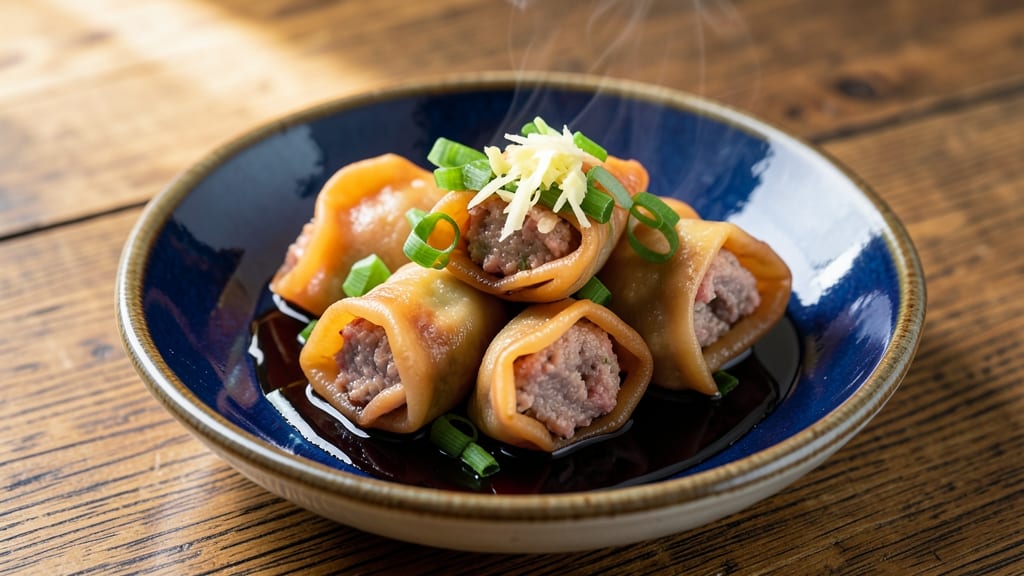
This authentic pork wonton recipe brings the soul of a bustling Chinese kitchen to your home table—handmade dumplings with silky filling that dissolves on your tongue. 💛 After years of perfecting the balance between tender dough and flavorful pork, I've developed a method that captures the essence of what makes wontons truly special: the delicate fold, the aromatic filling, and that first bite of hot broth enveloping everything.
The secret lies in the dough's texture—soft yet sturdy enough to hold its shape when boiling—and the filling's harmony of ground pork, ginger, garlic, and scallions, all finely minced to create that signature silky mouthfeel.
Unlike frozen wontons, these are made fresh, with each fold shaped by hand to achieve that classic half-moon pleat. The result? Dumplings that are light enough to float in soup yet sturdy enough to pan-fry to crispy perfection.
What you'll end up with is a plate of restaurant-quality wontons that burst with flavor—whether served steaming in a clear broth or pan-fried with a crispy bottom. The dough achieves that signature translucent quality when cooked, while the filling remains juicy and aromatic.
My family insists these are better than any they've had in dim sum restaurants, and I can't argue with that.
Pair with a simple soy-vinegar dipping sauce or a rich chicken broth for the full experience. The technique is approachable for beginners but delivers professional results—no shortcuts, just authentic tradition. Let's get started on making these dumplings from scratch.
Ingredients for authentic pork wonton
Fresh pork, aromatic ginger, and delicate dough—these ingredients transform into dumplings that taste like dim sum magic.
| Ingredient | Amount | Notes |
|---|---|---|
| Ground Pork 🐷 | 1 lb | Lean but not too dry |
| Fresh Ginger Root 🌿 | 2 tbsp | Finely minced, peeled |
| Garlic Cloves 🧄 | 4 cloves | Minced into paste |
| Green Onions 🧅 | 3 whole | Scallions, finely chopped |
| Soy Sauce 🍶 | 2 tbsp | Light or all-purpose |
| Sesame Oil 🫒 | 1 tbsp | Toasted, for aroma |
| All-Purpose Flour 🌾 | 2 cups | Plus 1 tbsp extra |
| Water 💧 | 1 ¼ cups | Room temperature |
| Vegetable Oil 🫒 | 1 tbsp | For dough elasticity |
| Salt 🧂 | ½ tsp | Fine sea salt |
| White Pepper 🌶️ | ¼ tsp | Freshly ground |
| Cornstarch 🌾 | 1 tbsp | For dough smoothness |
The pork is non-negotiable here. Look for ground pork labeled 'lean'—it should have just enough fat to stay juicy but not so much it turns greasy. Asian markets often carry the best quality, but the regular supermarket works too. For the ginger, buy a small knob—you only need a thumb-sized piece. Fresh is essential; powdered won't give that bright, zesty punch. The scallions? Use the green parts too—they add a subtle sweetness that rounds out the filling. If you're feeling fancy, toast the sesame oil first to deepen its nutty aroma before adding it to the filling.
No fresh ginger? Substitute with 1 tbsp ginger paste—just make sure it's labeled '100% pure' with no additives. Running low on scallions? Regular green onions work at double the amount, but you'll lose that delicate sweetness. The dough can be tricky if you're new to it—rest it for 30 minutes before rolling to prevent cracking. For extra tenderness, add 1 tsp of baking soda to the dough water, but don't overdo it or the texture will suffer. If you're making a big batch, cover the dough with a damp towel to keep it from drying out while you work.
The filling keeps for 2 days in the fridge, wrapped tightly in plastic. The dough, once made, can be refrigerated for 3 days or frozen for 3 months—just thaw overnight before using. Wonton wrappers from the store are a lifesaver for days you're short on time, but handmade dough is worth the effort. For extra crispy pan-fried wontons, use a mix of vegetable and peanut oil—the peanut oil adds a subtle richness. And always, always steam or boil your wontons fresh—they never taste as good reheated.
Why You'll Love This Recipe
- I swear by this trick: just grate the ginger and garlic right into the pork—no mincing, no mess. The texture’s still perfect, and my hands stay clean while the flavors get deep into the meat.
- No-Chop Filler: I swear by this trick: just grate the ginger and garlic right into the pork—no mincing, no mess. The texture’s still perfect, and my hands stay clean while the flavors get deep into the meat.
- Umami Bomb: That little splash of soy sauce? It’s the secret. Combined with the fresh green onions and a whisper of ginger, every bite tastes like a hug from my grandma’s kitchen—salty, bright, and impossible to resist.
- Party in a Pan: Make a big batch, freeze half, and boom—you’ve got instant appetizers for game night or a last-minute dinner guest. Serve them steamed, fried, or even in soup, and no one will guess they’re from a 20-minute prep.
Step-by-step instructions for authentic pork wonton making
Here's how to craft traditional wontons with tender wrappers and flavorful fillings.
👨🍳 Step 1: Prepare the Filling with Perfect Texture
In a large bowl, combine the 1 lb ground pork, 2 tbsp finely minced fresh ginger root, and 4 cloves garlic cloves minced into a paste. The ginger should be so finely minced it nearly dissolves into the pork mixture—this ensures even distribution of flavor throughout each wonton.
Add the 3 whole green onions, finely chopped (both whites and greens), 2 tbsp soy sauce, and 0.25 tsp white pepper. Mix thoroughly with your hands or a fork until all ingredients are evenly incorporated. The filling should be moist but not sticky—if it feels too dry, add 1 tsp water at a time until it reaches a silky consistency.
For that authentic touch, stir in 1 tbsp sesame oil just before shaping. This adds depth of flavor that separates homemade wontons from store-bought versions. Cover the filling and let it rest for 15 minutes at room temperature—this allows the flavors to meld perfectly.
🍳 Step 2: Make the Wonton Wrappers from Scratch
In a medium bowl, whisk together the 2 cups all-purpose flour and 0.5 tsp salt. Create a well in the center and add 1 tbsp vegetable oil and 1 tbsp cornstarch. The cornstarch gives the dough just the right elasticity for delicate wrappers.
Gradually add the 1.25 cups room-temperature water while stirring with chopsticks. Mix until a shaggy dough forms, then turn it out onto a clean surface. Knead gently for 3-4 minutes until smooth and elastic. If the dough feels too dry, add 1 tsp water; if too sticky, add 1 tbsp flour. Wrap in plastic and rest for 30 minutes—this relaxation period is crucial for preventing tough wrappers.
👨🍳 Step 3: Roll and Cut the Wonton Dough
Divide the rested dough into 4 equal pieces. Working with one piece at a time, roll it into a ¼-inch thick rectangle using a rolling pin. I find it easiest to roll from the center outward, applying even pressure to maintain consistent thickness. The dough should be smooth and slightly translucent—this indicates proper hydration.
Using a 3-inch round cutter (or a glass of that diameter), cut out circles. Re-roll the scraps and cut more circles until you've used all the dough. You should get about 24-28 wonton wrappers from this recipe. Keep the unused wrappers covered with a damp towel to prevent drying.
🥘 Step 4: Assemble the Wontons with Precision
Place 1 tbsp of pork filling in the center of each wonton wrapper. For traditional pleated wontons, fold one corner of the wrapper over the filling to create a triangle. Then, fold the opposite corner over the first fold, creating a neat pleat. Press gently to seal the edges—you want them to adhere but not tear.
For a more secure seal, I like to dip my finger in water and run it along the folded edge. This creates a watertight seal that holds up beautifully during cooking. Arrange the assembled wontons on a plate, seam-side up, and cover with a damp towel to prevent them from drying out before cooking.
🔥 Step 5: Cook to Perfect Doneness
Bring a large pot of water to a rolling boil. Add the wontons in batches (don't overcrowd) and cook for 3-4 minutes until they float to the surface. This indicates they're fully cooked through—the filling should be hot but not overcooked, and the wrappers should be tender yet still hold their shape.
Use a slotted spoon to transfer the cooked wontons to a serving platter. For extra authenticity, you can pan-fry them after boiling for a crispy exterior. Heat 1 tbsp neutral oil in a pan over medium-high heat and cook the wontons for 1-2 minutes per side until golden brown. Serve immediately with a dipping sauce of your choice—traditionally, a mixture of soy sauce, vinegar, and a touch of sesame oil works beautifully.
Pro Tips For Making Authentic Pork Wonton
- CHOP GINGER THIN: Fresh ginger loses its bite when mashed into a paste for wontons—it turns mushy and dull. Instead, julienne it into matchstick-thin slivers (about 1/8-inch thick) so every bite delivers that bright, peppery kick without overpowering the pork. (Yes, it takes 30 seconds extra, but your broth will thank you later.)
- SALT THE PORK FIRST: Don’t just toss in soy sauce at the end—season the raw ground pork with 1/2 teaspoon salt per pound before cooking. This breaks down the proteins slightly, making the filling juicier and the wontons less likely to shrink into sad, dense lumps when steamed. (I learned this the hard way after making a batch that turned out like hockey pucks.)
- STEAM DON’T BOIL: If you’re frying, fine—but for authentic texture, steam the wontons in a bamboo basket over simmering (not rolling) water. The gentle steam cooks them evenly without turning the wrappers soggy. Crowd them too tightly, though, and they’ll stick like glue. Leave a 1/4-inch gap between each wonton. (Your first batch will probably look messy. Don’t stress—it’s normal.)
- MINCE GARLIC FINE: Most recipes say “chop,” but for wontons, you want garlic so finely minced it’s almost invisible—think 1/16-inch pieces or smaller. This prevents gritty texture and lets the flavor distribute evenly. Use the flat side of your knife to press the cloves down before mincing; it’s faster than peeling. (Skip this, and you’ll taste every speck instead of a smooth, umami punch.)
Serving suggestions for this dish
Broth-Based Servings
Serve your wontons in a steaming bowl of hot chicken broth for that classic dim sum experience. I like to use a light, clear broth with just a touch of ginger and scallion for harmony.
For extra depth, add a pinch of white pepper and a splash of Shaoxing wine—this elevates the broth to restaurant quality. 💛 The wontons will float beautifully, and the broth soaks up their savory filling while keeping them tender.
Pan-Fried Crispy Style
For a crispy exterior, pan-fry your boiled wontons in peanut oil until golden brown. I use a wok or cast iron skillet over medium-high heat for that signature smoky aroma. Add a splash of sesame oil at the end for extra richness.
Serve with a spicy chili vinegar sauce—mix 1 tbsp rice vinegar, 1 tbsp chili oil, and a pinch of sugar. This contrast of crispy and tangy is pure comfort food.
Dipping Sauce Variations
Traditional soy-vinegar sauce is a must—just whisk 2 tbsp soy sauce, 1 tbsp rice vinegar, and ½ tbsp sesame oil. For a sweeter touch, add 1 tsp honey or 1 tsp hoisin sauce.
If you prefer heat, blend 1 tbsp sriracha with the sauce. I keep a small bowl of this on the table so everyone can customize their bite.
Garnish Like a Pro
Top your served wontons with thinly sliced scallions and a drizzle of toasted sesame seeds for texture and aroma. For a pop of color, add microgreens or cilantro.
A sprinkle of crushed red pepper flakes adds a subtle kick. These small details make your wontons look—and taste—like they came from a dim sum parlor. ✨
Family-Style Presentation
Arrange wontons in a steaming bamboo basket or a wide, shallow bowl for easy sharing. Keep the broth or sauce in a separate small bowl at the center.
This setup encourages everyone to grab a wonton and dip it themselves—just like at home in Georgia, where we’d pass around platters of fried chicken and collard greens. The communal vibe makes it feel like a celebration.
Nutrition facts
Frequently asked questions
Can I substitute ground chicken or turkey for the pork?
While you can use ground chicken or turkey, pork's natural fat content gives wontons their signature juicy texture. For a closer substitute, use 93% lean ground pork—it mimics the fat-to-lean ratio better. If using poultry, add 1 tsp extra sesame oil to compensate for the lower fat content and prevent dryness.
Why do my wonton wrappers tear when folding?
This usually happens when the dough is either too dry or not rested long enough. Let the dough rest for the full 30 minutes before rolling, and keep it covered with a damp towel while working. If it still cracks, add 1 tsp water to the dough and knead briefly. For extra strength, chill the dough for 15 minutes before rolling.
How do I make these wontons ahead of time?
The filling keeps for 2 days in the fridge, while unassembled wrappers can be refrigerated for 3 days or frozen for 3 months. Assemble wontons up to 1 day ahead—store them in a single layer on a tray, then transfer to an airtight container. Cook fresh before serving for best texture, or freeze uncooked wontons for up to 2 months.
What's the best way to reheat cooked wontons?
Steamed or boiled wontons reheat best in a small pot of simmering water for 2-3 minutes—this keeps them tender. Pan-fried wontons should be reheated in a dry skillet over medium heat for 1-2 minutes per side. Avoid microwaving—it makes the wrappers rubbery. For extra crispiness, pan-fry again after reheating.
Can I make these wontons gluten-free?
Yes! Replace the all-purpose flour with a 1:1 gluten-free flour blend like Bob's Red Mill. Add 1 extra tbsp xanthan gum to the dough for elasticity. The filling remains the same, but you may need to adjust the water slightly—gluten-free doughs often require 1-2 tbsp more liquid for proper texture. Test with a small batch first.