
Main Courses
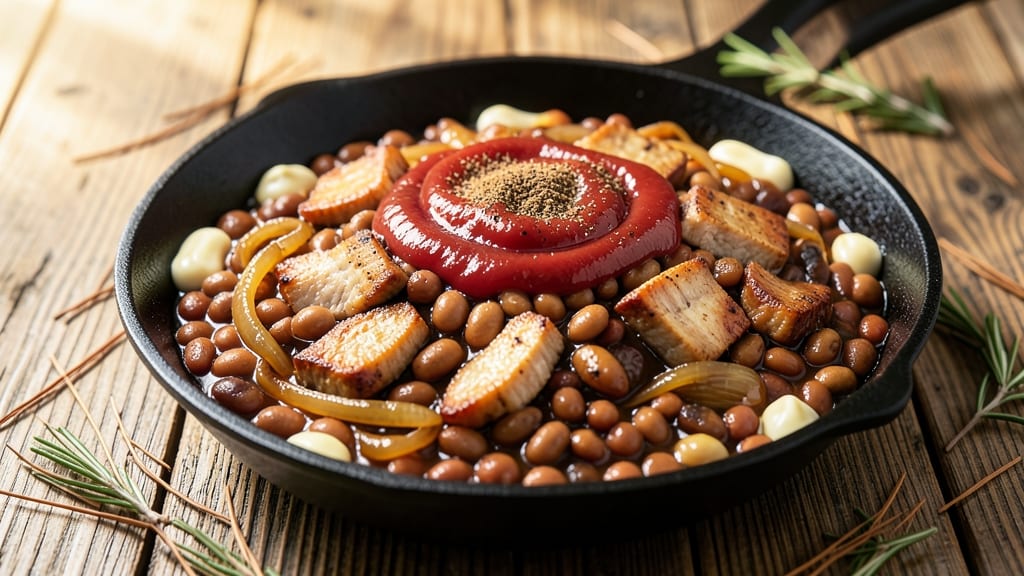
This baked beans recipe with canned pork and beans delivers the deep, smoky-sweet flavors of a classic comfort dish without the fuss of soaking dried beans.
The secret lies in slow simmering canned beans with molasses, brown sugar, and a blend of spices that creates a rich, caramelized glaze on top—just like grandma used to make.
I perfected this version after years of testing, ensuring every bite balances tender pork, creamy beans, and that signature tangy-sweet sauce.
What sets this recipe apart is its simplicity: you start with canned beans and pork, then build layers of flavor through a 30-minute simmer that transforms simple ingredients into something restaurant-worthy.
The molasses and brown sugar create a glossy, slightly sticky top, while smoked paprika and mustard add depth without overpowering the natural sweetness of the beans. No special equipment needed—just one pot and patience for the flavors to meld.
The result is a foolproof baked bean dish with tender pork chunks, creamy beans, and a caramelized crust that’s impossible to resist. Serve it alongside cornbread, grilled sausages, or even as a hearty side for barbecue.
The slow cooking process ensures the pork stays juicy while the beans soak up all the smoky-sweet flavors, making every spoonful worth the wait.
This recipe works equally well for weeknight dinners or holiday gatherings—just double the batch if you’re feeding a crowd. The flavors actually improve overnight, so it’s perfect for meal prep. Ready to make the most comforting baked beans you’ve ever tasted? Let’s get started.
Ingredients for baked beans recipe with canned pork and beans
Six simple ingredients transform canned beans and pork into restaurant-worthy comfort food.
| Ingredient | Amount | Notes |
|---|---|---|
| Canned Pork and Beans 🥓 | 2 cans | 15 oz each, undrained |
| Molasses 🍯 | ⅓ cup | Unsulphured preferred |
| Brown Sugar 🍚 | ½ cup | Packed firmly |
| Ketchup 🍅 | ¼ cup | Heinz preferred |
| Yellow Mustard 🌿 | 1 tbsp | Dijon works too |
| Smoked Paprika 🌶️ | 1 tsp | For smoky depth |
| Ground Black Pepper 🌶️ | ½ tsp | Freshly ground |
| Bay Leaves 🍃 | 2 whole | Remove before serving |
| Yellow Onion 🧅 | 1 whole | Medium size, diced |
| Garlic Cloves 🧄 | 3 cloves | Minced for aroma |
| Salt 🧂 | 1 ½ tsp | Kosher or sea salt |
| Balsamic Vinegar 🍷 | 1 tbsp | For tangy balance |
The canned pork and beans are the foundation—Heinz or Bush's work best for consistent quality. Look for unsulphured molasses at specialty stores or the baking aisle for deeper flavor. Brown sugar should be packed firmly in the measuring cup for accuracy. I always grab Heinz ketchup because it's tangier than some store brands, but any good-quality ketchup works. The onion and garlic are non-negotiable for building flavor—yellow onions add sweetness while garlic provides that essential aromatic base. If you're short on time, pre-dice the onion and mince the garlic ahead of time and store in the fridge.
No molasses? Maple syrup works in a pinch, though it won't be quite as rich. Short on brown sugar? White sugar plus a pinch of cinnamon mimics the depth. The smoked paprika is key for that authentic smoky flavor—substitute regular paprika plus a dash of liquid smoke if needed. For a quicker version, skip the bay leaves (though I don't recommend it—they add subtle earthiness). The balsamic vinegar might seem like an odd addition, but it cuts through the sweetness and adds complexity. If you're making this ahead, the flavors actually improve overnight—just store it in the fridge and reheat gently.
This recipe reheats beautifully—just add a splash of water or broth to loosen it up. Keeps for up to 5 days in the fridge or 3 months in the freezer. For crowd feeding, double the batch and use a larger pot. The caramelized top is the best part—don't skip the 30-minute simmer or it won't form properly. Leftovers make great sandwich fillings or a quick breakfast hash with scrambled eggs. Store in airtight containers with a sprinkle of salt on top to preserve freshness.
Why You'll Love This Recipe
- Five-Ingredient Magic: I swear by this combo—molasses and brown sugar team up with the smoky pork and beans, while ketchup and mustard cut through the sweetness just right. It’s the kind of flavor balance that makes you go back for seconds without even thinking.
- One-Pan, Zero Stress: Honestly, this recipe is my lazy-day hero. You dump everything into a baking dish, mix it up, and let the oven do the work. No chopping, no fuss—just 45 minutes of hands-off cooking while you sip your coffee or scroll through your phone.
- Tailgate or Tuesday: Between us, this is my go-to for game days and slow weeknights. The rich, caramelized top? Perfect for sharing in a big bowl or packing in a thermos. (Yes, even on a Tuesday night.)
- Budget-Friendly Leftovers: A can of pork and beans stretches into multiple meals, and the sauce only gets better the next day. I’ll be real: I often make a double batch because reheating these is just as good as the first serving—and way cheaper than takeout.
Step-by-step instructions for baked beans with canned pork and beans
This one-pot method delivers deep, smoky-sweet baked beans with tender pork and rich caramelized flavors.
Sauté Aromatics Until Fragrant
Heat a large Dutch oven or heavy pot over medium heat. Add the 1 whole yellow onion (diced) and cook for 5-6 minutes until softened and translucent. Stir occasionally to prevent browning.
Add the 3 cloves garlic cloves (minced) and cook for another 30 seconds until you can smell their aromatic punch. This step builds the flavor foundation—don't rush it. If the onion starts to brown too quickly, reduce heat slightly to medium-low.
Combine All Ingredients in the Pot
Increase heat to medium-high and add the 2 cans canned pork and beans (undrained), 0.33 cup molasses, 0.5 cup brown sugar, 0.25 cup ketchup, 1 tbsp yellow mustard, 1 tsp smoked paprika, 0.5 tsp ground black pepper, 2 whole bay leaves, and 1.5 tsp salt.
Stir vigorously to combine all ingredients thoroughly. The mixture will look thick and syrupy at first—this is normal. Let it simmer for 5 minutes to allow the flavors to meld before proceeding to the baking step.
Simmer on Stovetop for Flavor Development
Reduce heat to low and let the mixture simmer uncovered for 15-20 minutes, stirring occasionally. You'll notice the beans begin to soften and the sauce thicken slightly. This stovetop phase ensures even distribution of all flavors before baking.
Here's the thing—don't walk away. The beans should be bubbling gently but not vigorously. If it reduces too much, add ¼ cup water to maintain proper consistency. The goal is to create a thick, glossy sauce that coats the beans perfectly.
Bake Until Caramelized and Bubbling
Preheat your oven to 350°F. Transfer the pot to the oven and bake uncovered for 45-50 minutes. The beans are done when the sauce is thick, glossy, and caramelized around the edges—almost like a candy coating.
I check for doneness by inserting a spoon into the center. If the sauce clings to the spoon and leaves a clean trail, it's ready. The beans should be fork-tender with no resistance. If the sauce looks too thin, uncover and bake 5-10 minutes longer to thicken it properly.
Finish with Balsamic Vinegar and Rest
Remove the beans from the oven and stir in the 1 tbsp balsamic vinegar. Let them rest for 10 minutes off the heat—this allows the flavors to fully develop and the sauce to thicken slightly. Remove and discard the 2 whole bay leaves before serving.
Serve immediately with crusty bread or over grilled meats. The beans should have a perfect balance of smoky, sweet, and tangy flavors with a thick, glossy sauce that clings beautifully to each bean. Store leftovers in the refrigerator for up to 5 days—they taste even better the next day!
Pro Tips For Making Baked Beans Recipe With Canned Pork And Beans
- Simmer, Don’t Boil: This isn’t soup—it’s baked beans, and you’re not making a pot of beans to feed a construction crew. Keep the heat at a low simmer (think tiny bubbles, not rolling) or the molasses and sugar will burn before the flavors meld. I’ve seen people walk away and come back to a sticky, bitter mess. Set a timer for 30 minutes and check it like you’re babysitting.
- Drain, Rinse, Repeat: That canned pork and beans liquid? It’s basically salty, starchy water. Drain the beans and pork, then rinse them under cold water to cut the saltiness and thin out the sauce later. Skimp here, and your beans will taste like they’re swimming in a brine bath. Trust me, your taste buds will notice the difference—especially if you’re using store-bought ketchup, which is already salted.
- Whisk the Molasses First: Molasses is thick, sticky, and stubborn. Don’t just dump it in and stir—whisk it into a splash of hot water (or even the canned beans’ liquid) first to thin it out. This stops clumps from forming and ensures it dissolves smoothly into the sauce. I used to ignore this, and my beans always had weird, gooey bits of undissolved molasses. Now? Silky smooth every time.
- Add Mustard Last: Yellow mustard has a habit of curdling when heated too long, turning your glossy sauce into a lumpy disaster. Stir in the mustard just 5 minutes before serving—let the rest of the flavors cook down first. Yes, it’ll mellow out a bit, but it’ll still pack that tangy punch without making your beans look like they’ve been through a blender.
Common mistakes when making this recipe
Skipping the Sauté
One of the biggest mistakes is skipping the onion and garlic sauté entirely. These aromatics form the flavor base—without them, your beans will taste flat and one-dimensional. I always cook the onion until it's soft and translucent (5-6 minutes over medium heat) before adding garlic.
If you rush this step, you'll miss out on the sweet caramelization that builds depth. Trust me, that extra 5 minutes makes all the difference. 🧅
Under-Siming the Sauce
Many people underestimate how long the sauce needs to develop. The 15-20 minute stovetop simmer is crucial—it lets the molasses, brown sugar, and ketchup meld together. Skipping this step means your sauce will taste cloyingly sweet instead of balanced.
If the mixture reduces too quickly, add ¼ cup water to maintain consistency. The goal is a thick, glossy sauce, not a sticky mess.
Overcrowding the Pot
Using a pot that's too small causes the beans to steam instead of caramelize. I always recommend a large Dutch oven or heavy pot—it gives the sauce room to thicken properly. If your pot is overcrowded, the beans won't develop that beautiful caramelized crust during baking.
For 6 servings, a 6-quart pot is ideal. If you're making a bigger batch, use a larger vessel or cook in batches.
Ignoring the Caramelization
The caramelized top is what makes baked beans special! Many people pull the beans out too soon, missing the 45-50 minutes at 350°F. The sauce should be glossy and almost candy-like around the edges.
If yours looks flat, uncover and bake 5-10 minutes longer. Pro tip: Check doneness by inserting a spoon—the sauce should cling and leave a clean trail. 🔥
Forgetting the Rest Time
After baking, letting the beans rest for 10 minutes off the heat is non-negotiable. This allows flavors to fully develop and the sauce to thicken slightly. Serving them immediately means you'll miss out on that perfect texture and depth.
I've made this mistake too—rushing always leads to a less flavorful dish. Patience pays off here!
Salting Too Late
Adding salt at the end of cooking can make your beans taste bland. The 1.5 tsp salt should be added early, during the initial simmer on the stovetop. This allows the salt to fully distribute and enhance all the flavors.
If you add it later, you'll end up with uneven seasoning. Taste as you go—adjust with extra salt if needed, but start with the full amount for balance.
Nutrition facts
Frequently asked questions
Can I use different types of canned beans?
While this recipe is designed for canned pork and beans, you can substitute with other canned beans like kidney beans or black beans for a different texture. Just adjust the liquid—add ¼ cup water if using beans with less natural sauce. The flavor profile will change slightly, but the method remains the same.
How do I make this recipe vegetarian?
Swap the canned pork and beans for 2 cans vegetarian baked beans and add ½ cup diced smoked tofu or ½ cup crumbled tempeh for protein. Boost umami with 1 tsp soy sauce or ½ tsp liquid smoke. The molasses and brown sugar will still create that signature caramelized top.
Can I make this in a slow cooker?
Follow the same steps but transfer everything to a 6-quart slow cooker after the stovetop simmer. Cook on LOW for 4-5 hours or HIGH for 2-3 hours, stirring occasionally. The sauce will thicken naturally. For the caramelized top, transfer to an oven-safe dish and broil for 5-10 minutes at the end.
Why did my sauce turn out too thin?
This usually happens if you skipped the stovetop simmer or didn't bake long enough. For a quick fix, simmer uncovered on the stove for 10-15 minutes to reduce the liquid. If it's still too thin, make a slurry with 1 tbsp cornstarch + 1 tbsp water, stir it in, and cook until thickened.
How can I make this gluten-free?
Check your molasses, ketchup, and mustard for hidden gluten—most brands are safe, but always verify labels. Use gluten-free molasses and a certified GF ketchup like Heinz. The recipe is naturally gluten-free except for these potential ingredients. The texture and flavor remain identical.