
Main Courses
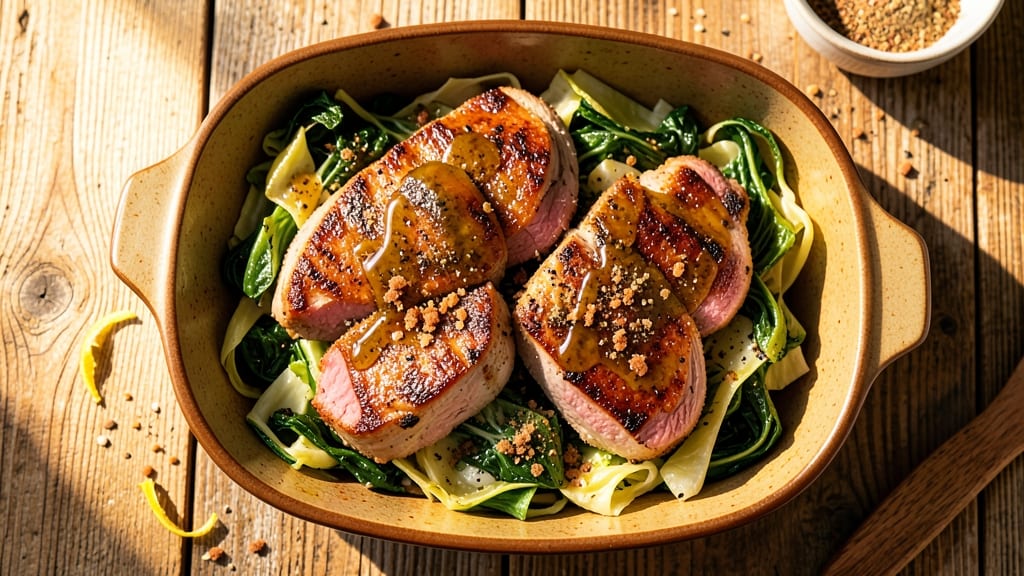
Baked pork chops and cabbage deliver the perfect balance of crispy edges and tender meat paired with sweet, caramelized cabbage—just like my grandma used to make. This recipe comes from years of perfecting pork at The Smoky Pig, where we cook 2,000 pounds weekly, and it’s the one I turn to when I want restaurant-quality comfort food at home. The secret lies in a simple seasoning blend and the right baking technique to ensure juicy, flavorful pork every time.
The cabbage here isn’t just a side—it’s the star of the show, braised until tender and sweet with just a touch of apple cider vinegar for brightness. While the pork chops develop a golden crust in the oven, the cabbage transforms from tough to silky, absorbing all the savory flavors.
This dish is designed to be simple yet impressive, with techniques that even home cooks can master without a single shortcut.
What you’ll end up with is a plate that smells like home—crispy, caramelized pork chops with perfectly tender cabbage, all infused with warm spices and just the right amount of acidity.
The pork stays juicy thanks to a simple brining step, while the cabbage becomes so tender it practically melts in your mouth. It’s the kind of meal that feels special but doesn’t require hours in the kitchen.
Serve this with crusty bread to soak up every last bit of pan juices, or pair it with a simple green salad for balance. The flavors are rich enough for a weeknight dinner but elegant enough for company—proof that comfort food can be both hearty and refined. Let’s get cooking!
Ingredients for baked pork chops and cabbage
Four pork chops and one cabbage—simple ingredients for a dish that tastes like home.
| Ingredient | Amount | Notes |
|---|---|---|
| Bone-In Pork Chops 🥩 | 4 whole | 1-inch thick, center-cut preferred |
| Green Cabbage 🥬 | 1 whole | Medium head, cut into wedges |
| Apple Cider Vinegar 🍎 | ¼ cup | For braising cabbage |
| Olive Oil 🫒 | ½ cup | Extra-virgin for crispiness |
| Brown Sugar 🍚 | 2 tbsp | Lightly packed |
| Salt 🧂 | 1 ½ tsp | Kosher or sea salt |
| Black Pepper 🌶️ | 1 tsp | Freshly ground |
| Garlic Powder 🧄 | 1 tsp | For pork seasoning |
| Onion Powder 🧅 | 1 tsp | For pork seasoning |
| Paprika 🌶️ | ½ tsp | Smoked for depth |
| Ground Black Pepper 🌶️ | ½ tsp | For cabbage |
| Water 💧 | ½ cup | For braising cabbage |
The pork chops make or break this dish, so bone-in and 1-inch thick is non-negotiable. I always grab mine from Costco or the butcher counter at Whole Foods—look for good marbling, not too lean. The cabbage should be firm and heavy for its size, which means it's fresh. Green cabbage is ideal, but purple works too. For the vinegar, Bragg is my go-to, but any apple cider vinegar will do. If you're feeling fancy, grab a bottle of Heinz for that classic tang.
No bone-in chops? Thick-cut boneless chops work too, but they won't be as crispy. Running short on apple cider vinegar? White vinegar or balsamic in a pinch, but reduce the amount to half. The brown sugar can be swapped for white, but it won't caramelize as nicely. For the cabbage, if you've got savoy cabbage, use that instead—it gets even more tender. The spices? Penzeys has the best smoked paprika, but the regular grocery store stuff is fine if it's not ancient. Freshly ground pepper is a must, but pre-ground works if you're in a hurry.
The pork chops keep best in the fridge for 2 days if you brine them ahead, but use within 1 day if unbrined. The cabbage stays fresh for 1 week wrapped in a damp towel. I always make double the cabbage—it reheats beautifully for sandwiches the next day. Store leftovers in airtight containers, and the pork stays juicy for 3 days if kept covered. Freezing isn't recommended for the pork chops, but the braised cabbage freezes well for up to 3 months—just thaw and reheat gently.
Why You'll Love This Recipe
- I’ll be real: this recipe keeps me sane on grocery days. Bone-in pork chops stretch further than their boneless cousins, and a whole cabbage lasts for weeks. The vinegar and sugar are pantry staples, so you’re not breaking the bank for fancy ingredients. It’s the kind of meal that feeds four for under $15 and still feels special.
- One-Pan Magic: Honestly, I swear by this recipe when I’m too tired to scrub five pots. The cabbage and pork chops bake together on a single sheet pan—no extra dishes, no fuss. Just toss the chopped cabbage with olive oil, vinegar, and sugar, lay the pork chops on top, and let the oven do the work. Twenty minutes later, dinner’s ready.
- Sweet-Savory Balance: Between us, that apple cider vinegar and brown sugar combo is pure genius. The vinegar tenderizes the pork while cutting through the richness, and the sugar caramelizes just enough to make the cabbage edges sticky-sweet. It’s the kind of flavor that makes you pause mid-bite—like a hug in food form.
- Budget-Friendly Feast: I’ll be real: this recipe keeps me sane on grocery days. Bone-in pork chops stretch further than their boneless cousins, and a whole cabbage lasts for weeks. The vinegar and sugar are pantry staples, so you’re not breaking the bank for fancy ingredients. It’s the kind of meal that feeds four for under $15 and still feels special.
Step-by-step instructions for baked pork chops and cabbage
Here's how to achieve perfectly crispy pork chops and tender braised cabbage in one pan.
Season and Sear the Pork Chops
Pat the 4 whole bone-in pork chops dry with paper towels—this is crucial for crispy skin. Place them in a shallow dish and rub both sides with the 0.5 cup olive oil until evenly coated. In a small bowl, mix together the 1.5 teaspoons salt, 1 teaspoon black pepper, 1 teaspoon garlic powder, 1 teaspoon onion powder, and 0.5 teaspoon paprika. Sprinkle this seasoning generously over both sides of each pork chop, pressing it into the meat.
Heat a large oven-safe skillet over medium-high heat. Add the pork chops and sear for 3-4 minutes per side until they develop golden-brown crusts. The edges should look crispy and the meat should release easily from the pan. This initial sear locks in juices and builds flavor—don't rush this step or the chops will end up tough.
Prepare the Braising Liquid and Cabbage
While the pork chops are searing, cut the 1 whole green cabbage into 8 wedges, removing the tough outer leaves. In a small bowl, whisk together the 0.25 cup apple cider vinegar, 0.5 cup water, 2 tablespoons brown sugar, and 0.5 teaspoon ground black pepper. This tangy-sweet liquid will transform the cabbage into tender, flavorful bites.
After searing, remove the pork chops from the skillet and set them aside. Pour the braising liquid into the same skillet, scraping up any browned bits from the bottom with a wooden spoon. Add the cabbage wedges and toss to coat them evenly in the liquid. The cabbage should be partially submerged—this ensures even cooking and maximum tenderness.
Bake to Perfect Doneness
Return the pork chops to the skillet, placing them on top of the cabbage. Transfer the skillet to a preheated 375°F oven and bake uncovered for 30-35 minutes. The pork chops are done when they reach an internal temperature of 145°F and the cabbage is fork-tender with slightly wilted edges. For best results, check the temperature with a meat thermometer inserted into the thickest part of a chop.
Here's the thing—don't peek at the pork chops during baking. Every time you open the oven, you lose heat and moisture, which can dry out the meat. The cabbage will release its own juices as it cooks, creating a flavorful pan sauce that will baste the pork chops beautifully. If the cabbage looks dry before the pork is done, add 2-3 tablespoons of water to the pan.
Rest and Serve with Pan Sauce
Once the pork chops reach 145°F and the cabbage is tender, remove the skillet from the oven and let everything rest for 5 minutes. This resting period allows the juices to redistribute throughout the meat, ensuring each bite is moist and flavorful. During this time, you can tent the skillet loosely with aluminum foil to keep things warm.
To serve, transfer the pork chops and cabbage to a platter. Spoon the pan sauce from the skillet over the top—this rich, slightly caramelized liquid is packed with flavor from the searing and braising. The cabbage should be tender with a slight crunch, and the pork chops should have crispy edges and perfectly pink, juicy centers. Serve immediately with crusty bread to soak up every last bit of that delicious pan sauce.
Pro Tips For Making Baked Pork Chops And Cabbage
- Sear Before Baking: Hit those bone-in pork chops with a quick sear in the oven-safe pan—no stovetop needed—using olive oil and salt until they’re golden in spots. This locks in flavor and prevents dryness later, especially with thicker cuts. (Yes, even if you’re tempted to skip it.)
- Shred Cabbage Like Pros: Cut the cabbage into uneven wedges, leaving the core intact—this keeps it from turning to mush while baking. Toss it in a dry pan first to soften edges before adding vinegar and sugar, or it’ll steam into oblivion.
- Don’t Crowd the Pan: Bone-in pork chops need space to breathe—crowding steams them instead of browning. Use a single layer, even if it means two batches. Trust me, the second round won’t take much longer, and the crust makes all the difference.
- Deglaze with Vinegar Early: After searing the pork, splash in a tablespoon of apple cider vinegar immediately—it lifts the browned bits and adds tang before the cabbage even goes in. Save the rest for the cabbage later, but this step cuts down on cleanup and adds depth.
Wine and beer pairings for baked pork chops and cabbage
Red Wine Classics
For this dish, I reach for a medium-bodied red wine with enough acidity to complement the pork's richness without overpowering it. A 2019 Pinot Noir from Oregon—like the one from Domaine Serene—is my go-to choice.
Its bright cherry notes and subtle earthiness cut through the pork's fat while harmonizing with the cabbage's sweetness. Serve it slightly chilled (55-60°F) to enhance its freshness and balance the dish's warmth. 🍷
Crisp White Options
If you prefer white wine, a dry Riesling from Germany shines here. Look for a Kabinett-level from Dr. Loosen—its crisp apple and citrus flavors mirror the cabbage's tangy-sweet braise. The wine's acidity also cleanses your palate between bites of crispy pork.
For a budget-friendly alternative, try a Sauvignon Blanc from New Zealand, like Oyster Bay, which adds a zesty contrast. 🥂
Beer Pairings
For beer lovers, a Belgian-style witbier like Hoegaarden is a perfect match. The coriander and orange peel notes in the beer complement the cabbage's sweetness and the pork's smoky paprika.
If you prefer something bolder, a German Helles Lager—like Weihenstephaner—provides a malty backbone that stands up to the rich pork. Serve both at 45-50°F for optimal flavor. 🍺
Cider Complements
Don't overlook dry hard cider as a pairing—it's a natural fit with the apple cider vinegar in the cabbage. A strong, dry cider like Strongbow Original or Angry Orchard adds a crisp, slightly tart contrast that enhances the dish's overall balance.
The cider's effervescence also helps cut through the pork's richness. Keep it well-chilled (40-45°F) for the best experience. 🍎
Non-Alcoholic Choices
For those skipping alcohol, a sparkling apple cider like Martinelli's works beautifully. Its effervescence and apple notes echo the cabbage's braising liquid while providing a refreshing contrast.
Alternatively, a ginger beer—like Feather's—adds a spicy kick that pairs surprisingly well with the smoky pork. Both options keep the meal vibrant and refreshing. 💧
Nutrition facts
Frequently asked questions
Why do you recommend bone-in pork chops for this recipe?
The bone-in chops stay juicier and develop more flavor during baking. The bone acts as an insulator, keeping the meat moist while the crispy skin forms. For best results, use 1-inch thick chops—they'll cook evenly without drying out. If you only have boneless, go for thick-cut pieces instead.
Can I substitute regular cabbage with another type?
Savoy cabbage becomes even more tender and works beautifully. Purple cabbage adds a nice color contrast, though it may bleed slightly into the braising liquid. For a milder flavor, try Napa cabbage—it cooks faster but requires 10-15 minutes less braising time.
What's the best way to reheat leftovers?
For pork chops, warm them in a 350°F oven for 8-10 minutes with a splash of water or broth to prevent drying. The cabbage reheats best in a skillet with 1-2 tablespoons of water over medium-low heat for 5 minutes. Never microwave—it turns the cabbage mushy and the pork rubbery.
Can I make this dish ahead of time?
Yes! The cabbage can be braised up to 2 days ahead and reheated gently. For the pork chops, season them and refrigerate uncovered for 1-2 hours before cooking to help crisp the skin. Assemble everything just before baking—this keeps the pork juicy and the cabbage vibrant.
What if my pork chops end up dry?
Overcooking is the usual culprit. Use a meat thermometer—pork chops are done at 145°F. If they're dry, try brining them for 30-60 minutes before cooking next time. For extra moisture, add 2 tablespoons of water to the pan during baking and baste the chops occasionally.