
Main Courses
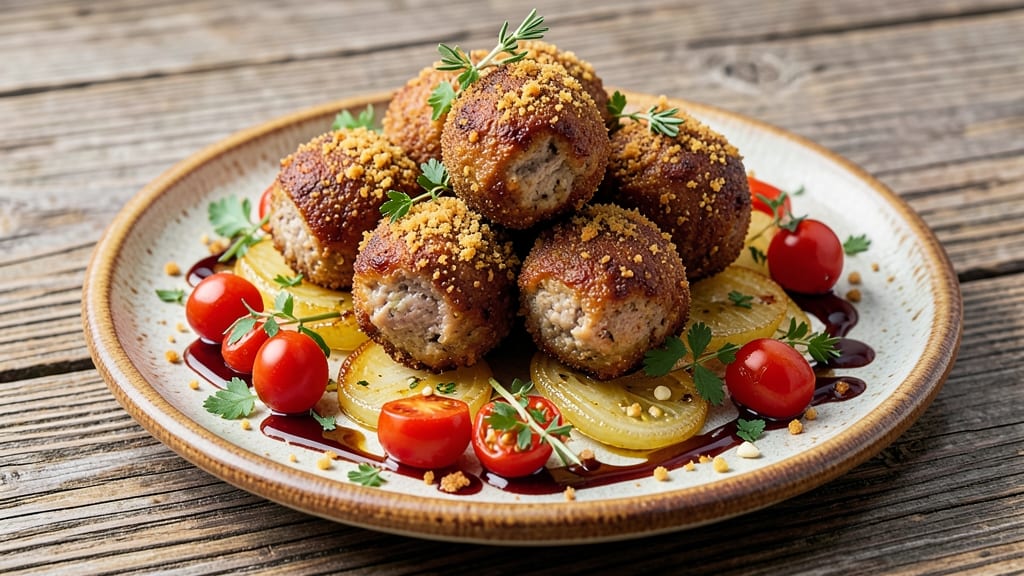
This baked pork meatball recipe delivers restaurant-quality tenderness without the grease or fuss of frying. 🔥 After perfecting this method over years of cooking for crowds at The Smoky Pig, I've developed a foolproof technique that ensures juicy centers and crisp edges every time.
The secret lies in proper ingredient ratios and a gentle baking process that preserves moisture while creating that satisfying crust.
What sets these pork meatballs apart is the honey-glaze finish that adds just the right balance of sweetness and savory depth. We start with ground pork shoulder—rich in flavor and fat—mixed with aromatics like garlic, onion, and fresh herbs.
The meatballs bake until golden and tender, then get brushed with a warm honey-mustard glaze that caramelizes beautifully in the oven.
By the time you're done, you'll have perfectly shaped meatballs with a tender interior and slightly crisp exterior, all finished with that sticky-sweet glaze. They're substantial enough to serve as a main course but work beautifully as appetizers or in sandwiches.
The best part? No deep-frying required—just simple prep and oven baking.
These meatballs pair wonderfully with marinara sauce for spaghetti, in sliders with garlic aioli, or alongside roasted vegetables. The recipe makes about 3 dozen meatballs, perfect for feeding a family or meal prepping for the week.
Let's get started with this crowd-pleasing dish that's sure to become a regular at your table.
Ingredients for baked pork meatball
Ground pork, fresh herbs, and a touch of sweetness—this is all you need for restaurant-quality meatballs.
| Ingredient | Amount | Notes |
|---|---|---|
| Ground Pork Shoulder 🥩 | 2 ½ lb | 80/20 fat ratio preferred |
| Yellow Onion 🧅 | 1 whole | Medium size, finely chopped |
| Garlic Cloves 🧄 | 4 cloves | Freshly minced, aromatic |
| Fresh Parsley 🌿 | ¼ cup | Chopped, stems removed |
| Fresh Thyme Leaves 🌿 | ½ tbsp | Finely chopped, vibrant |
| Breadcrumbs 🍞 | 1 ½ cups | Panko for extra crispiness |
| Large Eggs 🥚 | 2 whole | Room temperature, beaten |
| Dijon Mustard 🍯 | 1 tbsp | For tangy depth |
| Kosher Salt 🧂 | 1 ½ tsp | Diamond Crystal preferred |
| Ground Black Pepper 🌶️ | 1 tsp | Freshly cracked |
| Honey 🍯 | ½ cup | Wildflower for floral notes |
| Yellow Mustard 🍯 | 2 tbsp | For glaze consistency |
| Extra-Virgin Olive Oil 🫒 | 2 tbsp | For glaze richness |
The pork shoulder is non-negotiable here—80/20 fat ratio ensures juicy meatballs that won't dry out. Grab it from Costco or your butcher counter if you want the best quality, but the pre-packaged stuff at Walmart or Kroger works fine too. Look for bright red color and avoid anything with grayish edges. Fresh herbs make all the difference: grab flat-leaf parsley and thyme sprigs from the grocery store's produce section—they're usually fresher than the pre-chopped stuff. Panko breadcrumbs add that perfect crispy texture, and I always keep a box on hand for meatballs, chicken tenders, and crumb toppings.
No fresh parsley? Dried parsley at half the amount works in a pinch, but it won't have the same bright flavor. Running low on Dijon? Yellow mustard plus a pinch of sugar mimics that tangy sweetness. The honey glaze is where the magic happens—use raw, local honey if you can find it, but any good-quality honey will do. For extra richness in the glaze, swap out half the olive oil for avocado oil. And if you're feeling fancy, add a dash of smoked paprika to the meatball mixture for depth. The mustard in the glaze keeps everything balanced so the sweetness doesn't overwhelm.
These meatballs reheat beautifully—just warm them in the oven at 350°F for 10 minutes. They'll actually taste better the next day once all the flavors meld. Store leftovers in the fridge for up to 5 days or freeze for 3 months in a single layer before transferring to a container. I like to portion them into ziplock bags with parchment paper so they don't stick together. The glaze keeps well too—store it separately and brush on fresh when reheating. Perfect for meal prep lunches or quick weeknight dinners.
Why You'll Love This Recipe
- No-Fuss Mixing: I swear by the 5-minute prep—just toss everything into a bowl, no food processor needed. The pork shoulder stays juicy because I barely handle it, and the onion and garlic get finely chopped in seconds (or just pulse them if you're impatient).
- Herb-Packed Punch: That thyme and parsley combo? It’s the secret weapon. The thyme adds this earthy warmth while the parsley brightens it up, and the garlic—oh, the garlic—turns these into "I’ll have another bite" meatballs every time.
- Game for Any Meal: I’ve served these as a weeknight dinner with marinara, stuffed into buns for sandwiches, or even tossed in a salad for extra protein. Honestly, they disappear fast no matter how I dress them up (or don’t).
- Budget Meal Maker: Ground pork shoulder is cheaper than beef, and these meatballs stretch across three meals for my family. Leftovers reheat like a dream—crispy outside, tender inside—so I’m never scrambling for dinner ideas again.
Step-by-step instructions for baked pork meatballs
Easy, mess-free baking delivers juicy meatballs with a sticky-sweet glaze every time.
👨🍳 Step 1: Prep the Meatball Mixture
In a large mixing bowl, combine the 2.5 lb ground pork shoulder with the finely chopped yellow onion and minced garlic cloves. I like to use my hands for this—it helps distribute the fat evenly and creates a more cohesive mixture. Add the chopped fresh parsley, finely chopped fresh thyme leaves, 1.5 cups breadcrumbs, 2 whole large eggs, 1 tbsp Dijon mustard, 1.5 tsp kosher salt, and 1 tsp ground black pepper. Mix gently but thoroughly until everything comes together.
Here's the thing—don't overwork the mixture. Just combine until the ingredients are evenly distributed. Overmixing develops gluten in the pork, which can make the meatballs tough. The texture should be moist but not sticky, almost like wet sand that holds together when you press it.
🍳 Step 2: Form and Bake the Meatballs
Preheat your oven to 375°F. Line two baking sheets with parchment paper or lightly grease them with extra-virgin olive oil—this prevents sticking and makes cleanup a breeze. Roll the meat mixture into 12 equal meatballs, each about 1.5 inches in diameter. I use a kitchen scale for accuracy, but eyeballing works too if you're comfortable with the size.
Place the meatballs on the prepared baking sheets, spacing them about 1 inch apart. This gives them room to brown properly without steaming. Bake for 20-25 minutes, until the meatballs are golden brown on the outside and reach an internal temperature of 160°F when checked with a meat thermometer. They'll continue cooking slightly as they rest, so don't worry if they're not fully cooked through just yet.
🥘 Step 3: Make the Honey-Glaze
While the meatballs bake, whisk together 0.5 cup honey, 2 tbsp yellow mustard, and 2 tbsp extra-virgin olive oil in a small bowl. This glaze is what makes these meatballs special—it's sticky, sweet, and adds a beautiful sheen. The olive oil helps balance the sweetness and adds richness. Set the glaze aside until the meatballs are done baking.
Real talk: if you're short on time, you can make the glaze while the meatballs are still in the oven. Just keep an eye on them so they don't overbake while you're busy with the sauce.
🔥 Step 4: Glaze and Finish Baking
Once the meatballs are golden and cooked through, remove them from the oven and transfer them to a serving platter. Spoon the honey-glaze evenly over the top of each meatball, letting it drip down the sides. Here's where it gets fun—watch as the glaze starts to bubble and caramelize right before your eyes.
Return the meatballs to the oven for an additional 5-7 minutes to let the glaze set and develop a slightly sticky texture. They should be glossy and caramelized by the time they're done. If the glaze thickens too much, you can reheat it gently in the microwave for 10-15 seconds before serving.
⏰ Step 5: Rest and Serve
Let the meatballs rest for 5 minutes before serving. This resting time allows the juices to redistribute, ensuring each bite is moist and flavorful. Serve them warm, straight from the oven, with the glaze still glistening. These meatballs are tender, juicy, and perfectly balanced between sweet and savory—no one will guess they're baked, not fried.
Don't skip the resting step, even if it's tempting. The meatballs will hold together better, and the flavors will meld beautifully. Pair them with crusty bread to soak up that delicious glaze, or serve them as part of a larger meal with roasted vegetables for a complete dinner.
Pro Tips For Making Baked Pork Meatball
- CHILL THE MIX: After combining all ingredients, pop your pork mixture in the fridge for 15-20 minutes before shaping. I used to skip this and my meatballs would either flatten or dry out in the oven—this step keeps them tight and juicy. Works especially well with pork shoulder’s fat content.
- GRATE, DON’T MINCE: Use a box grater for the onion and garlic instead of mincing—it distributes flavor more evenly and avoids watery meatballs. I learned this the hard way when my first batch turned mushy from excess onion juice. (Yes, it’s messier, but worth it.)
- BROWN THE BALLS: Sear your meatballs in a hot pan for 30 seconds per side before baking—even if you’re baking them directly. The crust locks in moisture and adds depth. I was skeptical until I tried it; now I swear by it for pork.
- STEAM THE HERBS: Blanched thyme leaves and parsley in boiling water for 10 seconds, then drain and pat dry before mixing. This softens the herbs so they release flavor instead of turning bitter. (Your future self will notice the difference.)
Troubleshooting perfect results
Meatballs Too Dry
If your meatballs turn out dry, it's usually because the mixture was overworked or baked too long. I've found that using 80/20 ground pork shoulder with its natural fat content is key—it keeps them juicy.
Also, check your internal temperature: they're done at 160°F, not higher. For extra moisture, add 1 tbsp water to the mixture or brush them with a little extra olive oil before baking. 💫
Glaze Not Setting
The honey glaze should caramelize beautifully, but if it stays runny, it's likely because the oven wasn't hot enough during the final 5-7 minutes. Preheat thoroughly and use a 375°F oven for that last step.
For a thicker glaze, reduce it on the stovetop for 2-3 minutes before brushing on the meatballs. A splash of corn syrup (just 1 tsp) can also help stabilize the glaze.
Meatballs Falling Apart
This usually happens when the mixture is overmixed or lacks proper binding.
Uneven Cooking
If some meatballs cook faster than others, it's likely due to uneven spacing or oven hot spots. Arrange them 1 inch apart on the baking sheet and rotate the pans halfway through baking. For even browning, use the middle rack of your oven. If you notice some meatballs browning too quickly, tent them loosely with aluminum foil during the first 15 minutes of baking.
Raw Centers
This typically means the meatballs weren't cooked long enough or they were too large. Stick to 1.5-inch diameter meatballs and bake until they reach 160°F internal temperature.
If they're still undercooked after 25 minutes, increase the oven temperature to 400°F for the final 5 minutes to finish them off. Always use a meat thermometer—it's the only reliable way to check doneness.
Glaze Too Sweet
If the honey glaze overpowers the savory meatballs, balance it by adding 1 tsp Dijon mustard or a pinch of smoked paprika to the glaze mixture. For a more complex flavor, add ½ tsp grated ginger or a dash of soy sauce to the glaze.
You can also reduce the honey by 1 tbsp and add 1 tbsp extra olive oil to mellow the sweetness while keeping the richness. ✨
Nutrition facts
Frequently asked questions
Can I use ground turkey or chicken instead of pork?
While you can substitute, pork's natural fat content makes these meatballs extra tender. If using turkey or chicken, add 1 tbsp olive oil to the mixture and reduce baking time by 3-5 minutes—they'll dry out faster. For best results, stick with pork shoulder's 80/20 fat ratio for that classic juicy texture.
How do I make these meatballs ahead of time?
These meatballs freeze beautifully! Form them, then freeze on a tray before transferring to a bag. Bake straight from frozen at 375°F for 30-35 minutes, adding the glaze during the last 5 minutes. For fridge storage, keep them covered for up to 5 days—reheat at 350°F for 10 minutes with a quick glaze brush.
What's the best way to serve these meatballs?
These versatile meatballs shine in sliders with garlic aioli, over spaghetti with marinara, or as a hearty appetizer with toothpicks. For a complete meal, pair with roasted Brussels sprouts and crusty bread to soak up that honey glaze. They also work perfectly in tacos or grain bowls with lime crema.
Why does the recipe call for Dijon mustard?
The Dijon adds depth and helps bind the meatballs without overpowering. It's different from regular mustard because its coarse grind creates tiny flavor pockets. For a quick substitute, mix 1 tbsp yellow mustard + ½ tsp sugar—it won't be identical, but it'll work in a pinch. The mustard also balances the sweet honey glaze beautifully.
Can I make these meatballs in an air fryer?
Cook at 375°F for 12-15 minutes, shaking the basket halfway. For the glaze, brush it on after 10 minutes and finish at 400°F for 2-3 minutes to set it. Air fryers work great for smaller batches—just reduce the number of meatballs to 18-20 at a time for best results.