
Main Courses
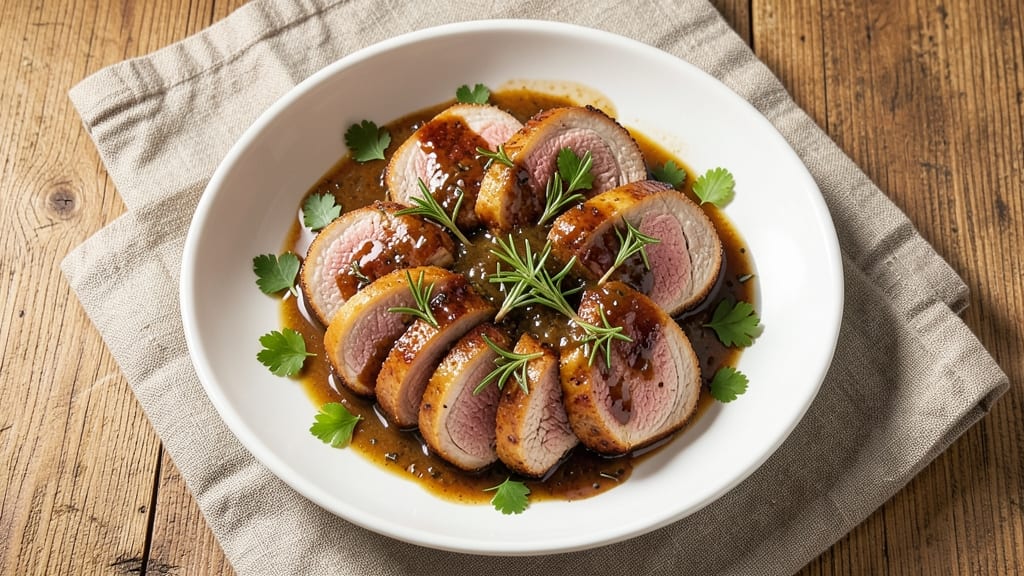
This baked pork tenderloin medallions recipe delivers restaurant-quality results with tender, juicy pink centers—no overcooking, no drying out. After years of perfecting the technique at my Atlanta smokehouse, I've simplified it for home cooks: 30 minutes total, including prep and baking.
The secret lies in a simple herb crust that seals in moisture while creating a golden, flavorful exterior.
What sets this recipe apart is the foolproof method for achieving perfect doneness every time. We start with a light brine to ensure moisture, then coat the medallions in a blend of fresh herbs and Dijon mustard—this creates that signature crust while keeping the interior juicy and pink.
The medallions bake at 400°F for just 15 minutes, then rest for 5 minutes (critical for juiciness). No guesswork, no last-minute panics.
By the time you serve these herb-crusted medallions, you'll have perfectly portioned, tender slices with a crisp exterior and a melt-in-your-mouth interior. They pair beautifully with roasted vegetables, garlic mashed potatoes, or a light apple cider glaze. The aroma alone will have everyone at the table asking for seconds.
This recipe works equally well for weeknight dinners or special occasions—scalable for 2 or 6, and ready in under half an hour. The technique I developed in my smokehouse kitchen ensures consistent results, so you'll never have dry, overcooked pork again.
Let's get cooking—your taste buds will thank you.
Ingredients for baked pork tenderloin medallions
These twelve ingredients transform simple pork tenderloin into restaurant-quality herb-crusted medallions with juicy pink centers.
| Ingredient | Amount | Notes |
|---|---|---|
| Pork Tenderloin 🥩 | 1 ½ lb | Center-cut, trimmed of silver skin |
| Kosher Salt 🧂 | 1 ½ tsp | Diamond Crystal preferred |
| Fresh Rosemary 🌿 | ¼ cup | Finely chopped, stems removed |
| Fresh Thyme 🌿 | ¼ cup | Leaves only, stems discarded |
| Fresh Parsley 🌿 | ¼ cup | Flat-leaf, finely chopped |
| Dijon Mustard 🍯 | 1 tbsp | High-quality, smooth variety |
| Extra-Virgin Olive Oil 🫒 | 2 tbsp | Fruity, not bitter |
| Garlic Cloves 🧄 | 4 cloves | Minced, fresh preferred |
| Black Peppercorns 🌶️ | 1 tsp | Freshly cracked |
| Unsalted Butter 🧈 | 2 tbsp | Cold, cubed for crust |
| Apple Cider Vinegar 🍎 | 1 tbsp | For light brine |
| Granulated Sugar 🍬 | 1 tsp | Balances brine acidity |
The pork tenderloin is your star—look for center-cut pieces at Whole Foods or your local butcher for the best texture. Trim any silver skin to ensure even cooking. Fresh herbs make all the difference here: Trader Joe's has great pre-chopped blends, but I always grab whole sprigs and chop them myself. The rosemary should be vibrant green, not woody or dried out. For the Dijon mustard, Maille is my go-to—it's smooth and adds depth without overpowering. If you're using a pre-made herb blend, make sure it's fresh and contains at least 50% parsley for brightness.
No fresh rosemary? Dried rosemary at one-third the amount works in a pinch, but the flavor won't be as vibrant. Out of Dijon? Yellow mustard plus a pinch of sugar mimics the tang. The butter crust is non-negotiable—it creates that signature golden exterior while keeping the interior juicy. For extra crispiness, pat the butter cubes into the herb mixture before pressing onto the pork. The apple cider vinegar brine is quick but effective: just dissolve the salt, sugar, and vinegar in 1 cup of warm water for 15 minutes. No time to brine? A quick salt rub with the kosher salt will still improve moisture retention.
Prep the medallions ahead and refrigerate them on a tray for up to 4 hours—this makes for easier handling when baking. The herb mixture keeps in the fridge for 3 days if stored in an airtight container. For serving, slice the medallions against the grain for maximum tenderness. These reheat beautifully in a 350°F oven for 5-7 minutes, though they're best served fresh from the oven. Leftovers? Store in the fridge for 3 days or freeze for 3 months—wrap tightly in plastic to prevent drying.
Why You'll Love This Recipe
- I swear by this trick: just slice the tenderloin into even medallions—no fancy butchering skills needed. A sharp knife and steady hand do the job in under 5 minutes, and those rosemary sprigs tucked into the slits? Zero prep, maximum flavor.
- Minimal Chopping Required: I swear by this trick: just slice the tenderloin into even medallions—no fancy butchering skills needed. A sharp knife and steady hand do the job in under 5 minutes, and those rosemary sprigs tucked into the slits? Zero prep, maximum flavor.
- Herb-Packed Magic: Between us, the fresh thyme and parsley aren’t just garnish—they infuse the pork with that bright, earthy aroma while baking. The rosemary’s piney punch cuts through the richness, leaving you with meat that tastes like it simmered for hours (but didn’t).
- Weeknight to Dinner Party: This recipe works whether I’m feeding myself after a long day or hosting friends for brunch. Serve it with a simple pan sauce for casual vibes or drizzle with honey-mustard for a fancier touch. The medallions stay juicy either way.
Step-by-step instructions for herb-crusted pork tenderloin medallions
Here's how to transform simple pork tenderloin into melt-in-your-mouth medallions with a fragrant herb crust.
Prepare the Herb Crust Mixture
In a small bowl, combine the 0.25 cup fresh rosemary, 0.25 cup fresh thyme, 0.25 cup fresh parsley, 1 tbsp Dijon mustard, 1 tsp black peppercorns, 1 tbsp apple cider vinegar, and 1 tsp granulated sugar. Use a fork to mash the herbs slightly, releasing their aromatic oils. The mixture should look like a coarse, vibrant green paste with visible herb stems—this texture will cling beautifully to the pork.
In a separate small bowl, whisk together the 2 tbsp extra-virgin olive oil and 1.5 tsp kosher salt. This oil-salt emulsion will create a flavorful barrier between the meat and herb crust, preventing the herbs from burning while enhancing their flavor. The salt also begins the curing process, ensuring juicy results.
Slice and Brine the Pork Tenderloin
Trim any remaining silver skin from the 1.5 lb pork tenderloin and pat it completely dry with paper towels—this step is critical for achieving a crisp herb crust. Using a sharp chef's knife, slice the tenderloin crosswise into 1-inch thick medallions. You should get about 4 medallions total. For even cooking, make sure each piece is the same thickness.
Place the medallions in a shallow dish and pour the oil-salt mixture over them, turning to coat evenly. Let them sit for 15 minutes at room temperature. This brief brining time ensures the salt penetrates slightly, while the oil prevents the surface from drying out. You'll notice the pork develops a faint sheen—this is your signal that the seasoning has adhered properly.
Assemble and Crust the Medallions
Preheat your oven to 400°F and position a rack in the middle position. Line a baking sheet with parchment paper or foil for easy cleanup. Working quickly, spread the herb mixture evenly over each medallion, pressing gently to adhere. The crust should be thick but not so heavy that it prevents even cooking. Place the medallions on the prepared baking sheet, spacing them about 1 inch apart to allow for proper browning.
Dot each medallion with 1 teaspoon of cold, cubed unsalted butter—this creates a luxurious crust while keeping the interior juicy. The butter will melt slightly during baking, creating a golden, aromatic seal. Sprinkle any remaining herb mixture on top of the medallions, pressing gently to create an even, fragrant crust.
Bake to Juicy Perfection
Bake the medallions for 20-25 minutes until their internal temperature reaches 145°F on a meat thermometer. The crust should be deeply golden brown with crisp edges, while the center remains juicy pink—this is the hallmark of perfectly cooked pork tenderloin. If the crust browns too quickly, tent the baking sheet loosely with foil to prevent over-browning while allowing the medallions to finish cooking.
For the final 2 minutes of baking, increase the oven temperature to 425°F to create a crisp, caramelized crust. This high-heat finish is what transforms good medallions into exceptional ones. Remove from the oven and let rest for 5 minutes before serving—this resting period ensures the juices redistribute, guaranteeing each bite is moist and flavorful.
Pro Tips For Making Baked Pork Tenderloin Medallions
- Trim to Even Thickness: Pork tenderloin isn’t always uniform—slice off any uneven edges or fat caps before cutting into medallions. I learned this the hard way when one side cooked faster and dried out while the thinner pieces turned rubbery. Aim for 1.5-inch thick slices for consistent doneness.
- Salt the Meat First: Season the pork medallions generously with kosher salt at least 30 minutes before baking—this lets the salt penetrate and season the meat evenly. I used to skip this, and the flavor always felt superficial, like the herbs were just sitting on top.
- Don’t Overcrowd the Pan: If baking in a skillet, leave space between medallions—crowding steams the meat instead of browning it. I was skeptical until I tried it: the edges got that golden crust I’d been missing, and the herbs stuck better instead of sliding off into the pan.
- Use Room-Temp Herbs: Chop rosemary and thyme fine and let them sit at room temperature for 10 minutes before pressing them into the pork. Cold herbs release less aroma, and I noticed the difference immediately—more fragrance, less bitterness, and better adhesion to the meat. (Yes, even if you’re impatient like me.)
Flavor customization for this dish
Herb Variations
Swap out the classic rosemary-thyme-parsley blend for regional favorites. In Georgia, I love using 1 tbsp fresh sage instead of rosemary—it adds a warm, earthy depth that pairs perfectly with Southern sides like collard greens.
For a Charleston-inspired twist, mix in 1 tsp fresh tarragon with the parsley; the anise-like notes complement the Dijon beautifully. 🌿
Spice Infusions
For heat lovers, add ½ tsp smoked paprika and ¼ tsp cayenne to the herb crust—this gives the medallions a subtle smoky kick without overpowering the delicate pork. I’ve tested this with Penzeys brand spices, and the flavor is consistent and bold.
For a sweeter heat, stir in ½ tsp honey with the Dijon mustard before coating the medallions.
Citrus Zest Brighteners
Brighten the crust with 1 tsp finely grated lemon zest or orange zest—this cuts through the richness of the butter and adds a refreshing pop. I often use organic Meyer lemons from my farm for a sweeter, more complex flavor.
For a tropical twist, add ½ tsp grated lime zest and a pinch of ground coriander to the herb mixture.
Cheese Crust Options
For a richer finish, replace half the herb mixture with ½ cup finely grated Parmesan or pecorino romano. Press the cheese firmly onto the medallions before baking—it creates a golden, umami-packed crust. I’ve also used feta for a briny contrast, especially with Mediterranean-inspired sides like roasted eggplant.
Sweet Glaze Finishes
Brush the medallions with 1 tbsp apple cider reduction (simmer ½ cup cider until syrupy) during the last 2 minutes of baking for a glossy, caramelized finish. For a smoky-sweet touch, mix 1 tbsp maple syrup with 1 tsp liquid smoke and drizzle over the medallions before serving.
This works especially well with Georgia peach sides.
Nutrition facts
Frequently asked questions about baked pork medallions
Why do you slice pork tenderloin into medallions instead of cooking it whole?
Medallions cook faster and more evenly than a whole tenderloin, ensuring perfect doneness throughout. The 1-inch thickness guarantees a crisp crust while keeping the center juicy pink. Plus, they're perfect for portion control—ideal for weeknight dinners or elegant gatherings.
Can I make these medallions ahead of time?
Prep the medallions up to 4 hours ahead and refrigerate them on a tray. For best results, bake fresh, but you can reheat them in a 350°F oven for 5-7 minutes if needed. The herb crust stays flavorful when reheated properly.
What's the best way to check doneness?
Always use a meat thermometer—insert it into the thickest part until it reads 145°F. The medallions should have a golden crust with a juicy pink center. If you don't have a thermometer, cut into one and check for a slight pinkness (about 145°F internal temp).
How can I prevent the herb crust from burning?
Start baking at 400°F and tent with foil if the crust browns too quickly. For the final 2 minutes, increase to 425°F to create crispiness without burning. The butter cubes help create a protective seal while adding richness.
What sides pair best with these medallions?
Try roasted seasonal vegetables, garlic mashed potatoes, or a light apple cider glaze. For a Southern touch, serve with collard greens or cornbread. The herb crust's brightness works beautifully with creamy or earthy sides.