
Main Courses
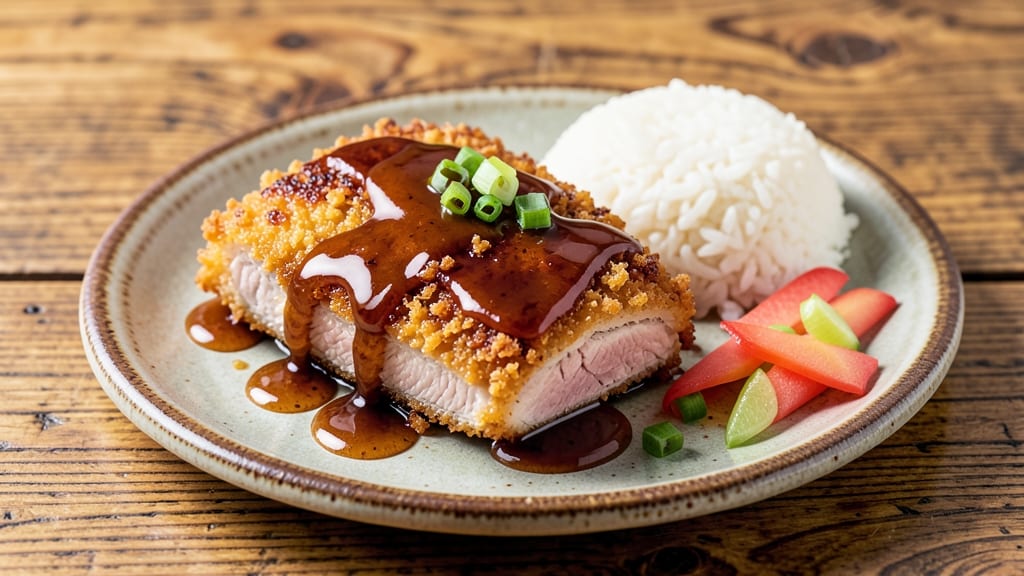
This baked pork tonkatsu recipe delivers the perfect balance of crispy panko crust and tender, juicy pink centers—no deep-frying required. 🔥 After years of perfecting tonkatsu at The Smoky Pig, I've adapted this Japanese classic for home cooks using just an oven and a little patience. The secret is a precise breading technique that locks in moisture while creating that signature crunch. The process starts with a simple marinade to tenderize the pork, followed by a triple-layer breading that ensures maximum crispiness. Unlike traditional pan-frying, baking gives you consistent results without the mess, and the oven's dry heat creates a lighter crust than you'd get in oil. This method also lets you cook multiple pieces at once, making it perfect for feeding a crowd. By the time it emerges from the oven, your pork will be golden-brown with a shatteringly crisp crust that gives way to juicy, melt-in-your-mouth pork inside. The key is monitoring the internal temperature—145°F is where perfection lives. Serve with shredded cabbage and tonkatsu sauce for the full experience, or enjoy it as-is with a side of steamed rice. What makes this recipe special is how it bridges two culinary worlds: the precision of Japanese technique meets the approachability of home cooking. The result is restaurant-quality tonkatsu that's foolproof for any kitchen. Let's get started!
Ingredients for baked pork tonkatsu
Fourteen ingredients for restaurant-style tonkatsu—no deep fryer needed.
| Ingredient | Amount | Notes |
|---|---|---|
| Boneless Pork Loin Chops 🥩 | 1 ½ lb | 1-inch thick, pounded even |
| Japanese Panko Breadcrumbs 🍞 | 3 cups | Standard panko works too |
| All-Purpose Flour 🌾 | 1 cup | For dredging first layer |
| Large Eggs 🥚 | 2 whole | Room temperature preferred |
| Japanese Tonkatsu Sauce 🍅 | ½ cup | Or sub Worcestershire + ketchup |
| Soy Sauce 🥢 | ¼ cup | For marinade |
| Mirin 🍶 | ⅛ cup | Or sub 1 tbsp sugar + 2 tbsp water |
| Sake 🍶 | ⅛ cup | Dry white wine substitute |
| Neutral Oil 🫒 | ½ cup | Vegetable or canola |
| Garlic Powder 🧄 | 1 tsp | For seasoning |
| Salt 🧂 | 1 tsp | Kosher preferred |
| Black Pepper 🌶️ | ½ tsp | Freshly ground |
| Cornstarch 🌾 | 2 tbsp | For extra crispiness |
| Shredded Green Cabbage 🥬 | 2 cups | For serving |
The pork chops are non-negotiable here. Look for boneless loin chops at least 1-inch thick—thinner cuts won't get that perfect pink center. Costco sells them pre-cut, but if you're buying whole, ask the butcher to trim the fat cap. Pound them to even thickness with a meat mallet (or rolling pin in a pinch). For the panko, Japanese brands like Nissin are ideal, but any standard panko will work—just don't use regular breadcrumbs. The sauce is where the magic happens: Japanese tonkatsu sauce (find it in the Asian aisle) has that perfect tangy-sweet balance, but the Worcestershire-ketchup combo is a solid backup.
No mirin? 1 tbsp sugar plus 2 tbsp water mimics its sweetness. Running short on sake? Dry white wine works just as well. The cornstarch is key for that extra crunch—don't skip it. For the breading, I use a triple-layer method: flour first, egg wash second, panko third. Rest the chops 10 minutes after breading—this lets the coating adhere properly. The cabbage? Green cabbage only—red turns mushy when cooked. If you're feeling fancy, toss it with a little soy sauce and sesame oil before serving.
Bread the chops right before baking—panko gets soggy fast. Store any extra marinade in the fridge for 3 days or freeze for 3 months. The cooked chops reheat beautifully—450°F oven for 5 minutes brings back that crispy crust. For meal prep, slice the chops and store in airtight containers with a paper towel to absorb moisture. They keep 3 days in the fridge or 2 months frozen. Pro tip: Save the leftover tonkatsu sauce for quick stir-fries—it's amazing with noodles.
Why You'll Love This Recipe
- No Deep Fryer Needed: I swear by this baked version—same crispy, golden crust as the classic, but without the mess. The panko and egg wash create that satisfying crunch while the oven does all the heavy lifting.
- Sweet-Savory Magic: That tonkatsu sauce? It’s the star. Rich, tangy, and just a little sweet—it clings to the pork like a hug. Honestly, I’ve made this for people who “don’t like pork,” and they’ve come back for seconds.
- Weeknight to Party Fix: Same recipe, different vibes. Toss it together for a lazy Tuesday dinner or double the batch for a potluck. The sauce keeps well, so you can prep ahead and still serve it crispy.
- Budget-Friendly Crisp: Pork chops stretch further than you’d think when sliced thin, and panko’s cheap but delivers restaurant-quality crunch. Leftovers? Reheat in the oven for 5 minutes—no soggy edges, just pure satisfaction.
Step-by-step instructions for crispy baked pork tonkatsu
Here's how to bake perfect tonkatsu with a golden panko crust and tender pink centers—no deep-frying required!
👨🍳 Step 1: Marinate the Pork for Maximum Flavor
In a bowl, combine the 0.25 cup soy sauce, 0.125 cup mirin, and 0.125 cup sake. Add the 1 tsp garlic powder, 1 tsp salt, and 0.5 tsp black pepper. Place the 1.5 lb boneless pork loin chops in a resealable plastic bag and pour the marinade over them. Seal the bag and massage the marinade into the pork, coating all surfaces. Let it marinate in the refrigerator for at least 30 minutes—this ensures deep flavor penetration and helps tenderize the meat.
While the pork marinates, preheat your oven to 425°F. The high heat will create that signature crispy crust while keeping the inside juicy. I like to use a wire rack on a baking sheet for this step—it allows air to circulate underneath, preventing soggy bottoms. Trust me, this makes all the difference for that perfect crunch.
🍳 Step 2: Set Up the Breading Station
Create three separate stations: one for the 1 cup all-purpose flour mixed with the 2 tbsp cornstarch, one for the 2 whole large eggs lightly beaten with a fork, and one for the 3 cups Japanese panko breadcrumbs. The cornstarch in the flour mixture helps create that extra-crispy texture we're after. I like to use room-temperature eggs—they coat the meat more evenly and create a smoother crust.
Here's the thing—don't skip the cornstarch. It might seem like a small amount, but it makes the crust noticeably crispier. Arrange your stations in this order: flour first, then eggs, then panko. This sequence ensures each layer bonds properly to the next. You'll want to work quickly once you start breading to keep everything crispy.
🔥 Step 3: Bread the Pork and Bake to Golden Perfection
Remove the pork from the marinade (let any excess drip off) and dredge each chop thoroughly in the flour mixture, tapping off any excess. Shake off the excess flour and dip each chop into the beaten eggs, allowing any excess to drip off. Finally, press each chop into the panko breadcrumbs, coating all sides completely. I press firmly here—this creates that thick, satisfying crust we want.
Place the breaded chops on the prepared wire rack and bake for 20-25 minutes, flipping once halfway through, until the crust is deep golden brown and the internal temperature reaches 145°F. The crust should be crispy enough to stand up to a fork but still tender enough to hold together. If the crust browns too quickly, tent with foil for the last few minutes to prevent burning while the inside finishes cooking.
🥘 Step 4: Assemble and Serve with Tonkatsu Sauce
While the pork bakes, heat the 0.5 cup neutral oil in a small saucepan over low heat. Add the 0.5 cup Japanese tonkatsu sauce and warm through, stirring until smooth. This sauce should be thick enough to coat the back of a spoon but still pourable. If it's too thick, add 1-2 teaspoons of water to loosen it slightly.
Once the pork reaches 145°F internally, transfer it to a cutting board and let it rest for 5 minutes. This resting time is crucial—it allows the juices to redistribute, ensuring each bite stays moist. Slice the pork into ½-inch thick cutlets and serve immediately with the warm tonkatsu sauce and 2 cups shredded green cabbage on the side. The cabbage adds a nice crunchy contrast to the crispy pork and creamy sauce.
Pro Tips For Making Baked Pork Tonkatsu
- PAT THE CHOPS DRY: Before you even think about breading, grab paper towels and press the heck out of those pork chops—all sides—until they’re bone-dry. I used to skip this, and the panko would turn soggy instead of crispy. Trust me, the extra 30 seconds now saves you from a sad, greasy mess later.
- USE COLD EGGS: Chill your eggs in the fridge for 10 minutes before dipping the chops. Cold eggs create a tighter, more stable coating that won’t slide off when you flip them in the oven. (Yes, even if you’re impatient like me—I know, I know.)
- BAKE IN BATCHES: Crowd the pan, and you’ll steam the chops instead of crisp them. Start with one chop per sheet pan, then add more as the first batch finishes—about 5 minutes per side at 400°F. Your future self will thank you for not turning the kitchen into a sauna.
- SEAR FIRST, BAKE SECOND: Hit the chops with a quick 2-minute sear in a hot skillet before baking—just enough to brown the edges. This locks in flavor and prevents the panko from turning pale. (Skip this, and you’ll end up with something that tastes more like a breaded pork steam bath than tonkatsu.)
Essential equipment for great baked pork tonkatsu
Oven Essentials
You'll need an oven preheated to 425°F for this recipe, but not just any oven will do. I recommend using a wire rack on a baking sheet—this allows air to circulate underneath, preventing soggy bottoms and ensuring that crispy crust.
If you don't have a wire rack, a perforated baking sheet works too. A thermometer is non-negotiable for monitoring the internal temperature of the pork—145°F is where perfection lives. I swear by the ThermoWorks Smoke for accuracy, but any good instant-read thermometer will do. 🌡️
Breading Station Setup
For the breading process, you'll need three separate containers: one for the flour-cornstarch mix, one for the beaten eggs, and one for the panko breadcrumbs.
I use shallow dishes or pie plates for this—I've found that Corelle stoneware plates work perfectly because they're sturdy and easy to clean. A fine-mesh sieve helps distribute the flour mixture evenly, and a fork for beating the eggs ensures they're smooth and well-coated.
Don't forget a meat mallet or rolling pin to pound the pork chops to even thickness before breading. This step is crucial for even cooking.
Panko Selection
The right panko makes all the difference. While Japanese brands like Nissin are ideal, any standard panko will work—just avoid regular breadcrumbs. For extra crispiness, I like to add 2 tbsp cornstarch to the flour mixture.
If you're feeling fancy, a panko press (like the Kitchy Panko Press) can help create an even, thick crust without making a mess. For storage, keep any leftover panko in an airtight container in a cool, dry place—it stays fresh for up to 3 months. 🍞
Resting and Slicing Tools
After baking, let the pork rest on a cutting board for 5 minutes before slicing. I use a sharp chef's knife (like my Wüsthof Classic) for clean cuts. For serving, a serving platter or large plate works best.
If you're making this for a crowd, consider a chafing dish to keep the tonkatsu sauce warm. A tongs helps with flipping the chops during baking, and a paper towel is handy for patting dry any excess marinade before breading.
These small tools make a big difference in the final result.
Nutrition facts
Frequently asked questions about baked pork tonkatsu
Can I use pork shoulder instead of pork loin for this recipe?
Pork loin works best here because it stays tender when baked, but you can use pork shoulder if you're careful. Cut it into 1-inch thick slices and bake at 375°F for 30-35 minutes instead of 425°F—the lower heat prevents the meat from drying out. The crust will be less crispy but still delicious. For extra tenderness, pound the shoulder slices to even thickness before breading.
Why is my tonkatsu crust not crispy enough?
Crispy crusts happen when three things align: proper breading technique, oven temperature, and resting time. First, make sure you're pressing the panko firmly onto the pork—don't just dip it. Second, bake at 425°F (not lower) and use a wire rack to allow air circulation. Finally, never skip the 5-minute rest before slicing—this lets the crust set properly. If it's still soft, try adding 1 extra tbsp cornstarch to the flour mixture next time.
How do I make this recipe gluten-free?
Swap the all-purpose flour for a 1:1 gluten-free flour blend (like Bob's Red Mill) and use gluten-free panko. For the egg wash, use gluten-free tamari instead of soy sauce in the marinade. The texture will be slightly different but still delicious. Test the marinade first—some gluten-free blends can be grittier. For extra crispiness, add 1 tbsp potato starch to the flour mixture to mimic cornstarch's properties.
Can I bake tonkatsu in an air fryer instead?
Preheat your air fryer to 375°F and cook the breaded chops for 12-15 minutes, flipping halfway. The air fryer creates a crispier crust than baking but requires closer monitoring to avoid over-browning. For best results, spray the chops lightly with oil before air frying. The internal temperature should still reach 145°F. Air frying reduces cooking time significantly—perfect for quick weeknight meals!
What's the best way to reheat leftover tonkatsu?
Reheat in a 450°F oven for 5-7 minutes on a wire rack to restore that crispy crust. For air fryer reheating, use 350°F for 3-4 minutes. Microwaving works in a pinch (cover with a damp paper towel for 20 seconds)), but it'll make the crust soggy. To keep leftovers crispy longer, store them in an airtight container with a paper towel between layers to absorb moisture.