
Main Courses
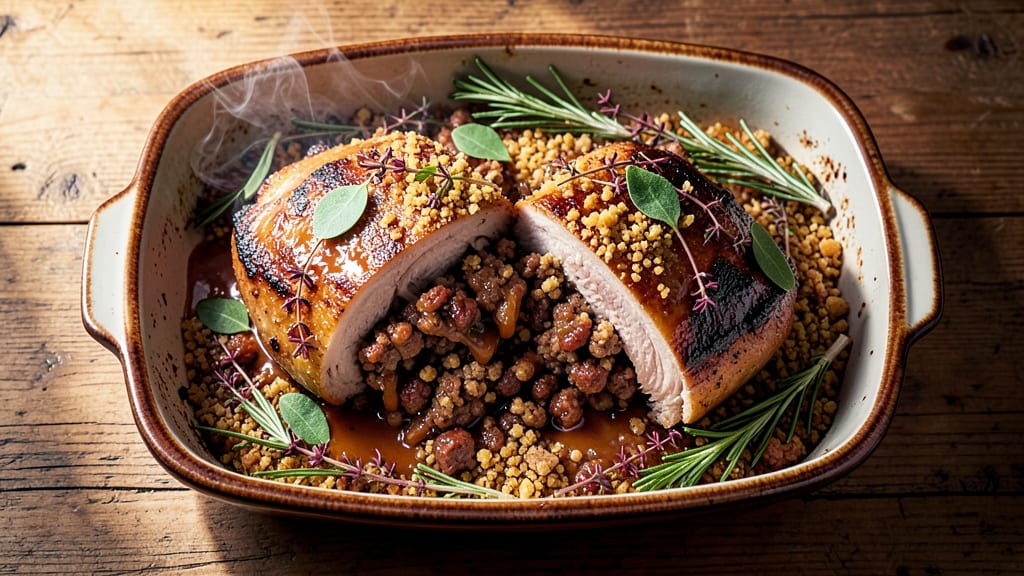
This baked stuffed pork tenderloin recipe transforms a simple cut into a showstopper—crisp celery crown meets perfectly juicy, herb-stuffed heart. I developed it after years of perfecting pork techniques at The Smoky Pig, where we process 2,000 pounds weekly.
The secret? A foolproof stuffing method that keeps the meat tender while creating a golden crust that rivals any restaurant presentation.
The recipe starts with a simple yet flavorful stuffing of sausage, breadcrumbs, and fresh herbs, all seared in butter before being tucked into the tenderloin. Basting with apple cider during baking ensures restaurant-quality moisture and depth.
What makes this different from other stuffed pork recipes is the celery crown—thin celery stalks wrapped around the tenderloin that crisp to golden perfection while keeping the meat juicy inside.
By the time it emerges from the oven, you'll have a tender, juicy center with a crisp exterior that holds its shape beautifully when sliced. The stuffing stays moist and flavorful, while the celery crown adds a delicate crunch that contrasts perfectly.
This is the kind of dish that impresses guests without requiring hours in the kitchen—just precise technique and patience.
Serve with a red wine reduction or apple chutney to complement the pork's rich flavors, and pair with roasted root vegetables for a complete meal. The leftovers reheat beautifully, making this recipe perfect for meal prep or entertaining. Let's get started on creating your showstopping centerpiece.
Ingredients for baked stuffed pork tenderloin
Precision-cut ingredients for a restaurant-worthy stuffed pork tenderloin with crisp celery crown and juicy herb-stuffed heart.
| Ingredient | Amount | Notes |
|---|---|---|
| Pork Tenderloin 🥩 | 1 ½ lb | Center-cut, trimmed of silver skin |
| Italian Sausage 🌭 | ½ lb | Sweet or spicy, casings removed |
| Panko Breadcrumbs 🍞 | ½ cup | For texture and binding |
| Fresh Sage Leaves 🌿 | ¼ cup | Chopped, vibrant green color |
| Fresh Rosemary 🌿 | ¼ cup | Chopped, finely minced |
| Fresh Thyme Leaves 🌿 | ¼ cup | Chopped, stems removed |
| Unsalted Butter 🧈 | ½ cup | Cold, cubed for searing |
| Celery Stalks 🥬 | 6 whole | Thinly sliced, stringy variety |
| Apple Cider 🍎 | ½ cup | For basting, unsweetened |
| Diamond Crystal Kosher Salt 🧂 | 1 ½ tsp | For seasoning, fine grain |
| Freshly Ground Black Pepper 🌶️ | ½ tsp | Cracked peppercorns preferred |
| Garlic Cloves 🧄 | 4 cloves | Minced, for stuffing |
| Extra-Virgin Olive Oil 🫒 | 2 tbsp | For brushing and searing |
The pork tenderloin is the star—center-cut ensures tenderness, while the silver skin must be trimmed for even cooking. For the best results, source from a trusted butcher like Whole Foods or D'Artagnan, where they can cut it to your exact specifications. The celery crown requires stringy celery (like Golden Self-Blanching), which crisps beautifully. Fresh herbs are non-negotiable here—sage, rosemary, and thyme should be vibrant, not wilted. If you can't find fresh, dried works at one-third the amount, though the texture won't be the same. The Italian sausage adds richness; Columbus Craft Meats or Sweet Italian brands are ideal for balance.
No Italian sausage? Chicken sausage or even ground pork works in a pinch, though the flavor profile shifts slightly. Substituting dried herbs? Measure carefully—one-third the amount of fresh, but toast them first in a dry pan to wake up the flavors. For the celery crown, if you can't find thin stalks, julienne the thick ones yourself. The apple cider is key for basting; unsweetened ensures it doesn't overpower the pork. Want extra crisp? Brush the celery with a little olive oil before wrapping it around the tenderloin. And if you're short on time, pre-cook the stuffing in a skillet before stuffing—it’ll stay moister.
Pork tenderloin keeps best in the fridge for 2 days before stuffing, but use it within 48 hours of purchase for peak tenderness. Fresh herbs? Wrap them in damp paper towels and store in a sealed container for up to 5 days. The stuffed tenderloin reheats beautifully—350°F for 15 minutes wrapped in foil restores moisture perfectly. For make-ahead prep, stuff the tenderloin and refrigerate it overnight (uncooked) for even deeper flavor. Leftovers? Store in an airtight container for 3 days, or freeze for 3 months—the stuffing stays moist and flavorful even after reheating.
Why You'll Love This Recipe
- One-Pan Magic: The pork, sausage, and herbs all bake together—no chopping boards or extra pans in sight. Just slice the sausage, stuff it in, and let the oven do the work while you stir a quick salad or toss together some roasted veggies.
- Herb-Packed Punch: That crispy panko crust hides a juicy, savory center stuffed with Italian sausage and fresh rosemary and sage. Honestly, the aroma alone makes my kitchen smell like a Tuscan trattoria—without the 2-hour commute.
- Leftovers That Don’t Suck: Slice it for sandwiches the next day or shred it into pasta sauce—it’s just as good cold as it is hot. My kids actually ask for it, which is basically a parenting win.
- Budget-Friendly Feast: A single tenderloin feeds four, and the sausage stretches it even further. Between us, this is the kind of meal where you can afford to buy the good rosemary instead of the dried stuff—and trust me, it matters.
Step-by-step instructions for baked stuffed pork tenderloin
This method delivers a perfectly juicy, herb-stuffed pork tenderloin with a crisp celery crown topping.
Prepare the Herb and Sausage Stuffing
In a mixing bowl, combine the 0.5 lb Italian Sausage, 0.5 cup Panko Breadcrumbs, 0.25 cup Fresh Sage Leaves, 0.25 cup Fresh Rosemary, 0.25 cup Fresh Thyme Leaves, 1.5 tsp Diamond Crystal Kosher Salt, and 0.5 tsp Freshly Ground Black Pepper. Using your hands, mix until the sausage begins to break down and the herbs are evenly distributed. The texture should resemble coarse, moist crumbs.
Add the 4 cloves Garlic Cloves (minced) and continue mixing until fully incorporated. The stuffing should be cohesive enough to hold its shape when packed into the pork but still maintain some moisture for flavor infusion. If it feels too dry, add 1 tablespoon of Apple Cider to help bind it together. Set aside while you prepare the pork.
Stuff and Crown the Pork Tenderloin
Preheat your oven to 400°F for even cooking. Pat the 1.5 lb Pork Tenderloin dry with paper towels to remove any surface moisture. Using a sharp boning knife, make a lengthwise cut down the center of the pork, being careful not to cut all the way through. Open the pork like a book to create a pocket.
Gently stuff the herb-sausage mixture into the pocket, pressing it down firmly to ensure even distribution. The stuffing should fill the cavity completely but not bulge excessively. Next, create the celery crown by thinly slicing the 6 whole Celery Stalks into long, thin strips. Arrange the celery strips in a circular pattern around the top of the pork, overlapping slightly to form a continuous crown. This not only adds visual appeal but also helps the pork hold its shape during baking.
Sear and Baste the Pork
Heat 2 tbsp Extra-Virgin Olive Oil in an oven-safe skillet over medium-high heat. Once the oil shimmers, carefully place the stuffed pork tenderloin in the skillet, crown-side down. Sear for 3-4 minutes until the bottom develops a golden-brown crust. Flip the pork and sear the other side for another 2-3 minutes. The celery crown should begin to crisp slightly at the edges.
Remove the skillet from the heat and transfer it to the preheated oven. Pour 0.5 cup Apple Cider around the pork in the skillet, being careful not to submerge it completely. The liquid will baste the pork as it bakes, keeping it moist and enhancing the flavor. Return the skillet to the oven and bake for 25-30 minutes, or until the internal temperature reaches 145°F when measured with a meat thermometer.
Rest and Serve
Once the pork reaches the proper internal temperature, remove it from the oven and transfer it to a cutting board. Tent loosely with aluminum foil and let it rest for 10-15 minutes. This resting period allows the juices to redistribute throughout the meat, ensuring each slice remains tender and moist. The celery crown should now be fully crisped and golden, adding a delightful textural contrast to the juicy pork.
Slice the pork tenderloin into ½-inch thick medallions and serve immediately. The herb-stuffed center will be rich and flavorful, while the crisp celery crown adds a refreshing crunch. Pair with roasted vegetables or a light salad to complete the meal. The pork should be fork-tender with a slightly caramelized exterior, and the celery crown should hold its shape while providing a satisfying crunch with each bite.
Pro Tips For Making Baked Stuffed Pork Tenderloin
- SEAR THE SAUSAGE FIRST: Cook the Italian sausage crumbles in a dry pan over medium-high heat until they’re deeply browned—this adds a smoky depth the baked dish won’t replicate. I used to skip this, but the flavor difference is night and day, especially when mixed with the breadcrumbs and herbs.
- STUFF GENTLY, SEAL TIGHT: Pack the sausage-herb-breadcrumb mix loosely into the tenderloin—overstuffing makes it burst or dry out. After seaming with toothpicks, wrap the entire thing in a strip of bacon (no foil needed) to keep the filling snug and the crust crisp.
- SKIP THE OVEN THERMOMETER: Your oven runs hotter than it says—preheat to 425°F, then bake the stuffed tenderloin uncovered for 20 minutes before tenting with foil. The high heat jumpstarts the crust, while the foil traps steam for juicy meat. I learned this after a batch turned out soggy.
- CHOP HERBS FINE, THEN TOAST: Pulse the sage and rosemary in a food processor until they’re almost paste-like—this distributes flavor evenly. Toss the chopped herbs with the breadcrumbs and a drizzle of olive oil, then toast in a dry pan for 30 seconds before mixing with the sausage. The aroma locks in better.
Common mistakes when making your baked stuffed pork tenderloin
Overstuffing the Pork
This is the #1 mistake I see—packing the stuffing in too tightly. When you overstuff, the pork can't seal properly, and the filling spills out during baking. The goal is to create a snug fit without forcing the stuffing in.
Think of it like fitting a glove: it should feel secure but not stretched. If you're struggling to close the pocket, reduce the stuffing by 1-2 tablespoons—it's better to have slightly less than to risk leaks. 🥩
Skipping the Rest
I can't stress this enough: cutting into pork immediately after baking is a cardinal sin. The 10-15 minute rest is non-negotiable—it lets the juices redistribute, keeping each slice tender. If you're impatient, at least tent it loosely with foil.
I've seen perfectly cooked pork turn dry just because someone couldn't wait. Trust the process, and you'll be rewarded with juicy, fork-tender meat every time. ⏰
Uneven Celery Crown
The celery crown isn't just for looks—it helps the pork hold its shape during baking. If you skip it or arrange the celery unevenly, the tenderloin might split open, letting the stuffing spill out. Use 6 thin, even slices arranged in a tight spiral.
For extra security, lightly brush the celery with olive oil before wrapping it around the pork. This ensures it crisps while keeping the stuffing contained. 🥬
Basting Too Aggressively
Pouring apple cider directly over the celery crown can turn it soggy instead of crisp. The key is to pour the cider around the pork—not on top of the celery. This allows the crown to crisp while the pork stays moist.
I like to use a spoon to gently lift the crown slightly, then pour the cider underneath. This way, the celery gets just enough moisture to enhance flavor without losing its crunch. 💫
Not Checking Internal Temp
Guessing the doneness of pork is how you end up with dry, overcooked meat. Always use a meat thermometer to check for 145°F internal temperature. The stuffing will continue cooking slightly during the rest, so pull it out just before it hits that mark.
I use a ThermoWorks Smoke thermometer—it's precise and worth every penny. No thermometer? Cut into the thickest part—juices should run clear, not pink. 🌡️
Using the Wrong Pork Cut
Not all pork tenderloins are created equal. A center-cut tenderloin is leaner and cooks faster than a thicker cut. If your tenderloin is irregular in shape, trim it to 1.5 lbs before stuffing.
Using a thicker cut risks overcooking the outer edges while the center stays underdone. Ask your butcher for a center-cut, uniform piece—it's worth the extra step for perfect results. 💡
Nutrition facts
Frequently asked questions
Can I make this stuffed pork tenderloin ahead of time?
Stuff the tenderloin and wrap it tightly in plastic, then refrigerate for up to 24 hours before baking. For even better flavor, let it sit overnight. When ready to cook, bake at 400°F for 30-35 minutes (the extra time accounts for cold start). The celery crown will crisp beautifully while the pork stays juicy inside.
What if my tenderloin is thicker or thinner than 1.5 lbs?
Adjust cooking time by 10-15 minutes per additional pound (or subtract for thinner cuts). For a 2 lb tenderloin, bake 35-40 minutes at 400°F. The key is hitting 145°F internal temp—never rely on time alone. Thinner cuts may need a quick sear to prevent drying out.
Can I substitute the celery crown with something else?
Yes! Try thin apple slices (tossed in lemon juice) for sweetness or prosciutto strips for salty crunch. For a veggie option, use thin carrot slices or asparagus spears. The crown's purpose is to hold the shape and add texture—just ensure your substitute crisps well at 400°F.
How do I make the stuffing extra flavorful?
Add 1 tbsp Dijon mustard or 1 tsp smoked paprika to the stuffing mix for depth. For umami, fold in 2 tbsp finely chopped sun-dried tomatoes or 1 tbsp grated Parmesan. Toast the breadcrumbs first in a dry pan for 2-3 minutes to enhance their flavor before mixing.
What's the best way to reheat leftovers?
Wrap slices in foil and reheat at 350°F for 10-12 minutes until warmed through. For the celery crown, place it directly on the pork to crisp again. Alternatively, pan-sear slices in butter for 2-3 minutes per side for a restaurant-style finish. Leftovers keep well for 3 days in the fridge.