
Main Courses
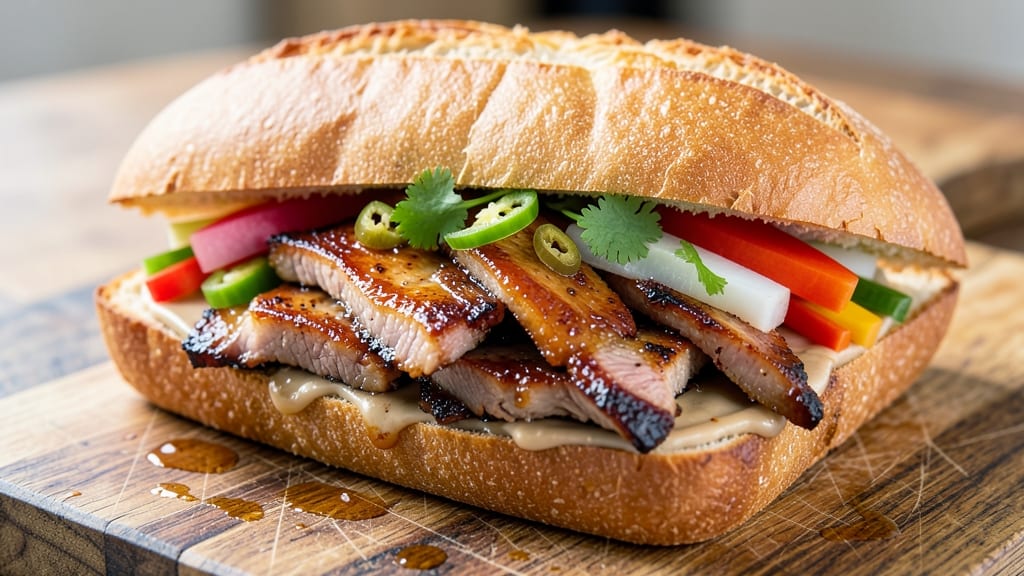
This banh mi roast pork recipe brings the bold flavors of Vietnam to your kitchen with smoky, sweet pork that melts between crisp baguettes. ✨ After years of perfecting Vietnamese techniques in my own kitchen, I've developed a method that delivers restaurant-quality results at home—no pressure cooker required.
The secret lies in the marinade—a balance of fish sauce, sugar, and five-spice powder—that transforms simple pork shoulder into tender, caramelized slices with just the right amount of char.
We'll build the sandwich with all the classic elements: crisp pickled carrots and daikon, fresh cilantro, jalapeños, and a spread of pâté or chả lụa for that authentic umami kick.
What you'll end up with is a sandwich that's crispy, juicy, and packed with layers of flavor—smoky pork, tangy pickles, fresh herbs, and that perfect crunch from the baguette.
The combination of textures and flavors makes every bite unforgettable, whether you're serving it at a family gathering or enjoying a solo lunch.
This recipe pays homage to the history of bánh mì, which began as a fusion of French baguettes and Vietnamese ingredients during colonial times. While traditional versions use leftover roast pork, my method ensures you get that signature texture and flavor without needing to plan ahead. Let's get started!
Ingredients for banh mi roast pork
The heart of bánh mì—smoky pork, tangy pickles, and crisp baguettes—all starting with these bold ingredients.
| Ingredient | Amount | Notes |
|---|---|---|
| Pork Shoulder 🥓 | 2 lb | Bone-in for flavor, cut into 1-inch cubes |
| Fish Sauce 🥫 | ½ cup | Red Boat preferred for authentic taste |
| Brown Sugar 🍚 | ½ cup | Packed, light or dark |
| Five-Spice Powder 🌶️ | 1 tbsp | Toasted for deeper aroma |
| Garlic Cloves 🧄 | 6 cloves | Minced, fresh preferred |
| Fresh Ginger 🌿 | ½ cup | Finely grated, peeled |
| Lime Juice 🍋 | ¼ cup | Freshly squeezed |
| Sesame Oil 🫒 | 1 tbsp | Toasted, not flavored |
| Baguettes 🥖 | 4 whole | Fresh, crusty, 12-inch |
| Carrots 🥕 | 2 whole | Baby or small, peeled |
| Daikon Radish 🥕 | 1 whole | Medium size, peeled |
| Fresh Cilantro 🌿 | 1 cup | Stems removed, chopped |
| Jalapeños 🌶️ | 2 whole | Fresh, sliced thin |
| Mayonnaise 🥫 | ½ cup | Duck or vegan mayo preferred |
| Salt 🧂 | 1 ½ tsp | Kosher or sea salt |
The pork shoulder is everything here. Look for bone-in cuts at Whole Foods or your local butcher—they stay juicier. If you can't find Red Boat fish sauce, Three Crabs is a solid backup. The sugar should be packed—light brown gives a touch of molasses depth. Toast your five-spice powder in a dry pan for 30 seconds before adding to the marinade; it makes a huge difference. Fresh ginger and garlic are non-negotiable for that authentic punch, but if you're in a pinch, jarred minced garlic works in a bind.
No daikon? Extra radish or turnip stretches it out, though the texture won't be identical. The carrots can be baby or regular—just peel them first. Fresh jalapeños too spicy? Pickled jalapeños at half the amount add tang without heat. For mayo, Hellmann's duck mayo is my go-to, but any good-quality mayo works. The cilantro stems add flavor too—don't toss them! If you're prepping ahead, pickle the carrots and daikon 2 days early so the flavors meld perfectly.
Marinated pork keeps 3 days in the fridge, but it's best used within 24 hours for maximum tenderness. The pickled veggies stay crisp for 5 days—store them in their brine. Baguettes? Wrap in a towel and freeze for up to 1 month—thaw at room temp before toasting. I always make double the pork—leftovers taste even better the next day in sandwiches or fried rice.
Why You'll Love This Recipe
- One-Pan Magic: I swear by this recipe—just toss the pork shoulder with fish sauce, brown sugar, and five-spice, then let the oven do the work. No flipping, no fussing, and the garlic cloves caramelize right into the meat.
- Sweet-Savory Bomb: That balance of sticky brown sugar and funky fish sauce? It’s ridiculously good. The pork ends up tender with a crackling crust, and the five-spice powder gives it this warm, aromatic depth that lingers.
- Weeknight & Picnic Hero: Between us, this makes the perfect sandwich filling for lunchboxes or potlucks. Slice it thin, pile it high on a baguette, and suddenly you’ve got a meal that feels fancy but costs next to nothing.
- Leftovers That Don’t Suck: Honestly, I make a double batch on Sundays because the flavor only gets better after resting. Shred it for tacos, stir-fry it with rice, or just reheat slices straight from the fridge—it’s that versatile.
Step-by-step instructions for Vietnamese-style roast pork
Here's how to transform simple ingredients into that signature banh mi roast pork.
🔥 Step 1: Marinate the Pork Shoulder for Maximum Flavor
In a large bowl, combine the 2 lb pork shoulder (cut into 1-inch cubes), 0.5 cup fish sauce, 0.5 cup packed brown sugar, 1 tbsp five-spice powder, 6 minced garlic cloves, and 0.5 cup finely grated fresh ginger. Mix thoroughly until the pork is completely coated in the marinade.
I like to use my hands for this—it helps distribute the marinade evenly. Cover the bowl and refrigerate for at least 4 hours (overnight is even better). This marinating time ensures the pork absorbs all those sweet, savory, and aromatic flavors. The fish sauce and brown sugar will create that signature sticky, caramelized crust we're after.
🍳 Step 2: Roast Until Caramelized and Tender
Preheat your oven to 325°F. Transfer the marinated pork to a roasting pan, making sure the cubes aren't piled too high. Roast for 2 hours, then increase the heat to 375°F and continue roasting for another 30-45 minutes until the pork is fork-tender and the edges are deep golden brown with caramelized spots.
Here's where the magic happens: the high heat at the end creates that beautiful caramelized crust while keeping the meat juicy inside. I check for doneness by piercing a piece with a fork—it should slide in easily, and the juices should run clear. If it's not quite there, give it another 10 minutes at 375°F.
🥘 Step 3: Prepare the Pickled Vegetables
While the pork roasts, make the pickled vegetables that balance the richness. In a small bowl, combine 0.25 cup freshly squeezed lime juice, 1 tbsp toasted sesame oil, 1.5 tsp salt, and 1 cup chopped fresh cilantro. Thinly slice the 2 whole carrots and 1 whole daikon radish, then toss them with the lime mixture. Add 2 thinly sliced whole jalapeños and let sit for at least 15 minutes before using.
The acidity from the lime juice will soften the vegetables slightly while adding that bright, tangy contrast. This step is crucial—it cuts through the richness of the pork and adds freshness to each bite. I like to make this just before serving so the vegetables stay crisp.
🍽️ Step 4: Assemble the Banh Mi
Toast the 4 whole baguettes until they're crisp and golden. Spread each with 2 tablespoons of mayonnaise—I prefer duck or vegan mayo for that authentic Vietnamese flavor. Add a generous portion of the roast pork, then top with the pickled vegetables and any accumulated juices from the roasting pan.
Here's where it all comes together. The crispy baguette, tender pork, sweet-savory glaze, and bright pickled vegetables create that perfect balance of textures and flavors. For extra crunch, I like to add a few extra slices of jalapeño on top. Serve immediately while everything is hot and fresh!
Pro Tips For Making Banh Mi Roast Pork
- CRANK THE HEAT THEN SLOW IT: Start your pork shoulder on high heat until it sears deep brown—this locks in flavor. Once browned, drop to 300°F (150°C) and let it cook low and slow for 3-4 hours. I used to rush the sear, and the meat always tasted flat. Don’t skip this step—it builds the crust that makes the difference.
- SWEAT THE GARLIC: Cook your minced garlic in oil until it’s golden, not just fragrant. Burnt garlic ruins the whole dish, but properly sweated garlic adds a rich depth. If you’re impatient, pull it out just before it turns nutty—you’ll know it’s right when the kitchen smells like a Vietnamese street cart.
- DON’T SKIP THE REST: Let the pork shoulder rest for 30 minutes after cooking—yes, even if you’re starving. The meat will stay juicy, and slicing it thin becomes a breeze. I learned this after serving dry, shredded pork that fell apart at the first bite. Trust me, the wait is worth it.
- SWAP THE SUGAR HALFWAY: Add half the brown sugar with the five-spice at the start, then sprinkle the rest in the last 30 minutes of cooking. This prevents a sticky mess and ensures the pork gets that perfect caramelized glaze without burning. I used to dump it all in early, and the sugar would turn to syrup too fast.
Regional styles of this recipe
Saigon-Style Bánh Mì
This is the classic version you'll find in Vietnamese bakeries across Saigon, where the pork is marinated overnight in a sweet-savory blend of fish sauce, brown sugar, and five-spice.
The key difference here is the charred baguette—I like to toast mine directly over a gas flame for that smoky aroma. Traditional Saigon bánh mì often includes pâté or chả lụa (Vietnamese summer sausage) alongside the pork for extra layers of flavor. 🥖
Northern Vietnamese Twist
Up north, bánh mì often features a lighter touch with less sugar in the marinade, emphasizing the five-spice powder and adding a splash of rice wine vinegar to brighten the pork. The pickled vegetables here might include green onions and cucumber slices>—thinly sliced for extra crunch.
I've seen versions where the pork is braised instead of roasted, giving it a tender, almost shreddable texture.
Southern California Fusion
This modern take swaps the traditional baguette for a ciabatta roll and adds a spread of spicy mayo> (mayo mixed with sriracha and lime juice).
The pork marinade sometimes includes honey> instead of brown sugar for a sweeter profile, and you'll often find avocado slices> or kimchi> as additional toppings. It's a great way to introduce bánh mì to those who prefer bolder, spicier flavors.
Hoisin-Glazed Variation
For a richer, stickier pork, I like to add 2 tablespoons of hoisin sauce> to the marinade along with the fish sauce and brown sugar. This creates a glossy, caramelized glaze that clings beautifully to the pork.
The rest of the sandwich stays the same, but the flavor profile becomes deeper and more complex. This version works especially well when served with a side of quick-pickled cucumbers> for extra freshness.
Vegetarian Adaptation
For a plant-based version, replace the pork with marinated and roasted king oyster mushrooms> or extra-firm tofu> pressed and sliced thickly. The marinade stays the same, but I add 1 tablespoon of soy sauce> to enhance the umami.
The texture won't be identical, but it captures the sweet-savory essence of bánh mì while keeping it vegetarian-friendly. 🌱
Regional Bread Choices
While baguettes are traditional, I've experimented with brioche buns> for a sweeter, softer texture and even pretzel bread> for a salty contrast. The key is to toast the bread until it's crisp—this is what gives bánh mì its signature crunch.
For a rustic touch, try a sourdough loaf> cut into thick slices and toasted until golden. The flavor differences are subtle but can elevate the sandwich depending on your preference.
Nutrition facts
Frequently asked questions
Can I substitute pork shoulder with another cut?
Yes! If you can't find pork shoulder, use pork butt or pork loin—both work well. For extra tenderness, cut the meat into 1-inch cubes and marinate for at least 4 hours. Avoid lean cuts like tenderloin—they won't develop that signature caramelized crust.
How do I make the pickled vegetables extra crisp?
For maximum crunch, slice the carrots and daikon very thinly (about 1/8-inch thick) and soak them in ice water for 10 minutes before pickling. Use white vinegar instead of lime juice if you prefer a sharper tang, and add 1 tsp sugar to the brine. Store them in the fridge for up to 5 days to keep them crisp.
What if my baguettes aren't fresh?
If your baguettes are stale, slice them in half lengthwise and toast them in the oven at 375°F for 5-7 minutes until crisp. For extra flavor, brush the cut sides with garlic butter before toasting. If you can't find fresh baguettes, French bread or ciabatta work in a pinch—just toast them until golden.
Can I make this recipe without five-spice powder?
Mix ½ tsp cinnamon, ¼ tsp cloves, ¼ tsp fennel seeds, and ¼ tsp black pepper to mimic the flavor. Toast the spices in a dry pan for 30 seconds to deepen their aroma. The marinade will still taste rich and aromatic, though the complexity of traditional five-spice will be slightly different.
How do I reheat leftover roast pork?
Reheat pork in a skillet over medium heat for 3-5 minutes until warmed through, adding a splash of water to prevent drying. For crispiness, broil for 1-2 minutes at the end. Avoid microwaving—it makes the pork soggy. Leftover pork also works great in fried rice or pho!