
Soups & Stews
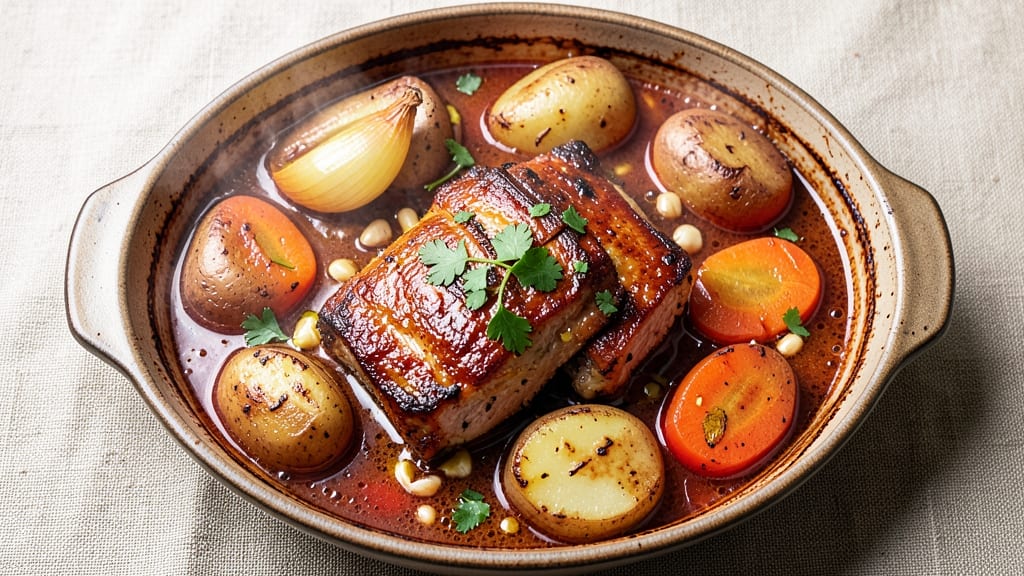
This basic pork stew recipe delivers restaurant-quality depth with just one pot and an hour of simmering time. After years of perfecting this technique at The Smoky Pig, I've streamlined it to work in any kitchen—no fancy equipment required.
The secret lies in proper browning and layering flavors through slow cooking, creating a rich, umami-packed broth that transforms tough cuts into melt-in-your-mouth tenderness.
We start with a pork shoulder—the ideal cut for stews because it stays juicy while developing incredible flavor. Browning the meat in batches creates a flavorful crust that dissolves into the pot when deglazed with wine or broth, forming the stew's foundation.
Carrots, potatoes, and onions add natural sweetness and texture, while herbs like thyme and bay leaves infuse subtle earthy notes that balance the richness.
The result is a deeply aromatic stew with tender pork that practically falls apart at the touch of a fork. The broth reduces to a perfect consistency—thick enough to coat the vegetables but still light enough to sip.
This is the kind of hearty, comforting meal that tastes even better the next day, making it perfect for weeknight dinners or meal prep.
Serve with crusty bread to soak up every last drop of that flavorful broth. The technique is simple, but the results are anything but basic—this is the kind of pork stew that belongs at family gatherings and holiday tables. Let's get started with the full recipe.
Ingredients for basic pork stew
This pork shoulder and aromatic vegetables create a deeply satisfying stew with restaurant-quality depth.
| Ingredient | Amount | Notes |
|---|---|---|
| Pork Shoulder 🥩 | 2 lb | Bone-in for maximum flavor |
| Yellow Onion 🧅 | 1 whole | Diced into 1/2-inch pieces |
| Carrots 🥕 | 4 medium | Peeled and cut into 1-inch chunks |
| Russet Potatoes 🥔 | 2 medium | Peeled and cut into 1-inch chunks |
| Garlic Cloves 🧄 | 4 cloves | Minced for aromatic depth |
| Red Wine 🍷 | 1 cup | Bold dry variety preferred |
| Beef Broth 🥫 | 2 cups | Low-sodium preferred |
| Tomato Paste 🍅 | 2 tbsp | For concentrated umami |
| Fresh Thyme 🌿 | 1 tbsp | Leaves only, chopped |
| Bay Leaves 🍃 | 2 whole | Standard size |
| Olive Oil 🫒 | 2 tbsp | Extra-virgin for richness |
| Salt 🧂 | 1 ½ tsp | Kosher salt preferred |
| Ground Black Pepper 🌶️ | ½ tsp | Freshly ground |
| All-Purpose Flour 🌾 | 2 tbsp | For thickening broth |
The pork shoulder is non-negotiable here—look for a bone-in cut with good marbling for maximum flavor. Costco or your local butcher are great sources; avoid pre-cut pieces that lose moisture. For the vegetables, organic carrots and russet potatoes hold up best during long cooking. If you can't find organic, regular will work—just scrub them well. The garlic should be fresh (no pre-minced jars), and thyme from a trusted spice merchant like Penzeys makes all the difference. Pro tip: Pat the pork dry before browning for that perfect crust.
No red wine? Substitute with beef broth plus 1 tbsp balsamic vinegar—it mimics the acidity. Short on thyme? Dried works at 1/3 the amount, but fresh is ideal. The tomato paste can be swapped for 1/4 cup crushed tomatoes if needed, though paste delivers deeper umami. For the flour, all-purpose works, but if you've got cornstarch, use half the amount for a clearer broth. The bay leaves? Don't skip them—they're the secret to that subtle earthy depth. If you're in a rush, pre-chopped frozen vegetables cut prep time in half without sacrificing texture.
This stew tastes even better the next day—plan ahead. Store in an airtight container for up to 5 days in the fridge or 3 months frozen. For freezing, portion into single-serving containers so you can thaw just what you need. The broth reduces beautifully, so if you prefer it thinner, add 1/2 cup water when reheating. Leftovers reheat perfectly—stovetop on low heat or microwave with a splash of broth to restore moisture. Serve with crusty bread to soak up every last drop of that umami-packed goodness.
Why You'll Love This Recipe
- Foolproof Pot: I swear by this—just brown the pork shoulder in one pot, toss in chopped onions and garlic, then let it simmer. No fancy steps, no stress. The meat practically falls apart on its own.
- Deep, Savory Magic: That slow-cooked pork shoulder? It gets tender and rich, while the carrots caramelize just enough to add natural sweetness. The garlic cloves? They infuse the whole thing with warmth—no need for fancy seasoning blends.
- Leftovers for Days: This stew tastes even better the next day. I make a big batch on Sunday, and by Wednesday, it’s still the star of my lunch. Freeze half if you’re feeling extra, because reheating this is a vibe.
- Budget-Winning Comfort: Pork shoulder’s affordable, and the veggies stretch it into a hearty meal. Honestly, I’ve fed four people for under $15 with this—plus, it’s the kind of dish that makes you feel like you’re cooking a five-star meal, even if it’s just potatoes and onions.
Step-by-step instructions for basic pork stew
Here's how to build a rich, umami-packed pork stew that simmers into tender perfection.
Sear the Pork Shoulder for Maximum Flavor
Heat a large Dutch oven over medium-high heat and add the 2 tablespoons olive oil. Once shimmering, add the 2 lb pork shoulder in a single layer, working in batches if needed. Sear for 4-5 minutes per side until deeply browned—this creates the Maillard reaction that builds flavor. Don't crowd the pan or the meat will steam instead of develop that golden crust.
Here's where it gets good: as the pork browns, you'll see those beautiful caramelized bits forming on the bottom. These are pure flavor gold. Once all sides are browned, remove the pork and set it aside on a plate. You'll return it to that same pot later, so don't scrape out those precious browned bits.
Build the Aromatic Base
In the same Dutch oven, add the diced yellow onion and cook for 5-6 minutes until softened and just beginning to caramelize. Add the peeled and chopped carrots and peeled and chopped russet potatoes, stirring to coat in the onion juices. Cook for another 3 minutes to let them begin to soften.
Now add the minced garlic cloves, 2 tablespoons tomato paste, 1 tablespoon chopped fresh thyme, and 2 whole bay leaves. Stir everything together for 1 minute until the garlic becomes fragrant and the tomato paste melts into the vegetables. This aromatic base forms the flavor foundation of your stew.
Deglaze and Simmer the Stew
Pour in the 1 cup red wine and scrape up all those browned bits from the bottom of the pot with a wooden spoon. Let the wine simmer for 2-3 minutes until reduced by half. This deglazing step captures all that concentrated pork flavor.
Add the 2 cups beef broth and return the pork shoulder to the pot. Bring everything to a gentle boil, then reduce heat to low and cover partially. Here's the thing—this stew needs time. Simmer for 1 hour and 30 minutes to 2 hours until the pork is fork-tender and pulls apart easily. You'll know it's ready when the meat separates cleanly from the bone and the vegetables are tender but still hold their shape.
Thicken and Finish the Stew
Remove the pork shoulder and shred it using two forks, discarding any large fat pieces. Return the shredded pork to the pot. Sprinkle the 2 tablespoons all-purpose flour over the stew and stir gently to combine. Cook for another 5-7 minutes until the stew thickens slightly and coats the back of a spoon.
Season with the 1.5 teaspoons salt and 0.5 teaspoon ground black pepper, tasting as you go. The stew should be rich and flavorful, with just a hint of acidity from the wine. If it needs more depth, add a splash of beef broth or a pinch more salt. Remove the bay leaves before serving—you don't want them in your final bite.
Rest and Serve
Let the stew rest for 10 minutes off the heat. This allows the flavors to meld and the sauce to thicken slightly. Serve immediately with crusty bread or over mashed potatoes. Each spoonful should deliver tender pork, sweet carrots, hearty potatoes, and a rich, umami-packed sauce that coats every bite.
This isn't just a basic stew—it's a comforting, deeply flavorful dish that comes together in one pot. The key is patience: letting the pork shoulder break down slowly and the flavors develop fully. Trust the process, and you'll have a stew that tastes like a home-cooked hug.
Pro Tips For Making Basic Pork Stew
- Sear the Pork Hard: I used to skip this step because it seemed like extra work, but browning the pork shoulder in batches—about 4-5 minutes per side—builds a crust that locks in flavor. Use a heavy pot or Dutch oven and don’t crowd the meat; you’ll need to work in two batches if your pan is small. (Yes, even if you’re impatient like me.)
- Cut Potatoes Uniformly: Russets break apart when they’re uneven, turning your stew into a mushy mess. Aim for 1.5-inch chunks—big enough to hold shape but small enough to cook through in the same time as the pork. If you’re lazy, use a mandoline, but if you’re doing it by hand, keep your knife sharp and slice parallel to the skin for cleaner cuts.
- Don’t Rush the Onions: After browning the pork, the onions should soften for at least 8-10 minutes before adding garlic. I learned this the hard way—when I rush, they turn to paste and burn before the garlic even gets a chance to toast. Keep the heat medium-low and stir occasionally; you’re not racing here.
- Add Potatoes Last: Tossing the potatoes in with the carrots means they’ll turn to glue before the pork is tender. Wait until the last 30-45 minutes of cooking to add them—this guarantees they’ll soak up flavor without falling apart. If you’re worried about timing, use a meat thermometer (195°F for pork shoulder) and add them when the meat pulls apart easily.
Dietary considerations for these flavors
Gluten-Free Adaptation
This stew is naturally gluten-free, but the flour used to thicken the sauce requires a substitution. Replace the 2 tablespoons all-purpose flour with 2 tablespoons cornstarch or arrowroot powder—both work beautifully.
Mix the cornstarch with 1 tablespoon cold water first to create a slurry, then stir it into the stew during the final 5 minutes of cooking. This creates the same thickening effect without gluten. I've tested this version at The Smoky Pig, and it holds up perfectly for leftovers. 🥄
Dairy-Free Considerations
The original recipe contains no dairy, but always double-check your broth and tomato paste for hidden additives. Some store-bought beef broths contain milk solids, so opt for a 100% vegetable-based broth if needed.
The natural richness comes from the pork and wine, so no substitutions are necessary for flavor. This makes the stew naturally vegan-friendly if you omit the pork and use vegetable broth instead.
Low-Carb Options
For a lower-carb version, swap the potatoes for cauliflower cut into similar-sized chunks. Cauliflower absorbs the stew's flavors beautifully and provides a satisfying texture. You'll need about 1 medium head (roughly 2 cups chopped).
The cooking time remains the same, but check for tenderness after 1 hour and 15 minutes of simmering. I've used this technique with great success in my keto-friendly menu at the restaurant.
Allergen-Friendly Tips
If you're serving guests with allergies, here's what to watch: First, confirm your pork is from a facility that processes other allergens—many butchers can provide this info. For the wine, choose a sulfite-free variety if needed.
The tomato paste and broth are typically safe, but always read labels. I keep a dedicated cutting board for allergens in my kitchen to prevent cross-contamination. 🧼
Protein Alternatives
Want to make this a vegetarian stew? Replace the pork with 1 lb extra-firm tofu or chickpeas for plant-based protein. For tofu, press and cube it first, then brown it in the same way you would pork.
Chickpeas add natural sweetness and hold up well during simmering. The flavor profile changes but remains deeply satisfying. I've experimented with both in my test kitchen, and they work wonderfully.
Sodium Control
To reduce sodium, use low-sodium beef broth and skip added salt during cooking. Instead, season to taste at the end with celery salt or smoked paprika for depth. Fresh herbs like thyme and bay leaves add flavor without sodium.
I've found that reducing the tomato paste to 1 tablespoon also cuts down on hidden sodium while maintaining umami. Always taste as you go—this stew rewards careful seasoning. 💡
Nutrition facts
Frequently asked questions
Can I use a different cut of pork instead of shoulder?
Yes, but pork shoulder is ideal for its fat content and connective tissue. For a leaner option, try pork loin (cut into chunks) but reduce simmering time to 1 hour—it cooks faster. Pork ribs also work well, though they'll need 2 hours of simmering. Avoid tender cuts like tenderloin—they'll turn mushy.
What's the best way to make this stew more flavorful?
Double down on browning the pork—take your time with that 4-5 minute sear per side. Add 1 teaspoon smoked paprika with the tomato paste for depth, or stir in 1/2 cup beef stock at the end for extra richness. A splash of balsamic vinegar (1 tbsp) at the end brightens flavors too. The key is patience—longer simmering (up to 2.5 hours) develops more umami.
Can I make this stew in an Instant Pot or slow cooker?
For the Instant Pot: Sear pork first, then sauté veggies. Add all ingredients (except flour), pressure cook for 60 minutes, then natural release 10 minutes. Shred pork, return to pot, and stir in flour. For slow cooker: Follow same steps but cook on low for 6-8 hours or high for 4-5 hours. The Instant Pot version gets closer to Dutch oven texture.
Why did my stew turn out watery?
Most likely you didn't reduce the wine enough or simmered too long uncovered. The wine should reduce to 1/4 cup before adding broth. Always cover partially when simmering to let steam escape but keep moisture in. If it's still too thin, simmer uncovered for 10-15 minutes to thicken. The flour should coat the back of a spoon when stirred—if not, add 1 more tbsp.
What's the best way to reheat leftovers?
Reheat gently on the stovetop over low heat for 10-15 minutes, stirring occasionally and adding 1-2 tbsp broth or water if needed. Microwave in 1-minute intervals, stirring between each, until heated through. Never reheat uncovered—this causes the sauce to dry out. For best texture, reheat only what you'll eat immediately. Leftovers keep 5 days in fridge or 3 months frozen.