
Main Courses
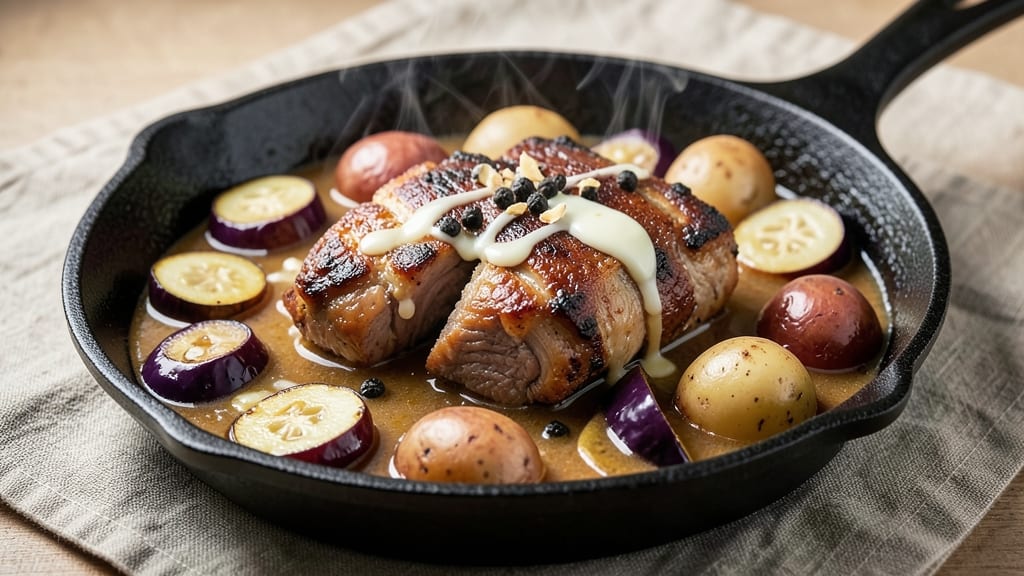
Batangas pork caldereta transforms humble ingredients into a dish that tastes like home. This Filipino classic features tender pork shoulder simmered in coconut milk until it practically melts, then finished with crispy fried eggplant and potatoes that add a satisfying crunch.
I first fell in love with this recipe during my time in the Philippines, where it's a staple in family gatherings and local carinderias.
The secret to authentic Batangas caldereta lies in the balance of flavors—sweet from coconut milk, tangy from vinegar, and smoky notes from slow cooking. Unlike other versions, this recipe calls for pork shoulder cut into large chunks, which becomes fork-tender after hours of simmering.
The vegetables are fried separately to maintain their crisp texture, creating contrast against the rich, creamy sauce.
What makes this dish truly special is how it comes together: the pork absorbs the aromatic spices, the coconut milk creates a velvety base, and the fried vegetables add texture that keeps every bite interesting.
Serve it over steamed rice to soak up every last drop of that flavorful sauce, or with crusty bread for dipping.
This recipe delivers restaurant-quality results with simple techniques—no fancy equipment needed, just patience and attention to timing. The long simmer develops deep flavors, while the crispy vegetables add a satisfying contrast that makes this dish unforgettable.
Ingredients for batangas pork caldereta
Sixteen ingredients transform into a dish that captures Filipino home cooking magic.
| Ingredient | Amount | Notes |
|---|---|---|
| Pork Shoulder 🥩 | 3 lb | Bone-in, cut into 2-inch chunks |
| Fresh Eggplant 🍆 | 1 ½ lb | Cut into 1-inch cubes |
| Russet Potatoes 🥔 | 2 lb | Cut into 1-inch chunks |
| Coconut Milk 🥥 | 2 cans | Full-fat, 13.5 oz each |
| Canola Oil 🫒 | ½ cup | For frying vegetables |
| White Vinegar 💧 | ¼ cup | For tangy balance |
| Garlic Cloves 🧄 | 8 cloves | Minced for aromatic base |
| Onion 🧅 | 1 whole | Medium, sliced into half-moons |
| Tomatoes 🍅 | 2 whole | Medium, quartered |
| Bay Leaves 🌿 | 2 whole | For subtle earthy flavor |
| Ground Black Pepper 🌶️ | 1 tsp | Freshly cracked |
| Salt 🧂 | 1 ½ tsp | Diamond Crystal preferred |
| Sugar 🍚 | 1 tbsp | Balances acidity |
| Dried Chili Peppers 🌶️ | 1 whole | Ancho or guajillo for smokiness |
| Long-Grain White Rice 🍚 | 2 cups | Uncooked, for serving |
The pork shoulder is the heart of this recipe—bone-in cuts add depth of flavor, while the 2-inch chunks ensure tender results. Filipino markets often carry pre-cut pork shoulder, but if you're buying from a regular butcher, ask for a well-marbled piece. For the eggplant and potatoes, Russet potatoes hold their shape best when fried, and eggplant should be firm with no soft spots. If you can't find fresh chili peppers, Penzeys or Latin markets carry dried varieties like ancho or guajillo that work perfectly for this dish. The coconut milk should be full-fat for that rich, creamy texture—Thai brands like Aroy-D are widely available and ideal.
No fresh chili peppers? Dried chili flakes or cayenne at half the amount will add heat without the same smoky depth. Running low on vinegar? Lime juice works in a pinch, though the flavor profile shifts slightly. For the vegetables, if you're short on time, pre-cut frozen eggplant and potatoes (thawed and patted dry) work surprisingly well. The tomatoes can be substituted with 1 can (14 oz) diced tomatoes if fresh aren't available, but they won't have the same bright acidity. For the garlic, garlic powder at one-third the amount is an option, but fresh is non-negotiable in my book—it makes all the difference in this aromatic base.
This dish tastes even better the next day as the flavors meld together. Store leftovers in the fridge for up to 5 days, covered with a tight lid to preserve that rich coconut aroma. For freezing, portion into airtight containers and it keeps for 3 months. The fried vegetables are best eaten fresh, so plan to fry them just before serving. If you're making this ahead, fry the vegetables, store them separately, and reheat in a skillet with a bit of oil before adding to the pork mixture. The rice? Cook it fresh—nothing beats steaming hot rice to soak up that flavorful sauce.
Why You'll Love This Recipe
- One-Pot Magic: I swear by this recipe’s simplicity—just brown the pork, toss in the veggies and coconut milk, then let it simmer. No fancy techniques, no extra pots, and honestly? That’s half the fun.
- Creamy Crisp Contrast: The eggplant soaks up the rich coconut milk while the potatoes stay firm, then the pork gets that perfect caramelized crust. Between us, that crispy edge with the creamy center? It’s my idea of heaven.
- Weeknight Hero: This feeds my family of five with leftovers for days, and it’s the kind of dish that tastes even better the next day. (Yes, even on a Tuesday night.) Plus, the pork shoulder gets more tender the longer it cooks—so it’s basically a set-it-and-forget-it miracle.
- Budget-Friendly Feast: Pork shoulder stretches for meals, potatoes and eggplant bulk it up, and coconut milk adds luxury without breaking the bank. I’ll be real: it’s my go-to when I need to feed a crowd without stressing over the grocery bill.
Step-by-step instructions for Batangas pork caldereta
Master this Filipino classic with layers of smoky depth and satisfying texture.
Brown the Pork Shoulder for Maximum Flavor
Heat a large Dutch oven over medium-high heat with 2 tablespoons of the canola oil. Working in batches, add the 3 lb pork shoulder in 2-inch chunks and sear until deeply browned on all sides, about 8-10 minutes per batch. This step develops the rich, caramelized foundation for your stew.
As you sear, press down gently on the pork with a wooden spoon to prevent curling. Remove the browned pork and set aside. The remaining 3 tablespoons of canola oil will be used later for frying the vegetables—don't drain it.
Build the Aromatic Base with Onion and Garlic
In the same Dutch oven, add the 1 whole onion sliced into half-moons and cook for 5 minutes until softened and beginning to caramelize. Add the 8 cloves garlic and cook for another 30 seconds until fragrant.
Here's where the magic happens: Stir in the 1 whole dried chili pepper (remove seeds if you prefer less heat) and toast for 1 minute until the pepper darkens slightly. This adds the signature smoky depth to the dish. Add the 2 whole bay leaves and 1.5 tsp salt next.
Fry Eggplant and Potatoes for Crunchy Texture
Heat the remaining 3 tablespoons canola oil in a separate skillet over medium-high heat. Fry the 1.5 lb eggplant in 1-inch cubes for 4-5 minutes until golden brown and slightly crispy. Remove and set aside on paper towels to drain excess oil.
In the same oil, fry the 2 lb russet potatoes in 1-inch chunks for 6-8 minutes until golden brown and crispy. The potatoes should hold their shape but develop a satisfying crunch. Remove and set aside with the eggplant. Keep both warm while you prepare the sauce.
Simmer the Coconut Milk Base
Return the Dutch oven with onions and garlic to medium heat. Add the 2 whole tomatoes quartered and cook for 3 minutes until they soften. Pour in the 2 cans coconut milk and stir well to combine. Bring to a gentle simmer.
Return the browned pork to the pot and add 0.25 cup white vinegar, 1 tbsp sugar, and 1 tsp ground black pepper. The vinegar brightens the coconut flavor while the sugar balances the acidity. Simmer uncovered for 45 minutes until the pork is tender and the sauce has thickened slightly.
Combine and Finish with Crispy Vegetables
Add the fried eggplant and potatoes back to the Dutch oven. Stir gently to coat everything in the coconut sauce. Simmer for another 10 minutes to heat through while maintaining the crispy texture of the vegetables.
Taste and adjust seasoning if needed—you may want to add a pinch more salt or a splash of vinegar for balance. Serve hot over 2 cups cooked long-grain white rice, spooning generous portions of pork and vegetables over each serving. The contrast of creamy coconut sauce with crispy vegetables and tender pork makes this dish unforgettable.
Pro Tips For Making Batangas Pork Caldereta
- Sear the Pork Shoulder First: Don’t rush this—get your pan smoking with canola oil and let that pork shoulder develop a deep brown crust before adding anything else. I used to skip this, and the dish always tasted flat until I realized the Maillard reaction is what carries the flavor through the coconut milk.
- Cut Potatoes in Chunks: Big, irregular chunks (about 2 inches) cook more evenly and hold their shape better than thin slices. Russets will break down in the coconut milk, but you want them to stay substantial—no mushy, sad potatoes ruining the dish.
- Simmer Low and Slow: After adding the coconut milk, drop the heat to a bare simmer and resist the urge to crank it up. The pork needs time to tenderize, and a rolling boil will turn the sauce into glue. Forty-five minutes of gentle cooking is worth it.
- Add Eggplant Late: Toss the eggplant in the stew only in the last 15 minutes—it soaks up liquid like a sponge. If you add it too early, you’ll end up with a watery mess instead of that perfect, creamy texture the dish is known for.
Pro cooking tips for perfect results
Pork Browning Mastery
Don’t skip the searing step—this builds the deep, caramelized foundation that makes the sauce sing. I use a Dutch oven because it holds heat beautifully, and I sear the pork in 2-inch chunks until deeply browned.
The trick? Press down with a wooden spoon to prevent curling, and work in batches if needed. This step takes patience but pays off with layers of flavor. 🥩
Coconut Milk Simmering Secrets
Simmering the coconut milk on medium heat (not boiling) prevents curdling and lets the flavors meld. I add the vinegar and sugar right before the pork returns to the pot—the acid brightens the coconut while the sugar balances it.
If you see the sauce splitting, whisk in 1 tablespoon cornstarch mixed with water to stabilize it. The key is a gentle simmer for 45 minutes—don’t rush it!
Crispy Vegetable Timing
Frying the eggplant and potatoes separately is non-negotiable for that perfect crunch. I use canola oil because it has a neutral flavor and high smoke point. Fry the eggplant first—it’s more delicate—then the potatoes.
Keep them warm in a 200°F oven while you finish the sauce. Adding them back at the end ensures they stay crisp, not soggy. 🍆
Dried Chili Pepper Trick
Toast the whole dried chili pepper for 1 minute before adding it to the onions—this unlocks its smoky depth. Remove the seeds if you prefer less heat. I like using ancho or guajillo peppers for their subtle sweetness.
If you can’t find them, a pinch of smoked paprika works in a pinch, but it won’t be the same. Trust me, this step makes all the difference!
Sauce Balance Check
Taste as you go! The sauce should be creamy but not watery, with a perfect balance of sweet, sour, and smoky. If it’s too thin, simmer uncovered longer. Too thick? Add a splash of coconut milk or water.
The vinegar and sugar should harmonize—adjust with ½ teaspoon at a time until it sings. Serve over steamed jasmine rice for the full experience. 🍚
Nutrition facts
Frequently asked questions
Why does this recipe use pork shoulder instead of other cuts?
Pork shoulder is perfect for caldereta because its fat marbling keeps the meat juicy during long simmering. The 2-inch chunks ensure even cooking and maximum flavor absorption from the coconut sauce. Unlike leaner cuts, shoulder stays tender while developing deep, caramelized edges from the initial browning.
Can I make this dish in a slow cooker?
Yes! Brown the pork first, then transfer everything (including fried vegetables) to a 6-quart slow cooker. Cook on low for 6-7 hours or high for 3-4 hours. The key difference is the vegetables may soften more, so add them during the last 30 minutes if you prefer extra crunch. The sauce will be even creamier from the gentle cooking.
What's the best way to store leftovers?
Store in an airtight container in the fridge for up to 5 days. The flavors actually improve overnight! For freezing, portion into single-serving containers and keep for 3 months. Reheat gently on the stove with a splash of water to restore moisture. The fried vegetables are best eaten fresh, but you can reheat them separately in a skillet.
How can I make this dish spicier?
For extra heat, add 1 tablespoon chopped fresh chili or 1 teaspoon chili flakes when frying the vegetables. You can also increase the dried chili pepper to 2 whole peppers (seeds removed for less heat). For a smoky kick, add ½ teaspoon smoked paprika to the sauce at the end. Adjust gradually—Filipino caldereta balances heat with coconut's richness.
What other vegetables can I use?
Classic options include green beans or bell peppers (fry separately for crunch). For a different texture, try sweet potatoes or carrots—just reduce fry time to 4-5 minutes to prevent overcooking. Avoid watery veggies like zucchini, as they'll dilute the sauce. The key is maintaining that satisfying contrast between creamy sauce and crispy vegetables.