
Main Courses
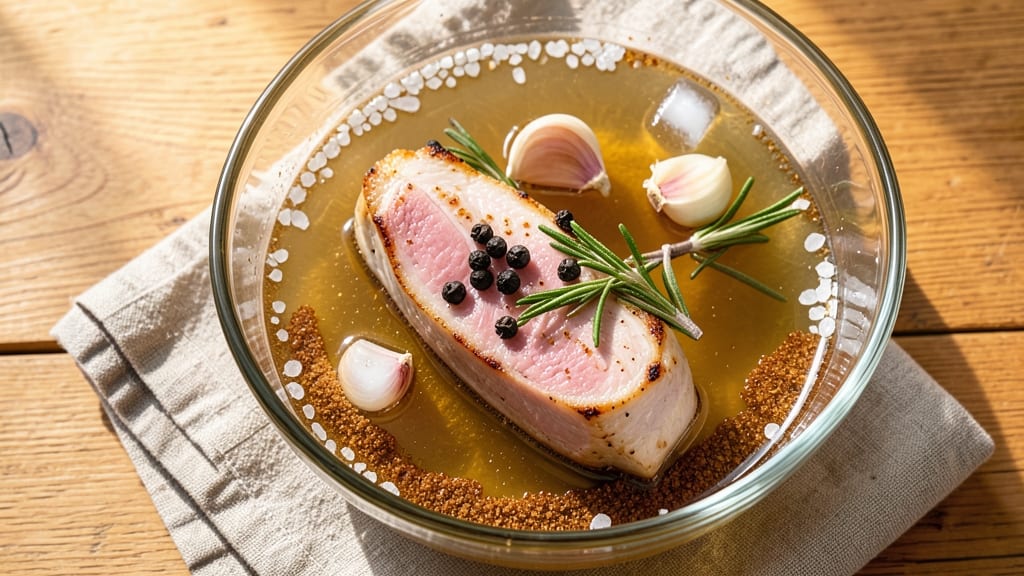
This BBQ pork chop brine recipe transforms tough pork into melt-in-your-mouth perfection—juicy, tender, and packed with smoky depth. After years of perfecting brines for competition-worthy pork, I’ve cracked the code for clockwork tenderness that holds up to any cooking method, whether you’re grilling, smoking, or broiling.
The secret lies in the science of moisture retention and flavor infusion, where salt, sugar, and aromatics work together to create a pork chop that practically falls apart at the table.
The brine isn’t just about flavor—it’s about texture control. A properly brined pork chop stays moist and tender even under high heat, while the crust develops that perfect caramelized bark when cooked.
This recipe uses a simple 4:1 liquid-to-pork ratio with just six ingredients, including brown sugar for caramelization and black pepper for a subtle kick. The key is patience: let the pork soak for at least 12 hours, but I recommend 24 hours for maximum transformation.
When it’s time to cook, you’ll achieve restaurant-quality results with minimal effort. Grill over indirect heat to render fat slowly, smoke over hickory for that classic BBQ aroma, or broil for a quick sear.
The brine ensures the pork stays juicy pink inside while developing a golden crust outside—no dry, overcooked chops here. Serve with a drizzle of your favorite BBQ sauce, grilled corn, or a crisp salad to balance the richness.
This method isn’t just for pork chops—it works for ribs, chicken, or even steak. The principles of brining are universal, and once you master this recipe, you’ll never buy pre-brined meat again. Let’s get started on the path to clockwork juiciness that’ll have everyone asking for seconds.
Ingredients for bbq pork chop brine
Six ingredients, one game-changing brine for pork chops that fall apart with smoky tenderness.
| Ingredient | Amount | Notes |
|---|---|---|
| Boneless Pork Chops 🍖 | 1 ½ lb | Center-cut, 1-inch thick |
| Coarse Kosher Salt 🧂 | 1 cup | Diamond Crystal preferred |
| Light Brown Sugar 🍚 | ½ cup | Packed, for caramelization |
| Black Peppercorns 🌶️ | 1 tbsp | Freshly cracked for intensity |
| Garlic Cloves 🧄 | 6 cloves | Smash lightly for stronger infusion |
| Fresh Rosemary Sprigs 🌿 | 4 whole | Heavy stems for aroma |
| Cold Water 💧 | 6 cups | Filtered preferred for clarity |
| Ice Cubes ❄️ | 1 cup | For initial brine temperature |
| Heavy-Duty Ziploc Bag 📦 | 1 whole | Gallon size for proper ratio |
The pork chops are non-negotiable—center-cut, 1-inch thick gives you the perfect balance of surface area and thickness. Thinner cuts brined too long get mushy, while thicker ones need more time to transform. Costco or local butchers often have these cut to order. Look for chops with good marbling—the fat renders during cooking, keeping them juicy. The Diamond Crystal kosher saltMorton kosher salt works, but you might need to adjust slightly.
No brown sugar? White sugar plus 1 tsp molasses mimics the caramelization. Short on rosemary? Thyme or oregano at the same amount works, though rosemary's piney aroma is signature here. The peppercorns can be swapped for freshly cracked coriander seeds if you prefer a different profile. For the water, sparkling water adds a subtle effervescence that enhances texture, but regular works fine. The ice cubes are key—they keep the brine cold initially, which helps the pork absorb the liquid faster. Don't skip this step if you're short on time.
This brine keeps 3 days in the fridge, though it's best used within 24 hours of making. Store it in the bag with the pork inside, sealed tightly. For leftovers, remove the pork, portion the brine into 1-cup containers, and freeze for up to 3 months. When ready to cook, thaw overnight in the fridge. The pork chops stay fresh 2 days in the brine, but 24 hours is ideal for maximum transformation. Pro tip: Label your bag with the date—trust me, you'll forget.
Why You'll Love This Recipe
- Five-Ingredient Magic: I swear by this brine—just salt, sugar, peppercorns, garlic, and time. No fancy marinades, no last-minute shopping. Honestly, the only real effort is letting the pork chops soak while you make dinner.
- Crispy-Creamy Payoff: That brown sugar caramelizes into a sticky glaze while the salt keeps the meat juicy inside. Between us, the first bite—where the crust gives way to tender—is why I keep making this.
- Weeknight to Weekend: Same brine works for Tuesday dinners or Saturday BBQs. I’ve grilled them, pan-seared them, even thrown them in the oven with a splash of apple cider. (Yes, even on a Tuesday night.)
- Budget Meal Upgrade: Pork chops are already affordable, but this brine turns them into something restaurant-worthy without breaking the bank. Leftovers? Even better—reheat and serve on sandwiches or tacos.
Step-by-step instructions for clockwork brine pork chops
This brine transforms tough pork chops into melt-in-your-mouth perfection with minimal effort.
Prepare the Brine Mixture
In a large bowl, combine the 6 cups cold water with the 1 cup ice cubes. Stirring constantly, gradually add the 1 cup coarse kosher salt and 0.5 cup packed light brown sugar until fully dissolved. This creates a concentrated brine solution that will deeply penetrate the pork chops.
Next, add the 1 tablespoon freshly cracked black peppercorns, 6 lightly smashed garlic cloves, and 4 whole fresh rosemary sprigs to the mixture. The rosemary stems add wonderful aromatic depth while the garlic and peppercorns infuse the brine with bold flavor. Let the mixture sit for 10 minutes to allow the aromatics to steep and release their oils.
Season and Submerge the Pork Chops
Pat the 1.5 lb boneless pork chops completely dry with paper towels—this ensures maximum brine absorption. Place each chop into the heavy-duty Ziploc bag and pour the prepared brine over them, making sure they're completely submerged. The bag creates a vacuum seal that locks in moisture and flavor.
Seal the bag tightly, removing as much air as possible before closing. Gently massage the bag to help distribute the brine evenly around the chops. Place the bag in a large bowl or container to catch any potential leaks, then refrigerate for 12-24 hours. This extended soak guarantees tender, juicy pork chops with a perfect balance of salt and sweetness.
Rinse and Rest Before Cooking
After brining, remove the pork chops from the bag and rinse them thoroughly under cold water for 30 seconds to remove excess surface salt. Pat them dry again with fresh paper towels. This step is crucial—it prevents overly salty pork while maintaining the deep flavor infusion from the brine.
Let the chops rest at room temperature for 15-20 minutes before cooking. This brief rest allows the surface to dry slightly, which promotes better searing and crispier edges when you cook them. The chops should feel cool to the touch but not icy—this ensures even cooking throughout.
Cook to Juicy Perfection
Heat a skillet over medium-high heat and add 1 tablespoon vegetable oil. Once the oil is shimmering, add the pork chops and cook for 3-4 minutes per side until they reach an internal temperature of 145°F. You'll see beautiful golden-brown crusts forming on the surface, indicating proper searing.
For a smoky finish, transfer the chops to a preheated 400°F oven for 5-7 minutes to carry through the cooking process. The result should be pork chops with a perfect pink center, juicy throughout, and a caramelized exterior that locks in all that flavor from the brine. Let them rest for 5 minutes before serving to allow the juices to redistribute.
Pro Tips For Making Bbq Pork Chop Brine
- WEIGH THE PORK: Skip eyeballing—use a kitchen scale for your pork chops. A 1-inch chop typically weighs 6-8 ounces, and brining ratios (1 cup brine per pound of meat) become way more reliable when you know the exact weight. I used to guess, and my brine was either too weak or drowned the chops in saltwater.
- CRUSH GARLIC RIGHT: Smash those garlic cloves with the flat side of your knife before mincing—it releases more flavor. Whole cloves just sit there like flavor placeholders. I learned this the hard way after tasting a batch where I’d been lazy and the garlic barely registered.
- BRINE AT ROOM TEMP: Take the pork chops out of the fridge 30 minutes before brining. Cold meat absorbs brine unevenly, leaving some parts dry or bland. Sounds like a small detail, but it makes a real difference in how evenly the sugar and salt penetrate.
- DRIP DRY, DON’T PAT: After brining, let the chops sit uncovered in the fridge for 15 minutes to drip dry—no need to pat them. The residual moisture will still evaporate, and you avoid pressing salt into the surface. I was skeptical until I tried it, and the crust on my seared chops became noticeably better.
Pro cooking tips for this dish
Brine Science
The magic happens through osmosis—salt draws moisture out of the pork, then the sugar and aromatics rehydrate it with flavor. This process breaks down muscle fibers, making tough cuts tender.
I’ve found that Diamond Crystal kosher salt works best because its larger crystals dissolve slower, creating a more even concentration. The 4:1 liquid-to-pork ratio ensures every chop gets fully infused without becoming waterlogged. 💡
Bag vs. Bowl Brining
Using a heavy-duty Ziploc bag creates a vacuum seal that locks in flavor and prevents leaks. If you prefer a bowl, use a glass or ceramic container with a plate on top to weigh down the pork and keep it submerged.
The bag method is my go-to because it’s mess-free and ensures even distribution. For extra security, place the bag in a bowl to catch any spills during the 12-24 hour soak. ❄️
Temperature Control
Keep your brine at 35-40°F for optimal absorption. If your fridge runs warmer, add more ice cubes or nestle the bag in a bowl of ice water for the first hour. The colder the brine, the faster and more evenly the pork absorbs the solution.
Pro tip: Use a meat thermometer to check the pork’s internal temp after brining—it should be 32-35°F before cooking. 🌡️
Rinse or Don’t Rinse?
I always rinse for 30 seconds to remove surface salt, but some chefs swear by patting dry only. The rinse prevents overly salty pork while keeping the deep flavor from the brine.
For a crispier crust, pat the chops very dry after rinsing. If you skip the rinse, cook the pork at medium heat to avoid a salty crust. 💪
Cooking Methods
Grill over indirect heat for smoky flavor, broil for a quick sear, or pan-sear for crispy edges. For the best results, aim for an internal temp of 145°F. Let the chops rest for 5 minutes before serving—this redistributes juices and prevents dryness.
I love finishing them in a 400°F oven for 5-7 minutes to carry through the cooking. 🔥
Make-Ahead Magic
This brine keeps for 3 days in the fridge or 3 months in the freezer. For leftovers, store the pork in the brine in an airtight container. Thaw overnight in the fridge before cooking.
The pork stays fresh 2 days in the brine, but 24 hours is ideal for maximum tenderness. Label your bag with the date—trust me, you’ll forget! ✨
Nutrition facts
Frequently asked questions
Can I use this brine for other meats besides pork chops?
This same brine works beautifully for chicken thighs, turkey breasts, or even steaks. The 4:1 ratio and ingredients are versatile—just adjust cooking times based on the meat's thickness. For chicken, brine for 8-12 hours and cook to 165°F internal temp. The rosemary and garlic add wonderful depth to poultry too!
What if I don't have a Ziploc bag for brining?
No problem! Use a glass or ceramic dish instead—just place a plate on top of the meat to keep it submerged. For extra security, weigh it down with a second plate. The key is ensuring the pork stays fully covered. If you're worried about leaks, place the container in a larger bowl to catch any spills during the 12-24 hour soak.
Can I make the brine without sugar?
Yes, but you'll miss the caramelization that enhances flavor and color. If you must omit it, add 1 teaspoon molasses for depth. The sugar helps create that beautiful crust when cooking and balances the saltiness. For a low-sugar option, reduce to ¼ cup while keeping all other ingredients the same.
How do I fix pork chops that came out dry after brining?
Dry pork usually means overcooking or insufficient resting time. For next time, cook to 145°F internal temp (not higher) and always let them rest for 5 minutes before slicing. If they're already dry, try slicing thinner and serving with a rich sauce or gravy to add moisture. The brine should prevent this if followed correctly!