
Main Courses
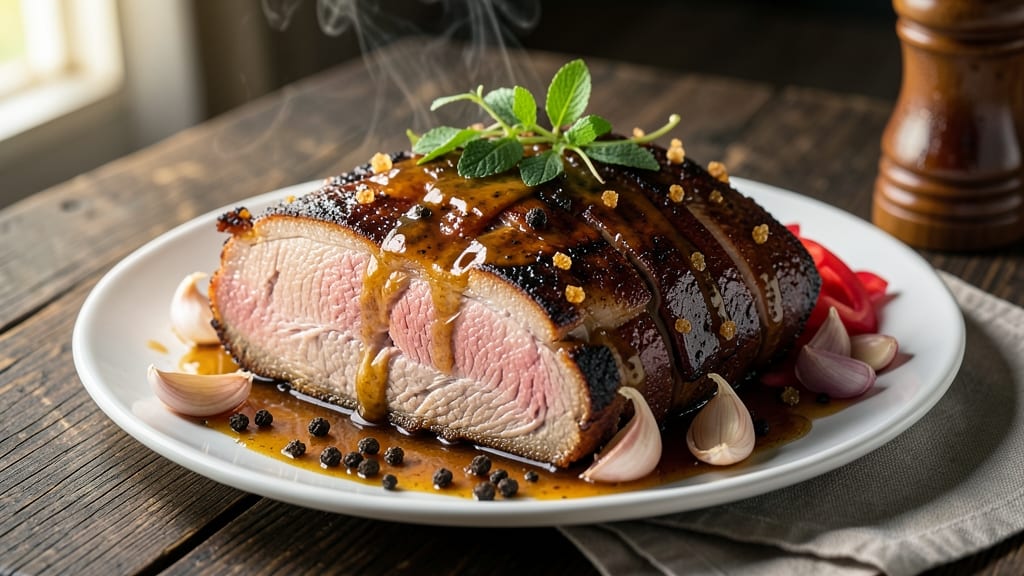
This Filipino-style BBQ pork recipe transforms simple ingredients into a dish that tastes like home. 🔥 The secret lies in the smoky vinegar braise that tenderizes the meat while building layers of flavor through slow cooking.
I first discovered this technique during a visit to my aunt's kitchen in Manila, where she'd let the pork simmer for hours until it fell apart at the touch.
What makes this recipe special is the balance of tangy vinegar, aromatic spices, and the signature crunchy celery topping that adds texture. Unlike many BBQ recipes, this one relies on a gentle braise rather than high heat, ensuring the pork stays juicy and flavorful.
The marinade—with its mix of soy sauce, garlic, and black pepper—creates a foundation that absorbs beautifully into the meat. By the time you're done, you'll have tender, caramelized pork that's perfect for serving with steamed rice, atchara, or sinigang.
The celery topping adds a refreshing crunch that cuts through the richness, making every bite satisfying. This is comfort food at its finest—simple yet impressive enough for gatherings. The best part? It's a dish that carries memories of family gatherings and long summer afternoons. Let's get cooking!
Ingredients for bbq pork recipe filipino style
Sixteen ingredients that bring Filipino comfort food to life with smoky depth and tender perfection.
| Ingredient | Amount | Notes |
|---|---|---|
| Pork Shoulder (Boston Butt) 🥓 | 3 lb | Bone-in for flavor, cut into 2-inch chunks |
| Cane Vinegar 🍶 | ½ cup | White or brown, for tangy depth |
| Soy Sauce 🥫 | ½ cup | Light or all-purpose variety |
| Brown Sugar 🍚 | ½ cup | Packed, for caramelized sweetness |
| Garlic Cloves 🧄 | 8 cloves | Minced, for aromatic foundation |
| Black Peppercorns 🌶️ | 1 ½ tsp | Freshly cracked, for warmth |
| Bay Leaves 🌿 | 2 whole | Dried, for earthy aroma |
| Celery Stalks 🧅 | 2 whole | Diced, for topping crunch |
| Green Onions 🧅 | ¼ cup | Sliced, for fresh finish |
| Vegetable Oil 🫒 | 2 tbsp | For searing pork |
| Water 💧 | 1 ½ cups | For braising liquid |
| Salt 🧂 | 1 ½ tsp | Kosher or sea salt |
| White Peppercorns 🌶️ | ½ tsp | Optional, for subtle heat |
| Lemon Juice 🍋 | 1 tbsp | Fresh, for brightness |
The pork shoulder is the heart of this dish—bone-in cuts from the butcher section add richness that boneless can't match. Look for well-marbled pieces, which stay juicier during the long braise. Filipino markets often carry pre-cut pork shoulders, but if you're at a regular grocery store, ask for 'Boston butt'—it's the same cut. For vinegar, cane vinegar (white or brown) gives that authentic tang, but apple cider vinegar in a pinch works too. Fresh garlic and black peppercorns are non-negotiable here—they build the aromatic base that makes this dish sing.
No cane vinegar? Apple cider or white wine vinegar will do, though the flavor won't be identical. Brown sugar substitutes like coconut sugar or even honey (if not avoiding it) add caramelization, but brown sugar's molasses notes are key. The celery topping can be swapped for green beans or bell peppers if you prefer, though celery's crispness is traditional. For the braise, low-sodium soy sauce prevents over-salting, but regular works if you adjust the final salt. The white peppercorns are optional but add a subtle complexity—skip them if you prefer classic heat from black pepper alone.
This dish tastes even better the next day, so make extra if you can. Store leftovers in the fridge for 4-5 days or freeze for 3 months in airtight containers. The celery topping stays crisp for 2 days in the fridge if you store it separately. For gatherings, double the recipe—the pork becomes more tender with longer cooking. Serve with steamed rice and a side of atchara for the full Filipino experience.
Why You'll Love This Recipe
- One-Pot Magic: I swear by this recipe because it’s all in one pan—no chopping boards, no extra bowls. Just dump the pork, toss in the vinegar and soy sauce, and let it simmer. Honestly, I’ve made it while watching TV, and it still turns out tender and sticky.
- Sweet-Savory Bomb: That combo of brown sugar and cane vinegar? It’s the secret weapon. The vinegar cuts through the richness of the pork while the sugar caramelizes into a glossy, addictive glaze. (Yes, even my picky nephew licks the plate.)
- Party or Pantry: This works for anything—weeknight dinners, potlucks, or packed lunches. I’ve served it cold in rice bowls and reheated it straight from the fridge, and it’s just as good. (Between us, it’s my go-to for lazy Sundays.)
- Budget Stretch: Pork shoulder is cheap, and a single roast feeds my family for days. The leftovers? I slice them for sinigang or stir-fry—no waste, all flavor. My wallet and my taste buds thank me.
Step-by-step instructions for Filipino-style BBQ pork
Here's the method for tender, caramelized pork with that signature Filipino tang and crunch.
🔥 Step 1: Sear the Pork Shoulder for Depth of Flavor
Heat the 2 tablespoons vegetable oil in a large Dutch oven over medium-high heat until shimmering. Pat the 3 lb pork shoulder dry with paper towels—this ensures a proper sear. Working in batches if needed, add the pork and sear for 4-5 minutes per side until deeply browned. You're building flavor here, so don't rush this step.
Once browned, remove the pork and set it aside. The goal is to develop a rich crust that will later caramelize in the braising liquid. If the oil starts smoking excessively, reduce heat slightly—you want to cook, not burn. This initial sear creates the foundation for that irresistible bark you'll see on the finished dish.
🍳 Step 2: Build the Braising Liquid with Aromatics
In the same Dutch oven, reduce heat to medium and add the 8 cloves minced garlic. Cook for 30 seconds until fragrant—don't let it brown or it'll turn bitter. Add the 1.5 teaspoons black peppercorns and 2 whole bay leaves, stirring for 10 seconds to toast the spices slightly.
Pour in the 0.5 cup cane vinegar and 0.5 cup soy sauce, scraping up any browned bits from the bottom of the pot. These bits are packed with flavor—don't miss them. Add the 0.5 cup packed brown sugar, 1.5 cups water, 1.5 teaspoons salt, and 0.5 teaspoon white peppercorns. Stir until the sugar dissolves completely. This liquid will transform into a rich, glossy sauce as it braises.
🥘 Step 3: Braise Until Fork-Tender
Return the seared pork to the Dutch oven, fat-side up. Bring the liquid to a simmer over medium-high heat, then reduce heat to low, cover, and transfer to a 300°F oven. Here's where patience pays off—braise for 2.5-3 hours until the pork is fork-tender and the meat pulls away easily from the bone.
I check for doneness by inserting a meat thermometer into the thickest part of the pork—it should read 200-205°F. The liquid should reduce to a thick, glossy sauce that coats the back of a spoon. If it looks too thin after 2 hours, uncover and simmer on the stovetop for 15-20 minutes to thicken. The pork is ready when it's so tender it practically falls apart with gentle pressure.
🔪 Step 4: Prepare the Crunchy Celery Topping
While the pork braises, dice the 2 whole celery stalks into ¼-inch pieces and slice the 0.25 cup green onions into ½-inch pieces. In a small skillet, heat 1 tablespoon vegetable oil over medium-high heat. Add the celery and cook for 3-4 minutes until crisp-tender, stirring occasionally. Add the green onions and cook for another 30 seconds until just wilted. Remove from heat and stir in the 1 tablespoon lemon juice.
This celery topping adds the signature crunch that makes this dish special. The lemon juice brightens the flavors and prevents the celery from turning mushy. Keep it warm until serving—it should still have some bite when mixed with the pork.
🍽️ Step 5: Shred and Serve with Crunchy Topping
Remove the pork from the braising liquid and let it rest for 10 minutes. Then shred it using two forks, discarding any large fat chunks or connective tissue. Return the shredded pork to the Dutch oven with the braising sauce and stir gently to combine. Taste and adjust seasoning if needed—you might want to add a splash more soy sauce or vinegar for balance.
To serve, spoon the shredded pork onto plates, drizzle with some of the braising sauce, and top with the crispy celery mixture. The contrast of tender pork with the tangy, slightly sweet sauce and crunchy celery topping is what makes this dish so special. Serve immediately with steamed rice to soak up every last bit of that flavorful sauce.
Pro Tips For Making Bbq Pork Recipe Filipino Style
- Marinate Overnight: I used to rush the marinade, thinking extra time didn’t matter—wrong. Let the pork shoulder sit in the vinegar-soy-brownie mix for at least 12 hours (or up to 24). The acid in cane vinegar needs time to tenderize, and the garlic actually infuses deeper. Trust me, the difference in texture and flavor is noticeable.
- Simmer Slow and Low: After browning the pork, don’t rush the braising. Cover it with just enough liquid (about 1 cup) and simmer at 160°F (71°C) for 3–4 hours. Too high a temp? The meat turns rubbery. Too low? You’ll wait forever. Use a meat thermometer—pull it when it hits 203°F (95°C) internal temp for that melt-in-your-mouth result.
- Reduce the Vinegar: Cane vinegar is strong, and if you don’t reduce it first, your sauce will taste harsh. After marinating, strain the liquid into a saucepan and boil it down by half before adding to the pork. This concentrates the flavor without overwhelming the dish. (Yes, it’s extra work, but the sauce will actually taste balanced.)
- Deglaze with Garlic: Don’t just toss in minced garlic at the end—deglaze the pan with it. After browning the pork, add 6–8 smashed garlic cloves to the hot pan and let them sizzle for 30 seconds. Then pour in a splash of water or broth to scrape up the fond. This locks in deeper garlic flavor instead of just sprinkling it on top like an afterthought.
Perfect pairings for bbq pork recipe filipino style
Filipino Side Dishes
This BBQ pork shines with steamed jasmine rice—the slightly sticky texture soaks up the braising sauce beautifully. I always cook 2 cups uncooked rice (about 4 cups cooked) in a rice cooker with 2.5 cups water for perfect results.
For extra flavor, add 1 tablespoon toasted garlic and a pinch of salt to the cooking water. 🌱
Sinigang, a sour tamarind broth soup, balances the richness perfectly. Simmer 1 lb shrimp or pork ribs with 2 cups tamarind pulp, 1 onion, and 2 tomatoes in 6 cups water for 30 minutes. The tangy broth cuts through the pork's sweetness while keeping the meal light. My aunt always served this during family gatherings—it's a must!
Crunchy Vegetable Sides
Atchara, pickled green papaya salad, adds a refreshing crunch and tang. Thinly slice 2 cups green papaya, mix with ½ cup vinegar, 1 tbsp sugar, 1 tsp salt, and 1 tbsp fish sauce. Let sit for 30 minutes before serving. The bright acidity cleanses your palate between rich bites of pork. I make a big batch and keep it in the fridge for up to 2 weeks. 🥒
For a heartier option, try garlic fried rice with 2 cups day-old rice, 3 eggs, 2 cloves minced garlic, and 1 tbsp soy sauce. Stir-fry in 1 tbsp oil until crispy—this turns leftovers into a delicious meal the next day.
My dad's trick? Add 1 tbsp butter at the end for extra richness.
Beverage Pairings
A cold San Miguel beer (Filipino lager) complements the dish perfectly—its crisp, slightly malty flavor balances the vinegar and sugar. For non-alcoholic options, calamansi juice (a Filipino citrus) mixed with sparkling water adds a zesty kick.
I like to serve it chilled in glass mason jars with ice for a festive touch. 🍺
If you prefer tea, hibiscus (sampalok) tea with a hint of honey enhances the meal's natural sweetness. Brew 2 tbsp dried hibiscus flowers in 4 cups boiling water for 10 minutes, then strain.
The tart, floral notes pair wonderfully with the pork's caramelized depth. My grandmother always had this ready during holidays—it's a nostalgic favorite.
Garnishes for Extra Flavor
Finish each plate with crispy fried shallots for a nutty crunch. Heat 2 tbsp oil in a pan and fry ½ cup thinly sliced shallots until golden (3-4 minutes).
Sprinkle them over the pork just before serving—they add texture and a subtle sweetness that elevates the dish. I buy pre-sliced shallots at New Seasons Market to save time. 🧅
For a fresh finish, scatter cilantro leaves and lime wedges on the side. The bright citrus cuts through the richness, while the cilantro adds a fresh herbal note. A squeeze of lime at the table is a classic Filipino touch that makes the dish feel complete.
My Portland farmers market always has fresh cilantro in season—it's my go-to garnish for any Filipino meal.
Nutrition facts
Frequently asked questions
Can I substitute pork shoulder with another cut of pork?
You can use pork butt (same as pork shoulder) or pork ribs for this recipe. For ribs, cut them into 2-inch pieces and reduce the braising time to 1.5-2 hours since they cook faster. Avoid lean cuts like tenderloin—they won't develop the same tender texture. Bone-in cuts work best for maximum flavor.
What makes this vinegar braise different from other BBQ pork recipes?
This recipe uses cane vinegar for its authentic tang and depth, plus a slow braise that tenderizes the meat without drying it out. The key difference is the crispy celery topping and the balance of sweet (brown sugar), salty (soy sauce), and acidic (vinegar) flavors. Unlike traditional grilled BBQ, this method keeps the pork juicy while building complex layers of flavor.
How do I know when the pork is fully tender?
Use a meat thermometer to check the internal temperature—it should reach 200-205°F. The pork should also pull away easily from the bone with gentle pressure. If it's still slightly firm after 3 hours, add ¼ cup water to the pot and simmer uncovered for another 30 minutes. The sauce should coat the back of a spoon when done.
Can I make this recipe in a slow cooker?
Follow the same marinade and searing steps, then transfer everything to a 6-quart slow cooker on low for 8 hours or high for 5-6 hours. The pork will become fork-tender with minimal effort. Just add ½ cup water if the liquid reduces too much during cooking. The slow cooker version is perfect for busy weeknights!
Why does the celery topping need lemon juice?
The lemon juice prevents the celery from turning mushy while adding a bright, refreshing contrast to the rich pork. It also helps balance the sweetness of the braising sauce. If you're short on time, a splash of vinegar works in a pinch, but lemon gives that classic Filipino tang. Keep the topping warm until serving to maintain its crisp texture.