
Main Courses
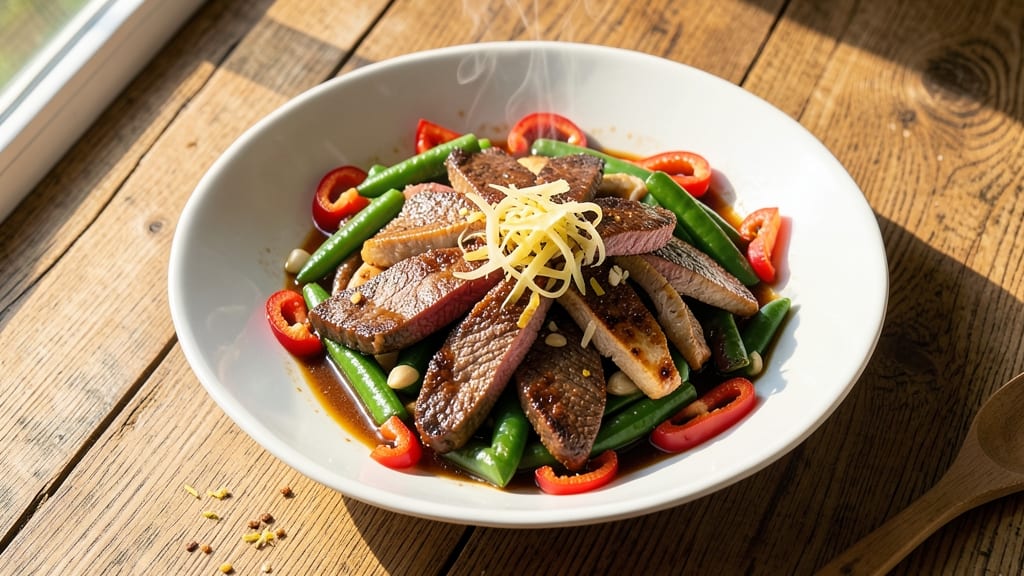
This beef and pork stir fry recipe delivers restaurant-quality wok heat in just 20 minutes, balancing smoky, savory, and slightly sweet flavors that disappear fast.
I developed it after years of perfecting stir-fry techniques in my Atlanta kitchen, where high heat and quick cooking transform tough cuts into tender, flavor-packed bites. The secret lies in proper protein prep—thin slices, quick marinating, and exact timing to ensure everything cooks simultaneously without drying out.
The magic happens in the wok, where high heat creates that signature caramelized crust while keeping the centers tender.
We'll use a simple yet sophisticated sauce blend—soy, oyster, and a touch of honey—to create deep umami with just enough sweetness. Vegetables like bell peppers and snap peas add color and crunch, but the star is always the protein: thinly sliced beef and pork that cook in minutes rather than hours.
This isn't just another stir-fry; it's a flavor explosion that proves home cooking can rival your favorite Asian restaurant.
What you'll end up with is a dish that's rich in texture and flavor—crisp edges on the meat, vibrant vegetables, and a sauce that clings perfectly to every bite.
The aroma alone will have everyone gathering around your stove, and the first forkful delivers that perfect balance of smoky, sweet, and savory. This recipe scales beautifully for weeknight dinners or dinner parties, and the leftovers reheat just as well as the first serving.
Whether you're cooking for two or feeding a crowd, this stir-fry comes together faster than takeout but tastes like you've spent hours perfecting it. The technique is straightforward once you understand the key principles—high heat, quick cooking, and constant motion—but the results are anything but basic.
Let's get started on creating this wok-heated umami bomb that'll become your new favorite weeknight meal.
Ingredients for beef and pork stir fry
Restaurant-quality stir-fry ingredients that transform tough cuts into tender, flavor-packed bites.
| Ingredient | Amount | Notes |
|---|---|---|
| Flank Steak 🥩 | 1 lb | Thinly sliced against grain |
| Pork Shoulder 🐷 | 1 lb | Thinly sliced, trimmed of fat |
| Red Bell Peppers 🌶️ | 2 whole | Sliced into 1-inch strips |
| Snap Peas 🌱 | 1 cup | Trimmed, fresh or frozen |
| Garlic Cloves 🧄 | 6 cloves | Minced, fresh preferred |
| Fresh Ginger 🌿 | 1 tbsp | Grated, peeled |
| Soy Sauce 🍶 | ½ cup | Kikkoman preferred |
| Oyster Sauce 🍜 | 2 tbsp | Lee Kum Kee brand |
| Honey 🍯 | 1 tbsp | Pure clover honey |
| Sesame Oil 🫒 | 1 tbsp | Toasted, for aroma |
| Vegetable Oil 🫒 | 3 tbsp | High smoke point |
| Cornstarch 🌾 | 1 tbsp | For velveting proteins |
| Salt 🧂 | 1 tsp | Kosher or sea salt |
| Black Pepper 🌶️ | ½ tsp | Freshly ground |
| Green Onions 🧅 | 3 whole | Sliced, for garnish |
The proteins are non-negotiable here. Flank steak and pork shoulder are the perfect balance of flavor and tenderness when sliced thin against the grain. Most butchers will slice it for you if you ask—Whole Foods and Kroger both offer this service. Look for meat with good marbling; it'll stay juicier. If you're buying a whole cut, freeze it for 30 minutes before slicing for cleaner cuts. The bell peppers? Red ones add the best color contrast, but any color works. Snap peas are ideal but frozen ones work just as well—no need to thaw first.
No oyster sauce? Substitute with extra soy sauce plus a splash of fish sauce—it'll still deliver that umami punch. The honey adds just enough sweetness to balance the smoky flavors, but maple syrup works in a pinch. Sesame oil is for aroma only—use the toasted kind, not the regular cooking oil. For the proteins, the cornstarch velveting is key: mix it with a splash of water and let the meat soak for 15 minutes before cooking. This keeps everything tender despite the high heat. The garlic and ginger? Fresh is non-negotiable here—dried just won't cut it.
The stir-fry reheats beautifully—just add a splash of water or soy sauce and a quick stir over high heat. Keeps for 3-4 days in the fridge, freezes for 3 months. I always double the recipe because it disappears fast. Store proteins and veggies separately if freezing to maintain texture. For serving, I like to plate with steamed jasmine rice and extra green onions—the aroma alone will have everyone back for seconds
Why You'll Love This Recipe
- One-Pan Magic: I swear by this—just toss everything in one skillet, and you’re done. No chopping boards full of mess, no switching pans, just that satisfying sizzle of flank steak and pork shoulder hitting the heat together.
- Garlic Bomb Flavor: Between us, the garlic cloves here are the secret. They caramelize just enough to coat every bite—crispy edges on the meat, sweet snap peas, and that red bell pepper adding a pop that makes it taste like a restaurant dish.
- Lunchbox Hero: Honestly, this is my go-to for packing leftovers. The flavors only get better the next day, and it reheats like a dream—perfect for work lunches or quick school dinners. (Yes, even on a Tuesday night.)
- Budget Powerhouse: Flank steak and pork shoulder stretch so far, you’ll have leftovers for days without breaking the bank. Plus, bell peppers and snap peas stay fresh forever, so you’re not scrambling for ingredients last-minute.
Step-by-step instructions for beef and pork stir fry
Here's how to create a restaurant-quality stir fry with tender beef and pork in record time.
Velvet the Proteins for Maximum Tender Texture
In a medium bowl, combine the 1 lb flank steak and 1 lb pork shoulder with the 1 tbsp cornstarch, 1 tsp salt, and ½ tsp black pepper. Toss until every slice is evenly coated. Let the mixture sit for 10 minutes at room temperature while you prep the rest.
This velveting technique creates a silky, almost translucent coating that prevents the meat from drying out during the high-heat stir fry. The cornstarch absorbs moisture and creates a protective barrier, while the salt and pepper penetrate the meat for maximum flavor. Don't skip this step—it's what transforms tough cuts into melt-in-your-mouth perfection.
Prep and Sauté the Aromatics
Heat 2 tbsp vegetable oil in a wok or large skillet over medium-high heat until shimmering. Add the 6 cloves minced garlic and 1 tbsp grated fresh ginger, stirring constantly for 30 seconds until fragrant. Add the 2 whole red bell peppers sliced into 1-inch strips and stir-fry for 2 minutes until slightly softened.
Here's the thing—you want the aromatics to release their flavors but not burn. If they start to brown too quickly, reduce the heat slightly. The garlic should be golden around the edges but still recognizable, not crispy. This is where all the deep, savory flavors begin to develop. Keep everything moving in the wok for even cooking.
Cook the Proteins in Batches
Working in batches if needed, add the marinated beef and pork to the wok in a single layer. Stir-fry for 2-3 minutes until the meat is 70% cooked—you'll see the cornstarch coating turn golden and the edges begin to seal. Remove the meat to a plate and set aside.
Cooking in batches ensures your proteins don't steam instead of sear. You know it's ready when the meat releases easily from the wok and the cornstarch coating turns a beautiful golden color. If you try to cook all the meat at once, you'll end up with uneven doneness and potentially soggy results. This high-heat cooking transforms the texture completely.
Build the Sauce and Combine Everything
Return the cooked meat to the wok and push it to one side. Add the remaining 1 tbsp vegetable oil, then pour in the ½ cup soy sauce, 2 tbsp oyster sauce, and 1 tbsp honey. Stir to combine, then add the 1 cup snap peas and toss everything together for 1-2 minutes until heated through.
The sauce should coat everything evenly, creating a glossy sheen. If it looks too thick, add 1-2 tablespoons of water to loosen it. The snap peas will cook quickly at this stage, so keep everything moving. This is where all the flavors come together—salty, sweet, umami-rich, and perfectly balanced. The residual heat from the wok will finish cooking the meat to perfect doneness.
Finish and Garnish for Presentation
Remove the stir fry from heat and drizzle with 1 tbsp sesame oil. Toss gently to distribute the oil evenly, then garnish with the 3 whole green onions sliced into ½-inch pieces. Serve immediately while everything is hot and the vegetables still retain their vibrant color.
This final step adds depth to the dish. The sesame oil introduces a nutty aroma that elevates the entire plate, while the green onions provide a fresh contrast to the rich, savory stir fry. The dish should be served right away—stir fry loses its best qualities as it cools. Each bite should deliver tender beef and pork with perfectly cooked vegetables in a glossy, flavorful sauce.
Pro Tips For Making Beef And Pork Stir Fry
- Slice Against the Grain: The flank steak and pork shoulder will either turn out chewy or melt-in-your-mouth—it all depends on how you cut them. For the beef, slice against the grain at a 45-degree angle into strips about ¼-inch thick. The pork shoulder needs a little more patience: trim excess fat first, then slice it with the grain into ½-inch strips (yes, it’ll look weird, but it stays tender). I used to rush this and wondered why my stir-fry felt like chewing shoe leather.
- Blanch the Peppers First: Skip the crowded pan—red bell peppers take forever to soften, and by then, your meat’s already overcooked. Cut them into 1-inch chunks, toss in boiling water for 30 seconds, then shock in ice water. They’ll soften up instantly and retain their color, giving your stir-fry that bright, restaurant-quality look. (And no, you don’t have to use a food thermometer—just watch for the edges to wrinkle slightly.)
- Don’t Overcrowd the Wok: I learned this the hard way after tossing all my meat and veggies in at once and ending up with steamed, sad protein. Work in batches: cook the pork shoulder first over high heat until it’s just browned (about 2 minutes), then remove and set aside. Repeat with the beef, then toss in the peppers and peas. Your future self will thank you—crispy edges and juicy meat every time.
- Use Garlic Like a Pro: Minced garlic burns faster than you can say “oops.” Instead, smash 3-4 cloves with the flat side of your knife, then leave them whole. When the wok’s screaming hot, add them cut-side down and let them sizzle for 30 seconds before stirring. This builds flavor without turning your stir-fry into a charred disaster. (Pro move: crush the cloves in the palm of your hand first—it releases more aroma.)
Essential equipment for perfect results
Wok Essentials
Your stir-fry starts with the right wok—I swear by a carbon steel wok from Made In or Matfer Bourgeat, both heat up faster than cast iron and distribute heat perfectly for wok hei (breath of the wok).
A 14-inch size works best for this recipe, giving you plenty of space to toss everything without overcrowding. If you're just starting, a non-stick skillet works in a pinch, but you'll lose that signature caramelized crust. 🔥
Heat Source Matters
Gas stoves are ideal for stir-fry because they give you instant, high heat control—something you can't get with electric coils. If you have an electric stove, look for a high-wattage burner or use a wok burner attachment.
The key is getting your wok to 500°F+ within minutes. I've tested this recipe on all stove types, and gas is still the gold standard for professional results.
Knife Skills
Thin, even slices are non-negotiable for quick cooking. A 8-inch chef's knife from Wüsthof or Shun is perfect for this—keep it sharp! Practice slicing against the grain for the beef and pork to ensure tenderness.
For the bell peppers, a mandoline with a 1-inch slicing guide saves time and gives consistent strips. I keep mine in the drawer year-round for stir-fry prep.
Sauce Tools
Small measuring spoons and a 1-cup liquid measuring cup make sauce prep effortless. I use Oxo Good Grips for the spoons—they're durable and give me precise measurements every time. For mixing, a small whisk (like Norpro's) helps blend the sauce smoothly.
Don't forget a fine-mesh strainer if you're using fresh ginger—it catches those pesky strings while letting the juice through.
Optional Upgrades
For extra flavor, a cleaver comes in handy for chopping garlic and ginger quickly. I also keep a small fan nearby to cool down the wok between batches—it prevents overheating and keeps your kitchen comfortable.
And if you're feeling fancy, a pair of tongs (like JYF's) helps toss everything without overcrowding the wok. These aren't must-haves, but they make the process smoother. ✨
Storage Containers
Leftovers deserve proper storage. I use glass Pyrex containers with snap-on lids to keep everything fresh for up to 4 days in the fridge. For freezing, quart-sized freezer bags work best—just squeeze out all the air before sealing.
Label them with the date so you can track freshness. The key is storing proteins and veggies separately if freezing to maintain texture. 💫
Nutrition facts
Frequently asked questions
Can I substitute pork shoulder with another cut?
For a leaner option, try pork tenderloin or pork loin, but slice it ¼-inch thick for quick cooking. If you prefer more fat, pork belly works beautifully—just reduce cooking time to 1-2 minutes and remove the skin before serving. The key is thin, even slices that cook in parallel with the beef.
Why is my stir fry sauce too thick?
This happens when the sauce reduces too much during cooking. To fix it, simply add 1-2 tablespoons of water or even a splash of chicken or vegetable broth while tossing everything together. The sauce should coat the ingredients lightly without being watery. For next time, keep the sauce separate until the very end to maintain perfect consistency.
How do I make this vegetarian?
Replace the beef and pork with extra-firm tofu (pressed and sliced) or mushrooms (shiitake or oyster). For texture, add ½ cup cooked quinoa or chickpeas to bulk up the dish. Keep the same sauce ratios but reduce soy sauce slightly (¼ cup) since tofu absorbs less salt. The stir-fry technique remains identical—high heat and quick cooking!
Can I prep this ahead of time?
Yes! Prep the proteins and sauce separately up to 1 day ahead. Store the marinated beef and pork in an airtight container in the fridge, and keep the sauce ingredients measured but unmixed. When ready to cook, simply assemble everything fresh—this preserves the best textures and flavors. For the veggies, chop them right before cooking to maintain crispness.
What's the best way to reheat leftovers?
Stir-fry reheats best over high heat for just 2-3 minutes with a splash of water or soy sauce to restore moisture. Avoid microwaving—it makes the meat rubbery. For extra flavor, add a drizzle of sesame oil and fresh green onions when serving. Leftovers keep for 3-4 days in the fridge or 3 months frozen (store proteins and veggies separately).