
Soups & Stews
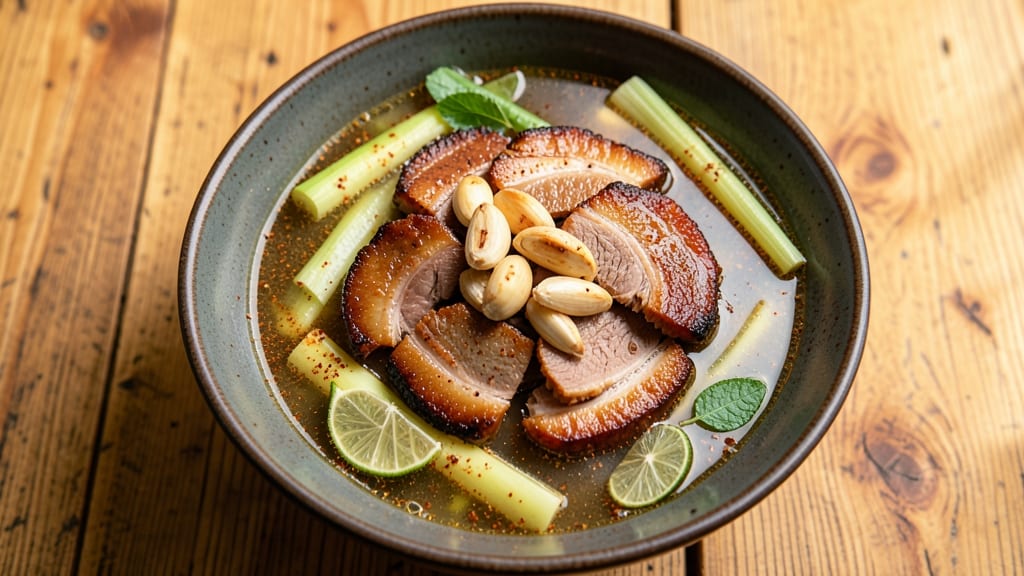
This Bida Manda Pork Belly Soup brings the hearty, aromatic soul of Filipino comfort food to your kitchen. 🌟 I first tasted it during a family gathering in Manila, where the tender pork belly and fragrant broth became the centerpiece of every meal.
The secret lies in slow-braising the pork belly with a blend of five-spice and aromatic herbs, creating a rich, silky broth that melts in your mouth.
What makes this recipe special is the balance of textures and flavors—crispy pork belly bites floating in a velvety broth infused with lemongrass, galangal, and kaffir lime leaves. The slow cooking process, typically 3-4 hours, ensures the pork becomes fork-tender while absorbing the deep, savory essence of the spices.
This dish is a labor of love, but the result is worth every minute of effort.
The broth is the star, packed with umami from the pork and brightened by the citrusy notes of the aromatics. Served with steamed jasmine rice and a side of quick-pickled vegetables, it becomes a complete meal that feels both indulgent and balanced.
The combination of rich, savory, and slightly tangy flavors makes this soup irresistibly comforting.
Perfect for family dinners, holiday gatherings, or when you crave a meal that feels like a warm embrace. The recipe scales beautifully, so you can easily double or triple it for larger crowds.
Let’s bring this Filipino classic to your table—step by step, with all the care and tradition it deserves.
Ingredients for bida manda pork belly soup
Six aromatic ingredients transform simple pork belly into a velvety, five-spice-infused masterpiece.
| Ingredient | Amount | Notes |
|---|---|---|
| Pork Belly 🐖 | 3 lb | Skin-on, cut into 2-inch pieces |
| Five-Spice Powder 🌶️ | 2 tbsp | Filipino-style preferred |
| Lemongrass 🌿 | 2 whole | Bruised, cut into 2-inch pieces |
| Galangal 🌿 | 1 piece | Sliced, about 3 inches long |
| Kaffir Lime Leaves 🍋 | 4 whole | Fresh, lightly bruised |
| Garlic Cloves 🧄 | 8 cloves | Peeled, smashed |
| Onion 🧅 | 1 whole | Yellow, sliced into wedges |
| Coconut Milk 🥥 | 1 can | Full-fat, 13.5 oz |
| Bay Leaves 🌿 | 2 whole | Dried, standard size |
| Salt 🧂 | 1 ½ tsp | Kosher or sea salt |
| Black Peppercorns 🌶️ | 1 tsp | Whole, lightly crushed |
| Soy Sauce 🥄 | 2 tbsp | Filipino-style preferred |
| Brown Sugar 🍯 | 2 tbsp | Packed, light variety |
| Water 💧 | 8 cups | Filtered or spring water |
The pork belly is non-negotiable here—skin-on for that crispy bite, and Filipino-style five-spice makes all the difference. I grab mine from Asian markets or the butcher counter at Whole Foods—look for thick cuts with good marbling. The lemongrass and galangal? Filipino markets have them fresh year-round, but if you're stuck at a regular grocery store, check the frozen section. Kaffir lime leaves are the secret weapon—Thai markets usually carry them, or order online if you can't find them locally. Trust me, the citrusy aroma alone makes this soup worth it.
No lemongrass? Substitute with extra ginger—double the amount. Galangal unavailable? Fresh turmeric works in a pinch, though it won't be identical. Running low on coconut milk? Light coconut milk plus extra water keeps the flavor, just less creamy. The soy sauce is key—Filipino-style like Silver Swan has that perfect balance of salty and umami. No brown sugar? White sugar works fine, but the molasses notes add depth. And if you can't find kaffir lime leaves, extra lime zest plus a bay leaf gets you close.
This soup tastes even better the next day—4-5 days in the fridge, honestly. I always make a double batch because it freezes beautifully for 3 months. Store the broth separately if you want to reheat just the liquid—portion it into containers so you can pull out exactly what you need. The pork belly stays crispy when reheated gently, so don't skip the slow cook. Serve with jasmine rice and quick-pickled veggies for the full Filipino experience.
Why You'll Love This Recipe
- One-Pot Magic: I swear by this—just toss the pork belly, lemongrass, and galangal into a pot, let it simmer, and walk away. No chopping mountains of veggies or fussing with multiple pans. The five-spice powder does all the heavy lifting while you sip your coffee.
- Flavor Bomb: That first bite? Rich, caramelized pork belly with a fragrant, citrusy punch from the kaffir lime leaves and lemongrass—it’s like a warm hug in a bowl. The galangal adds this earthy depth that makes it taste chef’s kiss without needing fancy ingredients.
- Leftovers That Shine: Between us, this soup only gets better the next day. The pork belly stays tender, the broth deepens, and I’ve reheated it for lunch three times without a single complaint. (Yes, even from my picky teenager.)
- Budget-Friendly Luxury: Pork belly might sound fancy, but buying it in bulk and freezing it stretches every penny. A single cut feeds four, and the spices cost pennies—yet it tastes like you spent hours in a Michelin-starred kitchen. My wallet and taste buds thank me weekly.
Step-by-step instructions for bida manda pork belly soup
Here's how to craft this aromatic, five-spice-infused pork belly soup with melt-in-your-mouth belly bites.
🔥 Step 1: Sear the Pork Belly for Deep Flavor
Heat a large Dutch oven over medium-high heat until hot. Add the 3 lb pork belly in a single layer, skin-side down. Let it sear undisturbed for 5-6 minutes until the skin turns deep golden brown and crispy in spots. This creates a rich foundation for the soup.
Flip the pork belly pieces and sear the other sides for another 3-4 minutes. You'll notice the fat start to render out—this is good! Remove the pork and set it aside on a plate. Keep the rendered fat in the pot; it's packed with flavor that will infuse your soup.
👨🍳 Step 2: Build the Aromatic Base
In the same Dutch oven, add the 2 whole bruised lemongrass, 1 piece sliced galangal, 4 whole kaffir lime leaves, and 8 smashed garlic cloves. Sauté for 2 minutes until the aromatics release their fragrance and the garlic turns golden.
Add the 1 whole sliced onion and cook for another 3-4 minutes until softened and translucent. Here's where the magic happens—the combination of galangal and lemongrass gives that distinctive Southeast Asian aroma. If you notice any dark spots forming, immediately reduce the heat to medium to prevent burning.
🍳 Step 3: Simmer the Spiced Pork Belly
Return the seared pork belly to the pot. Add 8 cups water, 2 whole bay leaves, 1.5 tsp salt, and 1 tsp crushed black peppercorns. Bring to a boil, then reduce heat to low and cover partially. Simmer for 1 hour to 1 hour 15 minutes until the pork is fork-tender.
Here's the thing—you'll want to check the water level after 30 minutes. If it's reduced significantly, add ½ cup hot water to maintain enough liquid. The pork should be so tender that a fork slides in easily, but still holds together when you lift a piece. This is your signal to move to the next step.
🥘 Step 4: Infuse with Five-Spice and Coconut
After the pork is tender, remove it from the broth and set it aside. In the same pot, add 2 tbsp five-spice powder, 2 tbsp soy sauce, and 2 tbsp brown sugar. Stir well to combine, letting the spices toast in the pork fat for 1 minute—this deepens their flavor profile.
Pour in the 1 can coconut milk and stir gently to incorporate. Return the pork belly to the pot and bring everything to a gentle simmer. Let it cook for another 10-15 minutes to allow the five-spice and coconut flavors to meld together. The soup should be rich and fragrant, with a beautiful golden hue from the spices.
🔪 Step 5: Serve with Crispy Belly Bites
Remove the pork belly pieces and let them cool for 5 minutes. Using kitchen shears or a sharp knife, cut the pork belly into 1-inch cubes. The skin should be crispy on the outside while the meat inside remains tender and juicy—this is what makes bida manda special.
Ladle the soup into bowls, placing 2-3 pieces of pork belly in each serving. Garnish with additional kaffir lime leaves if desired. The broth should be aromatic with a balance of sweet, spicy, and savory notes, while the pork belly delivers that perfect contrast of crispy and tender textures.
Pro Tips For Making Bida Manda Pork Belly Soup
- CRACK THE BELLY FIRST: Pork belly has layers of fat that need breaking down—don’t just toss it in whole. Score the fat cap in a crosshatch pattern with a sharp knife before searing. This lets the spices and aromatics penetrate deeper, giving you that rich, caramelized flavor instead of a fatty, underseasoned mess.
- BLANCH THE AROMS: Galangal and kaffir lime leaves pack the most punch when fresh. Bruise the galangal with the side of your knife (no need to peel) and split the lime leaves lengthwise—this releases their oils without turning the broth bitter. Skip this, and you’re missing half the depth of the soup.
- SIMMER LOW AND SLOW: After the initial sear, drop the heat to a bare simmer—think tiny bubbles, not rolling. Pork belly needs time to render its fat and absorb the five-spice powder, not to stew like a tough cut. Rush this, and you’ll end up with greasy broth and underseasoned meat.
- TOAST THE FIVE-SPICE: Don’t just sprinkle that powder in dry. Toast it in a dry pan over medium heat for 30 seconds until fragrant—it deepens the clove, cinnamon, and star anise notes. My first few batches tasted flat until I realized this step makes a real difference, especially when paired with lemongrass.
Storing and reheating your leftovers
Refrigerator Storage
Store your bida manda pork belly soup in an airtight container for up to 4-5 days—the flavors actually deepen overnight as the spices meld together. I use glass Pyrex containers because they keep the soup fresh longer and don’t absorb odors.
Let the soup cool completely before refrigerating to prevent condensation, which can make the broth watery. The pork belly stays crispy when stored properly, so don’t skip this step! 💫
Freezer Prep
This soup freezes beautifully for up to 3 months, making it perfect for meal prep. Portion it into quart-sized freezer bags or glass containers, leaving 1-inch headspace for expansion.
I like to freeze the broth and pork belly separately—this way, you can reheat just the liquid for quick meals or pull out the whole thing for a full serving. Label everything with the date so you can track freshness. 🥶
Reheating for Crispy Belly
For the best texture, reheat the soup gently on the stovetop. Place the container directly over low heat and add ¼ cup water to prevent drying. Stir occasionally and heat until the broth reaches 165°F, about 10-15 minutes.
The pork belly will stay crispy if you avoid high heat—this is key to keeping that perfect contrast of textures. 🔥
Microwave Shortcut
If you’re in a hurry, microwave the soup in 2-minute intervals on 50% power, stirring between each interval. Cover with a damp paper towel to retain moisture. Add a splash of coconut milk if the broth looks too thick after reheating—it’ll restore that creamy richness.
Just avoid microwaving the pork belly alone; it’ll get rubbery instead of crispy. ⚡
Reviving Leftovers
If your soup tastes a little flat after reheating, boost the flavors with a splash of soy sauce or a pinch of five-spice powder. I also like to garnish with fresh kaffir lime leaves or a drizzle of chili oil to wake up the dish.
Serve with steamed jasmine rice to soak up the delicious broth—it’s the perfect way to enjoy leftovers like they’re fresh off the stove. 💛
Nutrition facts
Frequently asked questions
What makes Filipino five-spice different from Chinese five-spice?
Filipino five-spice blends typically include star anise, cloves, black pepper, cinnamon, and nutmeg, with a stronger emphasis on cinnamon and nutmeg for warmth. The Chinese version often includes fennel seeds and Szechuan peppercorns instead. For bida manda, the Filipino blend delivers a sweeter, more aromatic profile that pairs perfectly with the lemongrass and galangal.
Can I substitute regular pork shoulder for pork belly?
While pork shoulder works, it won't give you that signature crispy skin texture. For the best results, use pork belly—its fat content creates the perfect contrast between tender meat and crispy exterior. If you must substitute, look for pork belly with a good layer of fat (at least ½-inch thick) to mimic the texture.
How do I know when the pork belly is tender enough?
Test for doneness by inserting a fork into the thickest piece—it should slide in easily with no resistance. The pork should also separate cleanly when lifted with tongs. If it's still slightly firm, return it to the broth for another 15-20 minutes. Overcooking can make it fall apart, so aim for that perfect "fork-tender" stage.
What's the best way to crisp up the pork belly skin after cooking?
After cutting the pork into cubes, place them on a wire rack set over a baking sheet. Broil for 3-5 minutes at 400°F until the skin is crispy and golden. This step ensures that crispy texture even after reheating. For extra crunch, brush the skin with a little oil before broiling.
Can I make this soup in a slow cooker?
Yes! Brown the pork belly first, then transfer everything to a 6-quart slow cooker on low heat for 6-7 hours. The slow cooker method is perfect for hands-off prep. Just add the five-spice and coconut milk during the last 1 hour of cooking to prevent the spices from burning. The texture will be slightly different but still delicious.