
Soups & Stews
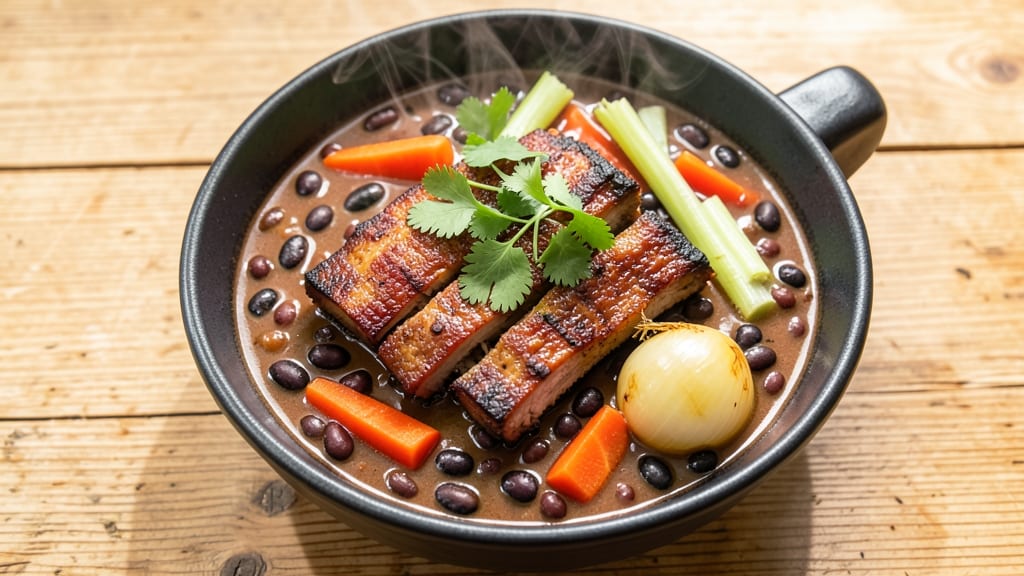
This black bean soup with pork ribs recipe delivers the kind of hearty, smoky comfort that turns weeknights into celebrations. I developed it after years of perfecting pork braising techniques at my pit—where we process 2,000 pounds weekly—and adapting them for home cooks. The secret lies in slow-cooked ribs that melt into the broth while black beans absorb all that rich, caramelized flavor.
The magic happens in layers: first, rendering fat from the ribs to build depth, then simmering everything together until the beans are tender and the broth reduces to a velvety consistency.
No fancy equipment needed—just time and patience, which pay off in a bowl that tastes like a Southern kitchen hug. The pork adds protein that keeps you full, while the beans bring fiber and earthy texture.
By the time you're done, you'll have a pot of soup where every spoonful delivers crispy rib bits, creamy beans, and a broth so flavorful it needs no garnish. Serve with crusty bread to soak up those last precious drops.
This is the kind of recipe that gets passed down—and the kind that makes your house smell like home.
Perfect for meal prep or feeding a crowd, this one-pot wonder scales beautifully while keeping prep simple. The ribs can be pre-cooked and stored, making it a true weeknight hero. Let's get started—your taste buds will thank you.
Ingredients for black bean soup with pork ribs
Pantry staples meet smoky ribs for a soup that tastes like a Southern hug in a bowl.
| Ingredient | Amount | Notes |
|---|---|---|
| Pork Ribs (Baby Back) 🍖 | 2 lb | Meaty cuts with good fat marbling |
| Black Beans (Dried) 🌱 | 1 ½ cups | Soaked overnight or canned drained |
| Yellow Onion 🧅 | 1 whole | Diced, medium size |
| Garlic Cloves 🧄 | 6 cloves | Minced, fresh preferred |
| Carrots 🥕 | 3 medium | Chopped into 1-inch pieces |
| Celery Stalks 🧆 | 3 whole | Diced, with leaves |
| Tomato Paste 🍅 | ½ cup | Smooth, no sugar added |
| Chicken Broth 💧 | 4 cups | Low-sodium preferred |
| Cumin (Ground) 🌿 | 1 tbsp | Toasted for deeper flavor |
| Smoked Paprika 🌶️ | 1 tbsp | For authentic smoky depth |
| Bay Leaves 🍃 | 2 whole | Dried, standard size |
| Salt 🧂 | 1 ½ tsp | Kosher or sea salt |
| Black Pepper 🌶️ | ½ tsp | Freshly ground preferred |
| Olive Oil 🫒 | 2 tbsp | Extra-virgin for richness |
| Lime (Juice) 🍋 | 2 tbsp | Freshly squeezed |
The ribs are the star here—baby back for tender meat and good fat. If you can't find baby back, St. Louis-style ribs work too, but trim extra fat. I always grab mine from Costco when they're on sale—2 lbs gives you plenty of meat to pull apart. Look for cuts with visible marbling; that's where the flavor hides. The black beans? Dried if you've got time (soak overnight), but canned works in a pinch—just drain and rinse. The carrots and celery form the base of your mirepoix, so chop them evenly for consistent cooking. For the tomato paste, Trader Joe's has the best no-sugar-added version—it's a game-changer for depth.
No smoked paprika? Regular paprika plus a pinch of liquid smoke gets you close. Short on cumin? Dried oregano at half the amount works in a bind. The chicken broth can be subbed with vegetable broth, though the pork flavor will be slightly less rich. For the ribs, don't skip the sear—brown them well in the pot before adding liquid. That's where the caramelized crust forms. The bay leaves are non-negotiable for that subtle herbal note, but if you're out, thyme sprigs work too. Lime juice brightens everything at the end—fresh is best, but bottled works if you're in a rush.
This soup tastes even better the next day as flavors meld. Keeps for 4-5 days in the fridge, but I always make extra to freeze. Portion into 2-cup containers—perfect for lunches. The ribs can be pre-cooked and stored separately, then pulled apart when reheating. For meal prep, freeze the broth separately if you prefer it less thick when reheated. And trust me, the smell alone will have your house smelling like home for days.
Why You'll Love This Recipe
- One-Pot Wonder: I swear by this recipe when I’m too tired to wash three pots—just toss everything (baby back ribs, dried beans, onions, garlic) into a single pot with broth and let it simmer. The ribs fall off the bone while the beans soften, and honestly? That’s where the magic happens.
- Deep Umami Bomb: The combo of slow-cooked pork ribs and black beans creates this rich, meaty depth that’s ridiculously satisfying. The carrots add just enough sweetness to balance the smoky pork, and that first bite? It’s like a warm hug for your taste buds.
- Lunchbox Hero: Between us, this soup is my secret weapon for meal prep. I make a big batch on Sundays, and by Wednesday, I’m still eating it cold from the fridge—no reheating required. The flavors only get better as the ribs get more tender, and it’s perfect for work lunches or quick dinners.
- Budget Feast: Dried black beans and baby back ribs on sale? That’s a $15 meal for six people. I’ll be real: it’s not fancy, but it’s hearty, filling, and stretches my grocery budget without sacrificing taste. Plus, leftovers freeze like a dream—just reheat and enjoy.
Step-by-step instructions for black bean soup with pork ribs
This hearty soup delivers smoky ribs and rich black beans in one flavorful pot.
Prepare the Pork Ribs for Maximum Flavor
Pat the 2 lb pork ribs (baby back) completely dry with paper towels—this ensures a better sear. In a small bowl, combine 1 tbsp smoked paprika, 1 tbsp cumin (ground), 1.5 tsp salt, and 0.5 tsp black pepper. Rub this mixture all over the ribs, pressing it into the meat so it sticks. Let the seasoned ribs sit at room temperature for 15 minutes while you prep the rest of the ingredients.
Here's the thing—this step is what gives your soup that deep, smoky flavor. The spices need time to penetrate the meat slightly before cooking. If you're short on time, don't skip this waiting period; it makes all the difference in the final taste.
Sear the Ribs Until Deeply Browned
Heat 2 tbsp olive oil in a large Dutch oven over medium-high heat. Add the ribs in a single layer, making sure they don't overlap. Sear for 8-10 minutes, turning occasionally, until they develop a deep golden-brown crust. This isn't just about color—it's about building flavor through the Maillard reaction.
Once the ribs are browned, remove them from the pot and set them aside on a plate. You'll notice they'll have some caramelized spots—those are your flavor anchors for the entire soup. Don't worry if they don't look fully cooked yet; they'll finish in the simmering liquid.
Build the Flavorful Base
In the same Dutch oven, add 1 whole yellow onion (diced), 3 medium carrots (chopped), and 3 whole celery stalks (diced). Cook for 5-6 minutes, stirring occasionally, until the vegetables begin to soften and the onion becomes translucent. This is where the soup's foundation takes shape—those sweet, earthy flavors meld together.
Add 6 cloves garlic (minced) and cook for another 30 seconds until fragrant. Be careful not to let the garlic burn—it should smell amazing but not bitter. Stir in 0.5 cup tomato paste and cook for 1 minute, letting it darken slightly. This step deepens the soup's richness and balances the flavors perfectly.
Simmer the Soup Until Ribs Are Tender
Return the ribs to the pot. Add 1.5 cups black beans (dried), 4 cups chicken broth, 2 whole bay leaves, and bring everything to a boil. Once boiling, reduce heat to low, cover partially, and let it simmer for 1 hour 30 minutes. You'll know the ribs are done when they're fork-tender and easily pull away from the bone.
I like to check the ribs at the 1-hour mark—if they're not quite tender yet, just keep simmering. The beans will soften as they cook, and the broth will develop a rich, smoky depth. Don't rush this step; patience ensures the ribs fall apart beautifully in the soup.
Finish with Bright Lime and Fresh Herbs
Once the ribs are tender, remove them from the pot and let them cool slightly. Skim any excess fat from the surface of the soup (if desired) and stir in 2 tbsp lime (juice). This bright citrus note cuts through the richness of the ribs and beans, balancing the entire dish beautifully.
Return the ribs to the pot, breaking them into bite-sized pieces as you go. Taste and adjust seasoning if needed—you might want to add a pinch more salt or a splash of lime juice. Ladle the soup into bowls and serve immediately, garnished with fresh cilantro if you like. Each spoonful delivers tender ribs, hearty beans, and a symphony of smoky, spicy, and tangy flavors.
Pro Tips For Making Black Bean Soup With Pork Ribs
- Parboil Ribs First: Toss the baby back ribs in simmering water for 10 minutes before searing—this softens them just enough to break down faster in the soup. I learned this the hard way after struggling with tough, chewy ribs that needed hours to tenderize.
- Rinse Black Beans: Give dried black beans a quick rinse under cold water before soaking—removes debris and speeds up hydration. Skipping this step means swallowing grit or waiting longer for them to soften.
- Brown the Onions Low: Cook the onions at medium-low heat until deeply golden, not burnt—this builds flavor without turning bitter. High heat turns them black; patience pays off here.
- Slice Carrots Thin: Cut carrots into ¼-inch slices so they soften evenly with the beans, not turn to mush. Thick chunks stay crunchy while the rest cooks, and no one wants a soup full of texture surprises.
Storing and reheating your black bean soup with pork ribs
Fridge Storage
Let your soup cool to room temperature (about 30-45 minutes) before transferring to airtight containers—I swear by Glasslock 32-ounce containers for their tight seals. Store in the fridge for up to 4-5 days, but honestly?
It tastes even better the second day as flavors meld. The ribs stay tender, and the beans keep their texture perfectly. I always make extra because this soup reheats beautifully. 💫
Freezer Prep
For long-term storage, portion the soup into 2-cup freezer-safe containers or heavy-duty freezer bags. Leave 1-inch headspace for expansion—trust me, you don't want frozen soup explosions. Label with the date and freeze for up to 3 months.
The ribs actually get more tender with freezing, and the broth maintains its richness. Pro tip: Freeze the broth separately if you prefer it less thick when reheating.
Stovetop Reheat
My preferred method is stovetop reheating because it preserves texture. Pour soup into a pot and heat over medium-low heat for 10-12 minutes, stirring occasionally. Add 2-3 tablespoons water or broth if it looks too thick.
For the ribs, they'll crisp slightly when reheated—this is good! If you want extra crispiness, broil for 2-3 minutes at the end. The lime juice should be added fresh after reheating to keep it bright. 🔥
Microwave Shortcut
When I'm in a rush, I use the microwave on 70% power for 3-4 minutes, stirring halfway. Cover with a damp paper towel to retain moisture. The ribs might not get as crispy, but the soup stays hot and flavorful.
Add a splash of lime juice and fresh cilantro after reheating to revive the flavors. This works best for individual portions rather than the whole pot.
Rib Storage Hack
Here's a game-changer: If you're prepping ahead, cook the ribs separately and store them in the fridge for up to 3 days or freeze for 2 months. When ready to make soup, simply add them to the simmering pot for the last 30 minutes of cooking.
This keeps the ribs tender without overcooking them in the fridge. I do this all the time when I'm meal prepping for the week. 💡
Broth Thickness
If your reheated soup seems too thick, don't panic. Thin it with warm water or broth—about ¼ cup at a time—until you reach your desired consistency. The ribs and beans will absorb the liquid, so go slow.
For extra richness, stir in 1 tablespoon olive oil or a splash of lime juice. The texture should be creamy but not gluey—this is the perfect balance for spooning. ✨
Nutrition facts
Frequently asked questions
Can I substitute canned black beans instead of dried?
Yes, you can absolutely use canned black beans! Drain and rinse 2 (15-ounce) cans to remove excess sodium, then add them to the pot after the ribs have simmered for 30 minutes. They'll cook faster than dried beans, so you can reduce the simmering time to 1 hour total. Just be sure to stir occasionally to prevent sticking.
How do I make this soup vegetarian?
Swap the pork ribs for 2 cups of extra-firm tofu or 1 lb of smoked tempeh, cubed and pan-fried until crispy. Use vegetable broth instead of chicken broth and add 1 tbsp liquid smoke for that smoky depth. The beans will still absorb all the rich flavors—just skip the rib preparation steps and focus on building the vegetable base.
Why do my ribs turn out tough instead of tender?
Tough ribs usually mean they weren't cooked long enough or the heat was too high. For perfect tenderness, simmer at low heat for the full 1 hour 30 minutes—never rush this step. If your ribs are still firm, add ½ cup water and cover tightly, then simmer for another 30 minutes. Also, ensure you're using baby back ribs (not spare ribs) for their natural tenderness.
Can I make this soup in an Instant Pot?
Sear the ribs in a skillet first, then transfer everything to your Instant Pot. Use the High Pressure setting for 30 minutes, followed by a 10-minute natural release. The beans and broth will develop flavor quickly this way. For extra richness, finish with 2 tbsp lime juice and a sprinkle of smoked paprika after pressure cooking.
What's the best way to serve this soup?
This soup is hearty enough to stand alone, but it pairs beautifully with warm cornbread, crusty sourdough, or tortilla chips for scooping up the broth. For a complete meal, serve with a side of Mexican rice or a simple green salad. The lime juice and fresh cilantro add brightness—don't skip these final touches!