
Main Courses
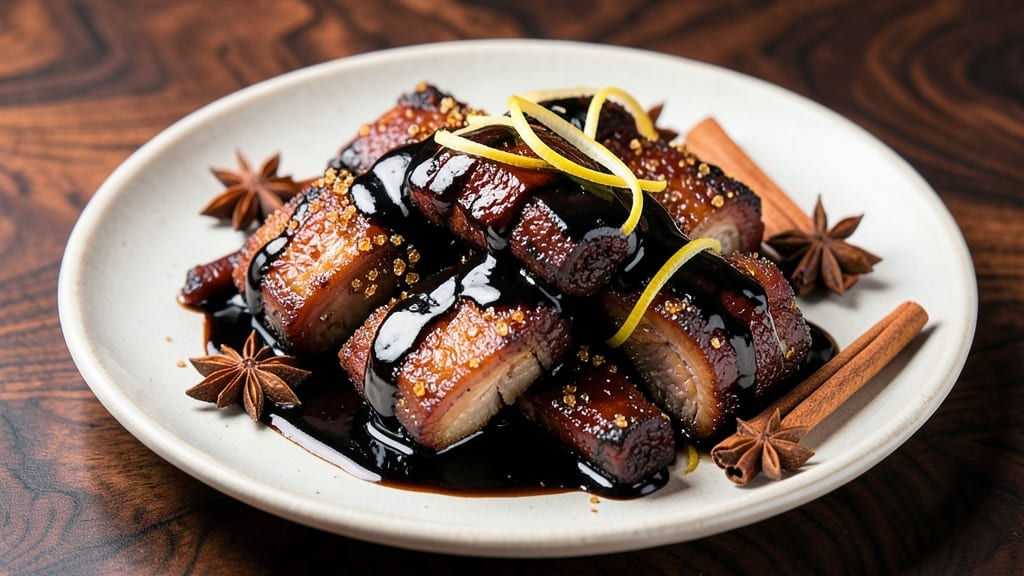
This black vinegar pork trotters recipe transforms tough cuts into melt-in-your-mouth tenderness with a bold, tangy depth that lingers. As someone who’s spent years perfecting pork at The Smoky Pig, I know the secret lies in slow braising—where the trotters become so tender they practically fall apart at the touch.
The black vinegar doesn’t just flavor; it transforms the dish into something rich, complex, and unforgettable.
The process starts with thorough cleaning and parboiling to remove impurities, then a long, slow braise that breaks down collagen into gelatinous perfection. Star anise, cinnamon, and ginger join the black vinegar to create a fragrant broth that infuses every bite.
This isn’t just a recipe—it’s a technique that turns simple ingredients into a restaurant-worthy centerpiece.
By the time you’re done, you’ll have trotters that are crispy on the outside, velvety inside, with a glossy black vinegar glaze that balances sweetness and tang.
The aroma alone will draw everyone to the table, and the first bite delivers that perfect contrast—crunchy edges giving way to melt-in-your-mouth richness. This is the kind of dish that makes people ask for seconds before they’ve even finished their first.
Best served with steamed jasmine rice to soak up every last drop of that fragrant braising liquid, or alongside stir-fried greens for a complete meal. The leftovers?
Even better the next day, as the flavors deepen and the trotters become even more tender. Let’s get cooking—this is pork at its finest.
Ingredients for black vinegar pork trotter
Pork trotters, black vinegar, and aromatic spices—this combo turns tough cuts into melt-in-your-mouth perfection.
| Ingredient | Amount | Notes |
|---|---|---|
| Pork Trotters 🍖 | 2 ½ lb | Fresh, cleaned and parboiled |
| Black Vinegar 🍶 | ½ cup | High-quality, aged variety |
| Brown Sugar 🍚 | ½ cup | Packed, light variety |
| Star Anise 🌿 | 2 whole | Whole pods, lightly crushed |
| Fresh Ginger 🧄 | ½ cup | Julienned, about 2 inches |
| Cinnamon Sticks 🌿 | 2 whole | 2-inch pieces |
| Garlic Cloves 🧄 | 6 cloves | Smashed, not minced |
| Bay Leaves 🍃 | 2 whole | Dried, standard size |
| Salt 🧂 | 1 ½ tbsp | Kosher or sea salt |
| Black Peppercorns 🌶️ | 1 tbsp | Crushed, not ground |
| Vegetable Oil 🫒 | 2 tbsp | For initial searing |
| Water 💧 | 4 cups | For parboiling |
| Jasmine Rice 🍚 | 1 ½ cups | Uncooked, for serving |
Pork trotters are the star here, and freshness is non-negotiable. Look for trotters with a vibrant pinkish hue and minimal odor—Asian markets or specialty butchers usually carry the best quality. The cleaning process is crucial: scrub thoroughly with a stiff brush, then parboil for 10 minutes to remove impurities. I always grab mine from Whole Foods or Trader Joe's when they're in season, but check your local butcher too. The black vinegar should be aged and dark—Lee Kum Kee or Hin Fung brands are my go-tos, but any high-quality Asian market vinegar works. Skip the cheap stuff; it won't deliver that deep, tangy complexity.
No star anise? Anise seeds at double the amount work in a pinch, but the flavor won't be identical. Fresh ginger is ideal, but dried ginger powder at half the amount gets you close. The cinnamon sticks can be swapped for ground cinnamon (1 tsp), but whole sticks infuse better. For the garlic, roasted cloves add a sweet depth—toss them in the oven at 400°F for 10 minutes before using. The brown sugar should be packed, not scooped. If you're using a different vinegar, balance the sweetness with a touch more sugar. And trust me, don't skip the parboiling step—it makes all the difference in the final texture.
This dish tastes even better the next day, as the flavors meld and the trotters become even more tender. Store leftovers in the braising liquid in an airtight container for up to 5 days—the liquid keeps the trotters moist. For longer storage, freeze portions for 3 months. I always make extra rice to serve with it; the fragrant broth soaks right in. The trotters reheat beautifully—just warm them gently in the oven with a splash of water to keep everything moist. Leftovers make fantastic sandwiches too—crisp up the trotters and pile them high on fresh bread with a drizzle of that tangy braising liquid.
Why You'll Love This Recipe
- One-Pot Magic: I swear by this recipe when I’m too tired to wash dishes—just trotters, vinegar, and a few spices simmering together. The black vinegar does all the work, cutting through the richness while the star anise adds depth without extra pots.
- Sweet-Savory Balance: Between us, that combo of brown sugar and black vinegar is chef’s kiss—sticky, tangy, and just sweet enough to make your taste buds dance. The ginger and star anise? They turn this into something that tastes like a fancy dinner, not a weeknight hack.
- Leftover Goldmine: Honestly, this is my go-to for meal prep because the flavors only get better after a day or two. Reheat and serve with rice, or toss cold trotters into a salad for a protein punch—no one will guess they’re leftovers.
- Budget-Friendly Feast: Pork trotters are cheap, and this recipe stretches them into a full meal for four (or more, if you’re feeding a crowd). The black vinegar and spices cost pennies, but they make it taste like a splurge—without the splurge price tag.
Step-by-step instructions for black vinegar pork trotters
Here's how to transform tough pork trotters into irresistibly tender, tangy-sweet bites with a satisfying crunch.
Parboil the Pork Trotters
Start by placing the 2.5 lb pork trotters in a large pot and covering them completely with the 4 cups water. Bring to a boil over medium-high heat, then reduce to a gentle simmer. Let them cook uncovered for 20-25 minutes until the water reduces by about half and the meat begins to soften slightly.
This initial boiling serves two purposes: it removes impurities from the surface and begins the tenderizing process. You'll know it's ready when you can easily pierce the thickest part with a fork. Drain the trotters and pat them dry thoroughly with paper towels—this step is crucial for developing that prized crispy exterior later.
Build the Flavor Base
In a large Dutch oven, heat the 2 tbsp vegetable oil over medium heat until shimmering. Add the smashed 6 cloves garlic and cook for 30 seconds until fragrant but not browned. Immediately add the 0.5 cup julienned fresh ginger, 2 lightly crushed whole star anise, 2 whole cinnamon sticks, and 2 whole bay leaves. Stir for 1 minute to toast the spices—you should smell their aromatic oils releasing.
Here's the thing—don't rush this step. The spices need time to bloom properly. If you smell burning, reduce the heat slightly. Add the 1.5 tbsp salt and 1 tbsp crushed black peppercorns, stirring to distribute evenly. This aromatic base forms the flavor foundation for your trotters.
Braise the Trotters Slowly
Carefully place the parboiled pork trotters into the Dutch oven, arranging them in a single layer. Pour in the 0.5 cup black vinegar and 0.5 cup packed brown sugar, stirring gently to coat the meat. Add enough water to come about halfway up the trotters—approximately 2 cups should do it.
Bring the liquid to a simmer over medium-low heat, then reduce to a bare simmer. Cover the Dutch oven and transfer to a preheated 300°F oven. This low-and-slow approach is key—it allows the connective tissue to break down gradually while the vinegar and sugar work their magic, creating that signature tangy-sweet glaze.
Develop the Glaze and Crisp
Let the trotters braise for 2.5-3 hours in the oven, turning them occasionally to ensure even cooking and glaze development. You're looking for the liquid to reduce significantly and the trotters to become fork-tender. About 30 minutes before they're done, uncover the pot and increase the oven temperature to 400°F.
This final step is where the magic happens—the increased heat helps caramelize the sugars in the braising liquid, creating that beautiful glossy glaze. The trotters should be tender enough that they pull apart easily with two forks, with a deep mahogany color and crisp edges. If the glaze seems too thin, you can reduce it further on the stovetop over medium heat.
Serve with Jasmine Rice
Remove the trotters from the oven and let them rest for 10 minutes before serving. While they rest, cook the 1.5 cups jasmine rice according to package instructions—it should be perfectly fluffy and ready to absorb all that delicious braising liquid.
To serve, arrange the trotters on a platter and spoon the aromatic braising liquid over them. The contrast of tender meat with crisp edges and that tangy-sweet glaze is what makes this dish so special. Serve immediately with the jasmine rice and let everyone experience the perfect balance of textures and flavors in each bite.
Pro Tips For Making Black Vinegar Pork Trotter
- Parboil First: Don’t skip this step—simmer trotters in salted water for 30 minutes before braising. I learned this the hard way when my first batch turned out chewy instead of tender. The initial boil breaks down collagen and removes impurities, so the black vinegar can focus on adding flavor instead of fighting gunk.
- Balance the Vinegar: Black vinegar is strong—start with ¼ cup per trotter and taste as you go. Too much makes the dish harsh; too little leaves it flat. My grandmother swore by this ratio, and she was right: the sugar and ginger need the vinegar to shine, not overpower.
- Crisp the Skin Slowly: After braising, broil the trotters for 3-4 minutes, not 10. Watch them like a hawk—they’ll darken fast. I used to rush this and end up with burnt edges; now I flip them every minute and finish under the broiler just until golden. That’s when the texture gets right.
- Grate Ginger Fine: No food processor? Use a microplane—you’ll get way more surface area for flavor. I was skeptical until I tried it: the ginger blends into the sauce instead of sitting in clumps, and the aroma is deeper. Skip this, and your dish will taste like it’s missing something.
Storing and reheating this dish
Refrigerator Storage
After your black vinegar pork trotters reach that perfect tenderness, store them in the braising liquid to keep them moist and flavorful. Place the trotters and about 1 cup of the aromatic liquid in an airtight container—I love using glass Pyrex with a tight-sealing lid.
Store at 40°F or below for up to 4 days. The flavors actually deepen overnight, making leftovers even more delicious. Just reheat gently to preserve that crispy edge. ❄️
Freezer Storage
For longer storage, freeze the trotters with their braising liquid in a freezer-safe bag or container. Leave 1 inch of headspace to prevent cracking, and squeeze out excess air to avoid freezer burn.
They'll keep for 3 months without losing quality. When ready to eat, thaw overnight in the refrigerator, then reheat gently in the oven at 300°F for 20 minutes to restore that satisfying crunch.
Reheating Methods
My preferred method is oven reheating—it preserves the best texture. Place the trotters on a baking sheet with a splash of water or braising liquid, then cover loosely with foil. Heat at 300°F for 20-25 minutes until warmed through.
For quick meals, microwave individual portions covered with a damp paper towel on 50% power for 2-3 minutes, stirring halfway. Always check internal temperature reaches 165°F for safety.
Leftovers Transformation
Turn your leftovers into something new with minimal effort. Shred the trotters and pile them high on fresh bread with a drizzle of that tangy braising liquid for an easy sandwich.
Or chop them into bite-sized pieces and toss with stir-fried greens for a quick wok-style dish. The flavors are so rich they work in unexpected ways—just don't skip the glaze! 💡
Glaze Preservation
Save that precious braising liquid by straining it through a fine-mesh sieve to remove any solids. Store the strained liquid in a separate airtight container in the refrigerator for up to 1 week.
Use it to baste other proteins, as a marinade, or even as a tangy sauce for noodles. I've even used it as a glaze for grilled vegetables—it adds a fantastic depth of flavor to everything it touches. 🍶
Serving Suggestions
When reheating, always serve with freshly cooked jasmine rice to soak up that flavorful liquid. For extra presentation, garnish with fresh cilantro or thinly sliced green onions. The contrast of warm rice with the rich, tangy trotters creates a meal that feels both comforting and exciting.
I often serve it with a side of steamed bok choy to balance the richness with freshness. 🌿
Nutrition facts
Frequently asked questions
Why do I need to parboil the pork trotters first?
Parboiling serves two critical purposes: it removes impurities from the tough skin and surface, and it begins the tenderizing process by partially breaking down collagen. This step ensures your trotters won't be bitter or tough later. Skipping it risks a less flavorful, less tender final result—especially important for this recipe where texture contrast matters!
Can I substitute regular vinegar for black vinegar?
While you can use it, you'll miss the deep umami complexity that black vinegar provides. For a similar effect, try a mix of 1/4 cup rice vinegar + 1/4 cup balsamic vinegar + 1 tbsp soy sauce. The black vinegar's aged, fermented notes create that signature tangy-sweet balance that's hard to replicate.
How do I know when the trotters are fully tender?
They're ready when they pull apart easily with two forks and the thickest part reaches 205°F internally. Look for deep mahogany coloring and crisp edges—this means the collagen has fully rendered. If they're still firm after 3 hours, increase the oven temp to 400°F for the final 30 minutes to help break down remaining connective tissue.
What's the best way to crisp the edges after braising?
The key is that final 400°F boost! Uncover the pot and increase heat for the last 30 minutes, allowing the sugars in the braising liquid to caramelize. For extra crunch, broil for 2-3 minutes at the very end, watching closely to avoid burning. A quick sear in a hot skillet with a splash of oil also works wonders for restaurant-quality edges!
Can I make this recipe in a slow cooker?
Yes, but with adjustments! Brown the trotters first in a skillet, then transfer to the slow cooker with all ingredients except the final 30 minutes of high heat. Cook on LOW for 6-7 hours, then transfer to a baking dish and broil for 5-10 minutes to develop that crispy texture. The slow cooker won't caramelize the glaze as beautifully, but it's a convenient alternative.