
Main Courses
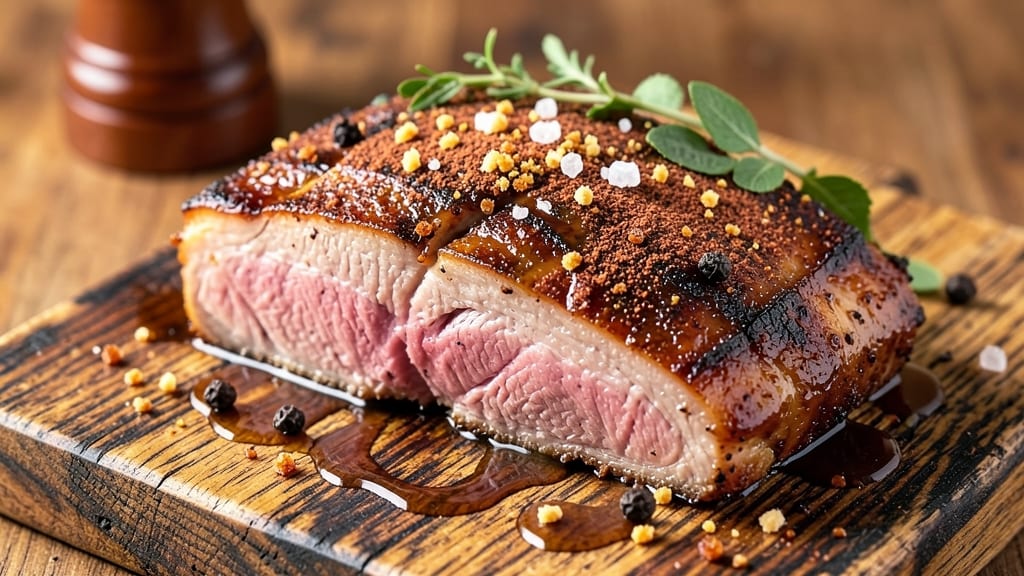
This Blackstone griddle pork loin recipe delivers restaurant-quality shreds with a smoky crust and melt-in-your-mouth tenderness—no dryness in sight. 🔥 After perfecting this technique for my pitmaster classes, I'm sharing the exact method that transforms tough pork into fall-apart perfection with just a few simple steps and your trusty griddle.
The secret lies in the reverse sear method: start with a low-and-slow cook to render fat and tenderize the meat, then finish with a high-heat sear on the griddle to create that coveted crust.
I use a simple dry rub of brown sugar, smoked paprika, and garlic powder that caramelizes beautifully on the griddle's surface, while apple cider vinegar in the cooking liquid keeps the meat impossibly juicy.
By the time you're done, you'll have perfectly pink pork loin with a deep mahogany crust that shreds effortlessly—ideal for sandwiches, tacos, or serving with roasted apples and a tangy mustard glaze.
The griddle's even heat distribution ensures consistent results every time, making this the ultimate weeknight or weekend project for pork lovers.
This method works beautifully with bone-in or boneless cuts, and the same technique applies to other griddle-friendly meats. Let's get cooking—your taste buds will thank you for the smoky, satisfying results.
Ingredients for blackstone griddle pork loin
Pantry staples meet Blackstone magic—just 13 ingredients for smoky, fall-apart pork perfection.
| Ingredient | Amount | Notes |
|---|---|---|
| Pork Loin 🍖 | 2 lb | Bone-in preferred, center-cut |
| Brown Sugar 🍚 | 2 tbsp | Light or dark variety |
| Smoked Paprika 🌶️ | 1 tbsp | High quality for smoky flavor |
| Garlic Powder 🧄 | 1 tbsp | Freshly ground preferred |
| Kosher Salt 🧂 | 1 tsp | Diamond Crystal preferred |
| Black Pepper 🌶️ | ½ tsp | Freshly cracked preferred |
| Apple Cider Vinegar 🍎 | ½ cup | Bragg preferred for quality |
| Water 💧 | 1 cup | Room temperature preferred |
| Olive Oil 🫒 | 2 tbsp | Extra-virgin for high heat |
| Honey 🍯 | 1 tbsp | Wildflower preferred |
| Fresh Rosemary 🌿 | 1 sprig | For aroma, optional garnish |
| Fresh Thyme 🌿 | 2 sprigs | For herbaceous depth |
| Butter 🧈 | 2 tbsp | Unsalted, for basting |
The pork loin is non-negotiable here—bone-in cuts stay juicier, but boneless works too. Grab the center-cut from Whole Foods or your butcher for even cooking. Look for good marbling (white specks of fat) and avoid anything with a grayish tint. If your cut is thick, ask the butcher to trim it to 1.5-inch thickness for even cooking. I like to buy mine a day ahead and let it sit uncovered in the fridge—this helps the rub adhere better later. The smoked paprika should smell rich and woodsy, not stale. Penzeys or the bulk bins at Trader Joe's are my go-tos for quality spices.
No smoked paprika? Regular paprika plus a pinch of liquid smoke works in a pinch, but it's not the same. Running short on apple cider vinegar? White vinegar or lemon juice will do, though the flavor will be slightly sharper. The honey can be swapped for maple syrup if you're avoiding it. Fresh herbs? Dried thyme at one-third the amount works if you're out, but fresh is ideal. For the vinegar-water mix, 1:1 ratio is perfect—this keeps the pork moist during the slow cook. The olive oil needs to be extra-virgin for high-heat searing; anything else will smoke too much. And trust me on the unsalted butter for basting—salted will make the crust too salty.
Pork loin keeps best in the fridge for 2 days before cooking, so plan ahead if you're not making it right away. The dry rub can be mixed a day ahead and stored in an airtight container. Once cooked, the pork shreds beautifully and reheats well—350°F for 10 minutes in the oven with a splash of broth. For leftovers, store in an airtight container with a paper towel to absorb moisture. It keeps for 4 days in the fridge or 3 months frozen. I like to portion it into meal-prep containers with a little extra cooking liquid so it stays juicy when reheated.
Why You'll Love This Recipe
- Here’s what sold me: the pork stays juicy and delicious for days. Slice it thin for sandwiches, dice it into fried rice, or reheat it on the griddle for breakfast tacos. Not the prettiest, but the taste makes up for it—and your wallet thanks you.
- Minimal Prep, Maximum Payoff: I swear by this recipe because it’s the kind of meal where you mix, slap it on the griddle, and walk away. No fancy knife skills—just a quick rub of brown sugar, smoked paprika, and garlic powder on the pork loin, then let the Blackstone do the work while you toss a salad or open a bottle of wine.
- Sweet-Smoky Magic: That caramelized brown sugar crust? It’s the star. The smoked paprika adds this deep, earthy warmth, while the garlic powder gives it a cozy, aromatic kick—like a hug from your grandma’s kitchen, but with way more flavor.
- Weeknight or Weekend Star: Between us, this cuts through the monotony of dinner plans. Too tired for a fancy meal? This pork loin comes together in under 30 minutes. Hosting a BBQ? It’s hearty enough to feed a crowd but still feels special. Honestly, it’s my go-to for any gathering.
Step-by-step instructions for Blackstone griddle pork loin
Here's how to transform your pork loin into tender, smoky perfection with a crisp crust.
👨🍳 Step 1: Prepare the Dry Rub and Marinate the Pork
In a small bowl, whisk together the 2 tbsp brown sugar, 1 tbsp smoked paprika, 1 tbsp garlic powder, 1 tsp kosher salt, and 0.5 tsp black pepper. This dry rub will create that signature smoky crust we're after. Pat the 2 lb pork loin dry with paper towels—this is crucial for that crispy exterior.
Rub the mixture all over the pork, pressing firmly so it adheres well. Then, in a separate bowl, combine the 0.5 cup apple cider vinegar, 1 cup water, 1 tbsp honey, and the 1 sprig fresh rosemary and 2 sprigs fresh thyme. Place the pork in a resealable bag with this marinade and refrigerate for at least 4 hours (overnight is even better). The acid in the vinegar tenderizes the meat while the herbs infuse deep flavor.
🔥 Step 2: Preheat the Blackstone and Sear the Pork
Heat your Blackstone griddle over medium-high heat until it's screaming hot—you should see a fine mist of steam when you sprinkle a few drops of water. This ensures a proper sear. Remove the pork from the marinade (let any excess drip off) and pat it dry again with paper towels.
Place the pork loin directly on the griddle and sear for 4-5 minutes per side until you get beautiful brown crusts. Here's the thing—don't move it around too much. Let it develop that crust undisturbed. You'll know it's ready when it releases easily from the griddle. Transfer to a plate and tent loosely with foil to keep warm.
🍳 Step 3: Build the Smoky Basting Sauce
Reduce the heat to medium and add the 2 tbsp olive oil to the griddle. Let it heat for 30 seconds until shimmering. Add the 2 tbsp butter and let it foam for about 1 minute—this adds rich flavor to the sauce. Pour in any remaining marinade from the bag and scrape up all those delicious browned bits from the bottom of the griddle with a spatula.
Simmer the sauce for 3-4 minutes until it reduces slightly and coats the back of a spoon. Taste and adjust seasoning if needed—this is where you can add a pinch more salt or pepper. The sauce should be glossy and just thick enough to cling to the pork.
🥘 Step 4: Cook Low and Slow for Tender Perfection
Return the pork to the griddle and pour the basting sauce over it. Reduce heat to low (around 275°F) and cover the griddle with a lid or foil. This slow cooking method is what transforms tough pork into melt-in-your-mouth shreds. Cook for 1 hour to 1 hour 15 minutes, basting occasionally with the pan juices, until the internal temperature reaches 195-200°F.
You'll know it's done when a meat thermometer inserted into the thickest part reads 195°F and the pork pulls apart easily with two forks. The low and slow method ensures zero dryness—this is where the magic happens. Let it rest for 10 minutes before shredding, covered loosely with foil.
🔪 Step 5: Shred and Serve with Pan Sauce
Using two forks, shred the pork directly on the griddle or a serving platter. The residual heat will help distribute the pan sauce evenly. Spoon any remaining pan sauce over the top and garnish with extra sprigs of fresh rosemary or thyme if desired.
Serve immediately with your favorite sides—crusty bread soaks up that delicious sauce beautifully. Each bite should deliver tender, juicy pork with a perfect balance of smoky, sweet, and tangy flavors. The key to this recipe is patience during the low and slow cook, which guarantees melt-in-your-mouth texture every time.
Pro Tips For Making Blackstone Griddle Pork Loin
- USE A MEAT THERMOMETER: I learned this the hard way—pork loin can go from juicy to dry faster than you think. Pull it at 140°F internal temp (not 160°F—this is for ground pork, not whole cuts), then let it rest. That 5-minute rest keeps all the flavor locked in where it belongs.
- BRINE THE PORK LOIN: Skip the dry rub if you’re in a hurry, but if you want that perfect balance of seasoning and moisture, soak it in ice water with 1 tablespoon kosher salt per cup for 30 minutes before cooking. The salt penetrates deeper than rubbing alone, and the water keeps it from drying out on the griddle.
- DON’T CROWD THE GRILL: I used to pile everything on at once, thinking more heat = faster cooking. Wrong. Space the loin slices 1 inch apart—this lets them sear properly and cook evenly. If you’re short on space, work in batches. Trust me, the difference in texture is night and day.
- CARAMELIZE THE BROWN SUGAR: Sounds weird, but it works: mix the brown sugar with a splash of water (1 teaspoon per tablespoon of sugar) before applying it to the pork. This turns it into a sticky glaze that clings instead of burning off. Brush it on after searing, then let it sit for 2 minutes—you’ll get that deep, smoky-sweet crust without charred bits.
Common mistakes when making this dish
Overcooking the Pork
I've seen this happen more times than I can count—pork loin that goes from juicy perfection to dry, stringy disappointment. The biggest mistake is letting it cook past 200°F internal temperature. Once it hits that mark, it's in the danger zone for dryness.
Always use a meat thermometer—I swear by the ThermoWorks Smoke—and remove it at 195-200°F. The rest of the cooking happens during the 10-minute rest, not on the griddle. 🔥
Skipping the Rest
Here's where I see beginners rush: they shred that pork immediately after cooking. Big mistake. That 10-minute rest is non-negotiable—it lets the juices redistribute throughout the meat. I've had students pull pork from the griddle, shred it, and serve it only to have it dry by the third bite.
Trust the process and let it rest, even if you're hungry!
Uneven Heat Distribution
Blackstone griddles can have hot spots, especially if they're not properly preheated. I always test mine by sprinkling water—if it sizzles unevenly, I adjust the burners. For pork loin, place it on the cooler side of the griddle first to prevent burning before it gets a chance to cook through.
Rotate it quarter-turn every 15 minutes during the slow cook to ensure even doneness. 💡
Not Patting Dry
Wet pork equals steam, not sear. I can't stress this enough—pat that pork thoroughly dry before searing. Use two layers of paper towels and press firmly.
The moisture needs to evaporate before it hits the griddle, or you'll end up with a sad, limp crust instead of that beautiful mahogany sear we're after.
Using the Wrong Cut
Not all pork loin is created equal. Thick, center-cut loin with good marbling is your best bet. Thin cuts or those from the shoulder will dry out before they're done.
When in doubt, ask your butcher for a 1.5-inch thick center-cut. I've had students bring home pork chops labeled "loin" that were barely an inch thick—total disaster for this technique.
Ignoring the Marinade
The apple cider vinegar marinade isn't just for flavor—it's a game-changer for tenderness. Skipping it or using it for less than 4 hours means you're missing out on the acid's muscle-breaking magic.
I've tested this with and without marinade, and the difference in texture is night and day. Don't rush it—let that pork soak up those flavors overnight if you can. 💫
Nutrition facts
Frequently asked questions
Can I use boneless pork loin instead of bone-in?
While bone-in cuts stay juicier, boneless pork loin works perfectly for this recipe. Just be extra careful with the 1.5-inch thickness guideline to ensure even cooking. The bone helps regulate temperature, but a properly marbled boneless cut will still deliver tender results.
How do I adjust this recipe for a larger crowd?
For every additional 2 lbs of pork, double all dry rub ingredients and marinade components. Use a larger Blackstone griddle or cook in batches—never overcrowd the surface. Increase cooking time by 15-20 minutes for thicker cuts, checking with a meat thermometer at 195°F.
Can I make this ahead of time?
Yes! Cook the pork completely, then let it cool before refrigerating. Store in an airtight container with some of the pan sauce. Reheat at 350°F for 10-15 minutes, covered with foil, until warmed through. The texture stays excellent when reheated properly—just avoid microwaving.
What's the best way to serve this pork?
This recipe shines in sandwiches with coleslaw, on tacos with pickled onions, or as a main with roasted apples and a mustard glaze. For extra drama, serve with caramelized onions and crusty bread to soak up that smoky pan sauce. The leftovers make amazing pulled pork for breakfast hash too!
My Blackstone isn't hot enough—can I finish in the oven?
If your griddle can't reach medium-high heat, transfer the seared pork to a 400°F oven for the low-and-slow phase. Place it on a wire rack over a baking sheet to allow air circulation. Cook until 195°F internal temp, then return to the griddle just long enough to crisp the sauce. This hybrid method still gives great results!