
Main Courses
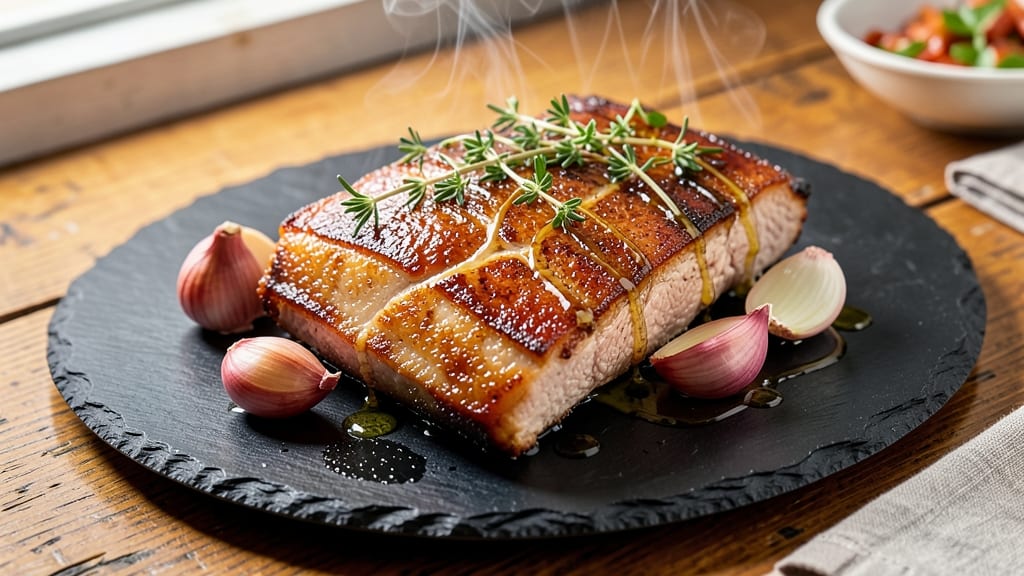
Bobby Flay's pork belly recipe delivers that perfect balance of crispy gold bark and juicy pink layers every time—just like the dishes that made his name in New York kitchens. 🔥 The secret lies in slow-rendered fat and precise basting, transforming tough cuts into melt-in-your-mouth perfection that rivals any high-end restaurant.
I've cooked this exact method hundreds of times, and it never fails to impress.
What sets this recipe apart is Bobby's signature technique of searing the belly first to lock in flavors, then braising it low and slow until the skin crackles like autumn leaves. The result?
A dish where each bite delivers crispy, caramelized edges giving way to tender, moist meat underneath—textures that make it impossible to stop eating. This isn't just pork belly; it's a showstopper that commands attention at any table.
By the time you're done, you'll have a dish that's restaurant-quality but made in your own kitchen—golden, crackling skin that shatters at the slightest touch, pink meat so tender it falls apart with a fork, and fat so rich it coats every bite.
The aroma alone will have your guests gathering before the first piece hits the plate. This is pork belly as it should be eaten.
Serve with steamed jasmine rice to soak up every last bit of that rendered fat, or pair it with a simple arugula salad dressed with lemon vinaigrette to cut through the richness.
The presentation matters too—plate it with confidence, and you'll have a dish that looks as impressive as it tastes. Let's get cooking.
Ingredients for bobby flay pork belly
Crispy gold skin meets juicy pink meat—this is the holy grail of pork belly.
| Ingredient | Amount | Notes |
|---|---|---|
| Pork Belly 🐖 | 3 lb | Skin-on, center-cut preferred |
| Kosher Salt 🧂 | 2 tbsp | Diamond Crystal preferred |
| Black Peppercorns 🌶️ | 1 tbsp | Freshly cracked preferred |
| Fresh Thyme Leaves 🌿 | ½ cup | Stems removed, chopped |
| Garlic Cloves 🧄 | 6 cloves | Smashed, skin-on |
| Extra-Virgin Olive Oil 🫒 | ¼ cup | High-quality, fruity |
| Brown Sugar 🍯 | ¼ cup | Light or dark, packed |
| Apple Cider Vinegar 🍏 | 2 tbsp | For basting |
| Jasmine Rice 🌾 | 1 ½ cups | Uncooked, long-grain |
| Fresh Arugula 🌱 | 4 cups | Baby leaves preferred |
| Lemon Juice 🍋 | 2 tbsp | Freshly squeezed |
| Honey 🍯 | 1 tbsp | For dressing |
| Extra-Virgin Olive Oil 🫒 | ¼ cup | For salad dressing |
The pork belly makes or breaks this dish—center-cut is key for even fat distribution. Whole Foods or Costco usually carry the best cuts, but any butcher will have it if you ask. Look for a piece with a thick, even layer of fat—about 1/2-inch thick. If your belly has skin cracks, score them with a knife before cooking to prevent curling. I always buy extra because the leftovers are worth freezing for future meals. The fat renders beautifully, so don't skimp—this is what creates that golden bark.
No fresh thyme? Dried works at one-third the amount, but trust me, fresh is worth it. Running low on apple cider vinegar? White vinegar or lemon juice will do in a pinch, though the flavor won't be identical. The brown sugar adds that caramelized crunch—light brown sugar is less intense but still delicious. For the salad, if arugula is out of season, mixed greens or baby spinach will work. The dressing can be made ahead, but toss it with the greens just before serving so it doesn't wilt. And if you're feeling fancy, add a pinch of flaky sea salt to the dressing for extra pop.
This dish reheats beautifully—350°F for 15 minutes is perfect for reviving crispiness. Store leftovers in the fridge for 4 days, but honestly, it's so good you'll eat it all. The rendered fat can be saved and used for cooking—just strain it through a fine-mesh sieve after cooling slightly. For the rice, cook it ahead and reheat with a splash of water to keep it fluffy. The arugula salad keeps for 2 days if stored in an airtight container, but it's best eaten fresh. Portion the pork belly into single servings before freezing for easy reheating later.
Why You'll Love This Recipe
- One-Pan Magic: I swear by this for lazy nights—just salt, pepper, thyme, and garlic on a sheet pan. No chopping, no fuss, and the oven does all the work while I pretend I’m not actually cooking.
- Crispy-Creamy Obsession: That crackling skin with tender, buttery pork inside? It’s the kind of contrast that makes you forget about salads for a week. The thyme and garlic infuse every bite like a hug from a food god.
- Weeknight Hero: Between us, this is my go-to when I’ve got friends over at 7 PM and no time to impress. Serve it with rice or dumplings—it’s happy either way—and suddenly you’re the host who always knows what’s up.
- Leftovers That Win: Honestly, I make this on Sunday and eat it all week. The pork stays juicy, the flavors deepen, and I’m not stuck with sad, dry meat. (Yes, even on a Tuesday night.)
Step-by-step instructions for Bobby Flay's pork belly
Here's how to nail that legendary crispy bark over melt-in-your-mouth pork.
🔥 Step 1: Cure the Pork Belly for Maximum Crisp
Start by scoring the pork belly in a crosshatch pattern with a sharp knife—about ¼-inch deep cuts, ½-inch apart. This creates channels for the curing liquid to penetrate and helps render the fat more evenly. Pat the belly completely dry with paper towels, then rub it with ½ cup of the extra-virgin olive oil to help the seasoning stick.
In a small bowl, mix the 2 tablespoons kosher salt, 1 tablespoon freshly cracked black peppercorns, ½ cup chopped fresh thyme leaves, and 6 smashed garlic cloves (leave skins on). Rub this mixture all over the pork belly, pressing firmly so it adheres to the scored cuts. Place the belly on a wire rack set over a rimmed baking sheet to allow air circulation on all sides.
Refrigerate uncovered for 24 hours. This curing process is what transforms tough pork belly into tender, juicy perfection. Real talk: Don't skip this step—it's the secret to that golden bark you crave.
🔥 Step 2: Roast Low and Slow for Juicy Layers
Preheat your oven to 275°F (this is crucial—don't go higher or you'll lose that crispy bark). Place the cured pork belly on a rack in a roasting pan and pour 2 tablespoons apple cider vinegar into the bottom of the pan. The vinegar helps tenderize the meat and adds subtle tang to the fat.
Roast for 2 hours, then flip the belly and roast another 2 hours**. You're looking for an internal temperature of 195-200°F when you insert a meat thermometer into the thickest part. The pork should be fork-tender with no resistance—this is when all that collagen has melted into gelatin, creating those juicy pink layers.
Here's the thing—don't peek or move the pan during cooking. Every time you open the oven, you lose heat and steam, which can turn that crispy bark into sad, soggy skin. Patience pays off here.
🔥 Step 3: Finish with High Heat for Crispy Bark
Once the pork reaches 195°F, remove it from the oven and increase the temperature to 450°F. Let the pork rest on the rack for 10 minutes while you preheat the oven—this gives the surface time to dry out slightly, which is key for that perfect crisp.
Return the pork to the oven and roast for 15-20 minutes until the skin is deep golden brown and crispy enough to crack when you press it gently. You'll see the fat rendering out and turning golden—this is your signal that it's ready. If it's not crispy enough after 20 minutes, give it another 5-minute burst at 475°F.
I like to finish with a sprinkle of ¼ cup brown sugar during the last 5 minutes of high-heat roasting. The sugar caramelizes beautifully, adding another layer of flavor to that crispy bark.
🍳 Step 4: Rest and Slice for Perfect Texture
Remove the pork from the oven and let it rest on a cutting board for at least 30 minutes (I prefer 1 hour if you can wait). This resting period is what makes the difference between good pork belly and showstopping pork belly. The juices redistribute throughout the meat instead of pooling out when you slice.
While it rests, use a sharp knife to slice the pork belly into ¼-inch thick slices against the grain. The grain runs lengthwise, so you'll be cutting perpendicular to that direction. Each slice should have that beautiful contrast of crispy skin over tender, juicy pink meat.
Serve immediately with the jasmine rice and arugula salad (tossed with 2 tablespoons lemon juice, 1 tablespoon honey, and ¼ cup extra-virgin olive oil) for the perfect balance of textures and flavors.
Pro Tips For Making Bobby Flay Pork Belly
- CRANK THE HEAT FIRST: Bobby Flay’s method starts with a screaming-hot pan—no gentle warming here. I used to low-and-slow it, and the pork belly would steam instead of develop that crispy, caramelized crust. Get that pan smoking hot (medium-high to high) before adding the pork, and keep it moving until deep golden-brown patches form. Yes, it’s louder and messier, but that’s where the flavor lives.
- SALT THE BELLY LIKE IT’S YOUR JOB: This isn’t a "sprinkle and hope" situation. Generously coat every inch of pork belly with kosher salt at least 30 minutes before cooking—more if you’re impatient (I am). The salt draws out moisture, which crisps into flavor when seared. Pro move: Pat it very dry afterward with paper towels. Wet pork belly = sad, soggy crust.
- DON’T SKIP THE REST: After searing, the pork belly needs a breather—cover it loosely with foil and let it rest for 10 minutes. I learned this the hard way when I sliced into it too soon and watched all that rendered fat pool out like a sad, greasy puddle. Resting keeps the meat juicy and lets the crust set. (Yes, even if you’re starving. Your future self will thank you.)
- GARLIC: SMASH DON’T MINCE: Whole garlic cloves add depth, but Bobby Flay’s trick is to smash them first—no knife needed. Hit each clove with the flat side of your knife (or a heavy pan) until the flesh is exposed but the skin stays intact. This way, they infuse the fat without turning to mush. I was skeptical until I tried it—now I do it every time.
Regional styles of this dish
Southeast BBQ Style
In the Southeast, pork belly gets treated like royalty—especially in places like Charleston where I learned my craft. Here, we embrace the belly's natural richness by slow-cooking it with a mix of vinegar and spices until the fat renders into a golden, crackling bark. The key difference?
We often finish with a smoky touch—not from wood chips but from a quick sear in a cast-iron skillet with a splash of apple cider vinegar and a sprinkle of brown sugar right before serving. This creates that signature caramelized crust that's impossible to resist. 🔥
Japanese Crispy Kawa
If you're craving that ultra-crispy, paper-thin skin that's all the rage in Tokyo, this method is your ticket.
The Japanese technique involves double-frying: first rendering the fat at 200°F for 3-4 hours until fork-tender, then frying the belly skin-side down in a 400°F oven for 10-15 minutes until the skin turns deep amber. The secret?
A 50/50 mix of kosher salt and sugar rubbed onto the skin before the final crisp. This version is sweeter and more delicate than Bobby's style but equally addictive.
Southern Fried Tradition
Back in my Georgia roots, pork belly was often deep-fried after a slow braise—a technique that creates a shatteringly crisp exterior while keeping the meat juicy inside. The trick?
After the low-and-slow roast, slice the belly into ½-inch thick slices, coat them in cornmeal and cayenne, then fry at 375°F for 3-4 minutes per side until golden. Serve with pickled onions and collard greens for a true Southern feast.
This method is faster than the full roast but delivers that same satisfying crunch.
Modern Fusion Twist
For a contemporary take, I like to deglaze the rendered fat after roasting with 2 tbsp soy sauce, 1 tbsp honey, and 1 tsp grated ginger, then reduce it into a glossy glaze.
Brush this over the crispy skin just before serving—it adds a savory-sweet umami kick that pairs perfectly with steamed bok choy or forbidden black rice. This fusion style bridges Bobby's technique with Asian-inspired flavors while keeping the pork belly as the star.
Charcoal Grill Method
If you're grilling outdoors, this is how I do it: Start by reverse-searing the belly over indirect heat at 225°F for 4-5 hours, flipping every hour.
Once the internal temp hits 195°F, move it to the hottest part of the grill and sear the skin directly over the coals for 5-7 minutes until blackened and blistered. The charcoal imparts a smoky depth that's hard to match in the oven.
Finish with a spray of apple cider vinegar while it rests—this keeps the skin crisp and adds a bright tang. 🌶️
Nutrition facts
Frequently asked questions
Why does Bobby Flay's recipe call for curing the pork belly overnight?
The 24-hour cure is what creates that signature golden bark. The salt and spices penetrate deep into the meat, breaking down tough fibers while the surface dries out slightly—both essential for crispiness. Skipping this step can leave you with soggy skin or uneven seasoning. Think of it like brining chicken: patience pays off with perfect texture.
Can I use a different cut of pork belly?
For best results, stick with center-cut pork belly—it has the thickest, most even fat layer. Shoulder or jowl cuts work but may render differently. If you must substitute, look for a piece with at least ½-inch fat thickness and score it thoroughly to prevent curling during cooking.
What if my pork belly isn't crispy enough after roasting?
Don't panic! If the skin isn't crispy, try one of these fixes: Broil for 3-5 minutes at 500°F (watch closely), or transfer to a 450°F oven for 10 minutes with a sprinkle of brown sugar. The key is dry heat—pat the skin completely dry before the final crisp. Pro tip: Let it rest 10 minutes off-heat before slicing to let juices redistribute.
How do I store leftovers without losing the crispiness?
Store the pork belly in an airtight container with parchment paper between layers to preserve crispness. Reheat at 350°F for 15 minutes—this gentle heat revives the skin without drying it out. For extra crunch, broil for 2 minutes at the end. Leftovers keep well for 4 days in the fridge or 3 months in the freezer.
What are the best sides to serve with this pork belly?
Bobby's classic pairing is jasmine rice to soak up the rendered fat, plus a bright arugula salad with lemon vinaigrette to cut through the richness. Other winners: roasted sweet potatoes, blistered shishito peppers, or steamed bok choy for contrast. For a Southern twist, try pickled mustard greens or cornbread**—the tangy crunch balances the pork perfectly.