
Main Courses
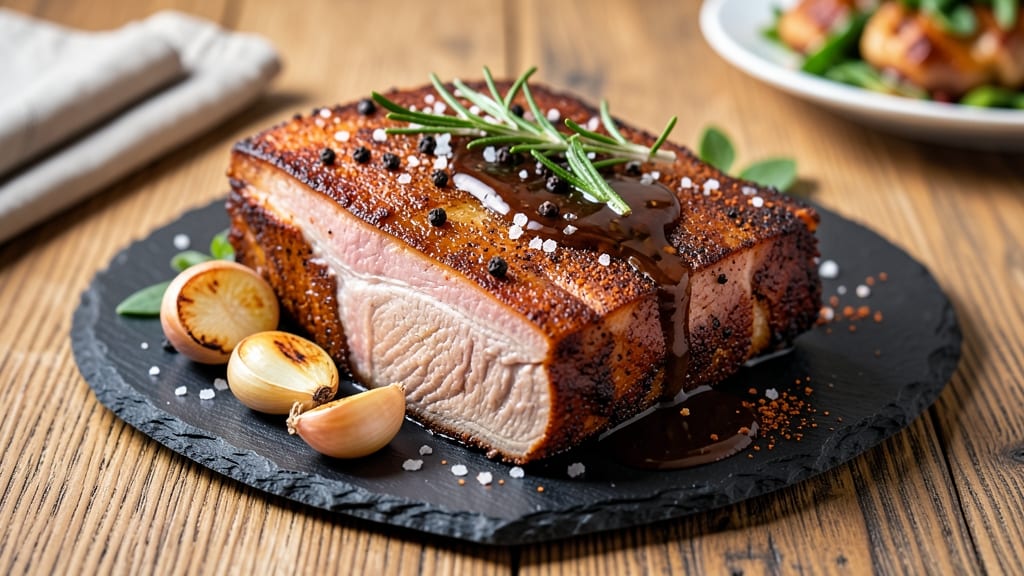
Bobby Flay's pork shoulder recipe delivers that signature restaurant-quality combination of smoky bark and juicy pink hearts—the kind that makes your taste buds sing. ✨ Growing up in Georgia, I learned that pork shoulder is where slow cooking meets pure magic, and Bobby's method takes it to the next level with precision timing and bold flavors.
The secret lies in dry-brining the meat overnight, then cooking it low and slow until the internal temperature hits 203°F—that's when the collagen transforms into melt-in-your-mouth tenderness.
This isn't just another pork shoulder recipe; it's a foolproof technique that guarantees perfect results every time, whether you're smoking it or braising in the oven.
What you'll end up with is a shoulder so tender it practically falls apart, with a crispy, caramelized crust that's worth the wait. The meat stays juicy and flavorful, with just a hint of pink in the center—Bobby's signature touch that keeps it irresistibly moist.
Serve with classic sides like coleslaw and cornbread for the full experience.
This recipe scales beautifully for gatherings, and the leftovers reheat perfectly for sandwiches or tacos. Let's get started on creating your own showstopping pork shoulder that'll have everyone asking for seconds.
Ingredients for bobby flay pork shoulder
Six pounds of pork shoulder plus bold flavors for Bobby Flay's signature smoky, juicy masterpiece.
| Ingredient | Amount | Notes |
|---|---|---|
| Boneless Pork Shoulder 🍖 | 6 lb | Bone-in preferred for flavor |
| Kosher Salt 🧂 | ½ cup | Diamond Crystal preferred |
| Black Peppercorns 🌶️ | 1 ½ tbsp | Freshly cracked for best flavor |
| Brown Sugar 🍯 | ¼ cup | Light or dark, packed |
| Smoked Paprika 🌶️ | 2 tbsp | For signature smoky bark |
| Garlic Cloves 🧄 | 8 cloves | Smashed, not minced |
| Onion Powder 🧅 | 1 tbsp | For depth of flavor |
| Apple Cider Vinegar 🍎 | ¼ cup | For tenderizing |
| Honey 🍯 | ¼ cup | Wildflower preferred |
| Yellow Onion 🧅 | 1 whole | Sliced for dry rub |
| Fresh Thyme 🌿 | ¼ cup | Leaves only, chopped |
| Fresh Rosemary 🌿 | ¼ cup | Needles only, chopped |
| Butter 🧈 | ½ cup | Unsalted, softened |
| Apple Juice 🍎 | 1 ½ cups | For braising liquid |
| Beef Broth 🍲 | 1 cup | Low-sodium preferred |
The pork shoulder is non-negotiable here—bone-in delivers the best flavor, though boneless works in a pinch. Costco and Whole Foods sell excellent cuts, but any well-marbled shoulder will do. Look for good fat coverage; that's where the flavor hides. The kosher salt is your secret weapon—Diamond Crystal dissolves better than table salt. Freshly cracked peppercorns add depth, and smoked paprika gives that signature bark. For the dry rub, I always toast the spices in a dry pan for 30 seconds to wake up the flavors—trust me on this.
No smoked paprika? Regular paprika plus a pinch of liquid smoke gets you close. Fresh thyme and rosemary are ideal, but dried at one-third the amount works in a bind. The apple cider vinegar and honey combo tenderizes while adding sweetness—substitute maple syrup if you're avoiding honey. For the braising liquid, apple juice and beef broth create the perfect balance. The butter at the end? Non-negotiable for that silky finish. If you're short on time, use a slow cooker instead of the oven—just add 2 hours to the cooking time.
This reheats like a dream—warm slowly in the oven with a splash of broth to keep it moist. Keeps for 5 days in the fridge or 3 months frozen. I always make double batches because the leftovers make the best pulled pork sandwiches. For serving, rest the meat 30 minutes before slicing—this keeps it juicy. The crispy bark? Worth the wait, so don't rush it.
Why You'll Love This Recipe
- Let’s be real: you’ll make more than you need. The beauty? That pork shoulder keeps giving—sandwiches, fried rice, or even a quick breakfast scramble. Honestly, I’ve eaten it cold three days in a row and still craved it. That’s a win.
- Five-Ingredient Magic: I swear, this recipe nails perfection with just five core ingredients—no fancy gadgets, no confusing steps. The pork shoulder does all the heavy lifting while you sprinkle salt, pepper, and that smoky paprika like you’re painting a masterpiece.
- Crispy-Caramel Bliss: Between the brown sugar’s sticky caramelization and the smoky depth of the paprika, every bite is a contradiction you’ll love: tender inside, crackling outside. It’s the kind of flavor that makes people pause mid-chew and ask, “What’s in this?”
- Sunday Dinner Hero: This isn’t just a weeknight dish—it’s the star of game days, potlucks, or lazy Sundays when you want to impress without slaving. Serve it sliced thin over mashed potatoes or shredded for tacos, and suddenly you’re the host everyone remembers.
Step-by-step instructions for Bobby Flay's pork shoulder
Here's how to nail that perfect smoky bark and melt-in-your-mouth tenderness every time.
👨🍳 Step 1: Build the Dry Rub and Prep the Pork
In a medium bowl, combine the 0.5 cup kosher salt, 1.5 tbsp freshly cracked black peppercorns, 0.25 cup brown sugar, 2 tbsp smoked paprika, 1 tbsp onion powder, 8 smashed garlic cloves, 0.25 cup chopped fresh thyme, and 0.25 cup chopped fresh rosemary. Mix thoroughly until the rub clings together—this is your flavor bomb.
Pat the 6 lb boneless pork shoulder completely dry with paper towels (this is non-negotiable for crispy bark). Then slather the rub all over the pork, pressing it into every nook and cranny. The goal is to create a thick, flavorful crust that'll caramelize beautifully during cooking. Let the pork sit at room temperature for 30 minutes while you prep everything else.
🔥 Step 2: Sear for Maximum Flavor and Bark Development
Heat a large Dutch oven over medium-high heat until smoking hot. Add the pork shoulder and sear for 8-10 minutes on each side, turning occasionally, until the rub is deeply caramelized and the pork develops a deep mahogany crust. Don't rush this—you want that bark to form properly before moving to the oven.
Once seared, remove the pork and set it aside. In the same Dutch oven, add 0.5 cup softened butter and let it melt, scraping up all those delicious browned bits from the bottom. This is where all the flavor lives, so don't skip this step. Keep the oven preheating to 325°F while you work.
🥘 Step 3: Braise with Apple Cider and Honey
Pour in the 0.25 cup apple cider vinegar and 0.25 cup honey, scraping up any remaining bits from the pan. Add 1 whole sliced yellow onion, 1.5 cups apple juice, and 1 cup beef broth, then return the pork to the Dutch oven, fat-side up. Bring everything to a gentle simmer, then cover tightly with a lid.
Transfer the Dutch oven to the preheated oven and braise for 3 hours. Here's the thing—don't peek! Every time you lift that lid, you're letting steam escape, which means longer cook times. After 3 hours, check the internal temperature—it should be around 195°F with a probe sliding in like butter.
⏰ Step 4: Rest and Slice for Perfect Texture
Once the pork reaches 195°F, remove it from the oven and let it rest for at least 30 minutes (I prefer 1 hour if possible). This resting period is crucial—it allows the juices to redistribute throughout the meat, ensuring each bite is juicy and tender. Tent loosely with foil to keep it warm.
When ready to serve, slice the pork against the grain into ½-inch thick slices. The exterior should have that beautiful smoky bark, while the interior reveals pink, juicy hearts that practically melt in your mouth. Spoon some of that rich braising liquid over the top for extra flavor, and serve with crusty bread to soak up all the goodness.
Pro Tips For Making Bobby Flay Pork Shoulder
- Sear Until Black: Bobby Flay’s crust isn’t just brown—it’s blackened in spots. Use a screaming-hot cast-iron or stainless skillet and don’t move the pork for at least 3 minutes per side. I used to rush this, and my pork ended up tasting like it was steamed, not seared.
- Trim the Fat First: Pat the pork shoulder bone-dry with paper towels, then trim any thick fat caps to ¼-inch. The brown sugar and paprika need direct contact with the meat, not a greasy barrier. (Yes, even if you’re impatient like me—this isn’t the step to skip.)
- Don’t Crowd the Pan: If you’re searing multiple pieces, work in batches. Overcrowding steams the pork instead of browning it, and that’s how you end up with sad, gray meat. A single layer in the pan is non-negotiable—trust the process.
- Use a Meat Thermometer: The internal temp should hit 195–203°F before pulling it from the oven. Bobby Flay’s recipe relies on that sticky, fall-apart texture, and guesswork leads to either dry pork or undercooked mess. (Your future self will thank you.)
Essential equipment for great bobby flay pork shoulder
Dutch Oven
You absolutely need a heavy-duty Dutch oven for this recipe—I swear by my Le Creuset 6-quart for its even heat distribution and durable construction. The deep sides prevent spills during searing, and the tight lid traps moisture during braising.
If you're on a budget, a Lodge cast iron Dutch oven works just as well and develops a natural nonstick patina over time. 🔥
Meat Thermometer
A digital instant-read thermometer is non-negotiable for perfect results. I recommend the ThermoWorks Smoke with dual probes—one for monitoring your oven temperature and another for checking the pork's internal temp.
The probe should slide into the thickest part of the meat like butter when it reaches 195°F. Never guess with pork shoulder; precision is key for that juicy center.
Mixing Bowls
Use two medium-sized mixing bowls—one for combining your dry rub ingredients and another for tossing the sliced onions. I prefer stainless steel bowls because they don't absorb odors like plastic.
A large bowl with high sides helps contain any spills when mixing the wet ingredients later. Keep these separate from your prep area to avoid cross-contamination with raw meat juices.
Sharp Knife Set
Invest in a high-quality chef's knife (I use a Wüsthof 8-inch) and a boning knife for cleanly trimming excess fat from the pork shoulder. A sharp meat slicer (like the Victorinox 10-inch) makes slicing against the grain effortless.
Dull knives make this process frustrating—take the time to properly sharpen your blades before starting. Your knife skills will directly impact how beautifully your pork slices.
Tongs and Spatula
Get a pair of heavy-duty tongs (I love the OXO Good Grips) for flipping the pork during searing and a stainless steel spatula for scraping up those precious browned bits from the Dutch oven.
The tongs should have a good grip on the pork without slipping, and the spatula needs to be sturdy enough to handle the hot pan. These tools make all the difference in developing that perfect smoky bark.
Prep Tools
Stock up on cutting boards (I use maple for prep, bamboo for raw meat), microplane for zesting citrus if you want to add it, and kitchen twine for tying the pork if you prefer a rolled shape. A fine-mesh strainer comes in handy for rinsing fresh herbs.
Don't forget parchment paper for easy transfer of the sliced onions to the Dutch oven. Having these tools ready streamlines the entire process and keeps your prep area organized. 💡
Nutrition facts
Frequently asked questions
Why does Bobby Flay's recipe call for resting the pork shoulder?
Resting is critical because it lets the juices redistribute throughout the meat after cooking. When you cut into freshly cooked pork shoulder, all those delicious juices rush to the surface, leaving the center dry. A 30-60 minute rest at room temperature ensures every bite stays moist and tender. This is especially important for pork shoulder, which can dry out if sliced too soon.
Can I use this recipe with a slow cooker instead of an oven?
For a slow cooker version, sear the pork first as directed, then transfer it to your slow cooker with the braising liquid. Cook on low for 8-10 hours or high for 5-6 hours until the internal temperature reaches 203°F. The slow cooker method is perfect for hands-off preparation, though the bark won't be as crispy as oven-braised. The meat will still be incredibly tender and flavorful.
What's the best way to reheat leftover pork shoulder?
Reheat leftovers in a 325°F oven for 20-30 minutes with a splash of beef broth to keep them moist. For quick reheating, use the microwave on 50% power in 1-minute intervals, stirring between each interval. Never reheat pork shoulder in a skillet or grill—this will dry it out. The goal is to gently warm through without cooking it further.
Why does my pork shoulder turn out dry even though I followed the recipe? Dry pork shoulder usually happens from one of three mistakes: overcooking (past 203°F), not resting properly, or cutting against the grain too early. Always use a meat thermometer to check the internal temperature, and resist the urge to check it too often during cooking. The resting period is non-negotiable—skip it at your own risk! Also,
What's the best way to serve this pork shoulder?
Bobby Flay-style pork shoulder shines with classic Southern sides like creamy coleslaw, cornbread, and mashed potatoes. For a lighter option, try it with roasted vegetables or a fresh green salad. The rich, smoky flavors pair beautifully with apple cider glaze or honey mustard sauce.