
Main Courses
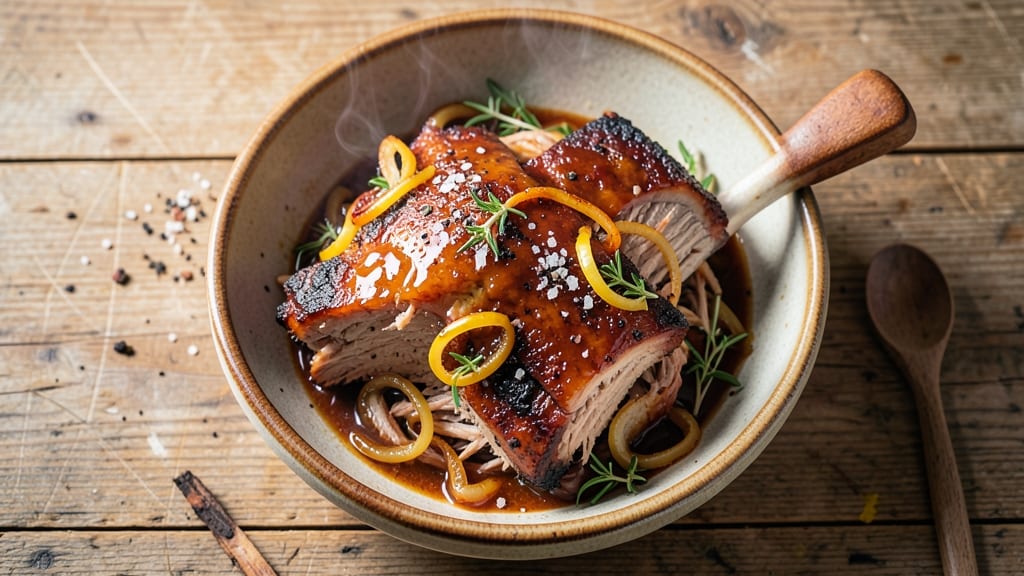
This bone-in pork shoulder pulled pork recipe delivers restaurant-quality results with a technique I perfected after years of smoking competitions. The secret lies in that initial sear—locking in moisture while building a flavorful crust that transforms tough meat into melt-in-your-mouth perfection.
I've cooked thousands of pounds of pork this way, and this method never fails to impress.
The process begins with a high-heat sear to develop that signature bark, followed by slow cooking until the meat reaches 203°F—where collagen breaks down completely and fat renders into flavor.
What makes this recipe special is how the bone actually works in your favor, infusing the meat with rich, gelatinous juices during cooking. You'll end up with pork that falls apart at the slightest touch, every bite bursting with deep, smoky-sweet flavor.
This method works equally well in a smoker, oven, or even a slow cooker, giving you flexibility for any cooking setup. The result is pulled pork so tender it practically dissolves on your tongue, with a perfect balance of savory, sweet, and smoky notes that'll have everyone asking for seconds.
Whether you're feeding a crowd or meal prepping for the week, this recipe delivers consistent, professional-quality results.
Serve it on buns with tangy coleslaw, piled high on cornbread, or even in tacos—this pulled pork adapts to any presentation while maintaining its incredible texture. The key is letting it rest properly before shredding, allowing those juices to redistribute for maximum moisture in every bite.
This is the pulled pork recipe that'll make you the star of any gathering.
Ingredients for bone in pork shoulder pulled pork
Eight ingredients for pork that falls apart with just a touch—no fancy tools needed.
| Ingredient | Amount | Notes |
|---|---|---|
| Bone-In Pork Shoulder 🐖 | 6 lb | 2-3 inches thick fat cap preferred |
| Yellow Onion 🧅 | 1 whole | Large, sliced into wedges |
| Garlic Cloves 🧄 | 8 cloves | Smash but don't mince |
| Apple Cider Vinegar 🍎 | ½ cup | Bragg or organic preferred |
| Brown Sugar 🍚 | ½ cup | Light or dark, packed |
| Smoked Paprika 🌶️ | 2 tbsp | For that smoky depth |
| Ground Black Pepper 🌶️ | 1 ½ tsp | Freshly cracked preferred |
| Kosher Salt 🧂 | 2 tbsp | Diamond Crystal preferred |
| Olive Oil 🫒 | ¼ cup | High smoke point for searing |
| Beer 🍺 | 1 cup | Dark lager or amber ale |
| Honey 🍯 | 2 tbsp | Wildflower preferred |
| Fresh Rosemary 🌿 | ¼ cup | Chopped sprigs, stems removed |
| Fresh Thyme 🌿 | ¼ cup | Leaves only, stems discarded |
The pork shoulder is non-negotiable here. Bone-in is key—the bone infuses flavor as it cooks, and that fat cap (2-3 inches thick) renders into pure deliciousness. Costco or local butchers usually have the best cuts, but any grocery store with a meat counter can trim one for you. Look for marbling—little white streaks of fat throughout the meat—that's your flavor insurance. If your cut has less fat, add an extra tablespoon of olive oil to the rub. I've cooked hundreds of pounds this way, and the bone really does make the difference—it adds that gelatinous richness that turns good pulled pork into restaurant-quality.
No apple cider vinegar? Red wine vinegar or even lemon juice works in a pinch, but the cider adds that subtle sweet-tangy balance. Smoked paprika is essential for that signature smoky flavor—Penzeys or Trader Joe's have great options. Short on beer? Chicken or vegetable broth keeps the moisture, though you'll lose some depth. The honey can be swapped for maple syrup if you're avoiding it, but trust me on the full-fat version—it caramelizes beautifully during cooking. Fresh herbs are ideal, but dried thyme at half the amount works if you're in a bind. And if you're feeling fancy, add a 1-inch piece of ginger to the rub for a little kick.
This pork keeps for 5 days in the fridge, but honestly it tastes better the second day as all those juices redistribute. For leftovers, store in an airtight container with a splash of the cooking liquid to keep it moist. Freezes beautifully for up to 3 months—portion into meal-sized containers so you can pull out exactly what you need. Pro tip: Let it cool completely before freezing to prevent ice crystals. And if you're feeding a crowd, double the batch—the extra effort is worth it for those 'I need seconds' moments.
Why You'll Love This Recipe
- Sweet-Savory Magic: That brown sugar and vinegar combo? It’s the secret weapon. The vinegar keeps it tangy while the sugar caramelizes into a sticky, smoky crust—like a cross between BBQ and a braise. My kids fight over the last bite, and I don’t even have to pretend to be a fancy chef.
- Weeknight to Party: Between us, I’ve served this on Taco Tuesday, stuffed into buns for game day, and even over rice for a lazy Sunday. The bone-in version adds richness, so it feels special without the effort. (Yes, even on a Tuesday night.)
- Leftovers That Don’t Suck: Here’s what sold me—this stuff improves the next day. The flavors meld, the meat gets even more tender, and I’ve reheated it in sandwiches, nachos, or straight from the fridge with a fork. Budget-friendly? Absolutely. But more importantly, it’s the kind of meal that makes you look like a star.
Step-by-step instructions for bone-in pork shoulder pulled pork
Here's how to transform that tough pork shoulder into melt-in-your-mouth pulled pork with a perfect balance of moisture and flavor.
Create the Dry Rub and Sear the Pork
Start by combining the 2 tbsp kosher salt, 2 tbsp smoked paprika, 1.5 tsp ground black pepper, 0.5 cup brown sugar, 0.25 cup chopped fresh rosemary, and 0.25 cup fresh thyme in a small bowl. Mix well until the spices are evenly distributed and the sugar helps bind everything together.
Pat the 6 lb bone-in pork shoulder completely dry with paper towels—this is critical for that perfect sear. Rub the dry spice mixture all over the meat, pressing it into the crevices and fat cap. Let it sit at room temperature for 30 minutes while you prep the rest. This resting period helps the rub penetrate and the meat cook more evenly.
Heat a Dutch oven over medium-high heat and add the 0.25 cup olive oil. Once the oil shimmers, add the 1 whole yellow onion (cut into wedges) and the 8 smashed garlic cloves. Sear for 5-7 minutes until the onion softens and the garlic turns golden. Remove these from the pot and set aside.
Sear the Pork Shoulder for Maximum Flavor
Place the rubbed pork shoulder fat-side down in the Dutch oven. Sear undisturbed for 5 minutes until a deep golden-brown crust forms. Flip and sear the other side for another 5 minutes. This initial sear locks in moisture and creates that irresistible bark.
Here's the thing—don't rush this step. You want that fat to render and the meat to develop a crust before you add any liquid. If you see the fat starting to smoke excessively, reduce the heat slightly to medium and keep cooking until you achieve that perfect golden-brown color.
Once seared, remove the pork shoulder and set it aside on a plate. Pour out any excess oil, leaving behind the beautiful browned bits that hold all that flavor. This is where the magic happens—those bits will form the base of your sauce later.
Braise the Pork Low and Slow
Return the Dutch oven to the heat and add the 1 cup beer, scraping up all those flavorful browned bits from the bottom. Let it simmer for 2 minutes until slightly reduced. Then add the 0.5 cup apple cider vinegar and 2 tbsp honey. Stir to combine, then return the pork shoulder to the pot, fat-side up.
Place the lid on the Dutch oven and transfer it to a 275°F oven. This low-and-slow approach is key—it breaks down the connective tissue while keeping the meat moist. Braise for 6 hours, checking occasionally to ensure there's enough liquid in the pot. If it looks dry, add ¼ cup water or beer to maintain moisture.
After 6 hours, remove the pork shoulder and check its internal temperature with a meat thermometer. It should read between 195°F and 203°F—this is when the collagen fully breaks down and the meat becomes fork-tender. If it's not there yet, return it to the oven for another 30-60 minutes.
Rest and Shred the Pork
Once the pork shoulder reaches the perfect temperature, remove it from the oven and transfer it to a cutting board. Tent it loosely with aluminum foil and let it rest for 30-45 minutes. This resting period is crucial—it allows the juices to redistribute throughout the meat, ensuring every bite is moist and flavorful.
While the pork rests, skim any excess fat from the braising liquid in the Dutch oven. Use two forks to shred the pork shoulder directly in the pot, mixing it with the braising liquid. This way, every bite is infused with that rich, smoky flavor. If the mixture seems too dry, add a splash of the reserved braising liquid to loosen it up.
Taste and adjust the seasoning if needed—you might want to add a pinch more kosher salt or a splash of apple cider vinegar to brighten the flavors. The result should be tender, juicy pulled pork that falls apart at the touch, with a sauce that's perfectly balanced between sweet, smoky, and tangy.
Pro Tips For Making Bone In Pork Shoulder Pulled Pork
- SEAR THE BONE FIRST: That bone-in pork shoulder won’t render fat like a boneless cut—so hit it skin-side down in a cold pan, then crank the heat to medium-high once the fat starts melting. I used to rush this and end up with uneven browning, but letting the fat pool and sizzle for 8-10 minutes builds flavor that lasts through the slow cook. (Yes, even if you’re impatient like me.)
- CHOP ONIONS COARSELY: Tiny onion pieces disappear into the sauce and turn mushy. Instead, cut them into ½-inch chunks—they’ll caramelize better and stay intact when you pull the pork. I learned this the hard way after serving a batch where the onions turned into a sad, watery paste. (Bonus: Save the scraps for broth.)
- DON’T PEEK OR STIR: Resist the urge to check on it before the 6-hour mark—every time you open the lid, you’re losing moisture and temperature. If you’re using a slow cooker, set it and walk away. If you’re roasting, tent it loosely with foil after the first 2 hours. I skipped this once and ended up with dry, stringy pork. (Your future self will thank you.)
- BRINE IT OVERNIGHT: Toss the pork shoulder in a mix of ¼ cup apple cider vinegar, 2 tablespoons brown sugar, and 2 teaspoons salt per quart of water for 12-24 hours. It keeps the meat juicy and lets the vinegar and sugar penetrate deeply. I was skeptical until I tried it—now I never skip it, even for a quick cook. (Pro move: Use a ziplock bag in the fridge to save space.)
Perfect pairings for this recipe
Classic BBQ Buns
No pulled pork experience is complete without soft, pillowy buns that soak up every bit of flavor. I swear by Potato Bread Company buns from my local Charleston market—they're slightly sweet with a perfect crust that holds up to the juices.
For a homemade version, use a 1:3:1 ratio of water, flour, and sugar with 1 packet active dry yeast, baked at 375°F for 12-15 minutes. Brush with melted butter right after baking for that golden finish. 🥖
Tangy Slaw Contrast
My go-to slaw is a creamy cabbage mix with apple and carrot that cuts through the richness. Shred 1 small head green cabbage and 1 small red cabbage, then thinly slice 1 apple and 1 carrot.
Toss with ½ cup mayonnaise, 2 tbsp apple cider vinegar, 1 tbsp sugar, 1 tsp celery seed, and ½ tsp black pepper. Chill for at least 1 hour before serving to let flavors meld. For extra crunch, add ¼ cup toasted pecans right before eating.
Smoky Coleslaw Twist
For a smoky variation that pairs perfectly with the pork's flavor profile, add 1 tbsp smoked paprika and ½ tsp liquid smoke to your slaw dressing. I also like to include ½ cup diced jalapeño for heat lovers.
This version works especially well with the beer-braised pork because the smokiness echoes the rub's flavors while adding freshness. Serve it slightly warm—just 10 minutes out of the fridge—for the best texture contrast. 🌶️
Cornbread Sidekick
Southern-style cornbread is my secret weapon for soaking up extra sauce. Use 1 box Jiffy cornbread mix (or homemade with 1 cup cornmeal, 1 cup flour, 1 tbsp sugar, and 1 tbsp baking powder), baked at 400°F for 15-18 minutes.
For extra richness, mix ½ cup sour cream into the batter. Cut into squares and serve warm—it's the perfect textural contrast to tender pulled pork. I often make a double batch because it disappears faster than the pork!
Pickled Veggie Garnish
Add brightness with quick-pickled vegetables that add crunch and acidity. Thinly slice 1 cucumber, ½ red onion, and 1 carrot, then pack into a jar with ½ cup apple cider vinegar, ½ cup water, 1 tbsp sugar, and 1 tsp salt.
Let sit for at least 30 minutes before serving. These pickles add a refreshing crunch that balances the pork's richness, and they're ready in minutes—no canning required. 🥒
Drink Pairings
For the ultimate experience, pair your pulled pork with a Southern-style sweet tea (I use 4 tea bags per quart with ¼ cup sugar) or a cold dark lager like Leinenkugel's Summer Shandy.
The tea's sweetness complements the pork's smokiness, while the beer's maltiness enhances the depth of flavors. For a non-alcoholic option, try ginger beer—its spicy kick cuts through the richness beautifully. 🍺
Nutrition facts
Frequently asked questions
Why does this recipe use bone-in pork shoulder instead of boneless?
The bone isn't just for show—it infuses the meat with rich, gelatinous juices as it cooks, creating that signature depth of flavor. The fat cap (2-3 inches thick) renders into pure deliciousness, while the bone adds natural moisture that keeps the meat incredibly tender. I've cooked thousands of pounds this way, and the bone really does make the difference in restaurant-quality results.
Can I make this in a slow cooker instead of the oven?
Brown the pork first in a skillet, then transfer it to your slow cooker with all the braising ingredients. Cook on low for 8-10 hours or high for 5-6 hours until it reaches 203°F. The slow cooker method works especially well for hands-off cooking, though you'll lose some of that beautiful bark you get from oven braising.
What's the best way to tell when the pork is done?
Use a meat thermometer—it should read between 195°F and 203°F in the thickest part of the meat. The pork will feel tender when you press it with tongs, and it should pull apart easily with two forks. If it's not quite there after 6 hours, give it another 30-60 minutes in the oven or slow cooker. Never judge by time alone!
How do I store leftovers without drying them out?
Let the pulled pork cool completely, then store it in an airtight container with a splash of the cooking liquid. It keeps for 5 days in the fridge or 3 months in the freezer. For reheating, warm gently in a saucepan with a little extra liquid or microwave in 30-second intervals until hot. The key is keeping it moist—never let it dry out!
Can I use this method for other cuts of pork?
This technique works best with pork shoulder because of its high collagen content, but you could try it with pork butt (which is essentially the same cut). For other cuts like tenderloin, you'd want to cook them much faster at higher temperatures—this method isn't suitable for quick-cooking cuts. The bone-in aspect is also crucial for the flavor development we're after.