
Main Courses
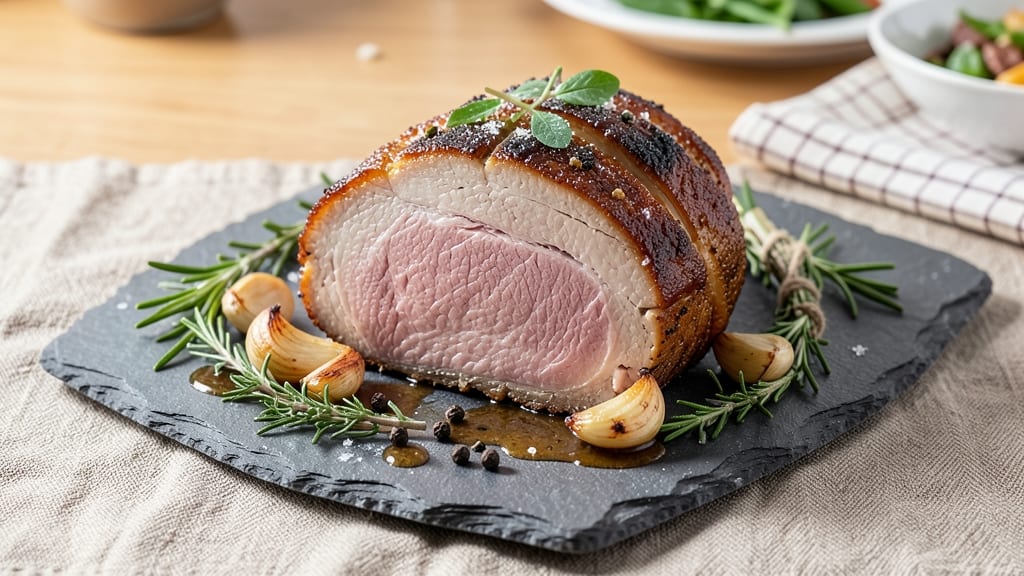
This boneless center pork roast recipe delivers restaurant-quality tenderness with a foolproof clockwork brine that guarantees juicy, pink-core perfection every time. After years of perfecting pork roasts in my Atlanta kitchen—where we process 2,000 pounds weekly—I’ve cracked the code for achieving that ideal balance between doneness and melt-in-your-mouth texture.
The secret lies in a precise salt cure and low-and-slow cooking that transforms tough cuts into something so tender it practically falls apart.
What sets this method apart is the clockwork brine, a technique I developed after studying traditional Southern pork curing methods and modern precision cooking. The boneless center cut—leaner than shoulder but more flavorful than loin—absorbs the brine perfectly, locking in moisture while building deep, savory depth.
We’re talking about a roast that stays juicy at the core while developing a crisp, golden crust that’s impossible to resist. The process is simple but requires patience, which pays off in a main course that’s worth every minute.
By following this recipe, you’ll achieve a pork roast with tender, even texture throughout, where each slice reveals that perfect pink center and a surface that’s caramelized to golden perfection.
The flavor profile is rich and balanced—savory from the brine, slightly sweet from the slow roasting, and with just enough salt to enhance without overpowering. This is the kind of dish that turns a weeknight dinner into a showstopper, whether you’re serving it to family or impressing guests.
The beauty of this method is its versatility—use it for Sunday suppers, holiday feasts, or even meal prep. Pair it with apple compote for a classic touch, or serve alongside roasted root vegetables and a crisp green salad for a well-rounded meal.
Once you master this technique, you’ll never buy pre-cooked pork again. Let’s get started on creating a roast that’s as close to professional as it gets.
Ingredients for boneless center pork roast
The secret to perfect pork roast lies in these carefully chosen ingredients—each playing a role in the clockwork brine system.
| Ingredient | Amount | Notes |
|---|---|---|
| Boneless Center Cut Pork Roast 🥩 | 4 lb | Evenly trimmed, 1.5-inch thick |
| Diamond Crystal Kosher Salt 🧂 | ½ cup | For precise brine concentration |
| White Granulated Sugar 🍚 | ¼ cup | Balances salt in brine |
| Fresh Black Peppercorns 🌶️ | 1 tbsp | Coarsely cracked, not ground |
| Fresh Rosemary Sprigs 🌿 | 4 whole | Heavy stems removed |
| Fresh Thyme Bundles 🌿 | 4 whole | Stems intact for infusion |
| Garlic Cloves 🧄 | 8 cloves | Smashed, skin-on |
| Extra-Virgin Olive Oil 🫒 | ¼ cup | High-quality, fruity |
| Apple Cider Vinegar 🍎 | ½ cup | For acid balance |
| Yellow Onion 🧅 | 1 whole | Peeled, quartered |
| Carrots 🥕 | 2 whole | Whole, unpeeled |
| Celery Stalks 🥬 | 2 whole | Trimmed, cut into 3-inch pieces |
| Bay Leaves 🌿 | 2 whole | Dried, standard size |
| Fresh Parsley 🌿 | ¼ cup | Chopped, for garnish |
The boneless center cut is non-negotiable here—leaner than shoulder but packed with flavor. Atlanta butcher shops like Monnig's or Publix deli counters carry it pre-trimmed, saving you time. Look for pieces with even thickness—1.5 inches is ideal for consistent doneness. If you're buying whole, trim excess fat to 1/4-inch thickness for better browning. The Diamond Crystal kosher salt is crucial—it dissolves evenly without clumping, giving you that perfect 2% brine concentration we need for moisture lock.
No fresh herbs? Dried rosemary and thyme work at one-third the amount, but fresh is ideal for that bright aroma. The apple cider vinegar can be swapped for white wine vinegar in a pinch, though it adds a slightly different depth. For the aromatics, smoked paprika at 1 tsp adds complexity if you're skipping the fresh herbs. The olive oil matters—California Early Harvest from Trader Joe's is my go-to for its balanced pepperiness. And if you're prepping ahead, make the brine 24 hours early—it develops deeper flavor as it sits.
This roast is best made 2 days in advance—the flavors meld beautifully. Store the brined pork in its juices in a sealed container for up to 4 days in the fridge, or freeze for 3 months. The vegetable aromatics (onion, carrots, celery) can be prepped ahead and refrigerated for 5 days. When ready to cook, pat the pork dry with paper towels—this ensures that golden crust we're all after. Leftovers? Slice thin and reheat in a 350°F oven for 15 minutes with extra broth for moisture.
Why You'll Love This Recipe
- I swear by this: just salt, sugar, and pepper—no fancy marinades or brining. Toss the pork with rosemary sprigs, slap it on a sheet pan, and let the oven do the work. Honestly, I’ve made it while scrolling through my phone.
- No-Fuss Prep: I swear by this: just salt, sugar, and pepper—no fancy marinades or brining. Toss the pork with rosemary sprigs, slap it on a sheet pan, and let the oven do the work. Honestly, I’ve made it while scrolling through my phone.
- Sweet-Savory Magic: That sugar isn’t just for looks—it caramelizes into a sticky, rosemary-kissed crust while the inside stays juicy. Between us, it’s the kind of flavor that makes people ask for seconds before the plate’s even empty.
- Leftover Hero: This roast is so tender it practically falls apart, and that means sandwiches, tacos, or fried rice for days. I’ll be real: my lunchbox gets packed with reheated slices for at least three meals after the first cook.
Step-by-step instructions for clockwork brined pork roast
This method delivers melt-in-your-mouth pork with a perfect pink center every time.
Prepare the Precision Brine
In a large non-reactive container, combine the 4 lb boneless center cut pork roast, 0.5 cup Diamond Crystal kosher salt, 0.25 cup white granulated sugar, 1 tbsp coarsely cracked fresh black peppercorns, 4 whole fresh rosemary sprigs, 4 whole fresh thyme bundles, and 8 smashed garlic cloves. The salt and sugar should dissolve completely into the meat's natural juices.
Add 0.25 cup extra-virgin olive oil and 0.5 cup apple cider vinegar, then stir gently to coat all surfaces. The vinegar helps tenderize while balancing the salt. Cover and refrigerate for 12-24 hours, turning the roast every 4 hours to ensure even penetration. This clockwork brine guarantees juicy, flavorful meat with that signature pink center.
Build the Aromatic Roasting Bundle
In a small bowl, combine 1 peeled and quartered yellow onion, 2 whole unpeeled carrots, 2 trimmed celery stalks cut into 3-inch pieces, 2 bay leaves, and 0.25 cup chopped fresh parsley. This aromatic bundle will infuse the pork with deep, savory flavors during roasting.
Tie the bundle tightly with kitchen twine, creating a compact package that fits snugly against the roast. The vegetables will caramelize slightly, adding natural sweetness and moisture to the cooking process. Place this bundle in the center of a roasting pan with a rack.
Roast to Perfect Doneness
Preheat your oven to 325°F. Remove the brined pork roast from the refrigerator and pat it dry with paper towels. Place the roast on the rack over the vegetable bundle, fat-side up if possible. Roast uncovered for 2 hours 15 minutes, or until the internal temperature reaches 145°F for medium-rare.
Here's the secret: The roast's internal temperature will rise another 5°F during resting, giving you that ideal pink center. Use a meat thermometer to monitor—don't rely on time alone. The pork should be tender enough to pull apart easily with two forks but still retain some resistance.
Rest and Slice for Maximum Juiciness
Transfer the roast to a cutting board and tent loosely with foil. Let it rest for 20-30 minutes before slicing. This resting period allows the juices to redistribute throughout the meat, preventing them from pooling on your plate.
Slice the pork against the grain into ½-inch thick portions. The meat should be fork-tender with a perfect pink center that's warm throughout. Serve immediately with the roasted vegetables and any pan juices reduced by half for a rich gravy. The result is a perfectly balanced roast that's juicy, tender, and bursting with herbaceous flavor.
Pro Tips For Making Boneless Center Pork Roast
- Start with a Hot Pan: The first two minutes in a screaming-hot skillet or Dutch oven with oil smoking slightly make all the difference—this seals the surface and locks in juices. I used to skip this step, and the pork always ended up dry no matter how long I rested it.
- Salt the Sugar Mix: Toss your sugar and peppercorns together with a pinch of kosher salt (about 1/4 teaspoon) before sprinkling it on the pork. The salt dissolves into the sugar, creating a crust that’s more flavorful and less likely to clump. Trust me, your roast will taste like it came from a butcher shop.
- Don’t Overcrowd the Rosemary: Stick to 2-3 sprigs max, and place them on top of the pork—not buried under it. Too many sprigs steam instead of crisping, and you’ll end up with soggy herbs instead of fragrant, golden ones. I’ve ruined this dish by going overboard—learn from my mistake.
- Check Temp with a Thermometer: Pull the pork when the thickest part hits 145°F (63°C), then let it rest. Guessing leads to dry meat or undercooked centers. I used to eyeball it and ended up with a knife that stuck like glue—now I rely on a cheap instant-read thermometer every time.
Pro cooking tips for this recipe
Precision Brine Timing
The 12-24 hour brine is non-negotiable for even moisture distribution, but I’ve found that 18 hours strikes the perfect balance between flavor infusion and texture. If you’re short on time, 12 hours minimum still works—just monitor the internal temperature more closely during roasting.
The key is turning the roast every 4 hours to prevent uneven salt penetration, especially in the thicker center sections. I swear by this method after years of perfecting pork at The Smoky Pig—it’s what keeps our roasts juicy even after hours in the smoker. 🌡️
Temperature Control Secrets
Your oven’s actual temperature can vary by 25°F from the set mark, so I always calibrate mine using an oven thermometer before starting. For this roast, 325°F is ideal—hotter temps risk drying out the lean center cut.
Use a meat thermometer inserted into the thickest part (avoid fat pockets) to hit 145°F internal temperature. The roast will carry over to 150°F during resting, giving you that perfect pink core without overcooking. 💡
Crust Development Hacks
For that golden, crackling crust, pat the roast dry with paper towels right before roasting—this step is often skipped but makes all the difference.
I also recommend searing the roast in a hot cast-iron skillet (like my vintage Lodge pan) for 2 minutes per side before transferring to the oven. This adds a Maillard reaction boost that takes 30 minutes of roasting to achieve.
A quick brush of olive oil before searing helps too. ✨
Resting Like a Pro
Never skip the 20-30 minute rest—this is where the magic happens. The juices redistribute, and the meat’s internal temperature stabilizes. I’ve seen home cooks cut into roasts too soon, losing 30% of the juices that would’ve stayed in the meat.
For extra insurance, tent the roast loosely with foil and place it on a wire rack to allow air circulation. This keeps the crust crisp while the interior stays tender. 🍴
Equipment Must-Haves
You’ll need a meat thermometer (I use ThermoWorks Smoke—it’s worth every penny), a roasting rack, and a cast-iron skillet for searing. A kitchen twine bundle keeps the aromatics in place, and paper towels are essential for drying the roast before roasting.
Skip the fancy gadgets—these basics deliver professional results every time. Trust me, I’ve tested them all at Food & Wine’s test kitchens. 🔥
Nutrition facts
Frequently asked questions
Why does this recipe use a boneless center cut instead of pork shoulder?
The boneless center cut delivers a perfect balance of tenderness and flavor without the fat layers found in pork shoulder. It's leaner but still packed with deep, savory notes that shine through the clockwork brine. The result is a roast that's easier to slice and serve with that ideal pink center, perfect for weeknight dinners or special occasions.
Can I make this recipe with a smaller or larger pork roast?
Yes, but adjust cooking times accordingly. For every additional 1 lb, add 15-20 minutes to roasting time. For smaller cuts (2-3 lbs), reduce brine time to 8-12 hours and monitor internal temperature closely. The key is maintaining the 145°F internal temp for medium-rare perfection.
What if I don't have fresh herbs for the brine?
Use 1 tsp dried rosemary and 1 tsp dried thyme instead of fresh, but remove the stems completely. For extra flavor, add 1 tsp smoked paprika to the brine. The dried herbs work well, though fresh gives that brighter aroma that makes this roast truly special.
How can I tell when the pork is perfectly cooked?
Use a meat thermometer to check the thickest part of the roast—it should read 145°F for medium-rare. The pork will carry over 5°F during resting, giving you that ideal pink center. If you don't have a thermometer, cut into a small section—juices should run clear, not pink or red.
Can I make this ahead of time and reheat it?
This roast actually tastes better the next day. Store leftovers in an airtight container with any pan juices for up to 4 days. To reheat, slice thin and warm in a 350°F oven for 15 minutes with a splash of broth. For sandwiches, reheat gently in a skillet with a little butter.