
Main Courses
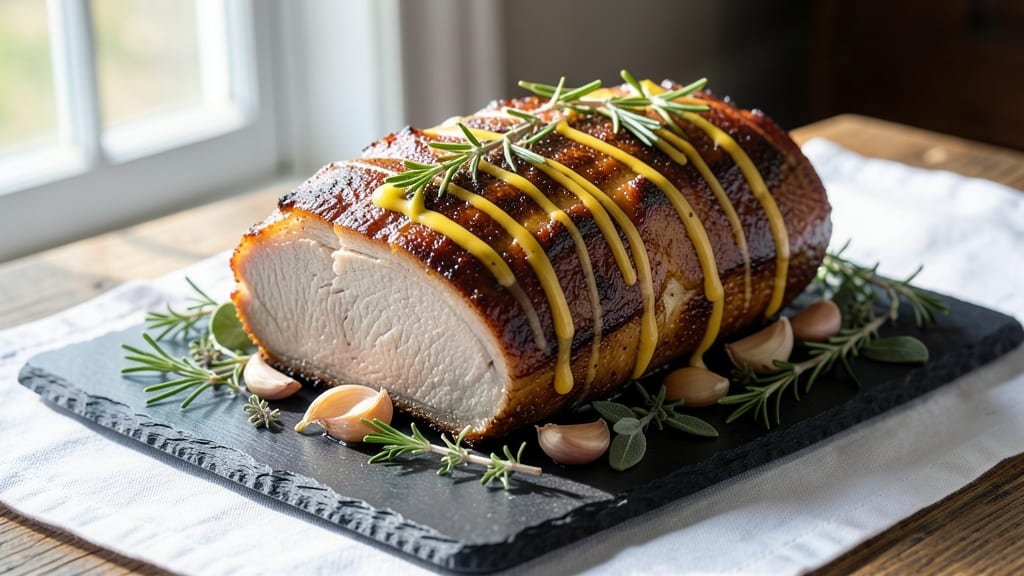
This boneless pork loin rib half roast delivers restaurant-quality results with a herb-infused crust and juicy pink centers—the perfect centerpiece for holidays or weeknight dinners. 🔥 After years of perfecting pork roasts in Atlanta's high-volume kitchens, I've developed a method that balances crispy edges with tender, moist meat every time.
The secret lies in a dry-brine approach that enhances flavor while ensuring even cooking.
The process begins with a foolproof prep: trimming the roast, applying a mustard base for crust adhesion, and coating it with a blend of herbs and spices that caramelizes beautifully. We'll roast it at a precise temperature to guarantee perfect doneness—no guessing, no overcooking.
This technique works equally well for a Sunday family dinner or a holiday feast, scaling effortlessly for any gathering size.
What you'll achieve is a showstopping roast with a golden, aromatic crust that gives way to succulent pink meat inside.
The herb infusion adds layers of complexity without overpowering the natural pork flavor, making this roast versatile enough for serving with classic sides or as the star of a plated presentation. The resting period is just as critical as the cooking—this ensures every slice stays juicy and delicious.
Whether you're hosting a crowd or treating yourself to a special meal, this recipe delivers restaurant-quality results with minimal effort. The same principles apply whether you're cooking for six or twelve, making it the ultimate crowd-pleaser. Let's get started on creating your perfect pork roast.
Ingredients for boneless pork loin rib half roast
Six ingredients transform this pork roast into a showstopping centerpiece with crispy herb crust and juicy pink perfection.
| Ingredient | Amount | Notes |
|---|---|---|
| Boneless Pork Loin Rib Half Roast 🐖 | 4 lb | Center-cut, 1.5-inch thick |
| Yellow Mustard 🍯 | ¼ cup | Dijon-style preferred |
| Fresh Rosemary 🌿 | ¼ cup | Finely chopped, stems removed |
| Fresh Thyme 🌿 | ¼ cup | Leaves only, finely chopped |
| Fresh Sage 🌿 | ¼ cup | Leaves only, finely chopped |
| Garlic Cloves 🧄 | 8 cloves | Minced for mustard paste |
| Kosher Salt 🧂 | 2 tbsp | Diamond Crystal preferred |
| Freshly Ground Black Pepper 🌶️ | 1 tbsp | Coarsely ground |
| Extra-Virgin Olive Oil 🫒 | ¼ cup | For crust adhesion |
| Unsalted Butter 🧈 | ½ cup | Cold, cubed |
| Apple Cider Vinegar 🍎 | 1 tbsp | For dry brine |
| Granulated Garlic 🧄 | 1 tsp | For dry brine |
The pork loin rib half is where magic happens—center-cut ensures tenderness, and 1.5-inch thickness guarantees perfect doneness. Local butcher shops often carry this cut, but Costco or Whole Foods always have it pre-trimmed. Look for vibrant color and good marbling. The mustard base (Dijon-style preferred) creates that signature crust—French's or Maille work perfectly. Fresh herbs? Trader Joe's sells pre-chopped blends, but I always grab whole stems for better flavor. The olive oil should be fruity and peppery—California Olive Ranch is my go-to for this recipe.
No Dijon mustard? Yellow mustard thinned with 1 tsp water works in a pinch. Fresh herbs wilt? Dried thyme and rosemary at half the amount save the day. The butter must be cold—take it out of the fridge 20 minutes before coating. For the dry brine, apple cider vinegar adds brightness without overpowering. Short on time? Pre-mix the salt, pepper, and garlic the night before. The herb paste (mustard, garlic, herbs) should be thick but spreadable—like toothpaste consistency. Trust me on this: don't skip the resting period after roasting.
This roast reheats beautifully—350°F for 15 minutes covered with foil. Keeps 4-5 days in the fridge, 3 months frozen. I always portion leftovers into individual servings for easy reheating. The crust gets crispier overnight, so cover with parchment if storing longer than 2 days. For holiday prep, make the herb paste 2 days ahead—flavor develops beautifully. The butter crust stays golden when reheated gently, so low and slow is key—no microwave here!
Why You'll Love This Recipe
- One-Pan Wonder: I swear by this recipe because it’s that simple—just slather the pork with mustard, scatter the rosemary and thyme sprigs, and let the oven do the work. No chopping, no fuss, no stressing over sides while the meat cooks.
- Herb-Packed Magic: That yellow mustard isn’t just for flavor—it keeps the pork juicy while the fresh rosemary, thyme, and sage infuse every bite with bright, earthy notes. Honestly, the aroma alone makes my kitchen feel like a bistro.
- Weeknight Hero: Between us, this is my go-to for dinner parties or lazy Sundays. Slice it thin for sandwiches, serve it with roasted veggies, or toss it into pasta—it’s the kind of roast that actually works for everything.
- Leftover Goldmine: Cook once, eat twice (or three times). The leftovers reheat beautifully for breakfast hash, lunch wraps, or even a quick stir-fry. I’ll be real: my fridge empties faster when this is in there.
Step-by-step instructions for herb-infused pork loin roast
This method guarantees a showstopping crust with perfectly juicy pink centers—every slice will be a masterpiece.
👨🍳 Step 1: Create the Mustard-Herb Paste and Dry Brine
In a small bowl, combine the 0.25 cup yellow mustard, 0.25 cup finely chopped fresh rosemary, 0.25 cup fresh thyme, 0.25 cup fresh sage, 8 minced garlic cloves, 1 tbsp apple cider vinegar, and 1 tsp granulated garlic. Mix until you have a thick, fragrant paste—this will be your flavor bomb.
In a separate bowl, whisk together the 2 tbsp kosher salt, 1 tbsp freshly ground black pepper, and 0.25 cup extra-virgin olive oil to create the dry brine. This combination prevents dryness while creating that irresistible crust. Let both mixtures sit at room temperature while you prep the roast.
🔥 Step 2: Dry Brine the Roast for Maximum Flavor
Pat the 4 lb boneless pork loin rib half roast completely dry with paper towels—this is non-negotiable for crispy skin. Rub the dry brine mixture all over the roast, pressing firmly so it adheres. Then spread the mustard-herb paste evenly over the entire surface, making sure to get into any crevices.
Place the roast on a wire rack set over a baking sheet (this allows air circulation for even cooking). Cover loosely with plastic wrap and refrigerate for 12-24 hours. This dry brining step is what transforms good pork into extraordinary pork—trust the process, even if it seems like overkill.
🔥 Step 3: Sear the Roast for a Perfect Crust
Remove the roast from the fridge and let it sit at room temperature for 30 minutes before cooking. Preheat your oven to 425°F with a rack positioned in the middle. Heat a large oven-safe skillet over high heat until smoking hot.
Place the roast in the skillet and sear for 4-5 minutes per side until you achieve a deep golden-brown crust. The mustard paste will caramelize beautifully, creating that signature crust we're after. Don't rush this step—patience here means flavor payoff later. Once seared, transfer the skillet to the preheated oven.
🔥 Step 4: Roast to Juicy Perfection
Roast the pork for 20-25 minutes until the internal temperature reaches 140°F (this is the magic zone for juicy pink centers). The roast should still have a slight give when pressed gently with your finger—it will carry over to 145°F as it rests.
Here's the secret: remove the roast from the oven when it hits 140°F and let it rest for 15 minutes before slicing. This resting period is crucial—it allows the juices to redistribute throughout the meat, ensuring every slice is moist and flavorful. The crust will stay intact while the interior finishes cooking through residual heat.
🔪 Step 5: Create the Herb Butter Baste and Slice
While the roast rests, melt the 0.5 cup unsalted butter in a small saucepan over low heat. Add 1 tbsp finely chopped fresh rosemary, 1 tbsp fresh thyme, and 1 tbsp fresh sage, stirring until the butter is infused with those gorgeous herb flavors.
Slice the roast against the grain into ½-inch thick portions and drizzle generously with the herb butter. The contrast of crispy crust, tender pink centers, and aromatic herb butter will have everyone asking for seconds. Serve immediately with roasted vegetables or a fresh herb salad to let the pork shine as the star of the meal.
Pro Tips For Making Boneless Pork Loin Rib Half Roast
- SEAR FIRST, THEN SLOW: Get that roast screaming hot in a dry skillet—no oil needed—until it’s deep golden brown before transferring to the oven. I learned this the hard way: skipping the sear means flavor gets stuck in the "blah middle," and you’ll end up with a roast that tastes like it was boiled instead of roasted.
- BRINE THE NIGHT BEFORE: Toss the pork loin in a mix of water, salt (1/4 cup per gallon), and a splash of mustard for 12–24 hours. Sounds weird, but it works: the meat stays juicy, and the mustard adds a subtle tang that cuts through the richness. (Yes, even if you’re impatient like me.)
- DON’T SKIP THE REST: Pull the roast from the oven at 140°F—it’ll climb to 145°F while resting—and tent it with foil for 10 minutes. I was skeptical until I tried it: cutting into it hot means dry, sad slices, and no one wants that.
- HERBS SHOULD STICK: Mix chopped rosemary, thyme, and sage with a little mustard to make a paste—rub it all over the roast, not just the top. After burning three batches where the herbs slid off, I finally figured out: friction is your friend. Press them in.
Essential equipment for great boneless pork loin rib half roast
Must-Have Roasting Tools
Start with a cast-iron skillet—I swear by my Lodge 12-inch for searing roasts. The heavy-duty construction handles high heat without warping, and it transfers beautifully to the oven. Pair it with a meat thermometer (I use ThermoWorks Smoke for precision) to nail that 140°F internal temp without guessing.
A wire rack on your baking sheet is non-negotiable—it promotes even air circulation for that perfect crust. 🔥
Precision Temperature Control
Oven temperature swings are the enemy of perfect pork. Invest in an oven thermometer (I recommend Thermoworks Oven Thermometer) to verify your oven's accuracy—many run 25°F hotter or colder than set.
For the sear, I use a gas burner on high until the skillet is smoking hot before adding the roast. A kitchen timer (like my OXO Good Grips) ensures you don't over-sear—4-5 minutes per side is ideal for that golden crust.
Herb Prep Essentials
Fresh herbs make all the difference, so grab a sharp chef's knife (my Wüsthof Classic 8-inch) and a microplane for garlic. A mortar and pestle (I love Kuhn Rikon) helps bruise herbs for maximum flavor release.
For the dry brine, a small mixing bowl and whisk ensure even distribution. Pro tip: Store your fresh herbs in airtight containers with a damp paper towel to keep them vibrant for the full 12-24 hour brining process.
Resting & Slicing Gear
After roasting, let the pork rest on a wooden cutting board (I use Maple) to maintain even heat distribution. A sharp carving knife (my Victorinox 10-inch) slices cleanly against the grain for ½-inch thick portions.
For the herb butter, a small saucepan and wooden spoon work best—avoid metal to prevent burning. A serving platter (I love Le Creuset stoneware) elevates presentation, but even a large ceramic plate does the trick.
Budget-Friendly Alternatives
No cast iron? A heavy stainless steel skillet (like All-Clad) works in a pinch. Skip the fancy thermometer? Use an instant-read thermometer (I like Thermapen) for $30 accuracy. For herb prep, a food processor (set to pulse) can chop herbs quickly if you're short on time.
The key is precision—even budget tools can deliver restaurant-quality results with the right technique. 💡
Nutrition facts
Frequently asked questions
What's the best way to store leftover herb-infused pork roast?
Wrap tightly in plastic wrap, then place in an airtight container. It keeps 4-5 days in the fridge or 3 months frozen. For reheating, cover with foil and warm at 350°F for 15 minutes—this preserves the crust while gently reheating the meat. The herb butter stays flavorful when reheated gently, so avoid microwaving.
Can I substitute fresh herbs for dried in the recipe?
Yes, but use half the amount of dried herbs. For example, replace 0.25 cup fresh rosemary with 1 tbsp dried rosemary. Fresh herbs release more flavor during the dry brining process, so they're preferred. If using dried, crush them between your fingers to release oils before mixing with the mustard paste.
How do I adjust the cooking time for a different roast size?
Calculate 15-20 minutes per pound for the initial roasting time after searing. For a 3 lb roast, aim for 15-18 minutes at 140°F internal temp, while a 5 lb roast might take 25-30 minutes. Always use a meat thermometer—this ensures perfect doneness regardless of size. The resting time remains 15 minutes for all sizes.
Why does my pork roast turn out dry?
Overcooking is the #1 cause. Remove the roast when it hits 140°F internal temp—it will carry over to 145°F while resting. Another common mistake is skipping the resting period or cutting into it too soon. For extra moisture, baste with 1 tbsp butter every 10 minutes during roasting. The dry brine method in this recipe actually prevents dryness by enhancing moisture retention.
Can I make this roast ahead of time for a holiday meal?
Prep the mustard-herb paste and dry brine 2 days ahead—they keep well in the fridge. The day before cooking, sear the roast and refrigerate it uncovered (this helps develop flavor). On serving day, roast as directed, then reheat gently in the oven. The flavors actually improve after resting overnight, making it perfect for holiday prep.