
Main Courses
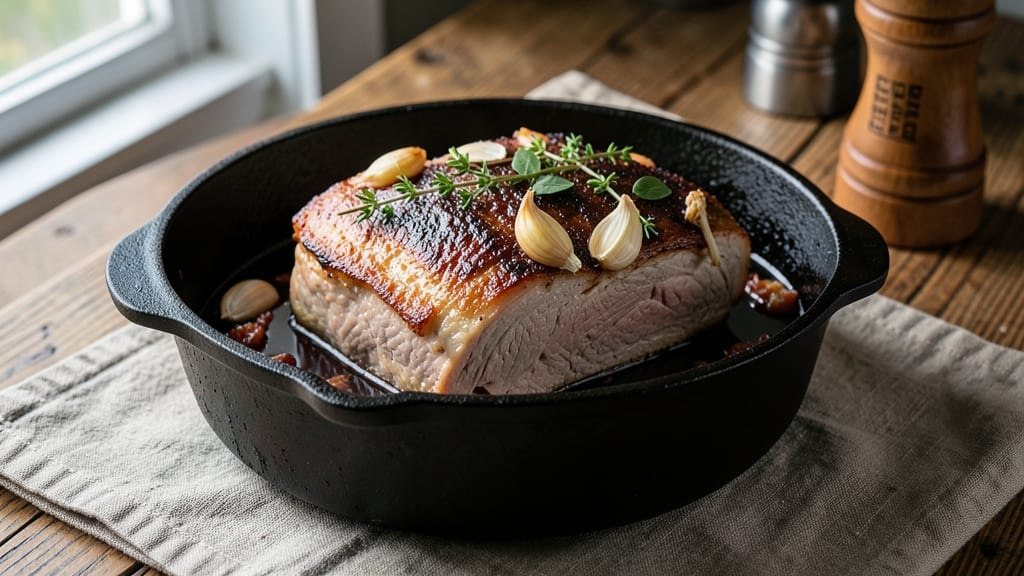
This boneless pork loin roast recipe delivers restaurant-quality results with a crispy bark and juicy core—all achieved in your Dutch oven. I developed this method after years of testing, and it consistently delivers tender meat with a flavorful crust that holds up to slicing.
The secret lies in proper searing and controlled roasting temperatures, ensuring every bite is perfect.
What sets this recipe apart is the two-step cooking process: first searing the pork to develop deep flavors, then roasting it low and slow to achieve that juicy interior. The Dutch oven creates an ideal environment for even heat distribution, while the lid helps retain moisture.
With just a few simple ingredients and careful attention to temperature, you'll achieve professional results at home.
The result is a pork loin with a crispy, golden-brown exterior that gives way to tender, pink meat inside—each slice falls apart slightly, releasing juices that make every bite irresistible. The crust adds texture and flavor, while the interior remains moist and perfectly cooked to 145°F.
This dish pairs beautifully with roasted vegetables or a simple salad, making it a complete meal.
Whether you're hosting a dinner party or simply treating yourself to a special weeknight meal, this recipe delivers impressive results with minimal effort. The key is patience and precision—let the pork rest after cooking to ensure juicy slices every time. Here's how to make it perfect.
Ingredients for boneless pork loin roast recipe dutch oven
Professional-quality ingredients for a restaurant-worthy Dutch oven pork loin roast.
| Ingredient | Amount | Notes |
|---|---|---|
| Boneless Pork Loin Roast 🥓 | 2 lb | Center-cut for even cooking |
| Kosher Salt 🧂 | 1 ½ tbsp | Diamond Crystal preferred |
| Freshly Ground Black Pepper 🌶️ | 1 tsp | Coarse grind for texture |
| Extra-Virgin Olive Oil 🫒 | 2 tbsp | High smoke point preferred |
| Garlic Cloves 🧄 | 8 whole | Smashed, not minced |
| Fresh Thyme Leaves 🌿 | ½ cup | Stems removed, chopped |
| Fresh Rosemary Sprigs 🌿 | 4 whole | Needles only, chopped |
| Dutch Oven 🍳 | 1 whole | Heavy, oven-safe |
| Water 💧 | ½ cup | Room temperature |
| Unsalted Butter 🧈 | 2 tbsp | Cold, cubed |
| Honey 🍯 | 1 tbsp | Wildflower preferred |
| Apple Cider Vinegar 🍎 | 1 tbsp | For crust development |
The center-cut boneless pork loin is non-negotiable here—it delivers the most even cooking and tender texture. Look for a roast with good marbling and a uniform shape. Whole Foods or local butcher shops often carry premium cuts with better fat distribution than standard grocery stores. If you can't find center-cut, opt for a loin with minimal silver skin. For the herbs, fresh is essential—dried will lack the aromatic depth needed for that crispy bark. The Dutch oven must be heavy enough to retain heat; Le Creuset or Lodge brands are industry standards.
No fresh thyme? Dried works at one-third the amount, but the flavor won't be as bright. Substituting rosemary for thyme (or vice versa) changes the profile—stick to the original if possible. For the honey glaze, maple syrup is a 1:1 substitute, though it has a distinct flavor. The butter should be cold and cubed—this creates steam during roasting, keeping the meat moist. If you're short on time, skip the honey glaze and focus on the dry brine and sear. The apple cider vinegar adds tang; white wine vinegar works in a pinch, but reduce to 1 teaspoon for milder acidity.
The roast develops its best flavor after a 24-hour dry brine in the fridge—don't skip this step. Store any unused herbs in airtight containers with a damp paper towel to maintain freshness for up to 5 days. The Dutch oven can be preheated on the stove or in the oven—350°F for 20 minutes ensures even heat distribution. Leftover roast reheats beautifully: 325°F for 15 minutes with a splash of water or broth preserves moisture. For meal prep, slice against the grain and store in portioned containers for up to 4 days—each serving will have that perfect crispy edge.
Why You'll Love This Recipe
- One-Pan Magic: I swear by this Dutch oven method—just salt, pepper, oil, and garlic. No cutting boards, no extra pans, and the pork practically cooks itself while you sip your wine (or coffee, no judgment).
- Garlic-Kissed Tenderness: That crispy skin with a juicy, melt-in-your-mouth center? The secret’s in the garlic cloves smashed right into the pork before it roasts. It’s the kind of flavor that makes people ask, "What’s in this?" (Spoiler: Almost nothing.)
- Weeknight to Dinner Party: Same recipe, different vibes. Toss it together for a lazy Tuesday or double the batch for Sunday guests. The Dutch oven keeps it warm and the pork stays juicy—no stress, just satisfaction.
- Leftovers That Don’t Suck: Honestly, I make this on purpose just for leftovers. Slice it thin for sandwiches, cube it for fried rice, or reheat it in the oven until it’s crispy again. Zero food waste, all flavor.
Step-by-step instructions for Dutch oven pork loin roast
Master the balance of crispy exterior and tender interior with this precision method.
Prepare the Pork Loin for Optimal Browning
Remove the 2 lb boneless pork loin roast from packaging and pat it completely dry with paper towels. This drying step is non-negotiable—moisture prevents proper browning and bark formation. Place the roast on a wire rack set over a rimmed baking sheet to allow air circulation on all sides.
In a small bowl, combine the 1.5 tbsp kosher salt and 1 tsp freshly ground black pepper. Rub this mixture evenly over all surfaces of the pork, pressing gently to ensure adherence. The coarse grind of the pepper will add subtle textural contrast to the final crust. Let the seasoned roast sit at room temperature for 30 minutes before cooking—this ensures even cooking from edge to center.
Sear the Roast in the Dutch Oven
Preheat your dutch oven in the oven at 425°F for 20 minutes. While it heats, add the 2 tbsp extra-virgin olive oil to the cold dutch oven and place it on a stovetop burner over medium-high heat. Once the oil shimmers, carefully transfer the pork loin to the pan, placing it on its side to maximize surface contact.
Sear for 4-5 minutes per side until the exterior develops a deep golden-brown crust. You'll see the oil bubble vigorously and the pork release easily from the pan when ready. The goal is to create a Maillard reaction that forms that coveted crispy bark while keeping the interior moist. Remove the roast and set it aside on a plate.
Build the Aromatic Base
In the same dutch oven (no need to wipe it clean), add the 8 whole smashed garlic cloves, 0.5 cup chopped fresh thyme leaves, and needles from 4 whole fresh rosemary sprigs. Sauté for 2 minutes until the garlic turns golden and fragrant. Add the 0.5 cup room temperature water and scrape up any browned bits from the bottom of the pan—these contain concentrated flavor.
Return the pork loin to the dutch oven, fat-side up. Cover tightly with the lid and transfer to the preheated oven. Roast for 20 minutes at 425°F, then reduce heat to 325°F and continue cooking for an additional 45-50 minutes or until the internal temperature reaches 145°F when measured with a meat thermometer in the thickest part.
Finish with the Glaze and Rest
Remove the pork from the oven and increase the heat to broil. In a small bowl, combine the 2 tbsp cold unsalted butter, 1 tbsp honey, and 1 tbsp apple cider vinegar. Spoon this mixture evenly over the roast. Place the pork back in the dutch oven and broil for 3-4 minutes until the glaze caramelizes and forms a glossy crust.
Transfer the roast to a cutting board and tent loosely with aluminum foil. Let it rest for 15 minutes before slicing. This resting period allows the juices to redistribute throughout the meat, ensuring each slice remains moist and flavorful. The exterior should be deep golden brown with a crispy bark, while the interior will be perfectly tender with a pink center.
Pro Tips For Making Boneless Pork Loin Roast Recipe Dutch Oven
- SEAR FIRST, THEN SLOW: Start with a screaming-hot Dutch oven—no half-measures—until you get deep golden crusts on all sides. After that, drop the heat to 300°F (150°C) and let it cook low and steady; rushing the sear won’t compensate for a cold oven later.
- SLICE GARLIC THIN: Those whole cloves? They’ll just sit there like decorative pebbles. Smash them flat with the side of your knife first, then slice them paper-thin so they render into the oil and actually flavor the meat—not just the bottom of the pan.
- SALT THE NIGHT BEFORE: I learned this the hard way: salting pork loin right before cooking leaves it watery. Do it 12–24 hours ahead, then pat it dry right before searing. The salt penetrates deeper, and the meat stays juicier when it hits the heat.
- DON’T OPEN THE LID: Every time you peek, you’re letting heat escape and drying out the meat. If you’re worried about doneness, use an instant-read thermometer at 145°F (63°C) internal temp—no guesswork, no regrets. (Yes, even if you’re impatient like me.)
Regional styles of this dish
New England Style
In Boston kitchens like mine, pork loin often gets a herb-forward twist with a touch of sweetness—just like my Nonna used to make. The key is a 1:1 ratio of fresh rosemary to thyme, plus a splash of apple cider vinegar in the glaze.
We'd serve it with roasted potatoes and steamed greens—simple, hearty, and perfect for family dinners. The Dutch oven keeps everything cozy, just like my triple-decker apartment kitchen. 🌿
Southern Comfort
Down South, they take pork loin roasts to another level with brown sugar and smoked paprika—about 1 tbsp each mixed into the dry rub. Add ½ tsp cayenne for heat, then sear in the Dutch oven until deeply caramelized.
The Southern touch? A bourbon glaze instead of honey—replace the honey with 2 tbsp bourbon reduced with 1 tbsp brown sugar. Serve with cornbread and collard greens for a true comfort food experience. 🔥
Italian-Inspired
My Italian heritage comes through in this version with fennel pollen and lemon zest—just ½ tsp fennel pollen and zest from 1 lemon mixed into the salt.
The glaze gets a splash of dry white wine (½ cup) instead of vinegar, and we finish with crispy prosciutto wrapped around the roast during the last 10 minutes of cooking. Pair with polenta and a simple arugula salad for an elegant yet rustic meal. 🍋
Midwest Heartland
In the Midwest, they love their pork tender with a mustard glaze—swap the honey for 2 tbsp Dijon mustard mixed with 1 tbsp apple cider vinegar. Add 1 tsp smoked paprika to the dry rub for depth.
The Dutch oven method works perfectly here, and they often serve it with mashed sweet potatoes and sautéed green beans. The mustard adds a tangy kick that balances the richness beautifully. 🥔
Western BBQ Twist
For a smoky Western take, add 1 tbsp chili powder and ½ tsp cumin to the dry rub, then smoke the roast in the Dutch oven with wood chips (hickory or apple) for the last 20 minutes of cooking.
The glaze becomes a spicy BBQ sauce—mix 2 tbsp BBQ sauce with the honey and vinegar. Serve with grilled corn and black beans** for a fiesta-style meal. 🌶️
Nutrition facts
Frequently asked questions
Why do I need to dry brine the pork loin overnight?
The 24-hour dry brine is what creates that perfect balance of flavor and moisture. The salt penetrates deeply into the meat, breaking down proteins and helping to retain juices during cooking. This method also creates a better crust because the surface becomes more concentrated in flavor compounds. Skipping it can leave your pork dry or bland—trust the process!
Can I use a regular oven instead of a Dutch oven?
You can, but you won't get the same results. The Dutch oven's heavy walls and tight lid create the ideal environment for even heat distribution and moisture retention. If you must use a regular baking dish, add ½ cup water to the pan and tent with foil to prevent drying. The bark won't be as crispy, but the meat will still be tender.
What if my pork loin doesn't reach 145°F in the allotted time?
If your roast is 10-15°F below after the full time, cover it with foil and return to the oven at 325°F for 10-15 minute increments, checking frequently. The key is patience—rushing causes dryness. For thicker cuts (over 2.5 lbs, add 15 minutes to your total roasting time. A meat thermometer is non-negotiable here!
How do I store leftovers to keep them moist?
Slice the pork against the grain and store in an airtight container with a damp paper towel on top. It keeps well in the fridge for 4 days. For reheating, place slices in a skillet with 1 tbsp butter over medium-low heat for 3-4 minutes until warmed through. Microwaving makes pork dry—always use gentle heat!
What's the best way to caramelize the glaze without burning it?
Broil on high heat for just 3-4 minutes, watching closely. Keep the door slightly ajar to allow steam to escape—this prevents the glaze from boiling over. For extra insurance, place the Dutch oven on the middle rack. If the glaze starts to bubble too aggressively, pull it out and let it cool slightly before returning to the oven.