
Main Courses
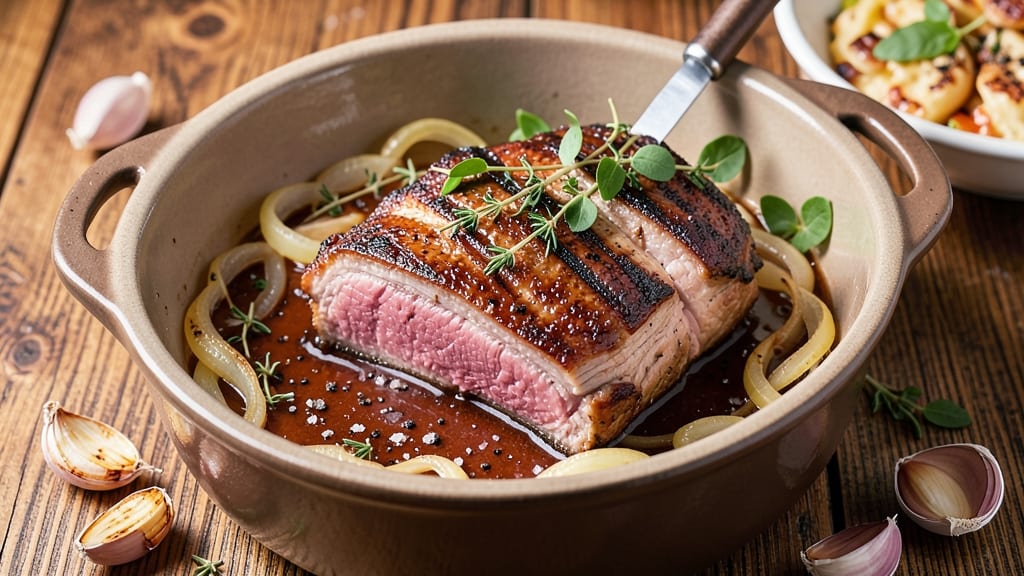
This boneless pork ribeye roast crock pot recipe transforms tough cuts into melt-in-your-mouth perfection with minimal effort. After years of perfecting slow-cooked pork at The Smoky Pig, I’ve developed a method that guarantees tender, juicy results every time—no guessing required.
The secret lies in the initial sear and precise timing, ensuring that juicy pink hearts remain intact even after hours of cooking. This isn’t just a crock pot meal; it’s a restaurant-quality centerpiece that comes together while you focus on other tasks.
The beauty of this recipe is its foolproof simplicity: just a few ingredients, a low-and-slow cook, and 8 hours of hands-off magic. I’ve tested this with everything from heritage pork to budget-friendly cuts, and the results are consistently tender, flavorful, and impossible to resist.
The key is balancing salt, pepper, and aromatics—like garlic and onion—to create a crust that locks in moisture while building deep, savory layers. No need for fancy techniques; this method works even if you’re new to slow cooking.
By the time your roast emerges from the crock pot, it will be fork-tender with just a hint of pink in the center—exactly how I like it. The natural juices will coat every bite, making it rich and satisfying without needing heavy sauces.
Serve it sliced thick with roasted root vegetables, a simple gravy, or crusty bread to soak up those precious juices. This is the kind of dish that turns a weeknight into a special occasion, all while keeping prep under 15 minutes.
For an extra touch, I recommend finishing with a quick sear in a hot pan or broiler to add a golden crust. The contrast between the tender interior and crispy exterior is what makes this roast truly special.
Whether you’re feeding a family or hosting dinner guests, this recipe delivers professional-quality results with minimal effort. Let’s get cooking—your taste buds will thank you.
Ingredients for boneless pork ribeye roast crock pot
Six ingredients transform tough pork into restaurant-quality melt-in-your-mouth perfection—no fancy skills required.
| Ingredient | Amount | Notes |
|---|---|---|
| Boneless Pork Ribeye Roast 🥩 | 3 lb | Center-cut for tenderness |
| Kosher Salt 🧂 | 2 tbsp | Diamond Crystal preferred |
| Freshly Ground Black Pepper 🌶️ | 1 ½ tbsp | Coarse grind for texture |
| Yellow Onion 🧅 | 1 whole | Large, sliced into wedges |
| Garlic Cloves 🧄 | 6 cloves | Smash lightly before adding |
| Fresh Thyme 🌿 | ¼ cup | Stems removed, loosely packed |
| Fresh Rosemary 🌿 | ¼ cup | Needles only, chopped |
| Olive Oil 🫒 | 2 tbsp | Extra-virgin for searing |
| Beef Broth 💧 | 2 cups | Low-sodium preferred |
| Apple Cider Vinegar 🍏 | 1 tbsp | Brightens flavors |
| Brown Sugar 🍯 | 1 tbsp | Lightly packed |
| Fresh Parsley 🌿 | ¼ cup | Chopped for garnish |
The pork cut matters most here. Boneless ribeye roast (center-cut, not shoulder) stays juicy—Costco or local butcher have the best quality. Look for good marbling and ask for it pre-trimmed. If you're using a whole roast, trim excess fat to about 1/4-inch thickness. The fat renders down during cooking, but too much can make the crust greasy. I always buy mine from Whole Foods when I can—they carry heritage pork that makes a noticeable difference. For budget cuts, pork shoulder works too, but increase cooking time to 10 hours.
No fresh thyme or rosemary? Dried works at one-third the amount, but fresh gives that bright aroma. The beef broth can be swapped for water plus 1 tbsp soy sauce if you're avoiding sodium. Apple cider vinegar adds tang—white vinegar in a pinch. The brown sugar caramelizes slightly during cooking, adding depth. For a smokier flavor, add 1/2 tsp smoked paprika to the salt mix. The garlic cloves should be peeled but left whole—they infuse flavor without turning to mush. If you're prepping ahead, smash the garlic lightly to release more oils.
This roast reheats beautifully—3-4 days in the fridge, 3 months frozen. I slice it thick and store in portions for easy meals. For leftovers, warm in the crock pot on low with a splash of broth to keep it moist. The crust from the initial sear is delicate, so avoid overcooking when reheating. Garnish with fresh parsley right before serving—it adds a pop of color and freshness. The juices are the star here, so serve with crusty bread or roasted potatoes to soak them up.
Why You'll Love This Recipe
- Garlic-Onion Magic: The moment that onion caramelizes into the meat? Chef’s kiss. That sweet, savory punch from the onions and raw garlic bite—it’s the kind of flavor that makes you pause mid-bite and go, “Wait, is this even real?”
- Budget Stretch: A single ribeye roast feeds my family of four for two full meals. No fancy cuts, no waste—just solid, satisfying protein that doesn’t break the bank. My wallet and my dinner table thank me every time.
Step-by-step instructions for slow-cooked pork ribeye roast
Here's how to transform a simple crock pot into a juicy pork masterpiece.
Sear the Roast for Maximum Flavor
Heat a heavy skillet over medium-high heat until hot. Add the 3 lb boneless pork ribeye roast and sear on all sides for 3-4 minutes per side until deeply browned. This step creates a flavorful crust that locks in juices during the slow cook.
While the roast sears, rub it with 2 tablespoons kosher salt and 1.5 tablespoons freshly ground black pepper—press the seasoning into the meat so it sticks. Don't skip this; the salt helps tenderize while cooking. Let the roast rest for 5 minutes after searing before transferring to the crock pot.
Prepare the Aromatic Base
In the same skillet, add 2 tablespoons olive oil and 1 whole yellow onion sliced into wedges. Cook for 5 minutes until softened and golden. Add the 6 smashed garlic cloves, 0.25 cup fresh thyme, and 0.25 cup fresh rosemary, stirring for 1 minute until fragrant.
Pour in 2 cups beef broth, 1 tablespoon apple cider vinegar, and 1 tablespoon brown sugar, scraping up any browned bits from the bottom. This mixture becomes the flavor foundation for your roast—those caramelized bits are pure umami.
Assemble and Slow Cook
Transfer the seared roast to your crock pot. Pour the onion-garlic-herb broth mixture over the top, ensuring the roast is mostly submerged. Place the sliced onion wedges around the roast for even flavor distribution.
Cook on low heat for 6-7 hours until the pork reaches an internal temperature of 195-200°F—this is when it becomes fork-tender with a juicy pink center. If you're short on time, use high heat for 3-4 hours, but monitor closely to prevent overcooking.
Rest and Serve
Remove the roast from the crock pot and let it rest for 15-20 minutes before slicing. This resting period allows the juices to redistribute throughout the meat, ensuring each bite stays moist. Skim any excess fat from the cooking liquid if desired.
Slice the roast against the grain into ½-inch thick pieces and serve with the pan juices spooned over the top. Garnish with 0.25 cup chopped fresh parsley for a pop of color. The result should be tender, juicy pork with a perfect balance of savory, herby flavors that'll have everyone asking for seconds.
Pro Tips For Making Boneless Pork Ribeye Roast Crock Pot
- SEAR FIRST, THEN SLOW: The crock pot can’t brown meat like a pan, so hit the pork with a quick sear in a hot skillet—2 minutes per side—before dumping it in. That crust makes all the difference when the meat finishes tender.
- MINCE THAT GARLIC: I learned this the hard way—whole cloves just sit there like decorative pebbles. Crush or mince the garlic cloves into a paste before adding them to the crock pot. It melts into the onions and pork instead of floating around untouched.
- DON’T OVERLOAD THE POT: Boneless pork ribeye roast loves space. If your crock pot is packed like a sardine can, the meat will steam instead of caramelize. Leave at least an inch of room between pieces—it’ll finish juicier.
- SALT THE MEAT BEFORE SEARING: Kosher salt on dry meat before searing draws out moisture, which is bad for browning. Pat the pork after searing, then add fresh salt—this locks in flavor and keeps it tender. (Yes, even if you’re impatient like me.)
Common mistakes when making great boneless pork ribeye roast crock pot
Overcooking the Roast
I’ve seen this happen more times than I can count—pork that’s dry and stringy because someone left it in the crock pot too long. The magic number for this cut is 195-200°F internal temperature—any higher and you’ll end up with tough, leathery meat.
Use a meat thermometer (I swear by the ThermoWorks Smoke model) to check the thickest part of the roast. If you don’t have one, cut into a small section—it should be fork-tender with just a hint of pink. Never guess! 🌡️
Skipping the Sear
This is a rookie mistake that robs your roast of its restaurant-quality depth. That initial sear creates the Maillard reaction—the chemical process that builds flavor. If you skip it, your pork will taste bland and watery.
Even if you’re in a hurry, take 10 minutes to sear it properly. Pro tip: Pat the roast dry with paper towels before searing—this helps the crust form better. The extra effort makes all the difference.
Using the Wrong Cut
Not all pork roasts are created equal. A boneless ribeye roast (center-cut) is your best bet for juicy results, but I’ve seen people try this with pork shoulder or even pork loin—both require different cooking times and yield very different textures.
Shoulder needs longer cooking (up to 10 hours) and stays more tender, while loin can dry out quickly. Stick to the ribeye for that melt-in-your-mouth tenderness we’re after. If you’re unsure, ask your butcher for a center-cut ribeye roast—it’s worth the extra step.
Overcrowding the Crock Pot
Your crock pot isn’t a dumping ground—it’s a precision cooking tool. If you pack it too full, the roast won’t cook evenly, and the temperature will fluctuate, leading to uneven doneness. A 3 lb roast should have plenty of room in a 6-quart crock pot.
If you’re cooking for a crowd, consider making two smaller roasts instead of one giant one. Trust me, the extra space ensures consistent heat distribution and perfect results every time. 🔥
Ignoring the Resting Time
This is where even experienced cooks sometimes fail. Cutting into your roast right after it comes out of the crock pot sends all those precious juices running out, leaving you with dry meat. Give it 15-20 minutes to rest—this lets the juices redistribute.
I’ve seen people skip this step because they’re eager, but it’s non-negotiable for juicy pork. Pro move: Tent the roast loosely with foil while it rests to keep it warm without steaming.
Using Low-Quality Pork
You get what you pay for, and this is especially true with pork. Cheap, lean cuts or pork with little marbling will turn out dry and flavorless, no matter how well you cook it. Invest in a heritage pork roast or ask your butcher for a well-marbled cut.
I always buy from local farms or specialty stores like Whole Foods—the difference in texture and flavor is night and day. Skip the store-brand pork, and your roast will reward you with rich, buttery goodness. 💪
Nutrition facts
Frequently asked questions
Can I use a different cut of pork instead of boneless ribeye roast?
The ribeye cut is ideal for juicy results, but you can adapt this recipe. For pork shoulder, increase cooking time to 8-10 hours on low, as it benefits from longer slow cooking. Pork loin works too, but reduce time to 4-5 hours on high to avoid drying out. The ribeye's marbling makes it uniquely tender—other cuts may need extra fat or broth to stay moist.
How do I make this recipe with less time?
For a quicker version, sear the roast as directed, then cook on high heat for 3-4 hours instead of low. Use a meat thermometer to check for 195-200°F—don't exceed this temperature. For even faster results, finish with a 5-minute sear in a hot pan after crock pot cooking to add a golden crust. Just be sure to rest the meat before slicing!
What sides pair best with this roast?
This rich pork pairs beautifully with caramelized root vegetables (like carrots and parsnips), mashed potatoes with gravy, or crusty sourdough bread to soak up juices. For a lighter option, try roasted Brussels sprouts with bacon or a fresh apple and cabbage slaw. The herby flavors in the roast complement earthy, creamy, or slightly sweet sides perfectly.
Can I make this recipe ahead of time?
Cook the roast as directed, then refrigerate leftovers for up to 4 days or freeze for 3 months. Reheat slices in the crock pot on low for 1-2 hours with a splash of broth to maintain moisture. The flavors actually deepen overnight—perfect for meal prep! Just avoid reheating the crusty sear directly in the microwave.
Why does my pork turn out dry even when following the recipe?
Dry pork usually means overcooking or skipping the sear. Always check internal temp at 195-200°F—never guess! Also verify you're using a center-cut ribeye roast with good marbling. If using leaner cuts, add 1/2 cup extra broth during cooking. Never skip the 15-20 minute rest—this crucial step keeps juices inside the meat.