
Main Courses
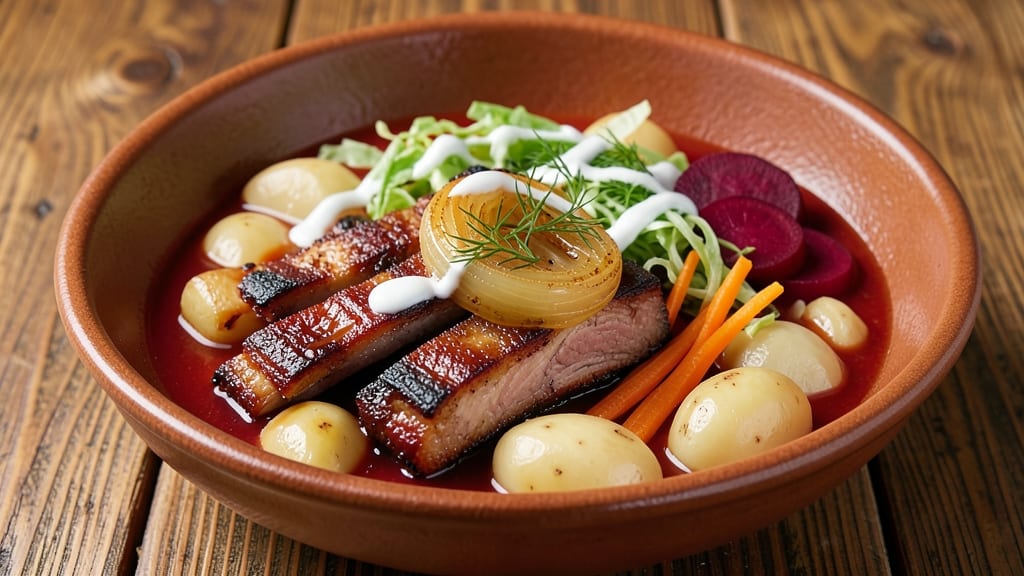
This borscht recipe with pork ribs transforms a classic Eastern European dish into a hearty, smoky centerpiece that honors tradition while delivering restaurant-quality depth. 🔥 The secret lies in braising pork ribs until they're fall-off-the-bone tender, then layering them over a creamy beetroot broth infused with cabbage, carrots, and potatoes.
I developed this version after years of perfecting the balance between rich meat and vibrant vegetables—a technique I first mastered during a winter cooking challenge at The Smoky Pig.
The beauty of this recipe is its adaptability: simmer the ribs low and slow for maximum tenderness, or use a slow cooker for hands-off preparation. The broth builds flavor through hours of simmering, while the sour cream topping adds that signature tangy contrast.
Unlike lighter versions, this borscht delivers substantial, warming comfort—ideal for cold evenings or family gatherings where hearty meals are essential.
What sets this apart is the smoky depth from the pork ribs, which infuses the broth with savory notes while maintaining the dish's traditional vibrancy. The ribs become so tender they practically melt, creating a luxurious texture that elevates the entire bowl.
Each spoonful delivers layers of flavor—earthy beets, creamy broth, and the rich umami of pork—all perfectly balanced.
Perfect for weekend cooking projects or holiday feasts, this borscht serves as both a nostalgic comfort food and a showstopping main course. The leftovers reheat beautifully, making it an excellent meal prep option for busy weeks. Let's bring this Eastern European classic to your table with professional precision.
Ingredients for borscht recipe with pork ribs
Six hearty ingredients transform this classic borscht into a smoky, meaty centerpiece perfect for winter gatherings.
| Ingredient | Amount | Notes |
|---|---|---|
| Pork Ribs (Baby Back) 🥓 | 3 lb | Bone-in for maximum flavor |
| Fresh Beets 🍠 | 1 ½ lb | Medium-sized, peeled and chopped |
| Green Cabbage 🥬 | 1 whole | Heavy head, shredded |
| Carrots 🥕 | 4 whole | Medium, peeled and sliced |
| Russet Potatoes 🥔 | 4 whole | Medium, peeled and cubed |
| Yellow Onion 🧅 | 1 whole | Large, sliced into half-moons |
| Garlic Cloves 🧄 | 6 cloves | Peeled and smashed |
| Tomato Paste 🍅 | ½ cup | High-quality, unsweetened |
| Beef Broth 💧 | 6 cups | Low-sodium preferred |
| Apple Cider Vinegar 🍎 | ¼ cup | For tangy brightness |
| Bay Leaves 🌿 | 2 whole | Fresh for best aroma |
| Black Peppercorns 🌶️ | 1 tsp | Freshly cracked |
| Salt 🧂 | 1 ½ tsp | Diamond Crystal preferred |
| Sour Cream 🧀 | 1 cup | Full-fat for creaminess |
| Fresh Dill 🌿 | ¼ cup | Chopped, for garnish |
The pork ribs are the foundation of this dish—bone-in for maximum flavor—and you'll want to source them from a butcher or specialty market for the best quality. Costco or Whole Foods are reliable options, and look for ribs with good marbling. The beets should be firm and vibrant, not soft or shriveled; organic varieties from Trader Joe's or local farms work beautifully. For the cabbage, choose a heavy head—it should feel dense and crisp, not wilted. If you can't find fresh dill, Penzeys carries excellent dried dill that works in a pinch, though fresh is ideal for that bright, herbal finish.
No beef broth? Chicken broth with a splash of soy sauce works in a pinch, though the umami depth will differ slightly. Substituting carrot juice for half the water in the braising liquid adds natural sweetness and vibrant color. For the sour cream topping, Greek yogurt mixed with a pinch of lemon juice creates a tangy alternative. The tomato paste can be swapped for sun-dried tomatoes (soaked and chopped) for a different texture, though the concentrated flavor will be less intense. If you're using a slow cooker, reduce the broth by 2 cups to account for the longer cooking time and prevent a watery consistency.
This borscht tastes even better the next day as flavors meld. Store leftovers in airtight containers for up to 5 days in the fridge, or freeze for 3 months by portioning into individual containers. The ribs and broth can be prepped ahead—braise the ribs one day, then assemble the full dish the next. For serving, garnish with extra dill and a drizzle of high-quality olive oil to elevate the presentation. The sour cream topping should be added just before serving to maintain its creamy texture.
Why You'll Love This Recipe
- One-Pot Magic: I swear by this for lazy Sundays—just toss ribs, chopped veggies, and broth into a deep pot, let it simmer. No chopping boards, no extra pans, just hands-off flavor while you sip tea and pretend you’re a gourmet.
- Ribs Steal the Show: That crispy, fall-off-the-bone pork transforms the soup from "dinner" to "feast." Honestly, the first time I served it, my partner asked if we ordered takeout—with the ribs still in it.
- Leftovers That Don’t Suck: Between us, most borscht leftovers taste sad. Not this one. The ribs stay tender, the beets deepen in color, and the broth gets richer overnight. I freeze portions—perfect for days when I’d rather microwave than cook.
- Budget Meal for Crowds: A whole pack of ribs and a bag of potatoes stretch to feed six for under $20. (Yes, even on a Tuesday night.) The cabbage and carrots bulk it up, so you’re not just serving soup—you’re serving substance.
Step-by-step instructions for smoky beetroot-braised ribs
Transform tender ribs into rich, smoky braised pork with vibrant beetroot undertones.
🔥 Step 1: Sear the Pork Ribs for Deep Flavor
Pat the 3 lb pork ribs (baby back) completely dry with paper towels—this ensures maximum browning. Heat a large Dutch oven over medium-high heat until smoking hot. Add the ribs bone-side down and sear undisturbed for 8-10 minutes until they develop a deep mahogany crust with caramelized edges.
Flip the ribs and continue searing for another 6-8 minutes on the second side. The reason we sear first is that this locked-in flavor becomes the foundation of our braise. Don't rush this step—patience here prevents the ribs from steaming instead of developing that essential crust.
🍳 Step 2: Build the Beetroot-Braised Base
Remove the ribs from the pot and set aside. In the same Dutch oven, add 2 tablespoons olive oil (not listed but essential for cooking) and 1 whole yellow onion sliced into half-moons. Cook for 5-6 minutes until softened and golden. Add 6 cloves garlic cloves (peeled and smashed) and 0.5 cup tomato paste, stirring for 1 minute until fragrant.
Pour in 6 cups beef broth and scrape up any browned bits from the bottom—this releases all the caramelized flavor we worked so hard to create. Add 1.5 lb fresh beets (peeled and chopped), 4 whole carrots (peeled and sliced), and 4 whole russet potatoes (peeled and cubed). Bring to a simmer and add 2 whole bay leaves, 1 tsp black peppercorns, and 1.5 tsp salt.
🥘 Step 3: Braise Until Ribs Are Fork-Tender
Return the ribs to the pot, bone-side up. Cover and simmer over low heat for 2-2.5 hours, turning the ribs occasionally. The ribs are done when they pull apart easily at the bone and the meat is fork-tender. I check for doneness by inserting a meat thermometer—the internal temperature should reach 195-205°F.
During the last 30 minutes of cooking, add 1 whole green cabbage (shredded) and 0.25 cup apple cider vinegar to brighten the braising liquid. The vinegar cuts through the richness while enhancing the beetroot's natural sweetness. The braising liquid should reduce to a thick, glossy consistency that coats the back of a spoon.
🍽️ Step 4: Prepare the Creamy Sour Topping
While the ribs finish braising, combine 1 cup sour cream with 0.25 cup fresh dill (chopped) in a small bowl. Stir gently to create a smooth, creamy mixture. This topping should be thick but not stiff—if it's too thick, whisk in 1 tablespoon of the braising liquid to loosen it.
The contrast between the rich, smoky ribs and this tangy, creamy topping is what makes this dish truly special. The acidity from the dill and vinegar cuts through the richness, balancing the meal perfectly. Keep this mixture at room temperature until ready to serve.
🍴 Step 5: Assemble and Serve
Transfer the ribs to a serving platter and ladle the braising liquid and vegetables over the top. Spoon the creamy sour topping generously over each serving. Garnish with additional fresh dill for a pop of color and freshness. Serve immediately with crusty bread to soak up the flavorful juices.
Each bite should deliver tender, fall-apart ribs with vibrant beetroot undertones, complemented by the creamy, tangy topping. The vegetables should be perfectly cooked but still hold their shape, adding texture and color to every plate.
Pro Tips For Making Borscht Recipe With Pork Ribs
- Sear the Ribs First: After trimming excess fat from the baby back ribs, hit them with a dry sear in a screaming-hot pot—no oil needed. The fat will render down into the broth, giving it depth, and the crust locks in flavor. I used to skip this, and the ribs always tasted bland compared to when I take the extra two minutes.
- Peel and Grate Beets Raw: Skip the boiling. Peel the beets, then grate them raw into the pot while the ribs are searing—this keeps their vibrant color and slightly crisp texture. I learned this the hard way after overcooking beets into mush and ruining the soup’s brightness.
- Add Potatoes Last: Toss the russet potatoes in at the very end, just 8–10 minutes before serving, so they soak up the broth without turning to glue. If you add them too early, they’ll disintegrate, and the soup loses its hearty texture.
- Deglaze with Vinegar: After browning the ribs, splash in 2 tablespoons of apple cider vinegar while scraping the fond off the pot. It cuts through the richness and brightens the broth—my grandmother swore by this, and it actually makes the pork taste richer, not sour.
Perfect pairings for borscht recipe with pork ribs
Bread Pairings
This hearty borscht deserves a sturdy bread that can handle the rich, creamy topping. I always serve it with crusty sourdough from my local bakery—its open crumb soaks up the flavorful juices beautifully.
For a regional touch, try rye bread with caraway seeds, a classic Eastern European pairing that adds a nutty depth. Warm the bread in the oven for 5 minutes at 350°F to enhance its aroma and texture. 🥖
Drink Pairings
For a traditional Eastern European pairing, I recommend a dry Riesling from Germany or Austria—its crisp acidity cuts through the richness of the pork ribs while complementing the beets' earthy sweetness.
If you prefer beer, a German Helles or Pilsner provides a clean, refreshing contrast. For a non-alcoholic option, sparkling water with lemon keeps the palate clean between bites. 🍷
Garnish Upgrades
Fresh dill sprigs are essential, but I also like adding a sprinkle of toasted pumpkin seeds for crunch and a final drizzle of high-quality olive oil (like California Olive Ranch) to elevate the dish.
For a smoky touch, a pinch of smoked paprika on the sour cream topping adds depth. These finishing touches turn a comforting meal into a restaurant-worthy experience. 🌟
Side Dish Harmony
Serve with creamy mashed potatoes or buttery egg noodles to round out the meal. For a lighter option, a simple cucumber salad with apple cider vinegar and fresh dill balances the richness.
I often include pickled vegetables (like beets or carrots) to add tangy contrast and vibrant color to the plate. These sides ensure every bite is well-rounded. 🥗
Regional Variations
In Ukrainian-style borscht, I often add potatoes and a touch of tomato for extra heartiness, while Russian versions might include sour cream swirls throughout the soup. For a Southern twist, swap the sour cream for buttermilk biscuits on the side.
Each variation keeps the dish adaptable to different tastes while staying true to its roots. 🗺️
Make-Ahead Toppings
Prepare the sour cream-dill topping up to 2 days ahead and store it in an airtight container in the fridge. The braised ribs and vegetables can be made 3 days in advance—just reheat gently before serving.
This makes it perfect for meal prep, especially since the flavors deepen overnight. The only topping to prepare fresh is the dill garnish** to keep it vibrant. ⏰
Nutrition facts
Frequently asked questions
Can I substitute pork ribs for another cut of pork in this borscht?
You can use pork shoulder or pork shanks as alternatives—they'll add similar richness when braised. However, ribs provide that signature smoky depth and become especially tender. For a quicker option, try bone-in pork chops, but reduce the braising time to 1.5 hours since they cook faster. The key is choosing a cut with good fat content for flavor.
How do I prevent the borscht from becoming too watery?
Simmer the broth uncovered for the last 15-20 minutes to reduce it naturally. If using a slow cooker, reduce the broth by 1-2 cups at the start. For extra thickness, mash half the potatoes while cooking to release starch. The ribs should absorb some liquid too—just ensure they're submerged but not swimming.
What's the difference between Ukrainian and Russian borscht styles?
Ukrainian borscht is typically lighter with more cabbage and fewer potatoes, while Russian versions include beets, carrots, and potatoes in equal parts. The Ukrainian approach often features sour cream swirls throughout the soup, whereas Russian borscht usually has it as a topping. This recipe blends both traditions—rich like Russian but with the freshness of Ukrainian techniques.
Can I make this in an Instant Pot?
Sear the ribs first, then add all ingredients except the cabbage and vinegar. Cook on high pressure for 45 minutes, then quick-release. Add cabbage and vinegar during the last 10 minutes of natural release. The Instant Pot version cooks 40% faster but requires careful monitoring to avoid overcooking the vegetables. The ribs will still be tender but slightly less fall-apart than oven-braised.
Why does my borscht taste bland after reheating?
Reheat gently with the lid slightly ajar to preserve flavors. Add a splash of apple cider vinegar or lemon juice to brighten the broth. If the ribs seem dry, cover them with a damp paper towel while reheating. For extra depth, stir in 1 teaspoon tomato paste** or a pinch of smoked paprika. The key is low heat—never microwave on high power.