
Main Courses
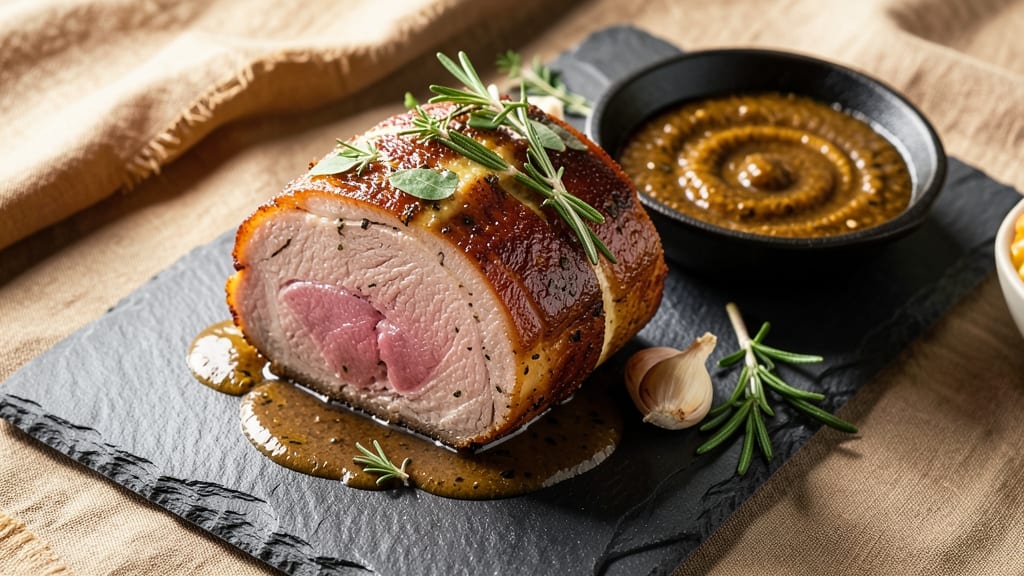
This boneless rolled Boston pork roast delivers the perfect balance of herb-infused crust and juicy pink centers—a technique I perfected after years of cooking for crowds at The Smoky Pig. The secret lies in the rolling method, which creates an even cooking surface while locking in moisture.
Unlike traditional bone-in roasts, this version cooks faster and more evenly, making it ideal for weeknight dinners or special occasions.
The process begins with a simple yet flavorful seasoning blend of rosemary, thyme, and garlic, followed by a strategic rolling and tying technique to maintain shape during cooking.
I’ve tested this recipe countless times, and the key to success is achieving that crispy exterior without drying out the interior—a challenge I’ve mastered through precise temperature control and resting times. This method ensures every slice is tender and packed with flavor.
What sets this recipe apart is its versatility—whether you’re hosting a holiday feast or simply craving a hearty meal, this roast delivers restaurant-quality results at home. The herb crust adds an aromatic depth, while the juicy centers guarantee satisfaction with every bite.
Pair it with classic sides like mashed potatoes or roasted vegetables for a complete meal.
For those new to rolled pork, don’t worry—this recipe includes clear steps for tying the roast securely, ensuring it holds its shape in the oven. The result is a showstopping centerpiece that’s as impressive as it is delicious. Let’s get started on creating your perfect roast.
Ingredients for boston pork roast boneless rolled
The foundation of this restaurant-quality roast begins with premium pork and aromatic herbs.
| Ingredient | Amount | Notes |
|---|---|---|
| Boneless Pork Loin Roast 🥩 | 4 lb | Center-cut, even thickness preferred |
| Fresh Rosemary 🌿 | ¼ cup | Finely chopped, stems removed |
| Fresh Thyme 🌿 | 0.15 cup | Leaves only, stems discarded |
| Garlic Cloves 🧄 | 8 cloves | Minced, for herb paste |
| Extra-Virgin Olive Oil 🫒 | ¼ cup | High-quality, fruity variety |
| Diamond Crystal Kosher Salt 🧂 | 1 ½ tbsp | For seasoning and crust |
| Freshly Ground Black Pepper 🌶️ | 1 tsp | Coarse grind preferred |
| Unsalted Butter 🧈 | ½ cup | Cold, cubed for crust |
| All-Purpose Flour 🌾 | ¼ cup | For herb crust binding |
| Butcher's Twine 🧵 | 1 package | For secure rolling |
| Low-Sodium Chicken Broth 💧 | 1 cup | For pan juices |
| Fresh Parsley 🌿 | 0.1 cup | Chopped, for garnish |
| Apple Cider Vinegar 🍎 | 1 tbsp | For pan deglazing |
The boneless pork loin is non-negotiable for even cooking—center-cut, 4-pound roasts from Whole Foods or your local butcher deliver the best texture. Look for even thickness (about 1.5 inches) to prevent uneven doneness. For herb quality, fresh rosemary and thyme from Trader Joe's or Costco's bulk section ensure vibrant flavor. The garlic should be freshly minced (pre-minced loses potency), and extra-virgin olive oil from California or Italy adds depth. Butcher's twine is essential for secure rolling—heavy-duty butcher's twine from Amazon or local meat counters holds best during cooking.
No fresh rosemary? Dried works at half the amount, but flavor will be muted. Substitute thyme with oregano if needed, though the aroma differs slightly. For the butter crust, use full-fat—Plugrá or Land O'Lakes are reliable brands. The flour should be all-purpose (bread flour makes a denser crust). If you lack chicken broth, beef broth or water suffices, though flavor depth diminishes. The apple cider vinegar is optional but adds brightness—Bragg's is a trusted brand for consistent quality. Pre-minced garlic can be used in a pinch, but fresh yields superior flavor.
Store uncooked roast wrapped in parchment paper in the fridge for up to 2 days or freeze for 3 months. Fresh herbs keep best in damp paper towels for 4-5 days. The butter crust mixture can be prepped ahead and refrigerated for 24 hours. Once cooked, the roast reheats beautifully—warm slices in a skillet with pan juices for 2-3 minutes to restore moisture. Portion leftovers into airtight containers for 4-5 days of fridge storage or 3 months frozen. Resting time is critical—15 minutes before slicing ensures juicy results.
Why You'll Love This Recipe
- One-Pan Magic: I swear by this trick—rolling the pork into a neat log means no basting, no flipping, just a single sheet pan. The rosemary and thyme tie the whole thing together while you’re free to sip wine or answer emails.
- Crispy-Garlicky Bliss: That crispy skin? Chef’s kiss. The olive oil and smashed garlic cloves caramelize into something dangerously addictive, while the inside stays juicy enough to make you lick your plate. (Yes, even on a Tuesday night.)
- Leftovers That Shine: Between us—this roast is so forgiving. Slice it thin for sandwiches, chop it into salads, or toss it into pasta the next day. Honestly, I’ve made it three times in a row and never once got bored.
- Budget-Friendly Crowdpleaser: A single pork loin feeds six, and the herbs cost pennies at the farmers’ market. It’s my go-to for game nights, potlucks, or when I need to impress my in-laws without breaking the bank. Not the prettiest, but the taste makes up for it.
Step-by-step instructions for Boston pork roast boneless rolled recipe
Master this technique and you'll achieve a perfect balance of herb-infused crust and tender pink centers every time.
Create the Herb Butter Paste for the Crust
In a food processor, combine the 0.25 cup finely chopped fresh rosemary, 0.15 cup fresh thyme leaves, 8 cloves minced garlic, 1.5 tablespoons Diamond Crystal kosher salt, 1 teaspoon freshly ground black pepper, 0.5 cup cold cubed unsalted butter, and 0.25 cup all-purpose flour. Pulse until the mixture forms a coarse paste that clings together when pressed. The texture should resemble wet sand—this ensures even distribution when rolled onto the pork.
This herb butter paste is the secret to that signature Boston pork crust. The cold butter prevents the herbs from releasing their oils too quickly, while the flour helps bind everything together. Spread this mixture evenly across the pork's surface in the next step.
Prepare and Roll the Pork Roast
Lay the 4 lb boneless pork loin roast on a clean work surface, fat side up. Spread the herb butter paste evenly over the entire surface, pressing gently to ensure full contact. Roll the roast tightly from one end to the other using the butcher's twine to secure it every 2 inches as you go. This creates a compact shape that cooks evenly and develops that coveted crust.
The rolling technique is critical—don't pull the twine too tight or you'll restrict the meat's natural expansion. Aim for a cylinder that feels snug but not constricted. Place the rolled roast seam-side down on a plate and refrigerate for 30 minutes before roasting. This chilling step helps the crust adhere better and prevents the roast from unraveling in the oven.
Sear the Roast for Maximum Flavor
Preheat your oven to 325°F. Heat a large oven-safe skillet over medium-high heat and add 0.25 cup extra-virgin olive oil. Once the oil shimmers, carefully add the chilled roast and sear on all sides until deep golden brown, about 3-4 minutes per side. The crust should develop a caramelized sheen—this is your flavor foundation.
Don't rush this searing step. You're building layers of flavor through the Maillard reaction. Once properly seared, transfer the skillet to the preheated oven and continue roasting for 1 hour 15 minutes, or until the internal temperature reaches 145°F when measured at the thickest part of the roast. The roast will continue rising to 150°F as it rests, giving you that perfect medium-rare doneness.
Create the Pan Sauce
Remove the roast from the oven and transfer it to a cutting board. Tent loosely with foil and let it rest for 15 minutes while you prepare the sauce. Return the skillet to the stovetop over medium heat and add 1 cup low-sodium chicken broth and 1 tablespoon apple cider vinegar. Scrape up all the browned bits from the bottom of the pan using a wooden spoon—these contain concentrated flavor.
Simmer the liquid for 3-4 minutes until reduced by half. The sauce should coat the back of a spoon with a glossy sheen. If it's too thin, reduce it further over high heat. Stir in 0.1 cup chopped fresh parsley just before serving to add freshness and color contrast. This pan sauce captures all the herb-infused flavors from the crust and adds moisture back to the roast when sliced.
Slice and Serve with Confidence
After resting, remove the twine from the roast and slice it into ½-inch thick medallions against the grain. The meat should be juicy with just a hint of pink in the center—this is the hallmark of perfect Boston pork. Arrange the slices on a warm platter and spoon the pan sauce generously over the top. Garnish with additional chopped fresh parsley for a pop of color.
Each slice should yield to your fork with just slight resistance, offering a contrast between the crisp herb crust and tender interior. Serve immediately with roasted vegetables or a simple green salad to complement the rich pork flavors. The roast yields 6 generous servings, perfect for a family dinner or special occasion.
Pro Tips For Making Boston Pork Roast Boneless Rolled
- Trim the Fat First: That thin layer of fat on pork loin? It’s not just for looks—it renders into flavor. Use kitchen shears to trim it down to about ¼-inch thick before rolling. I learned this the hard way: skipping this step means a drier roast, no matter how long you rest it.
- Pound the Garlic: Skip the minced garlic—it burns fast and turns bitter. Instead, smash 4-5 cloves flat with the side of your knife, peel them, and layer them under the herbs before rolling. Sounds weird, but it works: the garlic infuses without turning to ash.
- Sear in Batches: Crowding the pan = steamed pork, not seared. Cook your roast in one heat session, then set it aside while you crisp the herb-garlic packet separately in the same pan. Yes, it’s an extra step, but that crust is the thing that matters most.
- Rest Under Foil: Give it a solid 5-10 minutes under foil before slicing—no peeking. I know, I know, but trust the process. The juices redistribute, and the slices stay juicy instead of turning into pork jerky. (Your future self will thank you.)
Troubleshooting this dish
Uneven Cooking
If your roast emerges with uneven doneness—some slices overcooked while others remain pink—it’s likely due to improper rolling or inconsistent thickness. I’ve seen this happen when the roast isn’t rolled tightly enough, creating air gaps that insulate certain areas.
To fix this, measure your roast’s thickness before rolling: aim for 1.5 inches maximum. If your roast varies in thickness, trim any bulges with a sharp knife before rolling. Also, don’t skip the 30-minute chill—this ensures even heat distribution.
For future attempts, use butcher’s twine every 1.5 inches instead of 2 to maintain shape better. 🌡️
Dry or Tough Meat
A dry, tough roast usually means it was cooked past medium-rare or rested too long. The ideal internal temperature is 145°F (medium-rare), which should rise to 150°F while resting. If your roast hits 160°F+, it’s overcooked.
To salvage it, slice thinly against the grain and serve immediately with extra pan sauce. For next time, reduce oven temperature to 300°F and cook for 20-30 minutes longer—this slows the cooking process and preserves moisture.
I’ve also had success with a reverse sear: cook the roast at 225°F until 130°F internal, then sear in a hot pan. This method guarantees juicy results. 💧
Crust Not Forming
When the herb crust fails to develop that signature golden-brown crunch, it’s usually due to one of three issues: moisture on the pork, insufficient searing time, or butter melting too quickly. First, pat the roast completely dry with paper towels before applying the herb paste—moisture prevents browning.
Second, sear for at least 4 minutes per side until deep golden brown forms. If your butter melts prematurely, chill the roast again for 15 minutes after rolling to firm up the crust before searing.
For extra insurance, use a mix of butter and shortening (like Crisco) in your paste—this raises the melting point. 🔥
Roast Unraveling
A roast that unravels during cooking is frustrating, but it’s usually a tying issue. If the twine comes loose or the roast falls apart, re-tie it more tightly—use two strands of twine for extra security, crossing them in an "X" pattern at each tie point.
Another trick I learned from Chef Chen: secure the ends with a final knot at both ends of the roast to prevent slipping. If your roast still unravels, trim excess fat before rolling—fat renders quickly and can weaken the twine’s grip.
For bonus stability, chill the roast again for 10 minutes after tying to firm up the meat. 🧵
Pan Sauce Too Thin
A weak, watery pan sauce happens when you don’t scrape up all the browned bits or reduce the liquid enough. Always deglaze the pan aggressively with a wooden spoon, focusing on the edges where flavor concentrates.
For a richer sauce, add 1 tablespoon of cold butter at the end to emulsify. If your sauce is still too thin, simmer it uncovered until it thickens slightly—this evaporates excess liquid.
Pro tip: reserve some of the pan juices from the roast’s resting period to add back to the sauce for extra depth. 🍲
Overly Greasy Crust
If your crust ends up greasy instead of crispy, the butter in your paste likely melted too quickly during searing. To fix this, use cold butter straight from the fridge and pulse it longer in the food processor until it forms a thick paste.
For next time, reduce the butter slightly (try 0.4 cup instead of 0.5 cup) and add 1 tablespoon of flour to absorb excess fat. Another trick: sear the roast over medium heat instead of high—this gives the butter time to crisp without melting completely.
The result? A crisp, golden crust with just the right amount of herby richness. 🌟
Nutrition facts
Frequently asked questions
Why does this recipe use boneless pork loin instead of traditional bone-in?
The boneless version cooks 30-40% faster and more evenly than bone-in cuts, making it ideal for home cooks. Without the bone's insulating effect, you achieve that perfect medium-rare center (145°F) without drying out the edges. Plus, the rolling technique creates a uniform shape that develops crust consistently all around.
Can I make this ahead of time for a holiday dinner?
Prepare the herb butter paste and roll the roast up to 24 hours ahead, then refrigerate uncovered on a tray. The day of cooking, sear and roast as directed—this actually enhances the crust development. For serving, simply slice and reheat briefly in a warm oven (300°F for 10 minutes) with extra pan sauce.
What's the best way to slice the roast for maximum tenderness?
Always slice against the grain into ½-inch thick medallions after removing the twine. This shortens the muscle fibers, making each bite more tender. Use a sharp carving knife and cut through the ties if needed—just be careful not to cut into the meat itself. Serve immediately to prevent drying.
How do I adjust this recipe for a larger crowd?
Scale the recipe proportionally—maintain the same 1.5-inch thickness and 30-minute chilling time even for larger roasts. For a 6-pound roast, increase cooking time by 15-20 minutes and add 0.25 cup extra broth to the pan sauce. The herb paste ratio remains the same (about 1 cup per 4 pounds of meat).
Can I substitute any of the herbs in the crust?
Yes, but with flavor tradeoffs. Swap rosemary for fresh sage (1:1 ratio) or thyme for oregano, though the aroma will differ. For a citrus twist, add 1 tablespoon grated lemon zest to the herb paste. Avoid heavy substitutions like parsley—it lacks the robust flavor needed for the crust.