
Main Courses
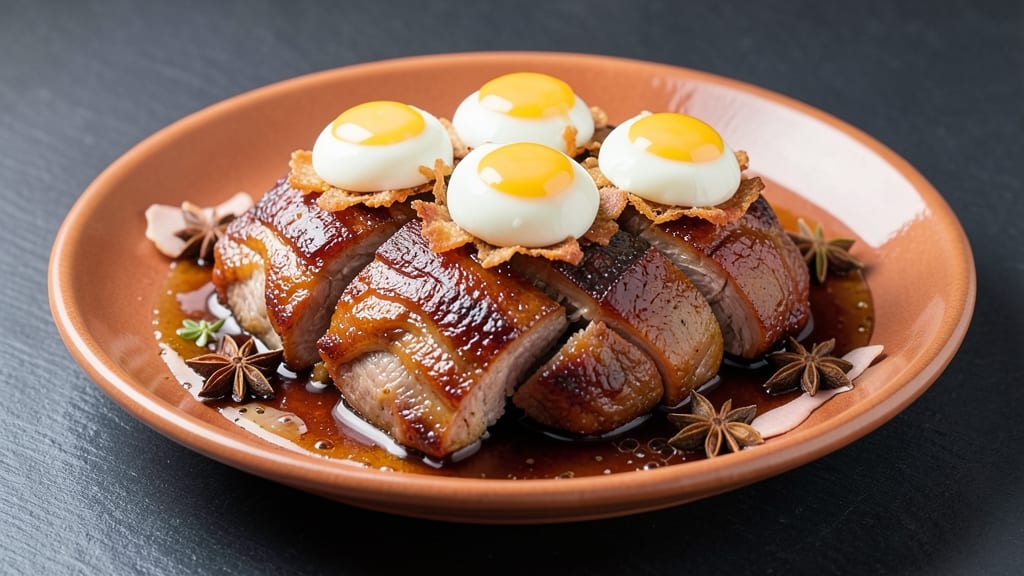
This braised pork and eggs recipe transforms humble ingredients into a restaurant-worthy dish that marries tender pork with silky poached eggs in a deeply aromatic broth.
The secret lies in slow-braising pork belly or shoulder with star anise, ginger, and soy sauce until it practically falls apart—then finishing with eggs poached directly in that rich, savory liquid.
I first perfected this technique during a Charleston winter when I needed to stretch a small cut of pork into a meal for eight hungry chefs after a long shift.
The magic happens in layers: first, the pork develops deep, caramelized flavors from the braising process, while the aromatics infuse the broth with warmth. Then, the eggs poach in that same liquid, absorbing all those savory notes without overpowering their delicate centers.
What you end up with is a dish where each bite delivers melt-in-your-mouth pork, creamy egg whites, and a spoonful of that golden broth—every element perfectly balanced in temperature and texture.
This method works equally well with pork shoulder or belly, though belly delivers richer fat for extra decadence. The braising time varies based on cut—about 3 hours for shoulder, 2 hours for belly—but the result is always worth the wait.
The eggs poach in just 3 minutes once the broth reaches temperature, ensuring they remain silky rather than rubbery.
Serve this dish family-style in a deep skillet or individual bowls with steamed rice to soak up every last drop of that flavorful broth.
The contrast between the tender pork, creamy eggs, and aromatic liquid creates a harmony that's both comforting and sophisticated—a dish that proves home cooking can rival any restaurant experience.
Ingredients for braised pork and egg
Pork shoulder, aromatic spices, and silky eggs create a luxurious dish with humble ingredients.
| Ingredient | Amount | Notes |
|---|---|---|
| Pork Shoulder 🥩 | 2 lb | Bone-in for flavor, cut into 2-inch chunks |
| Pork Belly 🥓 | 1 ½ lb | Optional for extra richness, cut into 1-inch cubes |
| Large Eggs 🥚 | 4 whole | Fresh, room temperature for poaching |
| White Wine 🍷 | 1 cup | Dry variety like Sauvignon Blanc |
| Fresh Ginger 🧄 | 2 tbsp | Finely grated, aromatic and fresh |
| Star Anise 🌟 | 2 whole | For deep aromatic complexity |
| Garlic Cloves 🧄 | 6 cloves | Minced, for aromatic depth |
| Light Soy Sauce 🥄 | ½ cup | For umami balance |
| Brown Sugar 🍯 | 2 tbsp | For subtle sweetness |
| Vegetable Oil 🫒 | 2 tbsp | For searing pork |
| Water 💧 | 2 cups | For braising liquid |
| Salt 🧂 | 1 ½ tsp | Kosher or sea salt |
| Black Pepper 🌶️ | ½ tsp | Freshly ground for heat |
| Jasmine Rice 🍚 | 1 cup | For serving, uncooked |
The pork cut is everything here. Pork shoulder delivers the best texture—tender yet substantial—while pork belly adds luxurious fat for extra decadence. Most butchers will cut these for you, but if you're doing it yourself, aim for 2-inch chunks for shoulder and 1-inch cubes for belly. I always source mine from Whole Foods or a local butcher—look for cuts with good marbling and vibrant color. The star anise and ginger are non-negotiable; Penzeys Spices sells them whole if you want to toast them first for deeper flavor. For the eggs, grab room-temperature ones—they poach more evenly. Freshness matters here, so check the sell-by date before buying.
No white wine? Dry chicken broth works in a pinch, though the flavor will be subtly different. Short on star anise? A pinch of cinnamon adds warmth, but it won’t replicate that licorice-like depth. The ginger should be freshly grated—pre-grated loses its punch fast. For the soy sauce, light soy is traditional, but coconut aminos give a slightly sweeter profile if you’re avoiding sodium. The brown sugar is optional but balances the umami beautifully. If you’re using pork belly, trim excess fat before braising—you want flavor, not grease. The rice? Jasmine or basmati both work, but don’t skip it—the broth soaks in perfectly.
This dish tastes even better the next day, so double the batch if you’re feeding a crowd. Store the braised pork in its broth in the fridge for up to 5 days—the flavors deepen over time. For the eggs, poach them fresh when ready to serve. The rice keeps for 4 days in an airtight container. Freeze the pork and broth for up to 3 months—just thaw slowly in the fridge before reheating. Pro tip: Portion the rice into individual containers ahead of time so lunches are ready in seconds.
Why You'll Love This Recipe
- One-Pot Magic: I swear by this—just toss pork shoulder and belly into a pot with ginger, a splash of white wine, and let it simmer. No flipping pans, no mess, and honestly? That rich, caramelized sauce practically cooks itself while you sip your coffee.
- Silky Eggs, Crispy Bits: The eggs poach in the braising liquid, soaking up all that porky, wine-kissed flavor until the yolks are velvety. Meanwhile, the pork belly crisps up just enough to give every bite that addictive contrast—like a hug from your favorite comfort food.
- Weeknight to Dinner Party: Between us, this feeds a crowd without stress. Double the recipe for leftovers, or serve it at your next gathering when you want to look like a pro. The ginger and wine make it fancy enough for company, but it’s still my lazy Sunday go-to.
- Budget-Friendly Luxury: Pork shoulder and belly stretch for miles, and eggs? Always affordable. That white wine splash elevates it without breaking the bank—plus, the leftovers taste even better the next day. My wallet and my taste buds high-five every time.
Step-by-step instructions for braised pork and eggs
This method delivers perfectly silky eggs poached in rich, aromatic pork broth.
Sear the Pork for Deep Flavor
Heat a large Dutch oven over medium-high heat and add the 2 tablespoons vegetable oil. Working in batches, add the 2 lb pork shoulder and 1.5 lb pork belly cut into chunks. Sear undisturbed for 3-4 minutes until deep golden brown on each side, creating a flavorful crust.
Remove the pork and set aside. In the same pot, add the 6 cloves garlic cloves and 2 tablespoons fresh ginger, cooking for 30 seconds until fragrant. This step builds the aromatic foundation for your braising liquid. If the aromatics burn, reduce heat immediately.
Build the Braising Liquid
Return the seared pork to the pot. Add the 2 cups water, 1 cup white wine, 0.5 cup light soy sauce, 2 tablespoons brown sugar, 2 whole star anise, 1.5 teaspoons salt, and 0.5 teaspoon black pepper. Stir to combine, ensuring all ingredients dissolve into the liquid.
Bring to a simmer over medium heat, then reduce heat to low to maintain a gentle bubble. Cover and cook for 1.5 hours, stirring occasionally. The pork should become fork-tender, and the broth should develop a rich, caramelized depth.
Poach the Eggs in the Broth
While the pork braises, prepare the 4 whole large eggs by cracking them into small bowls or ramekins. Once the pork is tender, carefully remove it from the broth and set aside. Bring the broth back to a gentle simmer—it should be hot but not boiling.
Lower the eggs into the broth one at a time, using a spoon to gently swirl the liquid around them. Simmer for 4-5 minutes until the whites are fully set but the yolks remain runny and silky. Remove with a slotted spoon and drain on paper towels.
Serve Over Jasmine Rice
Return the pork to the pot and heat through for 2-3 minutes. Cook the 1 cup jasmine rice separately according to package instructions. To serve, place a portion of rice on each plate, top with braised pork and poached eggs, and ladle the rich broth over the top.
The eggs should be perfectly silky with a set but tender white, while the pork remains juicy and infused with the aromatic braising liquid. Garnish with additional black pepper if desired, and enjoy immediately while the eggs are warm.
Pro Tips For Making Braised Pork And Egg
- SEAR THE BELLY FIRST: Pork belly renders fat like a dream, but if you toss it in raw with the shoulder, you’ll end up with a greasy mess instead of golden, crisp edges. Sear the belly skin-side down in a cold pan until it’s deep golden brown—about 8-10 minutes—before adding anything else. The shoulder can wait; this step guarantees that rich, crackly texture without fighting for space.
- SLICE GINGER THINLY: I used to chunk ginger like I was making tea, but that just leaves you with tough, chewy bits. For this braise, julienne it into paper-thin strips—almost translucent—so it infuses the wine and pork without fighting for texture. A microplane works, but a sharp knife takes seconds longer and gives you control. Trust me, your sauce will thank you.
- DON’T RUSH THE EGGS: The eggs are the star, but if you crack them in too early, they’ll turn into scrambled scraps instead of silky, custardy yolks. Wait until the pork is almost done—just 10-15 minutes left—then nestle them in the sauce. Cover and let the residual heat poach them gently. Overcooking turns them rubbery; patience here makes all the difference.
- DEGLAZE WITH COLD WINE: After searing the pork, the pan will have a crusty fond that’s pure flavor. Instead of pouring in wine straight from the bottle, chill it first—literally, pop the bottle in the freezer for 10 minutes. The cold wine cuts through the fat better, lifts the browned bits, and keeps the sauce from turning oily. Your braise will taste deeper, and you’ll use less wine to boot.
Best sauces and condiments for braised pork and egg
Classic Soy-Ginger Broth
The star of this dish is the soy-ginger braising liquid, where pork belly and shoulder infuse their rich flavors with star anise, garlic, and fresh ginger. I always use light soy sauce for umami depth and freshly grated ginger—never pre-grated—to avoid bitterness.
The white wine adds brightness, while brown sugar balances the saltiness. For extra depth, I toast the star anise in a dry pan for 30 seconds before adding it to the pot. This aromatic base is what transforms simple pork into a luxurious dish. 🌟
Spicy Chili Oil Finish
For a bold twist, drizzle the finished dish with homemade chili oil—a blend of neutral oil (like avocado or vegetable) infused with dried chili flakes, garlic, and sichuan peppercorns.
Heat ½ cup oil with 1 tbsp chili flakes and 3 minced garlic cloves until fragrant but not browned. Strain and drizzle 1 tsp over each serving. The heat cuts through the richness of the pork and eggs beautifully.
I keep a jar of this in my fridge for quick elevation. 🌶️
Sesame-Garlic Butter
Add a touch of luxury with a sesame-garlic butter drizzle. Melt 2 tbsp unsalted butter with 1 tsp toasted sesame oil, 1 tsp minced garlic, and ½ tsp white pepper. Drizzle over the eggs and pork just before serving.
The nutty sesame and garlic complement the soy-ginger broth while adding a creamy contrast. For extra crunch, sprinkle with toasted sesame seeds. This is my go-to when serving guests who love rich, layered flavors. ✨
Pickled Vegetable Topping
Brighten the dish with quick-pickled vegetables—thinly sliced cucumber, carrot, and red onion tossed with rice vinegar, sugar, and a pinch of salt. Let them sit for 15 minutes before serving. The tangy crunch cuts through the richness of the pork and eggs, adding freshness.
I often use Kosher dill pickles for a shortcut, but homemade is always better. This topping is especially great for balancing the deep flavors of the braised pork. 🥒
Scallion Oil Garnish
For a lighter touch, infuse neutral oil with scallions and a pinch of salt. Heat ¼ cup oil with 4 thinly sliced scallions until the scallions turn bright green and crisp.
Strain and drizzle over the dish. The mild onion flavor adds brightness without overpowering the main components. This is my default garnish when I want to keep things simple but elegant. 💚
Nutrition facts
Frequently asked questions
Can I use pork tenderloin instead of shoulder or belly?
Pork tenderloin works but requires adjustments—it's leaner and more delicate. Braise it for only 45-60 minutes instead of 2 hours to avoid drying out. Add 1 tablespoon cornstarch to the braising liquid to help thicken it slightly, since tenderloin releases less fat for flavor. The texture will be more refined but less rich than shoulder or belly.
How do I fix rubbery poached eggs?
Rubbery eggs happen when the broth is too hot or the eggs cook too long. Keep the broth at a gentle simmer (180°F/82°C)—not a rolling boil—and poach for exactly 4 minutes. Use room-temperature eggs and add a pinch of vinegar (1 tsp per quart of water) to help whites set faster. For extra silkiness, whisk the eggs first to break up the yolks slightly before poaching.
Can I make this dish ahead of time?
Braise the pork and broth up to 3 days ahead—flavors deepen over time. Store in the fridge, then reheat gently on the stove. Poach the eggs fresh when serving (they won't reheat well). For make-ahead convenience, cook the rice separately and store it in the fridge too. The broth can also be frozen for 3 months—just thaw and reheat before adding eggs.
What's the best way to reheat leftovers?
Reheat in the same Dutch oven over low heat with 1-2 tablespoons water to prevent drying. Add the pork and broth together, cover, and warm for 10-15 minutes until steaming. For eggs, poach fresh ones in the reheated broth. Never microwave—it turns the pork tough and the eggs rubbery. A quick sear in a hot pan can revive the pork's crust if desired.
Can I substitute the eggs with something else?
For a vegetarian version, try silken tofu cubes poached in the broth for 3 minutes—they absorb flavors beautifully. For extra richness, use soft scrambled eggs (cooked with a splash of broth) instead of poached. The key is maintaining the creamy texture contrast with the pork. Avoid firm tofu or hard-boiled eggs—they won't integrate as well.