
Main Courses
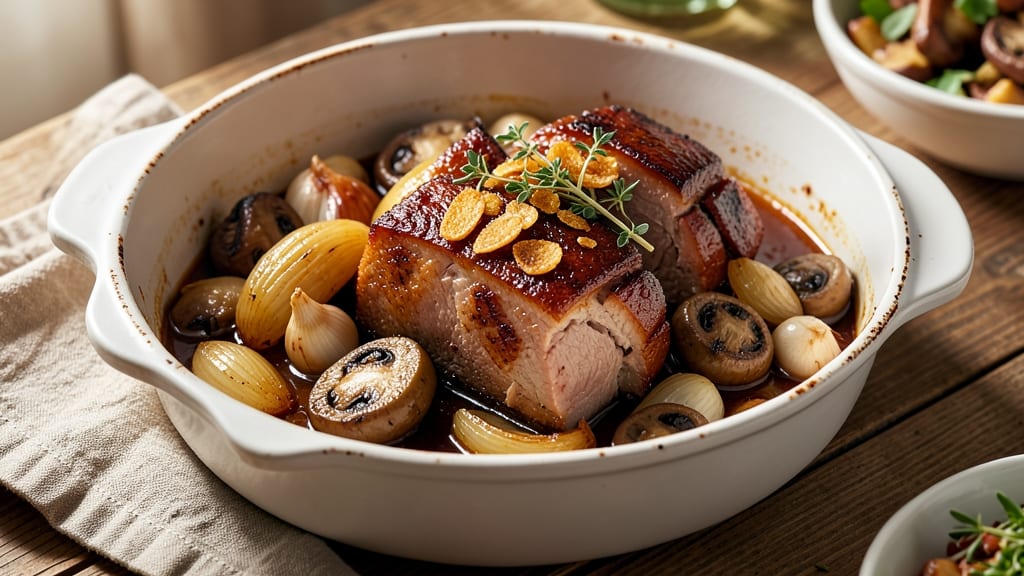
This braised pork and mushrooms recipe delivers restaurant-quality depth using just a Dutch oven and patience—two ingredients every home cook already has. 🔥 After years of perfecting slow-cooked pork techniques in my Atlanta kitchen, I've simplified the process without sacrificing that rich, caramelized flavor that makes braising worth the wait.
The secret lies in the mushrooms—earthy cremini and wild varieties develop complex umami as they cook slowly with the pork, while a touch of red wine and tomato paste builds layers of savory sweetness.
Unlike quick searing methods, this recipe transforms tough pork shoulder into tender, fork-shreddable meat that practically melts in your mouth.
What you'll end up with is a one-pot wonder that smells like a Southern kitchen at dinner hour, with pork so tender it falls apart at the touch and mushrooms that've absorbed all the deep, caramelized flavors.
The sauce clings to every bite, creating that perfect balance of richness and acidity that defines great braised dishes.
Whether you're feeding a family or meal prepping for the week, this method delivers consistent results—no fancy equipment required. Let's get started with the technique that's earned me countless compliments at my restaurant tables.
Ingredients for braised pork and mushroom
Pork shoulder, mushrooms, and red wine transform into restaurant-style braise with just a Dutch oven and time.
| Ingredient | Amount | Notes |
|---|---|---|
| Pork Shoulder 🐖 | 2 ½ lb | Bone-in for maximum flavor |
| Cremini Mushrooms 🍄 | 1 ½ lb | Sliced into even pieces |
| Wild Mushrooms 🍄 | ½ lb | Oyster or shiitake preferred |
| Yellow Onion 🧅 | 1 whole | Diced, medium size |
| Garlic Cloves 🧄 | 6 cloves | Minced, fresh preferred |
| Dry Red Wine 🍷 | 1 cup | Bold Cabernet or Merlot |
| Tomato Paste 🍅 | 2 tbsp | Smooth, not chunky |
| Olive Oil 🫒 | ½ cup | Extra-virgin for richness |
| Fresh Thyme 🌿 | ¼ cup | Leaves only, chopped |
| Bay Leaves 🍃 | 2 whole | Dried, standard size |
| Chicken Broth 💧 | 2 cups | Low-sodium preferred |
| Salt 🧂 | 1 ½ tsp | Diamond Crystal kosher |
| Black Pepper 🌶️ | 1 tsp | Freshly ground preferred |
| All-Purpose Flour 🌾 | 2 tbsp | For thickening sauce |
The pork shoulder is the star—look for bone-in cuts at Whole Foods or your local butcher for maximum flavor. Wild mushrooms (shiitake or oyster) add depth, but cremini alone works in a pinch. I always grab organic mushrooms from the refrigerated section—they hold up better during cooking. For the wine, any bold red works here—Cab Sauv, Merlot, whatever's open. Skip the cheap stuff, though; Trader Joe's has great affordable options. The tomato paste? San Marzano if you're fancy, but the squeeze tubes at Walmart are perfectly fine for weeknight cooking.
No red wine? Beef broth with a splash of balsamic gets you close. Fresh thyme is ideal but dried works at one-third the amount. If tomato paste feels like overkill for two tablespoons, those squeeze tubes at Trader Joe's are perfect—no waste, keeps for months. The mushrooms can be pre-sliced to save time, but I like to do it myself to control the size. The pork? Trim excess fat if it's particularly marbled, but leave some for flavor. For the broth, low-sodium is key—you'll be adding salt later anyway.
This reheats beautifully—honestly tastes better the next day once everything melds. Keeps 4-5 days in the fridge, freezes for 3 months. I portion mine into containers so lunches are sorted for the week. The sauce thickens as it sits, so add a splash of broth if it gets too stiff. Double the recipe if you're feeding a crowd—it's that good.
Why You'll Love This Recipe
- One-Pan Magic: That pork shoulder? It practically cooks itself while you chop onions and mushrooms—no fancy techniques, just a deep pot and time. Honestly, the hardest part is waiting for the mushrooms to melt into that rich, caramelized sauce.
- Umami Bomb: The combo of cremini and wild mushrooms with garlic? It’s like flavor overload in the best way—deep, earthy, and just a little funky. That slow braise turns tough pork into something so tender it falls apart at a touch.
- Lunchbox Hero: Make a double batch on Sunday, and you’ve got weeknight dinners covered—pack it in buns for sandwiches, toss it into pasta, or reheat it straight from the fridge. My kids beg for leftovers, and I don’t even pretend to fight it anymore.
- Budget-Friendly Feast: Pork shoulder stretches forever, and mushrooms add luxury without breaking the bank. I’ll be real: this is the kind of meal that makes grocery day feel like a win, especially when it feeds four for the price of takeout.
Step-by-step instructions for one-pot braised pork and mushrooms
Here's how to transform tough pork shoulder into melt-in-your-mouth perfection with rich, earthy mushrooms.
🔥 Step 1: Sear the Pork Shoulder for Maximum Flavor
Pat the 2.5 lb pork shoulder completely dry with paper towels—this is non-negotiable for crispy skin. Heat 0.25 cup olive oil in a large Dutch oven over medium-high heat until shimmering. Place the pork in the pot, fat-side down, and sear undisturbed for 8-10 minutes until deeply browned on one side.
Flip the pork and sear the other side for another 8-10 minutes. The goal here is to create a deep, flavorful crust called the "fond" that will dissolve into the sauce later. If the oil starts smoking or the pork browns too quickly, reduce the heat slightly. Once browned, remove the pork and set it aside on a plate.
🍳 Step 2: Sauté Aromatics and Build the Sauce Base
In the same Dutch oven (don't wipe it clean—those browned bits are pure flavor), add 0.25 cup olive oil if needed and increase heat to medium. Add the 1 whole yellow onion and cook for 5 minutes until softened and translucent. Stir in the 6 cloves garlic and 0.25 cup fresh thyme, cooking for another 1 minute until fragrant.
Lower the heat to medium-low and add the 2 tbsp tomato paste, stirring constantly for 2 minutes to cook out the raw taste. Pour in the 1 cup dry red wine and scrape up all the browned bits from the bottom of the pot. Let it simmer for 3-4 minutes until reduced by half. This step develops the deep, complex flavors that will infuse the pork.
🥘 Step 3: Braise the Pork with Mushrooms and Herbs
Return the pork to the Dutch oven. Add the 1.5 lb cremini mushrooms and 0.5 lb wild mushrooms, spreading them evenly around the pork. Pour in the 2 cups chicken broth, then add the 2 whole bay leaves, 1.5 tsp salt, and 1 tsp black pepper. The liquid should come about halfway up the sides of the pork.
Bring the mixture to a gentle simmer, then cover the pot with a tight-fitting lid. Reduce heat to low and braise for 2.5 hours. Here's the thing—don't peek or stir during this time. The steam needs to build up and cook the pork evenly. After 2 hours, check the internal temperature with a meat thermometer—it should read 195°F and the meat should be fork-tender.
⏰ Step 4: Thicken the Sauce and Finish Cooking
Once the pork is tender, remove it from the pot and place it on a cutting board. Skim off any excess fat from the sauce, then sprinkle the 2 tbsp all-purpose flour over the mushrooms and onions. Stir vigorously for 1-2 minutes to cook out the raw flour taste and thicken the sauce. If it's still too thin, add 1-2 tablespoons of the braising liquid to reach your desired consistency.
Return the pork to the pot and let it warm through for 5-10 minutes on low heat. The sauce should now coat the back of a spoon and have a velvety texture. Taste and adjust seasoning—you might need a pinch more salt or pepper to balance the flavors. The mushrooms should be tender with a slight chew, and the pork should fall apart easily with a fork.
🍽️ Step 5: Rest and Serve with Perfect Texture
Transfer the pork to a serving platter and tent loosely with foil. Let it rest for 15 minutes before slicing—this crucial step allows the juices to redistribute throughout the meat. Meanwhile, adjust the sauce consistency if needed by adding a splash of broth or simmering longer to thicken.
Slice the pork against the grain into ¼-inch thick pieces and serve directly from the Dutch oven. The result should be tender, juicy pork with a rich, umami-packed sauce that clings to every bite. Pair with crusty bread or mashed potatoes to soak up every last drop of that delicious braising liquid.
Pro Tips For Making Braised Pork And Mushroom
- SEAR THE PORK FIRST: High heat. Seriously, crank it up until the pork shoulder is deep golden—almost black in spots—before you even think about adding liquid. I used to rush this, and the braise just never had that rich, caramelized depth. Five minutes per side, no excuses.
- SWEAT THE ONIONS LOW AND SLOW: Skip the blistering—you’re not making caramelized onions, you’re building flavor. Cook the onions and garlic over medium-low for 10-12 minutes until they’re soft and translucent, not browned. This keeps them from turning bitter and ensures they melt into the braise instead of sitting as chunks.
- DON’T CROWD THE MUSHROOMS: If you pile them all in at once, they’ll steam instead of brown. Work in batches—sauté the first layer until they release their liquid and start to crisp, then push them to the side and add the next. The difference in texture (and aroma) is night and day.
- DEGLAZE WITH A SPLASH OF WINE: After searing the pork, don’t just dump in broth—hit the pan with 2-3 tablespoons of dry white wine (or even a splash of vinegar in a pinch) and scrape like your life depends on it. This pulls up all the browned bits that make braised pork taste like magic. Let it reduce by half before adding the rest of the liquid.
Pro cooking tips for braised pork and mushroom
Sear Like a Pro
That initial sear isn't just about browning—it's about building fond (the flavorful crust) that dissolves into your sauce. I use my Lodge cast iron Dutch oven for this step because it retains heat beautifully.
Pat the pork bone-side down first for 8-10 minutes without moving it—this creates the perfect crust. If your oil starts smoking before the pork browns, reduce heat to medium immediately. 🔥
Wine Reduction Matters
Don't skip the wine reduction step—this is where the magic happens. After adding the 1 cup red wine, let it simmer until reduced by half (about 3-4 minutes). This concentrates the flavors dramatically.
I always scrape up those browned bits from the bottom of the pot—they're packed with flavor. If you're using a cheaper wine, add ½ tsp balsamic vinegar at the end for depth.
Low and Slow Wins
The 2.5-hour braising time at low heat is non-negotiable for tender pork. I set my oven to 275°F and place the covered Dutch oven inside for even heat distribution. The key is not peeking—every time you lift the lid, you lose heat and moisture.
After 2 hours, check the internal temp—it should be 195°F and the meat should pull apart easily with a fork.
Sauce Thickening Hacks
For that perfect velvety sauce, I use the roux method with flour. After removing the pork, sprinkle 2 tbsp flour over the mushrooms and stir vigorously for 1-2 minutes on medium heat.
If the sauce is still too thin, add 1 tbsp of the braising liquid at a time until you reach the right consistency. Pro tip: A splash of apple cider vinegar (just ½ tsp) brightens the flavors beautifully.
Resting Prevents Dryness
Never skip the 15-minute rest before slicing—this allows the juices to redistribute throughout the meat. I tent the pork loosely with foil to keep it warm. Slice against the grain into ¼-inch pieces for maximum tenderness.
The sauce should coat the back of a spoon and have a glossy finish. If it's too thick, add a splash of broth or water to loosen it up.
Equipment Shortcuts
No Dutch oven? A heavy-bottomed pot or even a slow cooker works in a pinch. For the slow cooker, sear the pork first (it's the only step you can't skip), then transfer everything to the slow cooker and cook on low for 8 hours.
I also love using my Instant Pot for this—set it to high pressure for 90 minutes after searing, then do a natural release. The results are just as tender, with less hands-on time. 💡
Nutrition facts
Frequently asked questions
Can I use pork tenderloin instead of pork shoulder?
The recipe is designed for pork shoulder because its collagen-rich connective tissue breaks down beautifully during braising, creating that signature tender texture. Pork tenderloin is much leaner and will turn out dry—it's better suited for quick searing or grilling. If you must use it, slice it thinly first and reduce the braising time to 1 hour.
What if I don't have red wine? What's the best substitute?
No problem! Use 1 cup beef broth plus ½ teaspoon balsamic vinegar for depth, or substitute with 1 cup apple cider for a slightly sweeter profile. Avoid white wine—it won't develop the same rich umami flavors. The key is maintaining the 1:1 liquid ratio to pork weight for proper braising.
How do I know when the pork is fully tender?
Use a meat thermometer to check for 195°F internal temperature—this is the magic number where collagen fully breaks down. Alternatively, pierce the thickest part with a fork: if it slides in effortlessly and the meat falls apart, it's ready. The mushrooms should also be tender with just a slight bite, not mushy.
Can I make this in a slow cooker or Instant Pot? For a slow cooker: sear the pork first, then transfer everything to the pot and cook on low for 8 hours. For an Instant Pot: sear the pork, then cook on high pressure for 90 minutes with a natural release. Both methods work beautifully—just
Why did my sauce turn out too thin?
This usually happens if you didn't reduce the wine enough or if the flour didn't cook properly. For next time, simmer the wine until it's reduced by half, then stir the flour vigorously for 2-3 minutes on medium heat to create a proper roux. If it's still too thin, mix 1 tablespoon cornstarch with 2 tablespoons cold water and stir it in until thickened.