
Main Courses
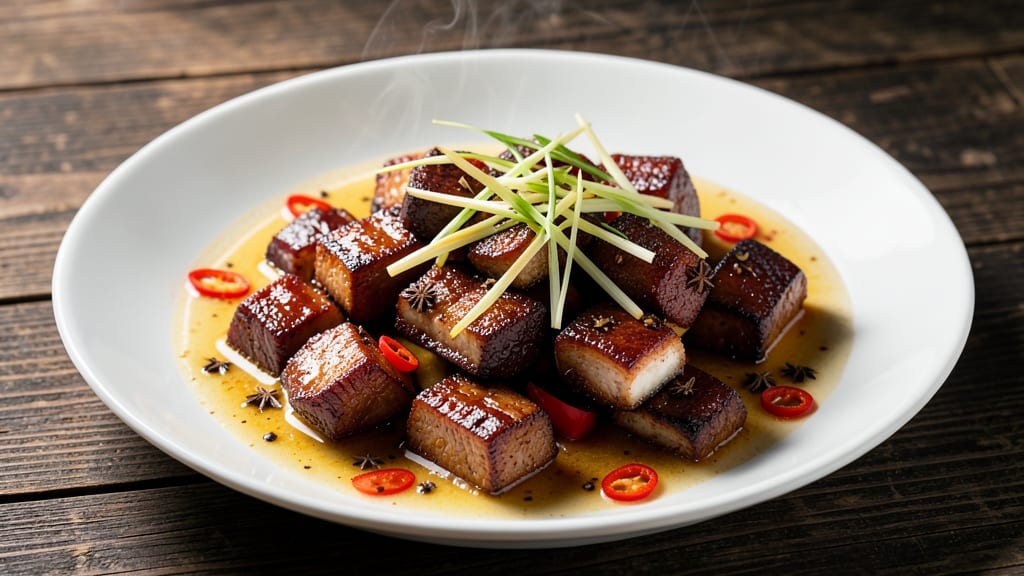
This Singapore-style braised pork belly transforms tough cuts into meltingly tender slices with aromatic coconut and lemongrass. The secret lies in slow simmering with star anise, cinnamon, and pandan leaf—flavors that define Singaporean comfort food.
I first discovered this technique while traveling, where every bite felt like a hug from a bustling hawker stall.
The process begins with a fragrant marinade of soy sauce, coconut milk, and lemongrass, which tenderizes the meat while building deep, complex flavors. Slow braising for 3-4 hours ensures the pork becomes fork-tender, absorbing every spiced note.
The result? Rich, caramelized edges and velvety flesh that practically dissolves on your tongue.
This dish pairs perfectly with steamed jasmine rice or stir-fried greens, creating a complete meal that’s both comforting and impressive. The aroma alone—warm spices mingling with coconut—will have your kitchen feeling like a Singaporean restaurant. Ready to master this restaurant-quality technique?
What sets this recipe apart is the balance of sweet, savory, and aromatic spices, all working together to create pork belly that’s unforgettable. The slow cooking process isn’t just about tenderness—it’s about layering flavor until every bite feels like a celebration. Let’s get cooking!
Ingredients for braised pork belly recipe singapore
Transform tough pork belly into restaurant-quality tenderness with these aromatic Singaporean ingredients.
| Ingredient | Amount | Notes |
|---|---|---|
| Pork Belly 🥓 | 2 lb | Skin-on, cut into 1-inch cubes |
| Full-Fat Coconut Milk 🥥 | 1 can | 13.5 oz can, unsweetened |
| Soy Sauce 🍶 | ½ cup | Dark soy preferred for color |
| Lemongrass 🌿 | 1 whole | Bruised, cut into 2-inch pieces |
| Star Anise 🌶️ | 2 whole | Whole pods, lightly crushed |
| Cinnamon Sticks 🌿 | 2 whole | 2-inch pieces |
| Pandan Leaf 🌿 | 1 whole | Tied in knot, or 1 tsp powdered |
| Garlic Cloves 🧄 | 6 cloves | Smashed, not minced |
| Ginger Root 🧅 | 2 tbsp | Freshly grated, thick slices |
| Brown Sugar 🍯 | ¼ cup | Light or dark preferred |
| White Peppercorns 🌶️ | ½ tsp | Crushed, not ground |
| Salt 🧂 | 1 ½ tsp | Kosher or sea salt |
| Vegetable Oil 🫒 | 2 tbsp | High smoke point preferred |
The pork belly is non-negotiable here—look for thick-cut, skin-on pieces from a butcher or Asian market. Costco or Whole Foods carry excellent quality, but avoid pre-sliced deli cuts. The skin should be crisp and the fat marbled. For lemongrass, Thai or Vietnamese markets sell it fresh in bundles—if you can't find it, substitute with 1 tbsp lemongrass paste. Star anise and pandan leaf define this dish's signature aroma; Penzeys Spices or bulk bins at Trader Joe's are reliable sources. The coconut milk must be full-fat—no light versions—as it carries the rich, creamy texture essential for braising.
No dark soy sauce? Regular soy sauce plus 1 tsp molasses mimics the depth. Fresh ginger and garlic are ideal, but powdered ginger at half the amount works in a pinch. Substitute pandan leaf with 1 tsp pandan extract if unavailable, though fresh is superior. For sugar, coconut sugar adds subtle caramel notes. The white peppercorns should be crushed between a mortar and pestle—not pre-ground—for maximum aroma. If you're short on time, pre-crushed peppercorns from a jar will suffice, though freshly crushed delivers superior flavor. The vegetable oil is purely for searing; avocado or peanut oil works best for high-heat browning.
Store the braised pork belly in its cooking liquid for up to 5 days in the fridge, where flavors deepen overnight. For longer storage, freeze portions in airtight containers for 3 months. Reheat gently on the stove with a splash of water to restore moisture. The skin crisps beautifully when reheated under a broiler for 2-3 minutes. Leftover coconut milk and aromatics can be repurposed into soups or curries—simply strain and reduce for a fragrant base. The braised pork also freezes exceptionally well, making it perfect for meal prep.
Why You'll Love This Recipe
- One-Pot Magic: I swear by this—just sear the pork belly, toss in the lemongrass and star anise, then let the coconut milk do its thing. No chopping, no fuss, and the house smells like heaven while you’re at it.
- Creamy-Savory Dream: That first bite? The crispy edges give way to melt-in-your-mouth pork swimming in rich coconut milk, with just enough soy sauce to keep it addictive. Honestly, I’ve never met a braise that hits this hard.
- Leftover Goldmine: Make a double batch and thank me later. The flavors deepen overnight, so it’s even better the next day—perfect for lazy lunches or sneaking into rice bowls. My freezer’s always stocked with this.
- Budget-Friendly Feast: Pork belly feels fancy, but it stretches far here. A slab feeds four easily, and the coconut milk adds luxury without breaking the bank. (Yes, even on a Tuesday night.)
Step-by-step instructions for fragrant coconut and lemongrass braised pork belly
Transform tough pork belly into melt-in-your-mouth perfection using this Singaporean technique.
Prepare and Sear the Pork Belly
Pat the 2 lb pork belly dry with paper towels, then cut into 1-inch cubes. This size ensures even cooking and maximum flavor penetration. In a large Dutch oven, heat the 2 tbsp vegetable oil over medium-high heat until shimmering but not smoking.
Working in batches to avoid crowding, add the pork belly cubes and sear for 3-4 minutes per side until deep golden brown with crispy edges. This initial searing locks in juices and builds deep flavor. Transfer the seared pork to a plate and set aside. Don't skip this step—it's what creates that coveted caramelized crust.
Build the Aromatic Base
In the same Dutch oven, add the 2 tbsp grated ginger root and 6 smashed garlic cloves. Sauté for 1 minute until fragrant and just beginning to color. Add the 2-inch lemongrass pieces, 2 lightly crushed star anise, 2 cinnamon sticks, and 1 whole pandan leaf (tied in a knot). Stir for 30 seconds to release their essential oils.
Pour in the 0.5 cup soy sauce and 0.25 cup brown sugar, scraping up any browned bits from the bottom of the pot. These bits contain concentrated flavor—don't let them go to waste. Let the mixture simmer for 2 minutes until slightly reduced and glossy. This creates the flavor foundation that will infuse the pork belly throughout the braising process.
Combine and Simmer with Coconut Milk
Return the seared pork belly to the Dutch oven. Add the 1 can full-fat coconut milk, ensuring it covers at least half of the pork cubes. Bring to a gentle simmer over medium-low heat. The coconut milk should bubble softly—if it boils vigorously, reduce the heat immediately to prevent curdling.
Partially cover the pot and simmer for 1 hour, spooning the coconut milk over the pork occasionally. You're looking for the pork to become fork-tender but still hold its shape. After 1 hour, check for tenderness by piercing a cube with a fork—it should slide in easily with minimal resistance. If not fully tender, continue simmering for another 30-45 minutes.
Finish with Seasoning and Rest
Once the pork is tender, increase the heat to medium and simmer uncovered for 5-7 minutes to reduce the sauce slightly. Add the 1.5 tsp salt and 0.5 tsp crushed white peppercorns, stirring to combine. Taste and adjust seasoning—you want a balance of sweet, salty, and aromatic notes.
Transfer the pork belly to a serving platter and tent loosely with foil. Let it rest for 10 minutes before serving. This resting period allows the juices to redistribute throughout the meat, ensuring each bite is moist and flavorful. The sauce can be served warm over steamed rice, or you can thicken it further by simmering uncovered for an additional 10 minutes if desired.
Pro Tips For Making Braised Pork Belly Recipe Singapore
- Sear the Belly Hard: Don’t just brown it—get that pork belly screaming hot in a dry pan for 8-10 minutes per side until deep golden. I used to rush this, and the flavor just didn’t stick like it should. The crust locks in all that fat and caramelized goodness when it hits the coconut milk later.
- Split the Lemongrass Properly: Bruise the lemongrass stems with the flat side of your knife before chopping—this releases the oils without bitterness. Skip the food processor unless you want a muddy, watery paste. My first batch tasted like I’d forgotten it entirely because I just minced it raw.
- Simmer Low and Slow: Once the coconut milk comes in, drop the heat to a bare simmer—no boiling, no rushing. I learned this the hard way when my sauce broke and split like curdled milk. Let it bubble gently for 1.5–2 hours, or until the pork falls apart easily.
- Save the Star Anise: Remove the star anise pods after 45 minutes of cooking—longer and they’ll turn the sauce bitter. I used to leave them in until the end, and the dish tasted medicinal. Strain them out, but keep the broth rich and aromatic.
Best sauces and condiments for these flavors
Coconut Milk Magic
The star of this braise is the full-fat coconut milk—it’s not just flavor, it’s texture. I always use Thai Kitchen brand because it has that perfect balance of creaminess and subtle sweetness.
If you’re worried about the coconut taste overpowering, don’t be: the star anise and cinnamon anchor it beautifully. For extra richness, stir in 1 tbsp toasted coconut cream at the end—it adds a luxurious depth that feels like a restaurant secret. 🥥
Umami Boosters
Dark soy sauce gives this dish its signature deep mahogany color and concentrated umami punch. If you can’t find it, mix ½ cup regular soy sauce with 1 tbsp molasses for a similar effect.
For an extra layer of complexity, add 1 tbsp fish sauce (like Red Boat) when you combine everything—it cuts through the richness with a salty, briny note. I promise, you won’t taste the fish sauce, but your dish will sing. 🍶
Spice Infusions
The pandan leaf is non-negotiable for that authentic Singaporean aroma—it smells like a tropical forest in a pot. If you can’t find fresh, 1 tsp pandan extract works in a pinch, but fresh is always better.
For heat lovers, add ½ tsp chili paste (like Sambal Oelek) when you sear the pork—it caramelizes beautifully and adds a slow-building spice. The white peppercorns add warmth without overpowering, and crushing them fresh makes all the difference. 🌿
Sweet-Savory Balance
Brown sugar isn’t just for sweetness—it helps caramelize the edges of the pork and balances the saltiness. I like Muscovado sugar for its molasses notes, but coconut sugar works too.
If your sauce needs more depth, stir in 1 tsp tamarind paste at the end—it adds a tangy complexity that elevates everything. Taste as you go: the sauce should be sweet, salty, and aromatic, with none of those flavors standing out alone. 🍯
Finishing Touches
Before serving, drizzle the pork with 1 tbsp toasted sesame oil for a nutty aroma and glossy sheen. For garnish, I love thinly sliced scallions and crushed peanuts—they add crunch and freshness. If you’re feeling fancy, sprinkle edible gold leaf for a restaurant-worthy touch.
The key is to let the pork rest 10 minutes before slicing so the juices don’t run everywhere. Trust me, it’s worth the wait. ✨
Nutrition facts
Frequently asked questions
Can I substitute regular soy sauce for dark soy sauce?
Yes, but you'll need to adjust for color and depth. Mix ½ cup regular soy sauce with 1 tbsp molasses to mimic dark soy's rich mahogany hue and concentrated umami. The molasses adds caramelized sweetness that balances the salty notes. For best results, use this substitute in the aromatic base step when building flavors.
How do I know when the pork belly is fully tender?
The pork is ready when it's fork-tender but still holds its shape. After 1 hour of simmering, pierce a cube—it should slide in easily with minimal resistance. For extra assurance, check the internal temperature: it should reach 195-203°F (90-95°C) in the thickest part. If it's still slightly firm, continue simmering for another 30-45 minutes uncovered.
What's the best way to crisp the skin after braising?
For perfect crispy skin, transfer the braised pork to a baking sheet and broil on high heat for 2-3 minutes until golden and blistered. Work in batches to avoid crowding. Alternatively, sear the skin side down in a hot skillet for 1-2 minutes per side. The key is high heat and quick cooking to render the fat without making the meat rubbery.
Can I make this recipe in a slow cooker?
Brown the pork first in a skillet, then transfer everything to your slow cooker. Cook on low for 6-8 hours or high for 4-5 hours. The slow cooker's gentle heat will create tender pork with a slightly thicker sauce. Just reduce the coconut milk by ¼ cup since slow cooking reduces less liquid. The flavors will meld beautifully over time.
What's the secret to keeping the sauce from curdling?
Never let the coconut milk boil vigorously—maintain a gentle simmer (medium-low heat) to prevent separation. Stir occasionally to distribute heat evenly. If you see signs of curdling, immediately reduce the heat and whisk vigorously for 1 minute. The sauce should be smooth and creamy. For extra insurance, whisk in 1 tbsp cornstarch mixed with 2 tbsp water at the end to stabilize it.