
Main Courses
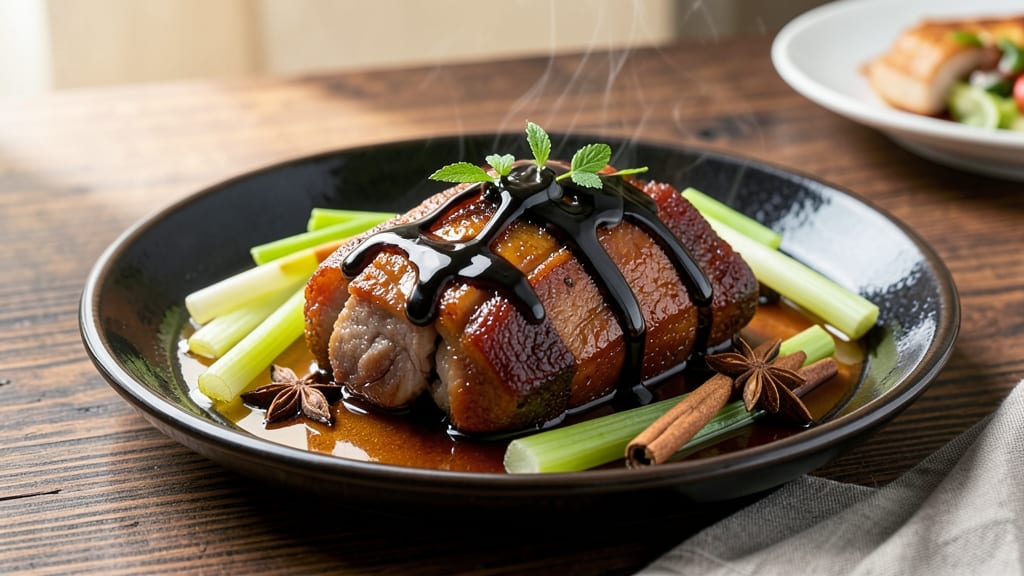
This braised pork hock Chinese recipe transforms tough cuts into melt-in-your-mouth tenderness with a celery crown that adds satisfying crunch. 🔥 The secret lies in slow braising with aromatic spices—star anise, cinnamon, and fermented bean paste—that build deep umami richness over hours.
As someone who's spent years perfecting pork dishes, I can tell you this method delivers restaurant-quality results in your own kitchen.
What sets this recipe apart is the balance of textures and flavors: the pork becomes fall-apperingly tender, while the celery crown adds a crisp contrast that keeps every bite exciting.
The braising liquid reduces into a glossy, flavorful sauce that coats each piece of meat, making it impossible to resist seconds. This is the kind of dish that tastes even better the next day as flavors meld together.
Traditional Chinese braising techniques are simplified here without sacrificing authenticity. We'll use a combination of soy sauce, rock sugar, and spices to create a harmonious blend of sweet, salty, and aromatic notes.
The pork hock is first marinated to enhance flavor penetration, then braised until fork-tender—a process that rewards patience with incredible results.
Perfect for family gatherings or special occasions, this dish pairs beautifully with steamed rice and stir-fried vegetables. The leftovers reheat wonderfully, making it an ideal meal prep option that still delivers restaurant-quality flavor. Let's get started on creating this timeless Chinese classic in your own kitchen.
Ingredients for braised pork hock chinese
Pork hock, aromatic spices, and celery crown transform into restaurant-quality braise with just 15 ingredients.
| Ingredient | Amount | Notes |
|---|---|---|
| Pork Hock 🐷 | 2 lb | With skin and bone intact |
| Celery Stalks 🧅 | 4 whole | Cut into 2-inch pieces |
| Star Anise Pods 🌿 | 4 whole | Whole, not ground |
| Cinnamon Sticks 🌿 | 2 whole | 2-inch lengths |
| Fermented Bean Paste 🍶 | ½ cup | Doubanjiang or hoisin |
| Light Soy Sauce 🥄 | ½ cup | Kikkoman preferred |
| Dark Soy Sauce 🥄 | 2 tbsp | For color depth |
| Rock Sugar 🍯 | ¼ cup | Or brown sugar substitute |
| Garlic Cloves 🧄 | 6 cloves | Smashed, not minced |
| Fresh Ginger 🌿 | ½ inch | Peeled, sliced thin |
| Fresh Ginger 🌿 | 2 tbsp | Grated, for marinade |
| Shaoxing Wine 🍷 | ¼ cup | Or dry sherry substitute |
| Green Onions 🧅 | 4 whole | Cut into 1-inch pieces |
| Vegetable Oil 🫒 | 2 tbsp | High smoke point |
| Water 💧 | 4 cups | For braising liquid |
The pork hock is the star—look for a 2-pound cut with good marbling from a butcher or Asian market (they usually have the best selection). Fresh ginger should smell bright and citrusy—avoid anything with dull spots. For the celery crown, organic celery holds up best to braising. Star anise and cinnamon sticks can be found in the spice aisle or bulk bins at stores like Whole Foods or Trader Joe's. If you can't find fermented bean paste, hoisin sauce works as a substitute, though it lacks the deep funk. The rock sugar adds just enough sweetness to balance the umami—substitute brown sugar if needed, but reduce by half.
No Shaoxing wine? Dry sherry or even a splash of white wine vinegar works in a pinch. Want to skip the celery crown? Substitute with baby carrots or parsnips for similar texture. The grated ginger in the marinade is non-negotiable—fresh only, no powdered substitutes. For the soy sauces, Kikkoman light soy and Lee Kum Kee dark soy are my go-tos, but any good-quality brands work. The garlic and ginger should be roughly chopped for the marinade—no need for fine mincing. If you're making this ahead, double the batch—it reheats even better the next day.
Marinate the pork overnight for maximum flavor penetration, then braise until fork-tender (3-4 hours). The celery crown should stay crisp—add it in the last 30 minutes of cooking. Store leftovers in the braising liquid for up to 5 days in the fridge. Freezes beautifully for 3 months—portion into containers with sauce for easy reheating. The sauce thickens as it cools, so add a splash of water when reheating if it seems too stiff. Serve with steamed jasmine rice to soak up every last drop of that umami-rich sauce.
Why You'll Love This Recipe
- One-Pot Magic: I swear by this—just toss the pork hock, celery, and spices into a pot, add water, and let it simmer. No chopping, no fuss, and honestly, the hardest part is waiting for that deep, caramelized aroma to fill your kitchen.
- Flavor Bomb: That fermented bean paste? It’s the secret weapon—savory, umami-rich, and slightly funky in the best way. Pair it with star anise and cinnamon, and you’ve got a broth so rich it’ll make your taste buds do a happy dance.
- Budget Meal, Big Impact: Pork hock is cheap, but it feels like a fancy dinner. A few dollars and an hour of simmering turn into a meal that feeds four for less than takeout—plus, the leftovers stretch for days. My wallet and my family thank me every time.
Step-by-step instructions for braised pork hock with celery crown crunch
Here's the method that transforms tough pork hock into melt-in-your-mouth perfection with that signature celery crown crunch.
🍳 Step 1: Sear the Pork Hock for Deep Flavor
Heat the 2 tablespoons vegetable oil in a heavy Dutch oven over medium-high heat until shimmering. Pat the 2 lb pork hock completely dry with paper towels—this ensures maximum crispiness. Place the pork hock skin-side down in the pot and sear for 8-10 minutes until the skin turns a deep golden brown and releases easily from the pot.
Here's the thing—don't rush this step. The Maillard reaction happening here creates the rich, caramelized foundation for your braise. Once golden, flip the pork hock and sear the other side for another 5-7 minutes. Remove and set aside temporarily—you'll return to it after building your aromatic base.
👨🍳 Step 2: Build the Aromatic Braising Base
In the same Dutch oven, add 2 tablespoons fresh ginger and 6 smashed garlic cloves, cooking for 30 seconds until fragrant. Add 4 whole celery stalks cut into 2-inch pieces and cook for 2 minutes until slightly softened. This step develops the celery's natural sweetness that will shine through in your finished dish.
Stir in 0.5 cup fermented bean paste, 0.5 cup light soy sauce, 2 tablespoons dark soy sauce, and 0.25 cup rock sugar. Let this mixture cook for 1 minute until the bean paste darkens slightly and releases its deep umami oils. This is where the magic happens—the balance of sweet, salty, and fermented flavors that define Chinese braising.
🔥 Step 3: Simmer with Aromatics and Alcohol
Return the seared pork hock to the pot. Add 4 whole star anise pods, 2 whole cinnamon sticks, 0.25 cup Shaoxing wine, and 4 cups water. Bring everything to a gentle boil, then reduce heat to low and cover partially. Here's where patience pays off—simmer for 2 hours, maintaining a gentle bubble at the edges but no vigorous boiling.
After 1 hour, check the liquid level and add ½ cup hot water if needed to keep the pork hock submerged. The pork should be tender enough to pierce with a fork but still have some resistance. The skin should be falling off in crispy layers, and the liquid should have reduced slightly, concentrating those rich flavors.
⏰ Step 4: Finish with Celery Crown and Green Onions
Remove the pork hock and strain the braising liquid through a fine-mesh sieve, pressing on the solids to extract maximum flavor. Return the liquid to the pot and bring to a simmer. Add 4 whole green onions cut into 1-inch pieces and 4 whole celery stalks (reserve some for garnish). Simmer for 5 minutes until the celery crowns soften slightly but maintain their crunch.
Return the pork hock to the pot and heat through for 2-3 minutes. The celery crowns should be tender-crisp with just a slight bite. Here's the trick: the celery should be cooked enough to soften slightly but still have that satisfying crunch when you bite into it. This is what makes this dish truly special.
🍽️ Step 5: Rest and Serve with Perfect Texture
Transfer the pork hock to a serving platter and tent loosely with foil. Let it rest for 10 minutes—this crucial step allows the juices to redistribute throughout the meat, ensuring each bite is moist and flavorful. The skin should be crispy enough to hold its shape when you lift it, with layers that flake away at the first touch.
Serve the pork hock with the braising liquid ladled over the top, garnished with the remaining celery crowns and green onions. The contrast of tender pork with that crispy celery crunch in every bite is what makes this dish truly unforgettable. Pair with steamed jasmine rice to soak up every last drop of that umami-rich sauce.
Pro Tips For Making Braised Pork Hock Chinese
- Parboil the Hock First: Skip the raw pork hock straight into the pot—it’ll turn rubbery. Instead, blanch it in boiling water for 10 minutes to soften the collagen and knock out impurities. I learned this the hard way when my first batch came out chewy instead of tender.
- Toast the Spices: Dry-toast your star anise and cinnamon sticks in the pot for 30 seconds before adding liquid—this releases their oils and deepens the aroma. Sounds minor, but it makes a real difference when you’re simmering for hours.
- Don’t Rush the Celery: Cut celery stalks into 3-inch chunks, not thin slices. Thicker pieces hold up better and infuse flavor without turning to mush. I used to chop them too fine, and they’d disappear into the sauce before the pork was done.
- Simmer Low and Slow: After the initial sear, drop the heat to a gentle simmer—barely any bubbles—so the pork hock cooks through evenly without toughening. I used to keep it at a rolling boil, and the meat ended up dry. Patience here pays off.
Serving suggestions for braised pork hock chinese
Rice Pairings
Jasmine rice is my go-to pairing—its delicate floral aroma and slightly sticky texture soak up the rich braising sauce perfectly. Cook 1 cup jasmine rice to 1.5 cups water for fluffy grains that hold their shape.
For extra luxury, try black rice or short-grain sushi rice, both of which add beautiful contrast to the deep brown hues of the braised pork. 🌟
Pro tip: Warm the rice in a steamer basket over simmering water for 5 minutes before serving to maintain its perfect texture. The residual heat keeps it hot while preventing sogginess from the pork's juices. I often double the rice portion because everyone will want seconds—this dish is that good.
Vegetable Sides
Steamed bok choy with a splash of Shaoxing wine complements the pork's richness beautifully. Blanch 4 heads bok choy for 2 minutes in boiling water, then finish with a quick sear in a hot wok.
The slight bitterness balances the dish's umami depth. For a heartier option, try stir-fried gai lan with garlic and fermented black beans.
Another winner is cucumber salad with rice vinegar and chili oil—its cool crunch cuts through the richness. Thinly slice 1 English cucumber, toss with 1 tbsp rice vinegar, ½ tsp chili oil, and a pinch of salt.
Serve immediately for that refreshing contrast that keeps the meal exciting from start to finish.
Dipping Sauces
Create a quick hoisin-ginger dipping sauce by mixing ¼ cup hoisin sauce, 1 tbsp grated ginger, 1 tsp rice vinegar, and a pinch of white pepper.
This sauce enhances the pork's flavors while adding a tangy kick. For a spicier option, add ½ tsp chili crisp or 1 tsp Sambal Oelek to taste.
My favorite restaurant-style sauce combines 2 tbsp fermented black beans (mashed), 1 tbsp light soy sauce, and ½ tsp sugar. Simmer for 2 minutes** until slightly thickened. This sauce adds an extra layer of funky, savory complexity that pairs perfectly with the braised pork's tender texture.
Presentation Tips
Slice the pork hock against the grain into ½-inch thick pieces for maximum tenderness. Arrange on a platter with the braising sauce spooned around it, then scatter the crisp celery crowns and green onions on top.
The visual contrast of the deep brown pork against the bright green celery makes the dish instantly inviting. 🍽️
For an elevated touch, use a lattice-style ceramic dish to serve the pork—it keeps the meat warm while allowing guests to see the beautiful layers of crispy skin and tender meat. Garnish with a few edible flower petals or a sprinkle of toasted sesame seeds for that final restaurant-quality presentation.
Nutrition facts
Frequently asked questions
Can I substitute pork hock with another cut of pork?
For the best results, use pork hock specifically—its collagen-rich connective tissue breaks down beautifully during braising. If unavailable, try pork shoulder (bone-in works better than boneless) or pork shank, but expect slightly different textures. Avoid lean cuts like tenderloin—they won't develop the same rich, gelatinous finish.
How do I know when the pork is fully tender?
The pork should be fork-tender after 3-4 hours of braising, but the skin should still have some resistance. Test by piercing the thickest part with a fork—it should slide in easily with no resistance. The meat should pull apart cleanly, not tear, and the skin should crisp up beautifully when sliced.
What if I don't have Shaoxing wine? Can I use something else?
Substitute with dry sherry (like Fonthill) or even white wine vinegar in a pinch. For best results, use ¼ cup dry sherry—it adds depth without overpowering. Avoid sweet wines or vinegars, as they can make the sauce too cloying. The alcohol helps tenderize the meat and carries the aromatics.
Can I make this dish ahead of time?
This dish actually tastes better the next day! Braise the pork as directed, then refrigerate for up to 5 days in its own juices. Reheat gently in a pot over low heat until warmed through, adding a splash of water if the sauce thickens too much. The flavors deepen as the meat absorbs more of the reduced braising liquid.
Why does my celery crown turn mushy instead of staying crisp?
Celery crowns need precise timing—add them only in the last 5 minutes of cooking. Overcooking releases too much water, making them limp. For extra crunch, blanch the celery in boiling water for 30 seconds** before adding to the braise, then finish in the sauce. This preserves texture while ensuring they're fully cooked.