
Main Courses
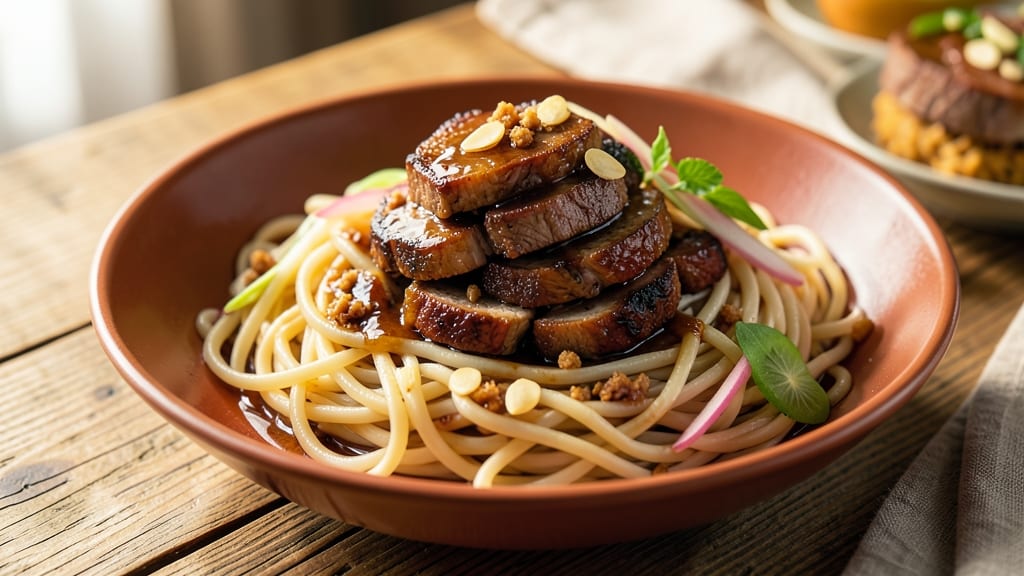
This braised pork noodles recipe delivers restaurant-quality flavor with tender, smoky pork shreds swimming in a rich soy-ginger sauce over perfectly al dente egg noodles. I perfected this dish after years of adapting traditional Chinese techniques to my Southern kitchen—where pork takes center stage.
The secret lies in slow-braising the pork until it practically melts, then combining it with a sauce that balances sweet, salty, and aromatic spices.
The process starts with a 30-minute prep for the pork and sauce, followed by 2 hours of slow braising at 325°F—this is where the magic happens. While the pork tenderizes, you'll cook the egg noodles just shy of al dente so they absorb the sauce beautifully.
The result is a dish that's hearty enough for a weeknight dinner but impressive enough for company, with layers of flavor in every bite.
What makes this recipe stand out is the smoky depth from star anise and cinnamon, balanced by the bright ginger and umami-rich soy sauce. The pork shreds easily, coating the noodles in a velvety sauce that's neither too sweet nor too salty.
This is comfort food at its finest—warm, satisfying, and packed with restaurant-quality flavor without the fuss.
Serve immediately with scallions and sesame seeds for freshness, or store leftovers for up to 3 days—the flavors only deepen over time. Whether you're feeding a family or treating yourself to a special meal, this dish delivers every time. Let's get cooking!
Ingredients for braised pork noodles
Here’s what you’ll need to create tender, smoky pork noodles with restaurant-quality depth.
| Ingredient | Amount | Notes |
|---|---|---|
| Pork Shoulder 🐷 | 2 lb | Bone-in for flavor, cut into 1-inch cubes |
| Egg Noodles 🍝 | 12 oz | Fresh or dried, al dente preferred |
| Soy Sauce 🥢 | ½ cup | Kosher or light variety, not reduced |
| Brown Sugar 🍯 | ¼ cup | Packed, light or dark works |
| Ginger Root 🌿 | 1 tbsp | Freshly grated, aromatic |
| Garlic Cloves 🧄 | 6 cloves | Minced, not pre-minced jarred |
| Star Anise 🌟 | 2 whole | Whole pods, crushed lightly |
| Cinnamon Sticks 🌳 | 2 whole | 2-inch pieces for depth |
| Green Onions 🧅 | 3 whole | White and green parts separated |
| Sesame Seeds 🌱 | 1 tbsp | Toasted for garnish |
| Vegetable Oil 🫒 | 2 tbsp | High smoke point for searing |
| Water 💧 | 1 cup | For braising liquid |
| Salt 🧂 | 1 ½ tsp | Diamond Crystal preferred |
| Black Pepper 🌶️ | ½ tsp | Freshly cracked |
The pork shoulder is the star—look for cuts with good marbling at Whole Foods or your local butcher. A 2-pound bone-in piece gives you that rich, meaty flavor you can’t get with leaner cuts. If you’re short on time, Costco’s pre-cut pork shoulder works perfectly. For the noodles, fresh egg noodles from the refrigerated section absorb sauce better than dried, but dried works in a pinch. The key spices—star anise and cinnamon—are non-negotiable for that authentic smoky depth. Penzeys or the bulk spices aisle at Trader Joe’s have the best quality.
No star anise? 1 tsp ground anise seed works in a bind, though it’s not the same. Swap the brown sugar for white sugar plus 1 tsp molasses if you’re out, but the caramel notes are worth keeping. Fresh ginger is ideal, but dried ginger at half the amount gets you close. Pre-minced garlic from a jar? Skip it—freshly minced makes all the difference. The green onions should be bright and crisp; if they’re wilted, toss them. For a quicker prep, jarred green onions from the Asian foods aisle work fine. The sesame seeds can be toasted in a dry pan for 30 seconds if you’re feeling fancy.
Pork cubes keep 3 days in the fridge before braising—just store them in a sealed container. The braised pork and sauce reheat beautifully; portion into containers and freeze for up to 3 months. The noodles are best cooked fresh, but you can prep the sauce ahead and store it separately. Leftovers taste even better the next day—let the flavors meld for a few hours before serving. Garnish with sesame seeds and green onions right before eating for that fresh pop of color.
Why You'll Love This Recipe
- One-Pot Magic: I swear by this—just sear the pork shoulder, toss in the ginger and soy sauce, then let it slow-cook while you chop a few veggies (or skip them entirely). The noodles go in last, and suddenly you’ve got a meal that feels fancy but took less effort than ordering takeout.
- Sweet-Savory Crunch: That brown sugar caramelizing into the soy sauce? Chef’s kiss. The pork gets fork-tender with a glossy, slightly sticky glaze—like a cross between a rich stew and a quick stir-fry. The ginger adds this bright, zesty kick that cuts through the richness, and honestly? It’s the kind of flavor that makes you want to eat it straight from the wok.
- Lunchbox Hero: Between us, this is my go-to for meal prep. The braised pork keeps for days in the fridge, so I can throw together cold noodles or reheat everything for a hot meal—no sad, mushy leftovers here. Pack it for work, freeze portions for lazy nights, or bring it to a potluck. It’s the ultimate "I didn’t even try" dish.
- Piggy Bank Friendly: Pork shoulder is cheap, and a single cut feeds four. Brown sugar and ginger are pantry staples, and egg noodles? You can grab a box for under two bucks. I’ll be real: I’ve made this on a $15 grocery run, and it still tasted like I spent an hour in the kitchen. That’s the kind of budget stretch I can get behind.
Step-by-step instructions for braised pork noodles
Here's how to create tender, smoky pork that practically falls apart over chewy egg noodles.
🍳 Step 1: Sear the Pork Shoulder for Deep Flavor
Heat 2 tablespoons vegetable oil in a large Dutch oven over medium-high heat until shimmering. Working in batches if needed, add the 2 lb pork shoulder cut into 1-inch cubes, arranging them in a single layer without overcrowding. Let each piece sear undisturbed for 3-4 minutes until a deep golden-brown crust forms.
This initial sear is crucial—it locks in juices and builds the foundational flavor of the dish. If your pan gets crowded and the temperature drops, simply add the pork to a second pan rather than rushing the process. Once all pieces are browned, transfer them to a plate and set aside, leaving all the rendered fat in the pot.
👨🍳 Step 2: Build the Aromatic Braising Base
In the same Dutch oven, reduce heat to medium and add 6 minced garlic cloves and 1 tablespoon freshly grated ginger root. Cook for 30 seconds until fragrant—you should smell that bright, zesty aroma. Immediately add 2 crushed star anise and 2 cinnamon sticks, stirring for 10 seconds to toast the spices gently.
Here's the thing—these spices infuse the braising liquid with complex warmth. Don't skip the toasting step, but don't let them burn, either. After 30 seconds, pour in 0.5 cup soy sauce and 0.25 cup packed brown sugar, scraping up any browned bits from the bottom with a wooden spoon. This deglazing captures all that precious flavor.
🥘 Step 3: Braise Until Fork-Tender
Return the pork to the pot and add 1 cup water. Bring to a simmer over medium heat, then reduce to low and cover tightly. Here's where patience pays off—braise for 2-2.5 hours until the pork is fork-tender. You'll know it's ready when a skewer slides in with minimal resistance and the meat pulls apart easily.
The liquid should reduce significantly but still coat the bottom of the pan. If it looks too thin, add 2-3 tablespoons water during the last 30 minutes of cooking. This ensures the pork stays moist without becoming watery. Once tender, remove the pork and strain the braising liquid through a fine-mesh sieve into a bowl, discarding the solids.
🍳 Step 4: Cook the Egg Noodles Al Dente
While the pork rests, bring a large pot of well-salted water to a rolling boil. Add the 12 oz egg noodles and cook for 1 minute less than package instructions recommend for al dente texture. Reserve 1 cup pasta water before draining, then drain the noodles and return them to the pot.
This is where the magic happens—toss the noodles with 1 tablespoon toasted sesame seeds and 1.5 teaspoons salt while still hot. The sesame seeds add nutty depth, and the salt enhances their natural eggy flavor. Keep the noodles warm until ready to serve, but don't let them sit too long or they'll turn mushy.
🥘 Step 5: Assemble and Finish with Fresh Herbs
Slice the braised pork against the grain into ¼-inch thick strips. Divide the cooked noodles among four bowls, then arrange the pork strips over the top. Ladle the strained braising liquid generously over each serving, coating the noodles and pork evenly. The sauce should cling beautifully to everything.
Garnish each bowl with white and green parts of the 3 green onions separated, and finish with an extra sprinkle of sesame seeds and a crack of black pepper. The contrast of fresh green onions against the rich, smoky pork creates a perfect balance of flavors. Serve immediately while the noodles are still hot and the pork is at its most tender.
Pro Tips For Making Braised Pork Noodles
- SEAR THE PORK FIRST: Don’t skip the initial sear—get that pork shoulder screaming hot in a dry pan for 3-4 minutes per side until it’s deep golden. I learned this the hard way: skipping this step means your braise will taste flat, no matter how long you cook it later. The crust locks in flavor and keeps the meat from turning mushy.
- GRATE THE GINGER FINE: Tiny, almost paste-like ginger pieces dissolve better and add brightness without bitterness. I used to chop it roughly, and it’d settle at the bottom like a sad, underused garnish. For this dish, you want it to blend seamlessly—no one’s judging if you use a microplane.
- SIMMER LOW AND SLOW: After the initial sear, drop the heat to a bare simmer—just enough to keep tiny bubbles breaking the surface. Rushing this turns the pork shoulder into tough, stringy sadness. Cover it tight and let it work for at least 2 hours (3 if you’re impatient like me, but don’t rush it).
- BALANCE THE SOY AND SWEET: Start with half the soy sauce and all the brown sugar, then adjust at the end. The sugar burns easily, and too much soy can make the dish taste like a salty brick. Taste as you go—you’re aiming for a glossy, sticky sauce that’s sweet, salty, and just a little tangy.
Troubleshooting great braised pork noodles
Pork Too Tough
If your pork isn't fork-tender after 2.5 hours, you likely started with a lean cut or didn't cover the pot properly. I always use a bone-in pork shoulder from my local butcher—it stays juicier.
For tougher cuts, add 30 minutes to the braising time and check internal temp with a meat thermometer (203°F is ideal). Pro tip: Use a Dutch oven with a tight lid to trap steam and tenderize the meat faster. 🌡️
Sauce Too Thin
A watery sauce usually means the braising liquid didn't reduce enough. Always simmer uncovered for the last 15 minutes to thicken it naturally. If it's still too thin, remove the pork and reduce the sauce on medium-high heat for 5-7 minutes until syrupy.
For extra thickness, mix 1 tablespoon cornstarch with 2 tablespoons water, stir into the sauce, and simmer until clear. I've even used 1 teaspoon arrowroot powder for a smoother finish.
Noodles Mushy
Overcooked noodles ruin the texture of this dish. Always cook them 1 minute less than package instructions and drain immediately. For extra insurance, shock them in ice water for 30 seconds before tossing with sesame seeds.
If you're prepping ahead, store cooked noodles separately in the fridge and reheat them in 1 minute of boiling water before assembling the dish. This keeps them firm and ready to absorb the sauce.
Spices Overpowering
Star anise and cinnamon are bold flavors, so use them sparingly if you're sensitive to strong spices. Start with 1 whole pod of star anise and 1 cinnamon stick instead of the full amount.
For a milder version, replace them with ½ teaspoon ground cinnamon and ¼ teaspoon ground anise seed. The key is balancing the spices with the sweetness from brown sugar—don't skip that ¼ cup or the dish will taste harsh. 🌟
Pork Too Dry
Dry pork usually means the braising liquid evaporated too quickly. Always add 1 cup water (or broth) to the pot and maintain a gentle simmer—never a rolling boil. If the liquid reduces too fast, add 2-3 tablespoons water during the last 30 minutes of cooking.
For extra moisture, add ½ cup chicken broth instead of water—it adds depth without thinning the sauce. I also recommend resting the pork for 10 minutes after cooking before slicing to let juices redistribute.
Sauce Too Salty
If your sauce tastes overly salty, it's likely from the soy sauce or added salt. To fix it, stir in 1-2 tablespoons water or broth and simmer for 2-3 minutes to dilute. For a sweeter balance, add 1 teaspoon honey or brown sugar.
If the issue is the pork itself, soak it in ½ cup milk or water for 30 minutes before cooking to reduce saltiness. Always taste as you go—adjust seasonings gradually to avoid overcorrecting. 🧂
Nutrition facts
Frequently asked questions
Can I use pork belly instead of pork shoulder for this recipe?
Pork belly adds a richer, fattier texture that works beautifully in braised dishes. Cut it into ½-inch thick slices and reduce the braising time to 1.5-2 hours since belly tenderizes faster. The extra fat will create an even more luxurious sauce—just skim excess fat from the surface before serving.
What if I don't have star anise or cinnamon sticks?
No problem! For star anise, use ½ teaspoon ground anise seed (or ¼ teaspoon fennel seeds for a milder flavor). Replace cinnamon with ½ teaspoon ground cinnamon or ¼ teaspoon allspice. The dish will still taste delicious—just slightly less aromatic.
How can I make this dish gluten-free?
Swap the soy sauce for tamari or coconut aminos (both gluten-free soy alternatives) and use gluten-free egg noodles. Check that your brown sugar is certified gluten-free too. The texture and flavor will be nearly identical—just ensure all ingredients meet your dietary needs.
Can I prepare this ahead of time for meal prep?
This dish actually tastes better the next day! Braise the pork and sauce up to 3 days ahead, then refrigerate. When ready to serve, reheat the pork and sauce gently on the stove, then cook the noodles fresh. For leftovers, store components separately—pork/sauce in one container, noodles in another. Reheat noodles in boiling water for 1 minute before assembling.
What's the best way to reheat braised pork noodles?
Reheat the pork and sauce together in a skillet over medium-low heat until warmed through. For the noodles, cook them fresh or reheat in boiling water for 30-45 seconds. Never microwave—the texture becomes gummy. If the sauce seems thickened, add 1-2 tablespoons water while reheating. The dish reheats best when components are warmed separately and combined at the end.