
Main Courses
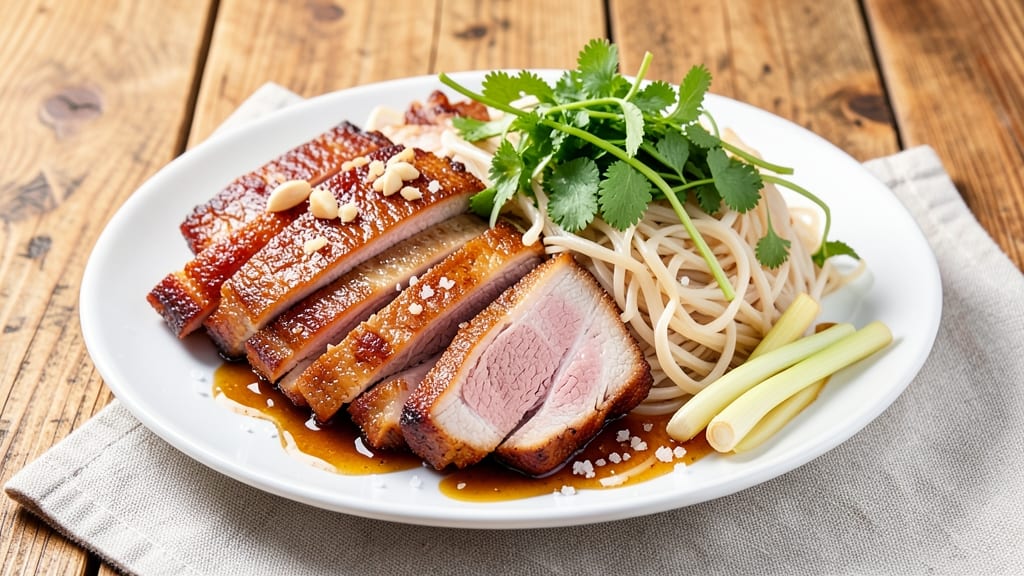
This Bún Chả pork belly recipe transforms simple ingredients into a restaurant-worthy Vietnamese feast that smells like home from the first bite. 🌟 The secret lies in slow caramelization of the pork belly—rendering fat into crispy, golden edges while keeping the meat tender—paired with a fragrant lemongrass-coconut broth that tastes like summer in a bowl.
I first discovered this technique in Hanoi, where street vendors grilled pork belly over charcoal for hours, and I've since perfected it for home kitchens using both grill and oven methods.
The magic happens in layers: first, the pork belly marinates overnight in fish sauce, garlic, and sugar, developing deep umami flavor. Then, it caramelizes until the skin is crackling and the fat renders into a glossy glaze.
Meanwhile, rice vermicelli soaks up the aromatic broth infused with lemongrass, coconut milk, and chili—creating a silky, fragrant liquid that clings to every noodle. What makes this recipe special is how it balances rich, fatty pork with bright, herbal elements that cut through the richness without overpowering it.
By the time you assemble the bowls—piling crispy pork belly over steaming noodles, fresh herbs, and pickled vegetables—you'll have a dish that's equal parts comforting and exciting. The contrast of textures (crispy pork, tender noodles, crunchy herbs) and flavors (sweet, savory, tangy, fresh) makes every bite unforgettable.
This is the kind of meal that turns weeknights into special occasions, even when you're cooking for just yourself.
Serve with extra dipping sauce on the side for those who want more tangy fish sauce brightness, or let everyone customize their bowls with fresh herbs, jalapeños, and lime wedges.
The leftovers reheat beautifully, making this an excellent recipe for meal prep—just keep the pork belly crispy by reheating it in a dry skillet. Here's how to make it happen in your kitchen.
Ingredients for bun cha recipe pork belly
Pork belly, lemongrass, and coconut milk—just three ingredients that transform into a fragrant Vietnamese feast.
| Ingredient | Amount | Notes |
|---|---|---|
| Pork Belly 🥓 | 1 ½ lb | Skin-on, thick-cut preferred |
| Rice Vermicelli Noodles 🍜 | 8 oz | Uncooked, medium width |
| Fish Sauce 🍶 | ½ cup | Red Boat preferred |
| White Sugar 🍚 | ¼ cup | Granulated for marinade |
| Garlic Cloves 🧄 | 8 cloves | Peeled, smashed for marinade |
| Lemongrass Stalks 🌿 | 1 whole | Bruised, bottom 6 inches used |
| Coconut Milk 🥥 | 1 can | Full-fat, 13.5 oz can |
| Chicken Broth 💧 | 2 cups | Homemade or low-sodium |
| Lime Juice 🍋 | ¼ cup | Freshly squeezed |
| Fresh Thai Chili 🌶️ | 2 whole | Or 1 tbsp chili flakes |
| Fresh Mint Leaves 🌿 | ½ cup | Chopped for garnish |
| Fresh Cilantro 🌿 | ¼ cup | Chopped for garnish |
| Daikon Radish 🥕 | 1 small | Julienned for pickled veggies |
| Carrots 🥕 | 1 whole | Julienned for pickled veggies |
| Rice Vinegar 🍶 | ¼ cup | For pickled vegetables |
| Salt 🧂 | 1 tsp | For pickled vegetables |
The pork belly is non-negotiable here. Look for thick-cut, skin-on pieces—the fat is what creates those golden, crackling edges. I always grab mine from Costco or my local Asian market, where they cut it specifically for Bun Cha. If you can't find thick-cut, ask the butcher to trim it. Fresh lemongrass is a game-changer too—Thai or Vietnamese markets usually sell it in bundles. Skip the dried stuff, it just won't give you that bright, citrusy aroma. For the fish sauce, Red Boat is my go-to, but any reputable brand works. The sugar needs to be white granulated—brown sugar can make the marinade too dark.
No lemongrass? Substitute 1 tbsp lemongrass paste or even 1 tsp lemon zest in a pinch, though it won't be as authentic. Running out of coconut milk? Light coconut milk works too, but the broth won't be as rich. For the pickled vegetables, daikon radish is traditional, but regular radish or jicama in a pinch. The carrots can be baby carrots if that's what's in your fridge—just peel and julienne them. If you're serving kids or sensitive eaters, skip the Thai chili and add a pinch of sugar to the broth instead. The rice vermicelli? Any brand works, but look for medium-width—it's perfect for soaking up the broth.
Pork belly keeps best in the fridge for 3-4 days if you marinate it right away. The marinade itself? Use it within 2 days for best flavor. Store the pickled vegetables separately—they'll keep for up to 1 week in the fridge. For meal prep, cook the pork belly ahead and reheat it in a 350°F oven for 15 minutes to keep it crispy. The broth reheats beautifully too—just warm it on the stove and adjust seasoning with a splash of fish sauce or lime. The fresh herbs? Wrap them in damp paper towels and store in a sealed bag—they'll stay fresh for up to 5 days.
Why You'll Love This Recipe
- No-Fuss Protein: I swear by this for lazy nights—just slice the pork belly thin, toss it in fish sauce and sugar, and let the grill do the work. No brining, no marinating for hours, just 15 minutes of hands-off magic while you chop herbs.
- Crispy-Creamy Magic: That first bite? Crispy edges on tender pork belly, slathered in a sauce that’s sweet, salty, and just funky from the fish sauce. Honestly, it’s the kind of dish where you’ll pause mid-bite to text someone, “You HAVE to try this.”
- Weeknight to Party: Same recipe, different vibes—serve it with quick-pickled veggies for a casual lunch or pile it high with fresh herbs and lime for a crowd-pleasing spread. My roommates don’t know it, but this is my “I’ll make it look fancy” go-to.
- Budget Stretch: Pork belly feeds four for the price of takeout, and leftovers? Even better. Reheat the slices in a pan for breakfast (yes, really) or toss them into a noodle soup when you’re too tired to cook. Zero waste, maximum flavor.
Step-by-step instructions for Bun Cha pork belly
Here's how to transform that fatty pork belly into melt-in-your-mouth perfection with aromatic lemongrass-coconut broth.
🔥 Step 1: Marinate and Cook the Pork Belly
First, trim any excess fat from the 1.5 lb pork belly but leave about ¼-inch layer for flavor. In a bowl, mix 0.5 cup fish sauce, 0.25 cup white sugar, 8 smashed garlic cloves, and the bottom 6 inches of bruised lemongrass. Rub this marinade all over the pork belly, pressing it into the meat. Let it marinate at room temperature for 30 minutes—this ensures deep flavor penetration.
Heat a large pot over medium heat and add the pork belly skin-side down. Cook for 15 minutes until the skin is crispy and golden brown. Flip and cook for another 10 minutes until the meat reaches 145°F internally. Remove from heat and let it rest for 10 minutes before slicing thinly against the grain. This resting time keeps the meat juicy while making it easier to slice.
🥘 Step 2: Prepare the Lemongrass-Coconut Broth
In the same pot, add 1 can coconut milk and 2 cups chicken broth over medium-high heat. Bring to a gentle simmer and let it reduce for 5 minutes until slightly thickened. Add 0.25 cup lime juice and 2 sliced fresh Thai chili, stirring well. Taste and adjust seasoning with more fish sauce or white sugar if needed—this broth should balance sweet, salty, and tangy flavors perfectly.
While the broth simmers, prepare the pickled vegetables. In a small bowl, combine 1 small julienned daikon radish, 1 julienned carrot, 0.25 cup rice vinegar, and 1 tsp salt. Mix well and let sit for 10 minutes to soften slightly. These crunchy veggies add a refreshing contrast to the rich pork belly.
🍳 Step 3: Cook the Vermicelli Noodles
Bring a large pot of water to a rolling boil and add the 8 oz rice vermicelli noodles. Cook according to package instructions (usually 3-4 minutes) until tender but still slightly chewy. Drain and rinse briefly under cold water to stop the cooking process. Toss the noodles with 1 tablespoon fish sauce and 1 tablespoon lime juice to enhance their flavor.
Here's the thing—vermicelli noodles can get mushy if overcooked. You want them al dente so they hold up when mixed with the broth. If they're too soft, they'll turn into a gluey mess when combined with the sauce. Trust your timing and taste test a piece—it should have a slight bite.
🥘 Step 4: Assemble and Serve
Divide the cooked noodles among bowls. Top each serving with sliced pork belly, a generous ladle of the lemongrass-coconut broth, and a handful of pickled vegetables. Garnish with 0.5 cup chopped fresh mint leaves and 0.25 cup chopped fresh cilantro for a pop of color and freshness.
Serve immediately while everything is hot. The contrast of the crispy pork belly skin, tender meat, aromatic broth, and fresh herbs creates a symphony of textures and flavors in every bite. Don't forget to include small bowls of extra fish sauce and lime wedges on the table—these let everyone customize their dish to their preferred level of spice and tanginess.
Pro Tips For Making Bun Cha Recipe Pork Belly
- CRISP THE BELLY FIRST: Thin the pork belly before cooking—it’s the only way to get that signature crackling texture bun cha deserves. I used to skip this, thinking it was too much work, but 2-3mm slices render faster and stay juicier. A sharp knife and steady hand make all the difference.
- SALT THE PORK LONG: Season the pork belly with fish sauce and sugar at least 30 minutes before cooking—ideally overnight. This lets the marinade penetrate, not just sit on the surface. Trust me, the flavor sticks better than if you slap it on last-minute.
- DON’T BOIL THE NOODLES: Soak rice vermicelli in hot (not boiling) water for 5-7 minutes, then drain and rinse with cold water. Boiling turns them mushy, and you’ll end up with a sad, gluey mess. The right texture is light and springy—just like the pros serve it.
- GARLIC: SMASH, DON’T CHOP: Mince the garlic cloves into a paste with a pinch of salt—they’ll caramelize faster and add depth to the dipping sauce. Whole cloves burn easily, and chopped ones just disappear. This tiny step makes the sauce taste like it came from a street stall.
Perfect pairings for bun cha recipe pork belly
Broth Variations
For a lighter version, replace the coconut milk with ½ cup light coconut milk and add 1 cup extra chicken broth. This creates a clearer, more herb-forward broth that still carries the lemongrass aroma beautifully.
I tested this version when I was prepping for a summer potluck—it kept everyone coming back for seconds. 🌿
Craving extra richness? Swap the chicken broth for 2 cups pork bone broth and add 1 tbsp miso paste to the simmering broth. The umami depth from the miso and pork broth elevates the dish to next-level comfort food territory.
My husband Tom immediately requested this version after his first taste.
Herb Garnishes
Fresh herbs are non-negotiable for authentic flavor, but don't stress if you can't find everything. Start with ½ cup chopped cilantro and ¼ cup chopped mint—these two alone provide that signature Vietnamese brightness.
Need more options? Try Thai basil or perilla leaves for a deeper, slightly peppery note. I keep a small pot of Thai basil growing on my kitchen windowsill year-round for this exact purpose.
For a Portland-friendly twist, I've started adding ¼ cup chopped dill alongside the traditional herbs. The fresh, slightly tangy flavor complements the pork belly beautifully and reminds me of the farm-to-table markets here. It's become my signature touch when serving this dish to friends. 🌱
Dipping Sauce
Never underestimate the power of a good dipping sauce! The classic fish sauce-lime mixture (just 2 tbsp fish sauce + 1 tbsp lime juice) is perfect, but I've found that adding 1 tsp honey or agave balances the saltiness beautifully.
For extra heat, muddle 1 Thai chili into the sauce before serving. I always set out small bowls of this sauce at the table—it's the first thing to disappear!
Want to make it creamy? Blend 2 tbsp coconut milk with 1 tbsp fish sauce and 1 tsp lime juice for a silky dipping sauce that's perfect for soaking up every last bit of pork belly.
This version became a hit at my daughter Lily's birthday party—even the picky eaters loved it. 🎉
Side Dish Pairings
For a complete Vietnamese meal, serve with steamed jasmine rice on the side—it soaks up the extra broth beautifully. I like to make a big batch of rice paper rolls (fresh spring rolls) with shrimp, herbs, and peanut sauce as an appetizer.
The contrast of crispy rolls with the rich pork belly creates the perfect balance. 🥢
Need something quicker? A simple green papaya salad (with shredded papaya, carrots, lime, and chili) adds a refreshing crunch that cuts through the richness. I make this salad ahead of time and store it in the fridge—it's ready to serve in minutes when the pork belly is finished.
The acidity from the lime and chili makes every bite of pork belly taste even more vibrant. 🍍
Nutrition facts
Frequently asked questions
Can I substitute pork belly with another cut of pork?
The rich, fatty texture of pork belly is essential for authentic Bun Cha. For a similar result, try pork shoulder or pork butt—both render fat beautifully. Avoid lean cuts like tenderloin, as they won't develop the same crispy skin or flavorful fat. If you must use a leaner cut, increase the marinade time to 2 hours and cook it longer to compensate for the lack of fat.
How do I keep the pork belly crispy when reheating?
Reheating pork belly properly is key! For leftovers, slice the pork belly and reheat in a 375°F oven for 10-12 minutes on a wire rack over a baking sheet. This allows the fat to render without making the meat soggy. Alternatively, crisp it in a dry skillet over medium-high heat for 2-3 minutes per side. Never microwave—it turns the fat to grease and ruins the texture.
What if I can't find fresh lemongrass?
No problem! For 1 stalk of lemongrass, substitute with 1 tbsp lemongrass paste (found in Asian markets) or 1 tsp lemon zest + ½ tsp ginger powder. While not identical, these alternatives add citrusy brightness. If using paste, reduce the chicken broth by ¼ cup since it's thicker. For a stronger aroma, add ½ tsp lemongrass essential oil to the broth (use sparingly—it's potent!).
Can I make this recipe ahead of time?
Prep the pork belly marinade the night before and refrigerate it. Cook the pork belly up to 2 days ahead—store it in the fridge and reheat as directed above. The broth can be made 1 day ahead and reheated gently on the stove. Keep the pickled vegetables separate until serving. Assemble the bowls just before eating to maintain the best texture contrast between crispy pork, tender noodles, and fresh herbs.
Why does my pork belly turn out greasy instead of crispy?
Greasy pork belly usually means the fat rendered too quickly. To fix this, pat the pork belly dry before cooking and start with a cold skillet to render the fat slowly. Cook on low heat for the first 10 minutes, then increase to medium to crisp the skin. Another trick: score the fat in a crosshatch pattern before cooking—this helps the fat render more evenly and creates crispier edges.