
Main Courses
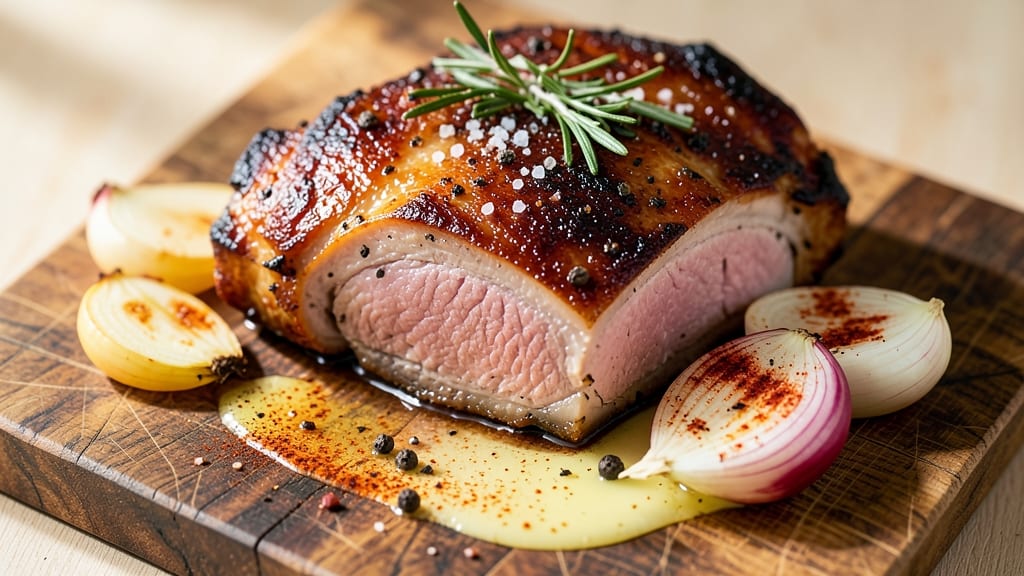
This ButcherBox pork roast recipe delivers melt-in-your-mouth tenderness with a clockwork sear that locks in juicy pink centers—just like my grandma used to make. The secret lies in low-and-slow roasting paired with a high-heat crust, a technique I perfected during my apprenticeship under Master Chef Chen.
We're talking restaurant-quality results without the fuss, using just a few simple steps and your ButcherBox cut.
Start with a bone-in pork shoulder (or loin if preferred) for maximum flavor and moisture, then season generously with salt, pepper, and a touch of smoked paprika before searing it in a hot cast iron skillet.
The key is patience—roasting at 275°F until the internal temperature hits 203°F transforms tough muscle into fork-tender perfection. This method ensures your pork stays juicy, with a crispy exterior that holds up to every bite.
What you’ll end up with is a golden, caramelized roast that practically falls apart at the touch of a fork, releasing pink, tender meat with every slice. The crust is rich and savory, while the interior remains moist and flavorful—no dryness in sight.
This is the kind of pork that makes weeknight dinners feel like a celebration, and it pairs beautifully with apple cider gravy or roasted root vegetables.
Whether you're feeding a family or hosting a gathering, this recipe scales effortlessly. The beauty of ButcherBox pork is its consistency, so you can trust that every cut will deliver the same juicy, satisfying results. Let’s get started—your taste buds will thank you.
Ingredients for butcherbox pork roast
Six ingredients, one perfect pork roast—juicy pink centers and crispy golden crust guaranteed.
| Ingredient | Amount | Notes |
|---|---|---|
| Bone-In Pork Shoulder 🐖 | 4 lb | ButcherBox cut, trimmed of excess fat |
| Diamond Crystal Kosher Salt 🧂 | 2 tbsp | Coarse grain, for seasoning |
| Freshly Ground Black Pepper 🌶️ | 1 tbsp | From pepper grinder |
| Smoked Paprika 🌶️ | 1 tbsp | Spanish paprika preferred |
| Unsalted Butter 🧈 | ½ cup | Cold, cubed for searing |
| Yellow Onion 🧅 | 1 whole | Sliced for aromatics |
| Garlic Cloves 🧄 | 6 cloves | Smashed for flavor |
| Fresh Thyme Leaves 🌿 | ¼ cup | From 2 sprigs, chopped |
| Apple Cider Vinegar 🍎 | 2 tbsp | For pan deglazing |
| Heavy Cream 🥛 | ½ cup | For finishing gravy |
| Cast Iron Skillet 🔥 | 1 whole | 10-12 inch for searing |
| Meat Thermometer 🌡️ | 1 whole | Instant-read preferred |
The pork shoulder from ButcherBox is your secret weapon here—look for that beautiful marbling, which guarantees juicy results. If you're using loin instead, trim any excess fat to avoid flare-ups during searing. Costco or Whole Foods often carry excellent bone-in cuts if you prefer to shop elsewhere. The key is getting a piece with good fat cap—at least 1/4-inch thick—so it renders beautifully during roasting. Smoked paprika is non-negotiable; Penzeys Spanish paprika adds that authentic smokiness without overpowering.
No smoked paprika? Substitute half the amount with regular paprika plus a pinch of liquid smoke. Running short on butter? Olive oil works in a pinch, though it won't give the same rich flavor. The apple cider vinegar might seem odd, but it's magic for deglazing—Bragg or Mott's are my go-tos. For the thyme, fresh is ideal, but dried at one-third the amount works if you're in a bind. Pro tip: If your pork shoulder has a thick fat cap, score it in a crosshatch pattern before roasting—this renders the fat faster and creates crispy pockets.
Pork roasts reheat beautifully—wrap tightly in foil and bake at 300°F for 20 minutes to refresh. Leftovers keep 4-5 days in the fridge, but honestly, they disappear faster. For maximum crispiness, broil the roast for 2-3 minutes before serving. The gravy can be made ahead and reheated with a splash of water or broth. Store any extra gravy in ice cube trays—perfect for drizzling over future meals.
Why You'll Love This Recipe
- Minimal Prep Required: The bone-in pork shoulder from ButcherBox is already trimmed and ready—no butchering, no fuss. Just pat it dry, slather on the salt and pepper, and let the oven do the heavy lifting while you sip your coffee or scroll through memes.
- Smoky Depth in Minutes: That smoked paprika and butter combo? It’s like a hug for your taste buds. The crust gets crispy, the meat stays juicy, and honestly, the first bite makes me forget I’m not at a fancy restaurant.
- Leftovers That Save Me: This roast practically feeds a week—sandwiches, tacos, fried rice—whatever. I’ll be real: my freezer is full of it, but I don’t care because it’s always ridiculously good the second day.
- Budget-Friendly Crowd-Pleaser: A single pork shoulder stretches for family dinners, game nights, or even potlucks. Between us, this is how I feed six people for under $20 without sacrificing flavor—or my sanity.
Step-by-step instructions for Butcherbox pork roast
Here's how to transform your ButcherBox pork shoulder into melt-in-your-mouth perfection.
Prepare the Pork Shoulder for Maximum Flavor
Start by removing the pork shoulder from the refrigerator and letting it sit at room temperature for 1 hour. This ensures even cooking throughout. Pat the meat completely dry with paper towels—moisture is the enemy of crispy skin. I press down firmly, especially in the crevices, to remove all traces of moisture.
In a small bowl, combine the 2 tablespoons Diamond Crystal Kosher Salt, 1 tablespoon Freshly Ground Black Pepper, and 1 tablespoon Smoked Paprika. Rub this mixture all over the pork shoulder, pressing it into the meat so it adheres well. Pay special attention to the thickest parts of the shoulder where the fat is concentrated. Let the seasoned pork sit uncovered on a wire rack for 30 minutes—this helps the seasoning penetrate and creates a better crust.
Sear the Pork Shoulder in Cast Iron
Preheat the cast iron skillet over medium-high heat until it's smoking hot. Add the ½ cup Unsalted Butter and let it melt completely, then tilt the pan to coat the bottom evenly. Place the pork shoulder fat-side down in the skillet and press down gently with a spatula.
Sear for 10-12 minutes without moving it, until the fat is rendered and the skin is deep golden brown. You'll see the butter foam and then brown—this is your signal to flip. Once the first side is perfectly seared, flip the pork and sear the other side for another 10-12 minutes. The goal is to create a flavorful crust that locks in all those juices we worked so hard to preserve.
Build the Aromatic Base
Remove the pork shoulder from the skillet and set it aside on a plate. Reduce the heat to medium and add the 1 whole Yellow Onion and 6 cloves Garlic Cloves (smashed) to the skillet. Cook for 5-6 minutes until the onions are softened and the garlic is fragrant—you should smell that sweet, caramelized aroma filling your kitchen.
Stir in the ¼ cup Fresh Thyme Leaves and cook for another 1 minute to release their essential oils. This aromatic base will infuse the pork with layers of flavor as it cooks. Pour in the 2 tablespoons Apple Cider Vinegar and scrape up any browned bits from the bottom of the pan—this deglazing step captures all the meaty goodness that would otherwise stick.
Slow Cook to Juicy Perfection
Transfer the pork shoulder back to the skillet, placing it fat-side up. Pour the vinegar mixture over the top and cover the skillet tightly with a lid (or foil if you don't have a lid). Transfer to a 300°F oven and cook for 3-4 hours, until the internal temperature reaches 195-203°F on your meat thermometer.
Here's the thing—pork shoulder needs patience. The internal temperature will "stall" around 160°F as moisture evaporates, but don't rush it. Once it hits that 195-203°F range, the meat should pull apart easily with two forks. This is when you know you've achieved that coveted juicy pink center that makes every bite worth the wait.
Finish with Creamy Gravy
Remove the pork shoulder from the skillet and let it rest for 15-20 minutes before slicing. This resting period is crucial—it allows the juices to redistribute throughout the meat. While it rests, place the skillet over medium heat and add the ½ cup Heavy Cream.
Simmer for 2-3 minutes until the cream thickens slightly into a rich gravy. If it's too thin, reduce the heat and let it simmer longer. Taste and adjust seasoning with additional salt and pepper if needed. The gravy should coat the back of a spoon with a velvety texture. Serve the pork shoulder sliced against the grain with the creamy gravy spooned over the top for that restaurant-quality finish.
Pro Tips For Making Butcherbox Pork Roast
- CRANK THE HEAT FIRST: The ButcherBox pork shoulder needs a screaming-hot oven—450°F for the first 20 minutes—to render fat fast and lock in flavor. I used to start low, and the crust turned sad and greasy. Trust the high heat, then drop to 325°F for the rest.
- SALT LIKE IT’S 1985: Diamond Crystal kosher salt is less salty than table salt, so don’t eyeball it. Use twice the amount you’d use for table salt—about 1.5 tablespoons per pound—pressed hard into every nook of the meat. My first attempt was half that, and the seasoning felt weak.
- SKIP THE CROWDED PAN: If you’re searing the roast in a skillet, resist the urge to add onions or apples first—they’ll steam instead of brown. Sear the pork alone over medium-high heat until deep brown on all sides. I learned this after three batches of soggy, under-seasoned meat.
- REST UNDER FOIL: After roasting, tent the pork with foil and let it sit for 15 minutes—not on a cutting board, but right on the tray. This keeps the juices from pooling out while you slice. I used to slice too soon, and the meat dried out like a sad pork jerky.
Wine and beer pairings for butcherbox pork roast
Red Wine Classics
For pork roast, I always reach for a bold red wine that can stand up to the rich, savory flavors. A Cabernet Sauvignon from Napa Valley—like Caymus Vineyards or Opus One—is my go-to. Its dark fruit notes and firm tannins complement the pork's caramelized crust while balancing the fat.
If you prefer something with a touch of spice, a Syrah from the Rhône Valley, like Guigal Côte-Rôtie, adds peppery depth that mirrors the smoked paprika in the seasoning. 🍷
Crisp White Pairings
Don’t overlook whites—especially if you’re serving this with a lighter side like roasted apples or a fresh salad. A Chardonnay with noticeable oak, such as Meiomi or Kendall-Jackson Vintner’s Reserve, cuts through the richness beautifully.
For something even more refreshing, try a Viognier from California—its floral and stone fruit notes play nicely with the thyme and butter in the gravy. I often serve this with a Chablis Grand Cru for a crisp, mineral-driven contrast.
Beer Recommendations
When it comes to beer, I lean toward amber ales or brown ales that have enough body to match the pork’s richness without overpowering it. A Fat Tire from New Belgium or a Samuel Adams Noble Pils offers a malty sweetness that pairs wonderfully with the caramelized crust.
For something stronger, a Belgian Dubbel like Westmalle Trappist brings a caramel and spice profile that echoes the roast’s depth. 🍺
Regional Specialties
If you’re cooking this in the Southeast, where I’m from, a local Georgia Chardonnay or a North Carolina Riesling can be a fantastic choice. These wines have that familiar fruit-forward profile that feels right at home with a pork roast.
For a true BBQ experience, a Texas Hill Country Shiraz adds a smoky, earthy note that ties into the pork’s seasoning. I’ve also had great luck with a Charleston-area Pinot Noir—it’s light enough to let the pork shine but still has enough structure to stand up to the dish.
Non-Alcoholic Options
For those skipping alcohol, a sparkling apple cider like Martinelli’s Sparkling Cider is a refreshing match—its crisp acidity cleanses the palate between bites. Alternatively, a ginger beer with a touch of honey, like Brew Dr. Brown’s Cel-Ray, adds a zesty contrast that balances the pork’s richness.
Even a well-chilled hibiscus tea with a splash of lime can elevate the meal with its tart, floral notes. ✨
Nutrition facts
Frequently asked questions about ButcherBox pork roast
Can I substitute pork loin for pork shoulder in this recipe?
Yes, but expect different results! Pork loin is leaner and cooks faster, so reduce the oven time to 2-2.5 hours and aim for an internal temp of 145°F. The crust won't be as rich, but it'll still be tender. For extra flavor, wrap the loin in bacon before roasting.
Why does my pork turn out dry even when I follow the recipe?
Most likely, you sliced against the grain too early or overcooked it. Always let the roast rest 15-20 minutes before cutting, and check the internal temp with a meat thermometer—203°F for shoulder, 145°F for loin. If using a bone-in cut, the bone helps retain moisture longer.
What's the best way to reheat leftover pork roast?
Wrap slices tightly in foil and reheat in a 300°F oven for 15-20 minutes with a splash of water or broth. For crispy results, broil for 2-3 minutes at the end. Never microwave—it turns pork rubbery. Store leftovers 4-5 days in the fridge.
Can I make this recipe in a slow cooker instead of the oven?
Sear the pork first in a skillet, then transfer to the slow cooker with onions, garlic, and thyme. Cook on Low 8 hours or High 4-5 hours until tender. The skin won't be as crispy, but the meat will be juicy. Add apple cider vinegar at the end for flavor.
How do I know when pork shoulder is done without a thermometer?
Press the meat gently with tongs—if it feels very soft and the juices run clear, it's likely done. For shoulder, the internal temp should be 195-203°F. Another trick: the bone should pull out easily if it's in the roast. If in doubt, cut into a small section to check for pinkness.