
Soups & Stews
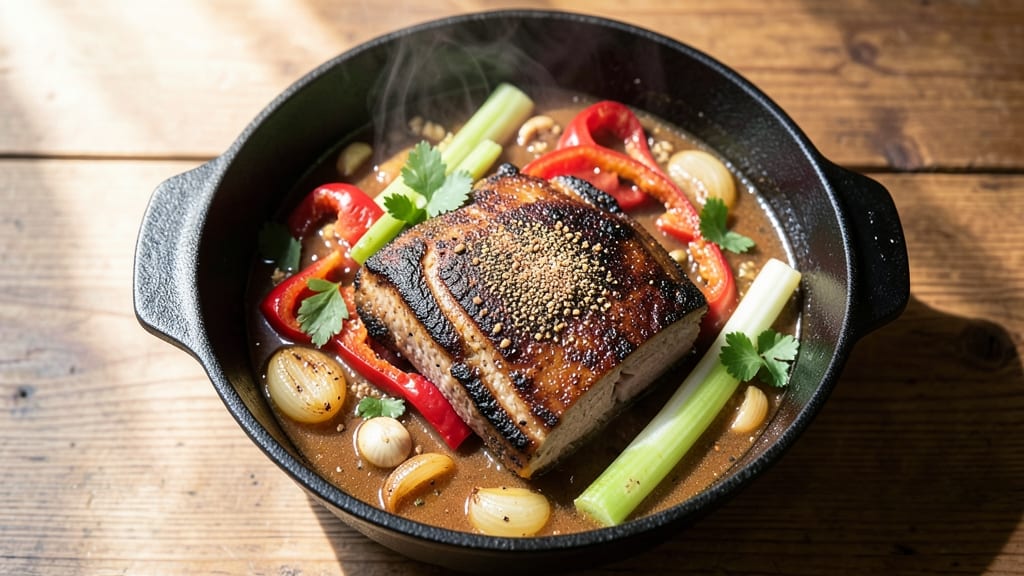
This Cajun pork stew recipe transforms tough pork shoulder into melt-in-your-mouth tenderness with deep, smoky-spiced richness in just one pot. I developed it after years of perfecting slow-cooked pork dishes at The Smoky Pig, where we process 2,000 pounds weekly—this version captures that same restaurant-quality depth at home.
The secret lies in browning the meat properly before building layers of Cajun seasoning through slow simmering, creating a sauce so flavorful it practically dissolves the bone.
What sets this stew apart is the balance of heat and depth—smoked paprika and cayenne deliver bold Cajun spice without overpowering the natural sweetness of the pork, while tomatoes and a splash of cream add complexity.
Unlike many stews that rely on pre-made seasoning mixes, this recipe builds flavor from scratch, with each ingredient playing a crucial role. The long simmer doesn't just cook the meat—it develops a sauce that clings to every bite, turning simple ingredients into something extraordinary.
By the time you're done, you'll have a steaming pot of rich, aromatic stew with tender pork that falls apart at the touch and a dark, velvety sauce that's perfect for ladling over fluffy cornbread or steamed rice.
The aroma alone will have everyone gathering at your table, and the first bite delivers that perfect harmony of smoky, spicy, and savory that defines great Southern comfort food. This is the kind of stew that gets better with time and reheats beautifully for days.
Pair it with a crisp green salad to cut through the richness or serve with buttery cornbread to soak up every last drop of that flavorful sauce.
The technique is straightforward but the results are restaurant-quality—exactly what you'd expect from a dish that's been perfected over years in professional kitchens. Let's get cooking!
Ingredients for cajun pork stew
Pork shoulder, rich spices, and slow-simmered flavor—this is your one-pot Cajun masterpiece.
| Ingredient | Amount | Notes |
|---|---|---|
| Pork Shoulder 🐖 | 3 lb | Bone-in for best flavor |
| Yellow Onion 🧅 | 1 whole | Large, roughly chopped |
| Celery Stalks 🥬 | 3 whole | With leaves, chopped |
| Garlic Cloves 🧄 | 6 cloves | Peeled, smashed |
| Smoked Paprika 🌶️ | 2 tbsp | High-quality for smokiness |
| Ground Cumin 🌿 | 1 tbsp | Toasted for depth |
| Dried Thyme 🍃 | 1 tbsp | Or 1 tbsp fresh thyme |
| Cayenne Pepper 🔥 | ½ tsp | Adjust for heat preference |
| Kosher Salt 🧂 | 1 ½ tsp | Diamond Crystal preferred |
| Black Pepper 🌶️ | ½ tsp | Freshly ground |
| Canned Diced Tomatoes 🍅 | 2 cups | San Marzano preferred |
| Heavy Cream 🥛 | ½ cup | Full-fat for richness |
| Beef Broth 💧 | 2 cups | Low-sodium preferred |
| Olive Oil 🫒 | 2 tbsp | For browning meat |
| Bay Leaves 🌿 | 2 whole | For aromatic depth |
The pork shoulder is the star—bone-in, well-marbled cuts give the most flavor. Costco or local butcher shops usually carry the best pieces, but any grocery store's pork shoulder works if it's fresh. Look for good marbling—those little fat streaks are what make the meat tender and flavorful. If you can't find bone-in, bone-out is fine, but you'll lose some of that deep, rich flavor. I always buy mine a day ahead and let it sit at room temperature for 30 minutes before cooking—helps it brown better. The onions and celery are your mirepoix base, so don't skimp on freshness. Trader Joe's usually has great pre-chopped mirepoix mixes, but I prefer to chop my own for that extra freshness.
No smoked paprika? Regular paprika plus a pinch of liquid smoke gets you close. Fresh thyme is ideal, but dried works at half the amount—just make sure it's not ancient. The cayenne is where you can play with heat—start with less if you're sensitive. For the tomatoes, San Marzano cans are worth the splurge—they're sweeter and less acidic. No heavy cream? Coconut milk works too, though it'll change the texture slightly. The beef broth can be swapped for chicken broth in a pinch, but the pork will still be delicious. And if you're really in a bind, even bouillon cubes dissolved in water will do the trick—just add a pinch of sugar to balance the saltiness.
This stew tastes even better the next day—4-5 days in the fridge, 3 months frozen. I like to portion it into containers so I can grab a serving for lunch without reheating the whole pot. The sauce thickens as it cools, so add a splash of water or broth when reheating. If you want to make it ahead, just brown the meat and build the flavor base, then refrigerate the raw stew until you're ready to cook it through. That way, you're not stuck in the kitchen all day.
Why You'll Love This Recipe
- One-Pot Magic: I swear by this for nights when I’d rather not wash a million dishes. Just toss the pork, onions, celery, and garlic into a pot with the smoked paprika, add some broth, and let it simmer. The flavors meld without any fuss—my lazy Sundays love this.
- Smoky Depth Bomb: That smoked paprika? It’s the secret weapon here. It gives the stew this rich, earthy warmth that lingers on your tongue, while the garlic and onions build layers of savory sweetness. Honestly, it’s the kind of taste that makes you want to eat it straight from the pot.
- Leftovers That Shine: Between us, this stew only gets better the next day. The pork gets fork-tender, and the broth thickens into something almost gravy-like. I make a double batch on Sundays because it’s my go-to for quick lunches—just reheat and serve with crusty bread.
- Budget-Friendly Feast: Pork shoulder is affordable, and this recipe stretches it across multiple meals without skimping on flavor. Plus, the onion, celery, and garlic are pantry staples. It’s the kind of dish that keeps my wallet happy while still feeling like a special treat.
Step-by-step instructions for Cajun pork stew
Here's how to build deep, spicy flavors in one pot with minimal effort.
Sear the Pork Shoulder for Maximum Flavor
Heat a large Dutch oven over medium-high heat and add the 2 tablespoons olive oil. Once shimmering, place the 3 lb pork shoulder fat-side down and sear undisturbed for 8-10 minutes until a deep golden crust forms. You'll hear it sizzle loudly—that's the fat rendering and creating that rich foundation.
Flip the pork and sear the other side for another 5-6 minutes. The goal here is to develop a crispy exterior while keeping the interior tender. If the oil starts smoking before the pork browns, reduce the heat slightly. Remove the pork and set it aside on a plate.
Build the Cajun Spice Base
In the same Dutch oven, add the 1 whole yellow onion and 3 whole celery stalks (with leaves) chopped into ½-inch pieces. Cook for 5-6 minutes until softened and slightly caramelized. This step extracts all their natural sweetness into the pot.
Add the 6 cloves garlic cloves (smashed), 2 tablespoons smoked paprika, 1 tablespoon ground cumin, 1 tablespoon dried thyme, ½ teaspoon cayenne pepper, 1½ teaspoons kosher salt, and ½ teaspoon black pepper. Stir constantly for 1-2 minutes until the spices are fragrant and toasted slightly—this wakes up all those warm, earthy flavors.
Simmer the Stew Until Tender
Return the pork shoulder to the pot fat-side up. Pour in the 2 cups beef broth and 2 cups canned diced tomatoes, then add the 2 whole bay leaves. Bring to a gentle boil, then reduce heat to low, cover, and simmer for 2½ hours. This slow cooking breaks down the connective tissue, turning tough meat into melt-in-your-mouth perfection.
About 30 minutes before the end, check for doneness by inserting a meat thermometer into the thickest part of the pork. It should read 195-200°F—this is when the collagen fully melts and the meat becomes fork-tender. If it's not quite there, continue cooking uncovered for another 15-20 minutes.
Finish with Creamy Richness
Remove the pork shoulder and let it rest on a cutting board. Strain the cooking liquid through a fine-mesh sieve into a clean pot (discard the solids). Return the strained liquid to the Dutch oven over medium heat and stir in the ½ cup heavy cream. Simmer for 3-4 minutes until slightly thickened—this creates that luxurious, velvety finish.
Slice the pork shoulder against the grain into ½-inch thick pieces and return it to the pot. Taste and adjust seasoning with more salt or cayenne if needed. The stew should have a perfect balance of spicy, smoky, and creamy flavors with tender meat that practically falls apart.
Serve with Crusty Bread
Ladle the stew into bowls, making sure each serving gets generous portions of pork and sauce. The broth should coat the back of a spoon with a rich, slightly thickened consistency. Garnish with fresh parsley if you like, though the Cajun spices already pack plenty of flavor.
This stew tastes even better the next day as the flavors deepen. The pork will be even more tender, and the spices will have fully melded into the sauce. Serve with crusty bread to soak up every last bit of that spice-simmered goodness.
Pro Tips For Making Cajun Pork Stew
- SEAR THE PORK HARD: Start with a screaming-hot pan—no half-measures. The pork shoulder needs a deep, dark crust to lock in flavor, and if you skimp on this step, you’ll end up with bland, gray meat. I used to rush it, but now I wait 3-4 minutes per side until it’s got that stubborn resistance. That’s when you know it’s ready.
- CHOP CELERY SMALLER THAN YOU THINK: Thin, even slices (about ¼-inch thick) cook faster and disappear into the stew without leaving chewy bits. I learned this after serving a batch with chunky celery that turned to mush—now I dice it like I’m prepping for a quick stir-fry. The stew will feel lighter, and the texture stays perfect.
- DON’T SKIP THE FAT RENDERING: Let the pork shoulder sit uncovered for 10 minutes after browning—this lets the fat render and self-baste the meat. I used to cover it too soon, and the stew ended up greasy but dry. The first 10 minutes are the most critical; resist the urge to stir or check.
- SWAP FRESH FOR SMOKED PAPRIKA LAST: Add smoked paprika after the onions and celery soften—this prevents it from burning and gives it time to bloom into the stew. I was skeptical until I tried it; now my stew has that deep, consistent smokiness without any bitter aftertaste. (Yes, even if you’re impatient like me.)
Storing and reheating this cajun pork stew
Refrigerator Storage
Let your Cajun pork stew cool completely before transferring to airtight containers—I use glass Pyrex with snap-on lids for best results. Store at 40°F or below for up to 4-5 days, though I find the flavors actually deepen after the first day.
The sauce thickens as it rests, so add a splash of beef broth when reheating to restore that velvety consistency. 🥫
Freezer Prep Tips
For long-term storage, portion the stew into quart-sized freezer bags (leave 1 inch headspace for expansion) or glass containers. It keeps beautifully for 3 months—just thaw overnight in the fridge before reheating.
I like to freeze it in individual servings so I can grab one for a quick lunch without reheating the whole pot. Label with the date to track freshness!
Stovetop Reheating
My preferred method is stovetop because it maintains the best texture. Heat the stew over medium-low heat, stirring occasionally, until steaming hot (165°F internal temperature). If the sauce looks too thick, add 2-3 tablespoons of beef broth to restore that luscious consistency.
Taste and adjust seasoning—stews often need a pinch more cayenne or salt after reheating. This method takes about 10-15 minutes for a full pot.
Microwave Shortcuts
For quick meals, microwave individual portions covered with a damp paper towel on 70% power for 2-3 minutes, stirring halfway. If the stew seems dry, add 1-2 tablespoons of water or broth and heat for another 30 seconds.
Avoid microwaving the whole pot—it can create a skin and uneven heating. This is great for single servings when you're in a hurry!
Make-Ahead Strategy
Want to simplify? Brown the pork and build the flavor base, then refrigerate the raw mixture. When ready to cook, simply add the broth and tomatoes, then simmer until the pork is tender. This cuts your active cooking time in half while still delivering that restaurant-quality depth.
I do this when hosting—just assemble the stew the night before and let it cook while I'm entertaining. The aroma alone will have guests anticipating every bite! 🌟
Nutrition facts
Frequently asked questions
Why does the pork shoulder need to be seared so long?
The long sear creates a flavorful crust called the Maillard reaction, which develops deep, caramelized flavors. This step ensures the pork stays juicy while building that rich foundation for the stew. Skipping it means missing out on that smoky, savory depth that makes this dish so special.
Can I substitute bone-in pork shoulder for bone-out?
Yes, but you'll lose some of that rich, gelatinous flavor that comes from the bones. Bone-in pork adds extra depth to the sauce as it simmers. If using bone-out, look for well-marbled cuts and consider adding an extra ½ cup beef broth to compensate for the missing collagen. The stew will still be delicious!
How do I adjust the heat level for sensitive eaters?
Start by reducing the cayenne pepper to ¼ teaspoon or omit it entirely. For extra warmth without heat, add ½ teaspoon ground allspice or 1 teaspoon smoked paprika. You can also blend the stew after cooking to mellow the spices slightly. The smoky depth will still shine through!
What's the best way to serve this stew?
Pair it with warm cornbread or buttery biscuits to soak up the rich sauce. A crisp green salad with vinaigrette cuts through the richness beautifully. For a heartier meal, serve with steamed white rice or crusty sourdough bread. The contrast of textures makes every bite even more satisfying!
Can I make this in a slow cooker?
Brown the pork first, then transfer everything to your slow cooker. Cook on low for 8 hours or high for 4-5 hours. Just add the heavy cream during the last 30 minutes** to prevent curdling. The slow cooker version actually enhances the tenderness and lets the flavors meld even more beautifully.