
Main Courses
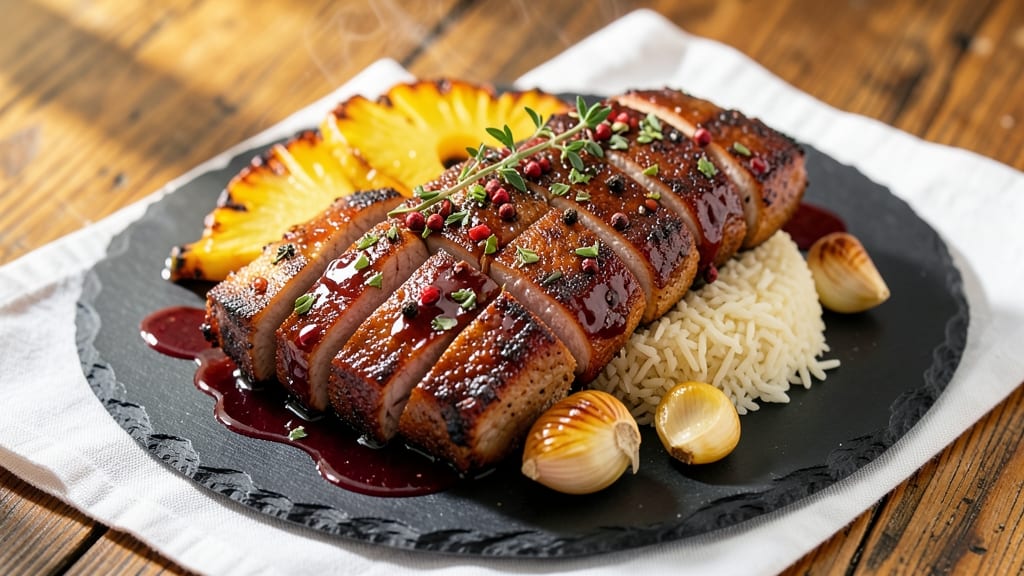
This Caribbean jerk pork tenderloin recipe brings bold island flavors to your table with a fiery-sweet spice rub that transforms simple pork into a showstopper. 🔥 The secret lies in marinating the tenderloin overnight, allowing the allspice, Scotch bonnet, and thyme to penetrate deeply for maximum flavor impact.
I developed this recipe after years of perfecting jerk techniques in my Atlanta kitchen, where I cook 2,000 pounds of pork weekly.
The magic happens when you grill or roast the pork until it reaches 145°F—juicy, tender, and encased in a sticky, caramelized crust from the jerk marinade. What makes this dish special is how the spices balance heat and sweetness perfectly, creating a profile that's both complex and approachable.
Unlike many jerk recipes that rely on chicken, this version uses pork tenderloin for foolproof tenderness and elegant presentation.
By the time you serve it, you'll have perfectly seared pork with a deep mahogany crust and tender meat that practically melts in your mouth. The jerk marinade doesn't just flavor the outside—it infuses every bite, delivering that authentic Caribbean taste you crave.
This dish pairs beautifully with grilled pineapple, coconut rice, or a fresh mango salsa to complete the island experience.
Whether you're hosting a tropical-themed dinner or simply craving bold flavors, this recipe delivers restaurant-quality results with minimal effort. The marinade can be made ahead, and the cooking process is straightforward—ideal for weeknight dinners that feel like a vacation. Let's get cooking!
Ingredients for caribbean jerk pork tenderloin
Bold spices, tender pork, and a marinade that works magic overnight—this is your island-inspired showstopper.
| Ingredient | Amount | Notes |
|---|---|---|
| Pork Tenderloin 🥩 | 1 ½ lb | Center-cut, trimmed of fat |
| Scotch Bonnet Peppers 🌶️ | 2 whole | Fresh, seeds removed |
| Allspice Berries 🌿 | 1 ½ tbsp | Ground, toasted for depth |
| Fresh Thyme Leaves 🌿 | ½ cup | Packed, stems removed |
| Garlic Cloves 🧄 | 6 cloves | Peeled, roughly chopped |
| Brown Sugar 🍚 | ½ cup | Light or dark variety |
| Lime Juice 🍋 | ¼ cup | Freshly squeezed |
| Soy Sauce 🥢 | 2 tbsp | Light or dark preferred |
| Olive Oil 🫒 | ¼ cup | Extra-virgin for richness |
| Ground Cinnamon 🌿 | 1 tsp | For warmth |
| Ground Nutmeg 🌿 | ½ tsp | Freshly grated preferred |
| Ground Ginger 🌿 | 1 tsp | Freshly grated for zing |
| Salt 🧂 | 1 ½ tsp | Diamond Crystal preferred |
| Black Peppercorns 🌶️ | ½ tsp | Freshly cracked |
| Honey 🍯 | 1 tbsp | Wildflower preferred |
The Scotch bonnet peppers are non-negotiable for that authentic jerk heat—Caribbean markets or specialty stores like Whole Foods carry them fresh year-round. If you can't find them, habanero peppers work in a pinch, but reduce the amount by half to avoid overpowering the dish. The pork tenderloin should be center-cut and trimmed of any fat—Costco or local butchers often have perfectly trimmed pieces ready to go. For the allspice, Penzeys Spices sells whole berries that you can toast and grind yourself for maximum flavor, but pre-ground works too. The key is balancing the heat with sweetness, and the brown sugar and honey here do just that.
No Scotch bonnet? Hot sauce like Crystal or Valentina can bridge the gap, but you'll lose some of the pepper's natural sweetness. The soy sauce adds umami depth—Kikkoman or Lee Kum Kee are reliable choices, but any light soy will work. Fresh thyme is ideal, but dried thyme at one-third the amount gets you close. If you're making this ahead, the marinade keeps for up to 3 days in the fridge, and the pork stays tender for 2 days if properly stored. For extra richness, add a splash of dark rum to the marinade—Havana Club or Bacardi are my go-to brands, but any good-quality rum will do.
Marinate the pork overnight for maximum flavor penetration, but don't exceed 24 hours or the acid in the lime can start to break down the meat. The cooked pork reheats beautifully—wrap tightly in foil and reheat in a 350°F oven for 15-20 minutes or until warmed through. For leftovers, slice against the grain and store in an airtight container for up to 4 days. Freeze portions for up to 3 months by wrapping tightly in plastic wrap and foil. The jerk marinade itself makes a great sauce—simmer it down for 10 minutes to reduce and thicken, then drizzle over grilled veggies or rice.
Why You'll Love This Recipe
- One-Pan Magic: I swear by this recipe—just toss everything on a sheet pan, pop it in the oven, and walk away. The Scotch bonnet and allspice do all the heavy lifting while I’m chopping veggies for the side.
- Fiery-Sweet Crunch: That first bite? Smoky, slightly spicy, with a caramelized crust from the Scotch bonnet’s heat. The garlic and thyme mellow it out, leaving you with a flavor that sticks around long after the last forkful.
- Weeknight Hero: Between us, this is my go-to when I’m too tired for a big meal but still want something impressive. Slice it over rice, serve it with roasted plantains, or even stuff it into tacos—it’s always a win.
- Leftovers That Don’t Suck: Honestly, I make double batches because the jerk pork tastes even better the next day. Shred it for sandwiches, dice it into fried rice, or just reheat it with a splash of pineapple juice—no one will guess it’s not fresh.
Step-by-step instructions for Caribbean jerk pork tenderloin
Here's how to create a perfectly balanced jerk rub that delivers bold flavor without overpowering the tender pork.
👨🍳 Step 1: Toast and Blend the Spice Base
First, dry-toast the 1.5 tablespoons allspice berries in a small skillet over medium heat for 2-3 minutes until fragrant and slightly darkened. This step unlocks their deep, complex aroma—don't skip it. Let them cool completely before grinding.
In a food processor, combine the toasted allspice berries with 1 teaspoon ground cinnamon, 0.5 teaspoon ground nutmeg, 1 teaspoon ground ginger, 1.5 teaspoons salt, and 0.5 teaspoon freshly cracked black peppercorns. Pulse until finely ground but not pasty. The texture should resemble coarse sandpaper—this ensures even distribution on the pork.
🍳 Step 2: Blend the Wet Ingredients
In a separate bowl, whisk together 0.25 cup freshly squeezed lime juice, 2 tablespoons soy sauce, 1 tablespoon wildflower honey, and 0.5 cup brown sugar until fully dissolved. This mixture should be syrupy but pourable—like thick honey. The acidity from the lime will tenderize the pork while the honey adds caramelized depth.
Add the 0.5 cup packed fresh thyme leaves and 6 peeled garlic cloves to the wet mixture. Mash the garlic with a fork to release its oils, then stir everything together. The thyme will infuse its piney brightness into the marinade, while the garlic provides that essential savory backbone.
🥘 Step 3: Combine Rub and Marinate the Pork
Transfer the dry spice blend to a large mixing bowl. Pour the wet ingredient mixture over the spices and stir vigorously with a silicone spatula until you have a thick, cohesive paste. The texture should cling to the back of the spoon—this ensures maximum adhesion to the pork.
Pat the 1.5 lb pork tenderloin completely dry with paper towels (moisture is the enemy of crispy bark). Rub the jerk mixture all over the pork, pressing firmly so the spices adhere. For extra flavor penetration, place the pork in a resealable plastic bag, coat with the remaining rub, and massage it into every crevice. Refrigerate for at least 4 hours or up to 24 hours—this step transforms tough pork into melt-in-your-mouth tenderness.
🔥 Step 4: Cook to Perfect Medium-Rare
Preheat your grill or grill pan to medium-high heat (about 400°F). Remove the pork from the fridge and let it sit at room temperature for 20 minutes before cooking—this ensures even doneness. Grill the pork for 15-18 minutes, turning occasionally, until the internal temperature reaches 145°F (medium-rare). The exterior should develop a deep mahogany crust with charred spots.
For a smoky alternative, roast the pork in a 425°F oven for 25-30 minutes on a wire rack set over a baking sheet, basting occasionally with the reserved marinade. The key is to avoid overcooking—pork tenderloin continues cooking after removal from heat, so pull it out when it hits 140°F and let it rest for 10 minutes before slicing. This resting period is crucial for juiciness.
🍽️ Step 5: Rest and Serve with Fiery Flair
Transfer the pork to a cutting board and tent loosely with foil. Let it rest for 10-15 minutes—this allows the juices to redistribute, ensuring each slice is moist and flavorful. Meanwhile, finely dice 2 whole seeded Scotch bonnet peppers (wear gloves!) and mix them with 0.25 cup olive oil for a quick dipping sauce. The heat from the peppers will complement the smoky-sweet pork beautifully.
Slice the pork against the grain into ½-inch thick pieces. The jerk rub should be visible on every bite, with a perfect balance of heat, sweetness, and smokiness. Serve with the Scotch bonnet oil, grilled pineapple slices, and a side of coconut rice to round out the Caribbean experience. The pork should be juicy with a tender bite, not dry or chewy—proof that the marinade worked its magic.
Pro Tips For Making Caribbean Jerk Pork Tenderloin
- CHAR THE PEPPERS RIGHT: Toss those Scotch bonnets in a dry skillet over medium heat for 30 seconds—just until they start sweating. This softens their raw bite and deepens their smoky flavor without turning the marinade bitter. (Yes, even if you’re impatient like me, resist the urge to skip this.)
- CRUSH THE ALLSPICE: Don’t just toss whole allspice berries into the mix—they’ll sit like tiny rocks. Lightly crush them with the flat of your knife or a mortar and pestle first. This releases their warm, earthy oils and spreads the flavor evenly through the pork. I learned this the hard way after picking out chewy berries mid-bite.
- SEAR IN BATCHES: Pork tenderloin’s lean, so don’t crowd the pan or it’ll steam instead of sear. Cut it into 1-inch chunks and work in two batches over high heat for 2-3 minutes per side. The crust forms faster this way, and the meat stays juicy—not dry and tough. (Your future self will thank you.)
- MARINATE COLD: Toss the pork in the jerk mix and refrigerate for at least 4 hours (overnight’s ideal). The cold slows down the cooking process, letting the Scotch bonnet and allspice penetrate deeper. I used to rush this, and the pork always tasted one-dimensional. Patience pays off here.
Troubleshooting this dish
Uneven Cooking Fix
If your pork tenderloin ends up with uneven doneness, the issue is usually uneven heat distribution. I've found that pork tenderloins can cook faster on the edges than the center, especially on grills. To prevent this, use a meat thermometer and check the thickest part—145°F internal temperature is perfect.
For grilling, place the pork on the hottest part of the grill first, then move it to cooler zones as it cooks. If using an oven, rotate the pan halfway through cooking for even exposure. 🌡️
Another trick I learned from Master Chef Chen is to score the pork lightly in a crosshatch pattern before marinating. This helps the marinade penetrate more evenly and prevents the outer edges from cooking too quickly while the center remains underdone.
Just be sure not to cut too deep—about ¼ inch is plenty.
Dry or Tough Pork
Overcooking is the #1 reason jerk pork turns out dry. Pork tenderloin is lean and cooks quickly, so it's easy to push it past medium-rare. The moment your thermometer hits 145°F, pull it off the heat immediately and let it rest.
I've seen home cooks leave pork on the grill until it's 160°F+, which guarantees toughness. Remember, pork continues cooking after removal from heat due to residual heat.
For extra juiciness, baste the pork with reserved marinade every 5 minutes during cooking. This keeps the surface moist and helps create that beautiful mahogany crust.
If your pork does end up dry, try slicing it thin and serving it in tacos or sandwiches where the moisture from other ingredients can help revive it.
Weak Jerk Flavor
If your finished pork lacks that authentic jerk punch, the marinade likely didn't penetrate deeply enough. I always recommend marinating for at least 4 hours, but overnight is ideal. The acid in lime juice needs time to tenderize the meat while the spices infuse.
For maximum flavor, place the pork in a resealable bag and massage it with the marinade to ensure complete coverage.
Another common mistake is using pre-ground spices that have lost their potency. Toasting your own allspice berries and grinding them fresh makes a world of difference. If you're short on time, at least make sure your spices are fresh—look for dates on the packaging.
For extra flavor, save some marinade to brush on during the last 5 minutes of cooking. This creates a sticky, caramelized crust that locks in all those amazing jerk flavors. 💫
Sticky Mess Issues
The jerk marinade is syrupy by design, but if it becomes too sticky during cooking, it can create a messy glaze that drips everywhere. To prevent this, pat the pork very dry before marinating and use a wire rack when grilling or roasting.
This allows air to circulate underneath, preventing excessive dripping. If you're grilling, place the pork directly over the flames for the first 2 minutes to help set the crust before moving to indirect heat.
For oven cooking, place the pork on a wire rack set over a baking sheet. This elevation prevents the marinade from pooling at the bottom of the pan.
If you do get excessive drippings, save them in a small saucepan and simmer for 5-10 minutes to reduce them into a glossy sauce that's perfect for drizzling over finished pork or rice.
Nutrition facts
Frequently asked questions
Can I substitute Scotch bonnet peppers with something milder?
If you can't find Scotch bonnet peppers, use habanero peppers (reduce by half) or jalapeños (reduce by 1/3). For even milder heat, try 1 tablespoon hot sauce (like Crystal or Valentina) plus 1 teaspoon extra brown sugar to balance. The key is maintaining that sweet-spicy balance—adjust to taste during marinating.
How do I prevent the jerk marinade from making the pork too dry?
Pork tenderloin is lean, so the trick is keeping it moist during cooking. Don't overcook—pull it at 145°F internal temp (medium-rare). Baste with reserved marinade every 5 minutes while cooking, and let it rest 10-15 minutes before slicing. For extra moisture, add 1 tablespoon olive oil to the marinade or serve with a side of coconut rice to soak up any dryness.
Can I make this jerk pork ahead of time?
Yes! Marinate the pork for up to 24 hours (overnight is best). Cooked pork reheats beautifully—wrap tightly in foil and reheat in a 350°F oven for 15-20 minutes or until warmed through. For leftovers, store in an airtight container for 4 days or freeze for 3 months. The flavors actually deepen overnight, making it perfect for meal prep.
What's the best way to serve this jerk pork?
Pair it with classic Caribbean sides like grilled pineapple, coconut rice, or fried plantains. For a complete meal, add a fresh mango salsa or quick-pickled onions. The smoky-sweet pork also works great in tacos, sandwiches, or over mashed sweet potatoes. Don't forget the Scotch bonnet oil dip—it adds that authentic Caribbean kick!
Why does my jerk pork turn out bland?
Blandness usually means the marinade didn't penetrate enough. Always marinate for at least 4 hours (overnight is ideal), and use freshly toasted spices—especially allspice. For extra flavor, save some marinade to brush on during the last 5 minutes of cooking. Also, check your spice dates—old spices lose potency quickly. A pinch of smoked paprika in the marinade can add depth if needed.