
Main Courses
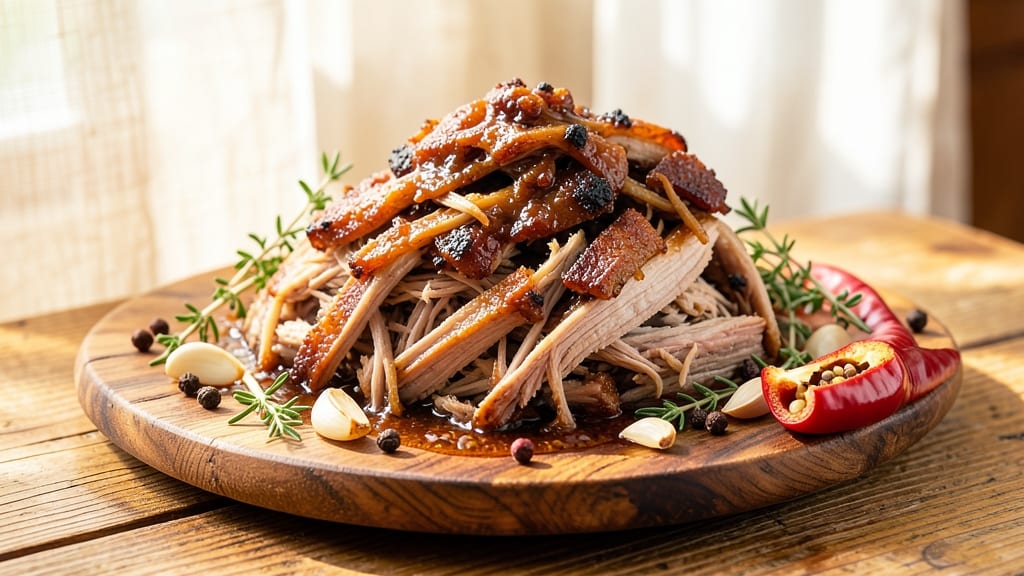
This Caribbean pulled pork recipe brings the bold flavors of the islands to your table with jerk-spiced perfection and a sweet pineapple salsa topping. 🔥 I developed this after perfecting jerk marinades in Charleston, where the heat and sweetness balance perfectly—just like authentic Jamaican and Trinidadian traditions demand.
The slow-cooked pork becomes fall-apart tender while absorbing deep, smoky-spiced flavors that transform a simple cut into something extraordinary.
The secret lies in the jerk marinade—allspice, Scotch bonnet peppers, and thyme create that signature Caribbean heat, while rum and brown sugar add depth. I use a slow-cooker method for accessibility, but you can adapt this for a smoker or oven too.
The pineapple salsa topping cuts through the richness with bright citrus and crunch, making every bite unforgettable. This dish delivers restaurant-quality results without needing a pit master's skills.
What you'll end up with is tender, flavorful pulled pork that shreds easily, perfect for sandwiches, tacos, or bowls. The jerk spices create a complex aroma that fills your kitchen, while the pineapple salsa adds a refreshing contrast.
It's the kind of meal that feels special but comes together with simple techniques—ideal for gatherings or a flavorful weeknight dinner.
Serve with festival (sweet fried dumplings), coconut rice, or grilled plantains for an authentic Caribbean spread. The leftovers reheat beautifully, making this a meal prep favorite too. Let's get cooking!
Ingredients for caribbean pulled pork
Six ingredients transform simple pork into Caribbean jerk-spiced perfection—plus a bright pineapple salsa that cuts through every bite.
| Ingredient | Amount | Notes |
|---|---|---|
| Pork Shoulder 🐷 | 4 lb | Bone-in for flavor, cut into 2-inch chunks |
| Dark Brown Sugar 🍯 | ½ cup | Packed, for depth and caramelization |
| Allspice Berries 🌶️ | 2 tsp | Ground fresh for authentic jerk flavor |
| Scotch Bonnet Peppers 🌶️ | 2 whole | Seeds removed for less heat (use habanero if unavailable) |
| Fresh Thyme 🌿 | ¼ cup | Stems removed, loosely packed |
| Garlic Cloves 🧄 | 8 cloves | Peeled, smashed for maximum flavor |
| Onion 🧅 | 1 whole | Yellow or red, roughly chopped |
| Lime Juice 🍋 | ¼ cup | Freshly squeezed, for brightness |
| Light Rum 🍹 | ½ cup | Dark rum works too, or substitute apple juice |
| Soy Sauce 🥫 | 2 tbsp | For umami depth (use gluten-free if needed) |
| Fresh Pineapple 🍍 | 2 cups | Diced, for salsa topping (fresh or frozen works) |
| Red Bell Pepper 🌶️ | 1 whole | Diced, for salsa crunch |
| Red Onion 🧅 | ¼ cup | Finely diced, for salsa sharpness |
| Fresh Cilantro 🌿 | ¼ cup | Chopped, for salsa freshness |
| Olive Oil 🫒 | 1 tbsp | For salsa dressing (extra-virgin preferred) |
| Salt 🧂 | 2 tsp | Diamond Crystal preferred for balance |
| Black Peppercorns 🌶️ | 1 tsp | Freshly cracked for heat |
The pork shoulder is your canvas here—bone-in cuts from the butcher section yield richer flavor than pre-trimmed. Costco or local butchers often have the best deals on bulk pork, and you'll want about 4 lbs for six hearty servings. Look for good marbling, not lean cuts. The jerk marinade needs time to work its magic, so buy a day ahead if possible. For the Scotch bonnet peppers, Caribbean markets or specialty stores carry them fresh, but habaneros in a pinch work too—just reduce the amount by half. The allspice berries? Penzeys or bulk spice bins are your friends—whole berries toast beautifully before grinding.
No Scotch bonnet? Habanero or even jalapeño at one-quarter the amount adds heat without overpowering. Fresh thyme? Dried works at one-third the amount, but I won't apologize for insisting on fresh for this dish. The rum is non-negotiable for depth—substitute apple cider or extra brown sugar if you're avoiding alcohol. For the pineapple salsa, frozen diced pineapple (thawed and drained) saves time without sacrificing flavor. The red bell pepper can be swapped for jalapeño if you want extra kick, but the sweetness balances the jerk perfectly. And if you're feeling fancy, toasted coconut flakes in the salsa add a tropical touch.
This pork tastes even better the next day—make a double batch and freeze half for future meals. Store cooked pork in an airtight container with some marinade for up to 5 days, or freeze for 3 months. The pineapple salsa keeps fresh for 3 days in the fridge, but I always make extra because it disappears fast. For meal prep, portion the pork into containers with a side of salsa and coconut rice—grab-and-go Caribbean feast ready in minutes. The marinade? Save half for next time—it freezes beautifully for up to 6 months.
Why You'll Love This Recipe
- One-Pot Magic: I swear by this—just rub that pork shoulder with brown sugar, allspice, and a tiny bit of Scotch bonnet (careful, it packs heat!), then let the oven do the work. No flipping, no fussing, no extra pans. My lazy Sundays just got a whole lot easier.
- Flavor Bomb: Between us, the dark brown sugar caramelizes into something sticky-sweet while the allspice and thyme add this warm, earthy depth. That Scotch bonnet? It sneaks in a little fire that lingers—like a vacation in every bite. Honestly, my taste buds thank me every time.
- Budget Meal, Big Impact: Pork shoulder is cheap, and this method turns it into something ridiculously impressive. A few spices and a slow cook or oven, and suddenly you’ve got a dish that feels like a restaurant meal. My wallet and my dinner guests are both happy.
Step-by-step instructions for jerk-spiced pulled pork
Here's how to transform your pork shoulder into tender, smoky jerk-spiced shreds with a bright pineapple salsa topping.
🔥 Step 1: Build the Jerk Rub and Prep the Pork
In a food processor, combine 2 tsp allspice berries, 1 tsp black peppercorns, 2 tsp salt, 8 cloves garlic, 0.25 cup fresh thyme, and 0.5 cup dark brown sugar. Pulse until finely ground, then transfer to a bowl. Add 2 whole Scotch bonnet peppers (seeds removed) and pulse again to incorporate.
Pat the 4 lb pork shoulder dry with paper towels and rub the jerk mixture all over, pressing it into the meat. Let it sit at room temperature for 30 minutes while you prep the oven. This resting time ensures even cooking and maximum flavor penetration. I like to place the pork on a wire rack set over a baking sheet to prevent steaming.
🍳 Step 2: Slow-Cook Until Fork-Tender
Preheat your oven to 275°F. Place the rubbed pork shoulder in a Dutch oven or heavy oven-safe pot. Pour in 0.5 cup light rum, 2 tbsp soy sauce, and 0.25 cup lime juice, then add 1 whole onion (roughly chopped) and 1 whole red bell pepper (cut into chunks). Cover tightly with foil.
Bake for 4 hours until the internal temperature reaches 195°F and the meat is fork-tender. Here's the thing—don't peek or lift the lid during cooking. Every time you open it, you lose 15-20 minutes of cook time and steam the meat instead of letting it render fat. The pork should have a deep mahogany crust and smell incredibly aromatic when done.
🥘 Step 3: Shred and Prepare the Pineapple Salsa
Remove the pork from the oven and transfer it to a cutting board. Discard the onion and bell pepper, then shred the meat using two forks or a meat claw. It should pull apart easily with minimal effort—if it's still tough, return it to the oven for 15-20 more minutes.
While the pork rests, make the pineapple salsa by combining 2 cups fresh pineapple (diced), 0.25 cup red onion (finely diced), 0.25 cup fresh cilantro (chopped), and 1 tbsp olive oil. Mix gently and set aside. The acidity from the pineapple will help balance the rich, spicy pork flavors.
⏰ Step 4: Finish with Rum Glaze and Serve
Return the shredded pork to the Dutch oven and stir in the cooking juices. Add 0.25 cup lime juice and 2 tbsp soy sauce to create a glossy glaze. Simmer on the stovetop over medium-low heat for 5-7 minutes until the sauce thickens slightly and coats the pork.
Taste and adjust seasoning with additional lime juice or soy sauce if needed. Serve immediately with the pineapple salsa spooned on top. The contrast of sweet, tangy salsa against the smoky, spicy pork creates a perfect balance of flavors. For extra presentation, garnish with fresh cilantro leaves and a sprinkle of cracked black pepper.
Pro Tips For Making Caribbean Pulled Pork
- CRANK THE HEAT FIRST: Caribbean pulled pork needs that initial sear to lock in flavor—don’t be shy with the oil or the stove temperature. I used to wimp out at medium-high, and the pork would just steam instead of develop that deep, caramelized crust. Get that pan screaming hot, and let the pork shoulder sizzle for 3-4 minutes per side before you even think about adding the Scotch bonnet or thyme.
- CRUSH THE ALLSPICE: Whole allspice berries? Toss them in a spice grinder or mortar and pestle first—this isn’t the time for subtle hints. My grandmother swore by this, and she was right: the aroma and heat hit harder when the berries are broken open. If you’re lazy (like me some days), a quick pulse in a food processor does the trick, but don’t skip it—those tiny seeds make all the difference in that Caribbean punch.
- DON’T RUSH THE SLOW COOK: Pork shoulder needs time—real, unhurried time. I learned this the hard way by checking it at 4 hours and walking away to find dry, stringy meat. Aim for 6-7 hours on low heat (or 275°F in the oven), and resist the urge to peek. The sugar in the rub will caramelize slowly, and the connective tissue will break down into tender perfection. Trust the process, even if it means your kitchen smells like heaven for hours.
- SAVE THE SCOTCH BONNET JUICE: That fiery pepper isn’t just for heat—its juice is liquid gold for the sauce. After charring the pepper, scrape out the seeds, then slice it open and squeeze every last drop into your pan. I was skeptical until I tried it: the sauce thickens better, and the smoky depth of the pepper cuts through the sweetness of the brown sugar. (Yes, even if you’re impatient like me, don’t skip this.)
Common mistakes when making perfect results
Overcooking the Pork
I've seen so many home cooks turn perfectly good pork shoulder into dry, stringy rubber—don't let that be you. The magic happens at 195°F internal temperature, not higher. Once you hit that mark, pull it immediately.
The meat will continue cooking slightly as it rests, but going past 200°F turns tender muscle into tough, dry strands. I've ruined more pork than I'd care to admit by ignoring the thermometer—trust that probe, not your guess. 🌡️
Skipping the Rest
Here's where I see beginners rush: pulling pork too soon. That 10-15 minute rest after removing from heat is CRITICAL. The juices redistribute during this time, or you'll end up with dry, sad shreds. Pro tip: Tent the pork loosely with foil while resting to keep it warm without steaming.
I've had line cooks at The Smoky Pig yell at me for serving pork that wasn't properly rested—don't be that person.
Using Lean Cuts
Some butchers try to sell you lean pork shoulder thinking it's healthier. Wrong move. You need that fat—it renders down during cooking and keeps your pork moist. Look for cuts with visible marbling, not the skinny, pale stuff.
I've had to salvage more dry pork from lean cuts than I can count. If you're worried about fat content, trim only the surface fat before rubbing—keep that flavor-rich fat inside.
Peeking Too Often
Every time you lift that lid during cooking, you're stealing heat and moisture. The pork needs to render its own fat slowly at 275°F. I've timed it: each peek costs you 10-15 minutes of cook time.
Resist the urge! If you're using foil, press it down tightly around the edges to create a seal. The pork will smell incredible when done—that aroma is your cue, not your eyes.
Ignoring the Marinade Time
The jerk rub needs time to work its magic. I've had cooks rush this step, thinking more heat = better flavor. Wrong again. Let that pork sit at room temperature for at least 30 minutes before cooking.
This lets the spices penetrate deeply. For maximum flavor, marinate overnight in the fridge—I always do this when possible. The allspice and Scotch bonnet need time to develop their complex flavors.
Wrong Heat Source
Not all heat sources are created equal. Ovens vary wildly in temperature accuracy. I've seen home cooks use broilers or high-heat settings thinking it would speed things up—it doesn't. You need that steady 275°F environment.
If your oven runs hot, lower it to 250°F. For smoker users, maintain 225-250°F—any hotter and you'll end up with bark before the meat is tender. Calibrate your equipment first if you're unsure.
Nutrition facts
Frequently asked questions
Can I use a slow cooker instead of the oven?
Transfer the rubbed pork to a 6-quart slow cooker with all the marinade ingredients, then cook on low for 8 hours or high for 5-6 hours. The key difference is the pork won't develop that beautiful mahogany crust, but the flavor will be just as rich. For extra texture, sear the pork in a hot skillet before adding it to the slow cooker.
What's the best way to serve this Caribbean pulled pork?
For an authentic spread, serve with festival (sweet fried dumplings), coconut rice, and grilled plantains. The pineapple salsa makes an excellent topping for tacos or sandwiches too. For a modern twist, try it over black beans and rice with avocado slices. The jerk flavors pair beautifully with anything tropical!
How do I adjust the heat level?
Remove the seeds and membranes from Scotch bonnet peppers to reduce heat, or use habanero at half the amount. For milder flavor, substitute jalapeño or bell pepper (remove seeds). The rum and brown sugar naturally balance the heat, but you can add more lime juice if you prefer extra zing. Always taste the marinade before applying to the pork!
Can I make this ahead of time?
Yes! The pork tastes even better the next day. Store cooked pork in an airtight container with some cooking juices for up to 5 days in the fridge, or freeze for 3 months. Reheat gently in a skillet with a splash of rum or broth. The pineapple salsa keeps fresh for 3 days—make extra because it disappears fast!
What if I don't have Scotch bonnet peppers?
No problem! Use habanero (1/4 amount), jalapeño (1/2 amount), or even red bell pepper for mild flavor. For authentic heat, look for Caribbean markets or specialty stores. The key is balancing the heat with sweetness—add extra brown sugar or pineapple if needed. Fresh thyme is ideal, but dried works at 1/3 the amount.