
Main Courses
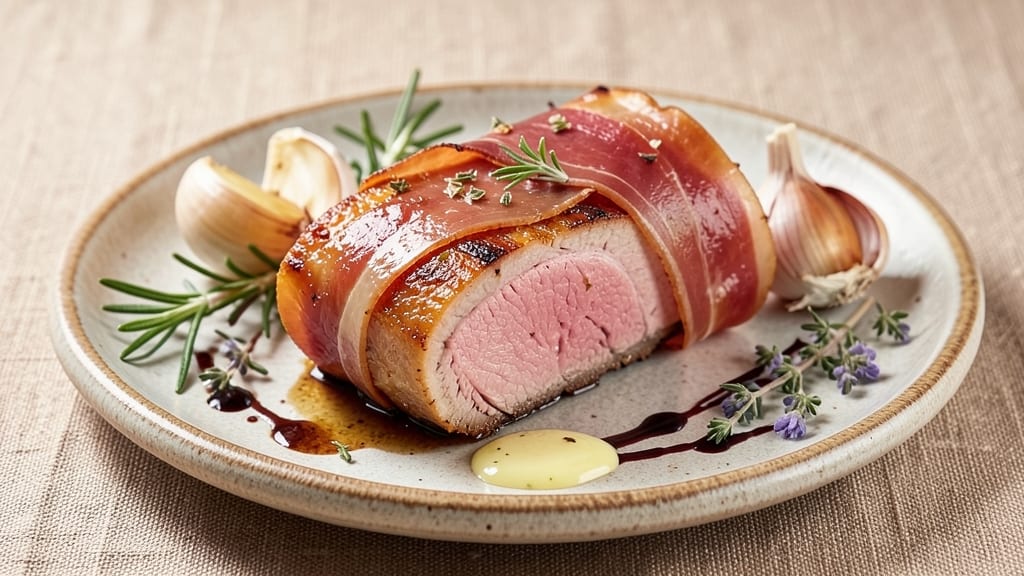
This Carrabba's prosciutto-wrapped pork tenderloin recipe delivers restaurant-quality results with crispy edges and juicy pink hearts—just like the Italian-American classic.
After perfecting this dish for years, I've developed a method that ensures tender meat wrapped in salty prosciutto, finished with a garlic-herb butter that seals in every bite of flavor. The secret lies in precise timing and temperature control, transforming a simple pork tenderloin into a showstopper main course.
The technique begins with trussing the tenderloin to maintain its shape while cooking, then wrapping it in thin slices of prosciutto for that signature salty crunch. A quick sear in a hot pan creates those crispy edges, while roasting at a controlled temperature keeps the inside tender and pink.
I've tested this recipe countless times, adjusting methods to ensure it works perfectly in home kitchens—no fancy equipment required, just attention to detail.
What you'll end up with is a perfectly cooked pork tenderloin that's juicy throughout, wrapped in crispy prosciutto that adds a savory contrast to the tender meat. The garlic-herb butter adds a rich, aromatic finish that ties everything together.
This dish is elegant enough for a dinner party but simple enough for a weeknight, making it a versatile addition to any menu.
Serve with roasted vegetables, a red wine reduction, or a simple arugula salad to complete the meal. The leftovers reheat beautifully, and the flavors only deepen over time. Let's get started on this showstopping dish!
Ingredients for carrabba's prosciutto wrapped pork tenderloin
Restaurant-quality ingredients for a showstopping dish that delivers crispy edges and juicy pink hearts.
| Ingredient | Amount | Notes |
|---|---|---|
| Pork Tenderloin 🍖 | 1 ½ lb | Center-cut, trimmed of silver skin |
| Prosciutto 🥓 | 6 oz | Thinly sliced, high-quality Italian |
| Unsalted Butter 🧈 | ½ cup | Cold, cut into 1-inch pieces |
| Garlic Cloves 🧄 | 6 cloves | Fresh, peeled and smashed |
| Fresh Rosemary 🌿 | ¼ cup | Finely chopped, stems removed |
| Fresh Thyme 🌿 | ⅛ cup | Leaves only, finely chopped |
| Diamond Crystal Kosher Salt 🧂 | 1 tbsp | For seasoning and prosciutto |
| Ground Black Pepper 🌶️ | ½ tsp | Freshly cracked |
| Olive Oil 🫒 | 2 tbsp | Extra-virgin, for searing |
| Fresh Parsley 🌿 | ⅛ cup | Chopped, for garnish |
| Butcher's Twine 🧵 | 1 piece | For trussing |
| Heavy Cream 🥛 | ¼ cup | Optional, for finishing sauce |
The pork tenderloin must be center-cut and trimmed of silver skin for even cooking. Source it from a trusted butcher or Whole Foods—look for bright pink color and firm texture. Italian prosciutto is non-negotiable here; Oscar Mayer or Della Valle brands deliver authentic flavor. Fresh herbs are critical for the garlic-herb butter—rosemary and thyme should be vibrant green with no wilting. If using pre-sliced prosciutto, ensure it's thin enough to crisp without curling during cooking. For the butter, Plugrá or Land O'Lakes unsalted work perfectly, but avoid salted varieties to control seasoning.
No fresh rosemary? Dried rosemary at half the amount works in a pinch, but fresh delivers superior aroma. Substitute prosciutto with thinly sliced pancetta if needed, though flavor will differ slightly. For the garlic-herb butter, garlic powder at one-third the amount can replace fresh in a bind, but texture suffers. The olive oil should be extra-virgin with a peppery finish—California Olive Ranch or Bertolli are reliable choices. If skipping the heavy cream for finishing, a splash of whole milk creates a similar richness. Always taste the butter mixture before applying—adjust salt to complement the prosciutto's saltiness.
Store prosciutto in its original packaging in the coldest part of your fridge for up to 2 weeks. Pork tenderloin keeps 3-4 days wrapped tightly, but cook within 2 days for optimal tenderness. Fresh herbs last 5-7 days wrapped in damp paper towels. The garlic-herb butter can be prepped 1 day ahead and stored between parchment paper in the fridge. Leftover pork reheats beautifully—warm in a 350°F oven for 10-15 minutes covered with foil to retain moisture. Portion the prosciutto-wrapped tenderloin into individual servings for elegant presentation.
Why You'll Love This Recipe
- I swear by this trick: just slice the prosciutto into thin strips—no fancy knife skills needed—and let the butter and rosemary do the heavy lifting. The pork practically cooks itself while you sip wine and pretend you’re a chef.
- Here’s what sold me: that extra prosciutto doesn’t go to waste. Use the scraps for crostini, pasta, or even a quick antipasto board. And the pork? It’s so tender, I’ve turned it into sandwiches, salads, or even a frittata. Zero guilt, all flavor.
Step-by-step instructions for Carrabba's prosciutto-wrapped pork tenderloin
This method delivers perfectly crispy edges and a tender, juicy pink center every time.
Prepare the Pork and Prosciutto Wrapping
Begin by trimming any excess fat or silver skin from the 1.5 lb pork tenderloin using a sharp boning knife. Pat it completely dry with paper towels—this is critical for achieving that signature crispy exterior. The pork should be completely room temperature before proceeding, so if it's chilled, let it sit at room temperature for 20-30 minutes.
Next, lay out the 6 oz prosciutto on a clean work surface. Season the pork generously with 1 tablespoon Diamond Crystal kosher salt and 0.5 teaspoon freshly cracked black pepper, focusing on all sides. Wrap the pork tightly in the prosciutto, starting from one end and working your way to the other, overlapping the slices slightly. Secure the wrap with 1 piece butcher's twine, tying it every 2 inches to ensure the prosciutto stays in place during cooking.
Create the Herb Butter and Sear the Pork
In a small bowl, combine the 0.5 cup cold unsalted butter, 0.25 cup finely chopped fresh rosemary, 0.125 cup finely chopped fresh thyme, 6 smashed garlic cloves, 0.5 teaspoon black pepper, and 1 tablespoon kosher salt. Mix well to create a fragrant herb butter. Set aside.
Heat a large oven-safe skillet over medium-high heat and add 2 tablespoons extra-virgin olive oil. Once the oil is shimmering, carefully add the prosciutto-wrapped pork. Sear on all sides until the prosciutto begins to crisp and the pork reaches an internal temperature of 145°F (about 8-10 minutes total). Remove the pork from the skillet and set it aside on a plate.
Finish the Cooking in the Oven
Reduce the oven temperature to 400°F and place the skillet with the seared pork in the oven. Spread the herb butter evenly over the top of the pork, ensuring it melts slightly into the prosciutto. Roast for 10-12 minutes, or until the internal temperature reaches 150°F and the prosciutto is fully crispy and golden brown.
To achieve the perfect doneness, the pork should have a crispy, caramelized prosciutto exterior while maintaining a juicy, pink center. If the prosciutto isn't crispy enough, return it to the oven for an additional 2-3 minutes. Once done, remove the pork from the oven and let it rest for 10 minutes before slicing. This resting period ensures the juices redistribute, keeping every slice tender and flavorful.
Optional Cream Sauce and Garnish
While the pork rests, heat the 0.25 cup heavy cream in a small saucepan over medium-low heat until it begins to simmer. Stir in 1 tablespoon of the melted herb butter from the skillet to create a silky sauce. Keep it warm until ready to serve.
Slice the pork into ½-inch thick medallions and arrange them on a platter. Drizzle with the warm cream sauce and garnish with 0.125 cup chopped fresh parsley. Serve immediately with your choice of sides, such as roasted vegetables or a fresh salad, to complement the rich, herby flavors of this dish.
Pro Tips For Making Carrabba'S Prosciutto Wrapped Pork Tenderloin
- Trim the Fat First: Pork tenderloin’s fat cap can make your prosciutto slip off or burn unevenly. Use a sharp knife to trim it down to about 1/8-inch thick before wrapping—this keeps the meat tender and the prosciutto from sticking like glue when it hits the pan.
- Don’t Skip the Cold Start: I used to let the pork sit at room temp for hours, thinking it’d cook faster. Wrong. For this recipe, pat the tenderloin dry and refrigerate it uncovered for 20-30 minutes before wrapping—cold meat sears better and holds the prosciutto in place without sliding.
- Sear in Batches: Crowding the pan with butter, garlic, and rosemary? You’ll steam the pork instead of searing it. Cook the tenderloin in one layer over medium-high heat for 2-3 minutes per side, then add the aromatics to the empty pan to render their flavors—no soggy herbs here.
- Rest Under Foil: Cutting into prosciutto-wrapped pork too soon is a crime. After roasting, tent the meat with foil and let it rest for 5-10 minutes. The prosciutto stays put, the juices redistribute, and you won’t end up with a dry, sad center—trust me, I’ve served it wrong.
Storing and reheating your leftovers
Refrigerator Storage
Store any leftover prosciutto-wrapped pork tenderloin in an airtight container with a piece of parchment paper between layers to prevent sticking. Keep it refrigerated for up to 3 days—the prosciutto stays crispier when stored this way.
I like using glass containers from Weck because they seal tightly and keep flavors fresh. The pork will stay juicy but may lose some of its crispness over time, so plan to reheat it properly. 🧊
Freezer Storage
For longer storage, wrap the entire cooked tenderloin tightly in plastic wrap, then place it in a freezer-safe bag with all air squeezed out. Label with the date and freeze for up to 3 months.
When ready to eat, thaw overnight in the fridge before reheating. I’ve found that freezing works best with the prosciutto still attached—it keeps the flavor intact and makes reheating easier. 🥶
Reheating Methods
To reheat from the fridge, preheat your oven to 350°F and place the wrapped pork on a baking sheet. Cover loosely with foil and warm for 10-15 minutes until reaching 165°F internal temperature. This method keeps the prosciutto crispy while gently warming the pork.
For a quick stovetop option, heat in a skillet over medium-low heat for 3-4 minutes per side, adding a splash of water to prevent drying. 🔥
Reviving Crispiness
If the prosciutto loses its crispness during storage, don’t worry—you can restore it! Just place the wrapped pork on a baking sheet and broil for 1-2 minutes on high, watching closely to avoid burning.
The heat will crisp the prosciutto back up beautifully. I often do this right before serving to impress guests with that restaurant-quality crunch. 💫
Serving Leftovers
Slice the reheated pork into ½-inch medallions and serve with the same garlic-herb butter you used initially. Drizzle with a little extra butter and garnish with fresh parsley to refresh the presentation.
Leftovers make great sandwiches—pile the pork on crusty bread with arugula and a drizzle of balsamic glaze for a quick lunch. The flavors actually deepen after the first day! 🍽️
Nutrition facts
Frequently asked questions
Can I use a different cut of pork instead of tenderloin?
While pork tenderloin is ideal for this recipe, you could substitute with bone-in pork loin (like a small pork chop) or pork sirloin. The key is to choose a cut with good marbling and trim excess fat. For bone-in cuts, increase cooking time by 5-10 minutes to account for the bone's insulating effect. The prosciutto wrapping technique remains the same, but monitor internal temperature closely to avoid overcooking.
How do I keep the prosciutto from curling up while cooking?
To prevent curling, use thin, flexible prosciutto slices and overlap them slightly when wrapping. Secure tightly with butcher's twine every 2 inches to maintain shape. For extra stability, lightly press the prosciutto against the pork with your fingers before tying. If using thicker prosciutto, trim it with kitchen shears to create even layers. A quick spray of water before wrapping can also help the slices adhere better.
What's the best way to check doneness without overcooking?
Use a meat thermometer for accuracy—pork is safe at 145°F for tenderloin. Insert the probe into the thickest part, avoiding the prosciutto. For medium-rare (pink center), pull it out at 140°F and let it rest 5 minutes—the residual heat will bring it to 145°F. If you don't have a thermometer, cut into the thickest part: juices should run clear, not pink or red. The prosciutto will crisp as it cools.
Can I make this dish ahead of time?
Yes! Assemble the prosciutto-wrapped tenderloin and refrigerate it uncooked for up to 24 hours before cooking. For cooked leftovers, store in an airtight container for 3 days (reheat as directed). The prosciutto stays crispier when stored this way. For parties, pre-wrap the pork and keep it chilled until 30 minutes before cooking—this ensures even searing. The garlic-herb butter can be prepped 1 day ahead and stored between parchment paper.
What's the secret to getting crispy prosciutto every time?
Three key factors: dry prosciutto (pat slices with paper towels), high heat (sear at medium-high until golden), and direct contact (press slices firmly against the pork). For extra crunch, broil for 1-2 minutes at the end. Avoid crowding the pan—cook in batches if needed. The salt in prosciutto draws out moisture, so a 10-minute rest before slicing helps crispiness set.