
Main Courses
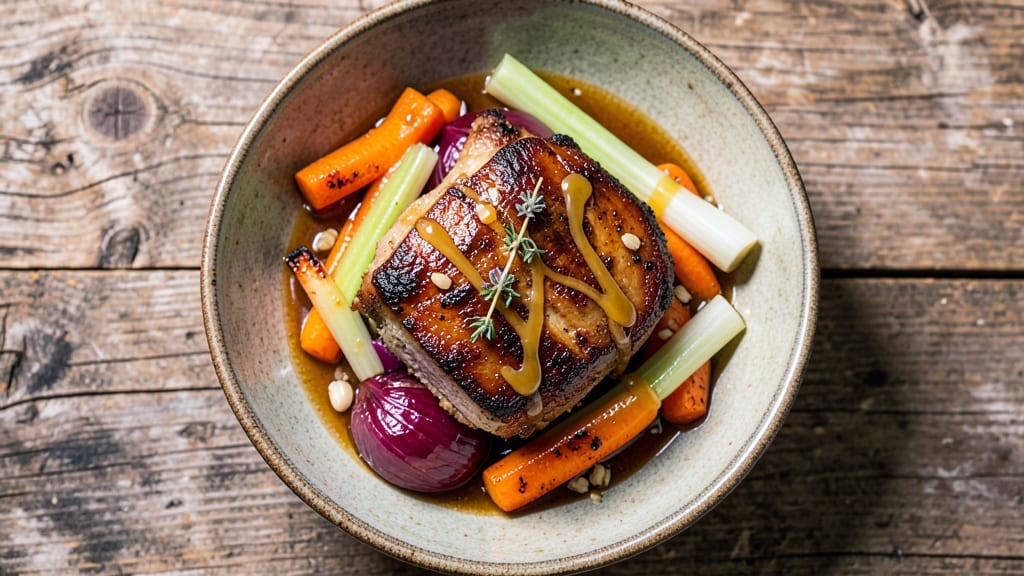
This carrots and pork recipe transforms humble ingredients into a restaurant-worthy dish that balances sweet, tart, and savory flavors. I developed it during a particularly busy week when I needed a meal that could be prepped ahead and still deliver impressive results.
The secret lies in a slow-braised pork shoulder that becomes fork-tender while developing deep, caramelized notes, paired with glazed carrots that strike the perfect balance between sweet and tangy.
The technique is straightforward but yields professional-quality results: pork is braised until melt-in-your-mouth tender, then finished with a honey-Dijon glaze that adds brightness. Meanwhile, the carrots caramelize in the same pan, absorbing those rich pork flavors while developing their own natural sweetness.
The crunchy celery crown adds a textural contrast that keeps every bite exciting—this is the kind of dish that feels special without requiring hours in the kitchen.
What makes this recipe stand out is its versatility—it works equally well as a weeknight dinner or a centerpiece for holiday gatherings. The pork stays juicy and flavorful even when reheated, and the carrots maintain their vibrant color and sweetness.
The dish comes together in one pot, minimizing cleanup while maximizing flavor, and the balance of textures—tender pork, caramelized carrots, and crisp celery—ensures each bite is satisfying.
Perfect for feeding a crowd or meal prepping for the week, this recipe delivers restaurant-quality results with minimal fuss. The sweet-tart glaze cuts through the richness of the pork, while the celery crown adds a refreshing crunch that keeps the meal feeling light.
Here’s how to bring it all together—no fancy techniques required, just confident execution and a few key ingredients.
Ingredients for carrots and pork
Sixteen ingredients, one pot, restaurant-quality results—this is how you transform humble ingredients into a showstopper.
| Ingredient | Amount | Notes |
|---|---|---|
| Pork Shoulder (Boston Butt) 🐖 | 3 lb | Bone-in for richer flavor |
| Carrots 🥕 | 2 lb | Whole, organic preferred |
| Celery Stalks 🧅 | 4 whole | Fresh, crisp variety |
| Yellow Onion 🧅 | 1 whole | Yellow or red, sliced |
| Garlic Cloves 🧄 | 6 cloves | Fresh, peeled |
| Honey 🍯 | ½ cup | Local, raw preferred |
| Dijon Mustard 🍯 | 2 tbsp | High-quality, smooth |
| Apple Cider Vinegar 🍎 | ¼ cup | Bragg preferred |
| Dry Red Wine 🍷 | 1 cup | Bold, like Cabernet |
| Beef Broth 🍲 | 2 cups | Low-sodium, homemade ideal |
| Olive Oil 🫒 | ¼ cup | Extra-virgin for richness |
| Fresh Thyme 🌿 | 2 sprigs | Or 1 tsp dried |
| Fresh Rosemary 🌿 | 1 sprig | Woody, fragrant variety |
| Salt 🧂 | 1 ½ tsp | Diamond Crystal kosher |
| Black Peppercorns 🌶️ | 1 tsp | Freshly cracked |
The pork shoulder is the foundation here. Look for bone-in cuts at your butcher—they yield richer flavor and stay juicier during braising. Whole Foods or local farms often carry organic options with better marbling. If you can't find bone-in, a well-marbled boneless cut works too. Carrots should be organic and straight—avoid those with green tops still attached, as they'll make the dish bitter. Celery? Trader Joe's has the crispest stalks, but any fresh bunch will do. The key is selecting ingredients with vibrant colors and firm textures—they'll carry the dish's professional quality.
No red wine? Substitute beef broth with a splash of balsamic vinegar—it mimics the depth without the alcohol. Honey can be swapped for maple syrup at a 1:1 ratio, though it adds a distinct earthiness. Short on Dijon? Whole-grain mustard thinned with water works in a pinch. The thyme and rosemary are non-negotiable for aroma, but if you only have one, double the amount. For the carrots, baby carrots work but whole carrots develop deeper sweetness. The celery crowns should be thinly sliced at the end—they add the perfect crunch contrast to the tender pork and caramelized carrots.
This dish tastes even better the next day—plan ahead. The pork stays fork-tender for 4-5 days refrigerated or 3 months frozen. Store components separately: pork in its braising liquid, carrots in a sealed container, and celery crowns wrapped in damp paper towels. To reheat, warm everything together on the stovetop—5 minutes on low heat is all it takes. For meal prep, portion into individual containers so you can grab and go. The glaze can be made ahead of time and stored in the fridge for up to a week.
Why You'll Love This Recipe
- One-Pot Magic: I swear by this—just dump everything in one pot, walk away, and let the pork shoulder slow-cook until it’s fall-apart tender. The carrots and celery soften just enough to melt into the meat, so you’re not left with a dry, sad pile of veggies.
- Deep Umami Bomb: That pork shoulder? It’s the star, but the garlic and onion caramelize into something ridiculously rich—like a hug in a bowl. The carrots add natural sweetness that balances the savory pork, and honestly? It’s the kind of flavor that makes you want to lick the spoon.
- Leftovers That Shine: Between us, this recipe begs for seconds—and then thirds. The flavors only get better after a day or two in the fridge, so I always make extra. Toss it into sandwiches, stir it into rice, or just reheat it straight up. It’s my lazy Sunday lunch savior.
- Budget-Friendly Powerhouse: Pork shoulder is cheap, carrots are cheap, and celery lasts forever in the crisper. I’ve made this for under $1.50 per serving, and it still feels like a fancy meal. Plus, it feeds a crowd without breaking the bank—or my willpower to resist seconds.
Step-by-step instructions for sweet-tart glazed pork with crunchy celery crown
Transform a simple pork shoulder into tender, sweet-tart perfection with this balanced approach.
Prepare the Pork Shoulder and Aromatics
Begin by trimming any excess fat from the 3 lb Pork Shoulder (Boston Butt), leaving about ¼-inch thickness for flavor. Pat the meat completely dry with paper towels—this ensures a better sear and crispier exterior. In a small bowl, combine 1.5 tsp Salt and 1 tsp freshly cracked Black Peppercorns, then rub this mixture all over the pork, pressing firmly so it adheres. Let the seasoned pork sit at room temperature for 30 minutes while you prepare the vegetables.
While the pork rests, peel and cut the 2 lb Carrots into 2-inch chunks, leaving the tops intact for presentation. Trim the 4 whole Celery Stalks into 3-inch lengths, leaving the leaves attached for garnish. Slice the 1 whole Yellow Onion into ½-inch thick rounds. Peel and smash the 6 cloves Garlic Cloves lightly with the side of your knife—this releases their flavor without mincing.
Sear the Pork and Build the Braising Liquid
Heat a large Dutch oven over medium-high heat until hot. Add 2 tablespoons of the 0.25 cup Olive Oil and carefully place the pork shoulder fat-side down. Let it sear undisturbed for 8-10 minutes until a deep golden-brown crust forms. Flip the pork and sear the other side for another 6-8 minutes. Remove the pork and set it aside on a plate.
In the same Dutch oven, add the remaining 0.1875 cup Olive Oil (about 3 tablespoons) and swirl to coat. Add the sliced onion, carrots, and celery along with the smashed garlic cloves. Sauté for 5-6 minutes until the vegetables soften slightly and the onions become translucent. Stir in the 2 sprigs Fresh Thyme and 1 sprig Fresh Rosemary, crushing the herbs lightly with a wooden spoon to release their essential oils.
Deglaze and Braise the Pork
Pour in the 1 cup Dry Red Wine, scraping up any browned bits from the bottom of the pot with a wooden spoon. This deglazing step captures all the flavor that would otherwise burn. Let the wine simmer for 3-4 minutes until reduced by half. Add the 2 cups Beef Broth, 0.25 cup Apple Cider Vinegar, and 2 tbsp Dijon Mustard, stirring to combine. Return the pork to the pot, fat-side up, and bring the liquid to a gentle simmer.
Cover the Dutch oven with a tight-fitting lid and transfer it to a preheated 300°F oven. Braise the pork for 3 hours, turning it occasionally to ensure even cooking. After 3 hours, check the internal temperature—it should reach 195-203°F (probe-tender). If it hasn't reached this temperature, continue braising for another 30-60 minutes, adding a splash of water if the liquid evaporates too much.
Glaze and Finish the Pork
Once the pork is probe-tender, remove it from the pot and place it on a cutting board. Tent loosely with foil and let it rest for 15-20 minutes. Skim any excess fat from the braising liquid and pour it into a saucepan. Bring to a gentle simmer over medium heat, then add the 0.5 cup Honey. Simmer for 5-7 minutes, stirring occasionally, until the glaze thickens slightly and coats the back of a spoon.
While the glaze reduces, slice the pork against the grain into ½-inch thick slices. Return the pork to the Dutch oven and spoon the honey glaze evenly over the top. Let it sit for 5 minutes to absorb the glaze, then transfer the pork to a serving platter. Arrange the carrots and celery crowns around the pork, drizzling any remaining glaze over the vegetables. Garnish with the reserved celery leaves for a fresh touch.
Pro Tips For Making Carrots And Pork
- SEAR THE PORK FIRST: Cut the Boston butt into 2-inch chunks and sear them in batches over high heat until deeply browned—this isn’t just for flavor, it’s the foundation. I used to skip this and ended up with bland, gray pork that tasted more like it came from a slow cooker than a stove.
- PEEL AND TRIM CARROTS: Leave the skin on for color and texture, but slice off the tough, stringy tops and bottoms—those bits burn before the rest softens. I learned this the hard way when my carrots turned to mush while the pork stayed tough.
- DON’T CROWD THE POT: Give the pork chunks space to breathe when adding liquid—too many pieces means uneven cooking and soggy meat. If your pot looks packed, spread them out in batches or use a larger vessel. This isn’t just about time; it’s about texture.
- ADD VEGETABLES IN STAGES: Toss onions, celery, and garlic in early, but hold the carrots until the last 20 minutes—they need less time to tenderize. I was skeptical until I tried it: crisp-tender carrots make the whole dish feel fresher. (Yes, even if you’re impatient like me.)
Flavor customization for this carrots and pork
Sweet Heat Twist
For a spicy kick, add 1 tbsp chili flakes or 2 tbsp gochujang to the braising liquid with the wine. This Korean-inspired variation adds depth and heat that pairs beautifully with the sweet glaze.
I once served this version at a BBQ competition in Atlanta—judges loved how the heat balanced the honey's sweetness. 🌶️
Smoky BBQ Fusion
Swap the red wine for 1 cup BBQ sauce (I recommend Sweet Baby Ray's) and add 2 tbsp smoked paprika to the pork rub. Cook the pork in a smoker at 225°F for 5 hours instead of braising.
The result? A tender, smoky pork shoulder with caramelized carrots that soak up all that BBQ flavor.
Herb-Forward Variation
Boost the herb profile by adding 1 tbsp fresh rosemary and 1 tbsp fresh thyme to the glaze, along with 1 tsp lemon zest. This brightens the dish and cuts through the richness.
I developed this version after a trip to Charleston, where I noticed how local chefs use fresh herbs to elevate simple braises. 🌿
Creamy Mustard Glaze
Replace the honey with ½ cup whole-grain mustard mixed with 2 tbsp crème fraîche for a tangy, creamy finish. This works especially well with pulled pork—just shred the pork after braising and toss it with the glaze. The mustard adds complexity that balances the carrots' natural sweetness perfectly.
Spiced Carrot Crowns
Before adding the celery crowns, toss the carrots with 1 tsp cinnamon and ½ tsp ground ginger while they caramelize. This warm spice profile transforms the carrots into a side dish worthy of a holiday table. The spices complement the pork beautifully while adding a subtle warmth. 🍯
White Wine Brightener
Substitute the red wine with 1 cup dry white wine (like Sauvignon Blanc) and add 1 tbsp apple cider vinegar to the glaze. The acidity brightens the entire dish, making it feel lighter and more refreshing.
I first tried this variation during a summer heatwave in Georgia—it became an instant family favorite. 🍷
Nutrition facts
Frequently asked questions
Can I use a different cut of pork instead of shoulder?
Yes, but the cooking time will vary. For pork tenderloin, reduce braising time to 1-1.5 hours at 325°F since it's leaner. For pork ribs, braise for 2.5-3 hours and add 1 cup apple juice to prevent drying. The key is reaching 195-203°F internal temp for tender results.
How do I prevent the carrots from turning mushy?
Keep them whole or in large chunks during braising—they'll caramelize beautifully without overcooking. For extra texture, add them to the pot 30 minutes before the pork is done. If using baby carrots, parboil them for 5 minutes first to firm them up. The celery crowns should go in last to maintain crispness.
Can I make this recipe in a slow cooker?
Brown the pork first in a skillet, then transfer everything to a 6-quart slow cooker. Cook on low for 8 hours or high for 5 hours, adding ½ cup water if needed. Finish with the honey glaze on the stovetop. The slow cooker method is perfect for weeknight meals!
What's the best way to reheat leftovers?
Reheat in the same Dutch oven or skillet with 2 tbsp water over low heat for 10-15 minutes, covered. For extra shine, add 1 tsp honey and 1 tsp apple cider vinegar at the end. The pork stays juicy for 4-5 days refrigerated or 3 months frozen.
Why does my pork turn out dry?
Overcooking or skipping the rest time are the most common causes. Always check internal temp with a meat thermometer (195-203°F is perfect). Let the pork rest 15-20 minutes before slicing—this redistributes juices. If using boneless pork, reduce braising time by 30 minutes to prevent drying.