
Main Courses
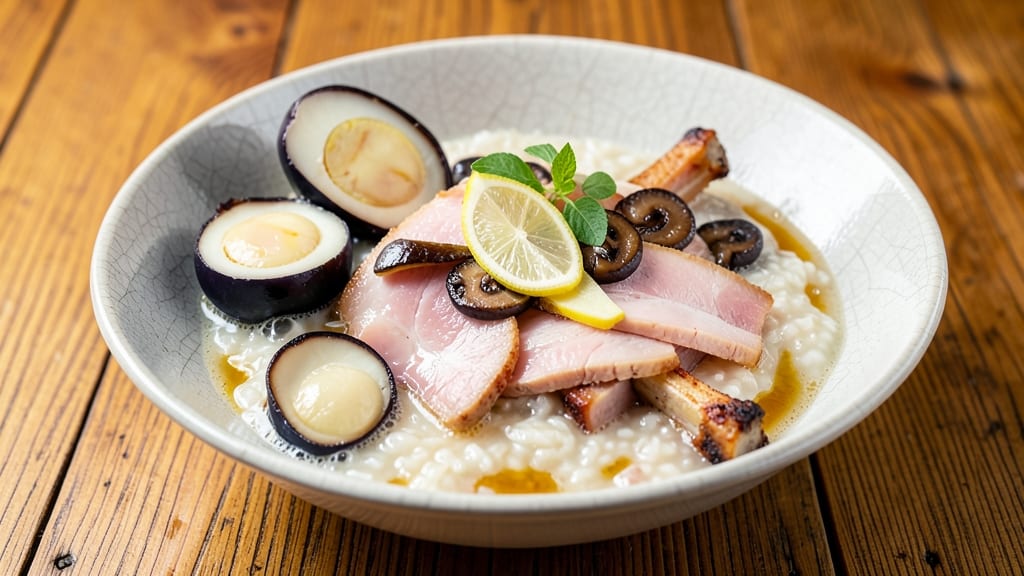
This century egg and pork congee delivers the perfect balance of silky rice and rich umami flavors that define Chinese comfort food. 💛 The secret lies in slow-simmered pork broth infused with century eggs—those unique, marbled eggs with their signature deep flavor and jelly-like yolk.
I first encountered this dish in a dim sum house in Shanghai, where the contrast between tender pork, silky rice, and the bold, briny century eggs created an unforgettable experience.
The beauty of this recipe is in its simplicity—just a few ingredients transform into a deeply satisfying meal. You'll start with pork bones and meat for a deeply flavorful broth, then incorporate century eggs (available at Asian markets) for their signature complexity.
The rice cooks slowly in this fragrant liquid until it reaches that perfect porridge-like consistency, while the pork adds hearty substance. It's a dish that feels both rustic and refined, perfect for chilly days when you crave something warming and substantial.
What makes this congee truly special is how the century eggs elevate every spoonful. Their rich, briny flavor cuts through the richness of the pork while adding a luxurious texture.
The result is a bowl that's comforting yet sophisticated—each bite delivers layers of umami from the broth, the tender pork, and the distinctive century egg.
This is the kind of dish that becomes a family staple, especially when you want to impress guests with a meal that's both impressive and deeply comforting.
Serve it with pickled vegetables for brightness, fresh cilantro for freshness, or a drizzle of chili oil for heat. The broth is so flavorful it can be made ahead, allowing the flavors to deepen overnight.
This is the ultimate congee experience—one that transforms simple ingredients into something truly extraordinary. Let's get cooking.
Ingredients for century egg and pork congee
Pork bones, century eggs, and jasmine rice transform into this luxurious congee masterpiece.
| Ingredient | Amount | Notes |
|---|---|---|
| Pork Bone 🥓 | 2 lb | Marbled for rich broth |
| Pork Shoulder 🥩 | 1 lb | Cut into 1-inch cubes |
| Century Eggs 🥚 | 4 whole | From Asian market |
| Jasmine Rice 🍚 | 1 cup | Uncooked, long grain |
| Dried Shiitake Mushrooms 🍄 | 4 whole | Rehydrated for umami |
| Fresh Ginger 🧅 | 1 inch | Peeled, sliced thin |
| Garlic Cloves 🧄 | 6 cloves | Smushed for infusion |
| Dried Scallions 🧅 | 2 tbsp | For aroma |
| Light Soy Sauce 🥄 | 2 tbsp | For seasoning |
| Sesame Oil 🫒 | 1 tbsp | For finishing |
| Water 💧 | 8 cups | For broth base |
| Salt 🧂 | 1 tsp | To taste |
| White Peppercorns 🌶️ | ½ tsp | Freshly cracked |
Century eggs are the star—Asian markets carry them, often in jars with that signature black-and-white marbling. If you can't find them, black salt (kala namak) can mimic their briny depth. The pork bone should have good marbling for a rich broth. I always grab pork shoulder from the butcher counter—it stays tender while simmering. For the ginger, fresh is non-negotiable—dried lacks that bright punch. The shiitake mushrooms? Soak them in hot water for 20 minutes, then slice—don't skip this step, it's where the umami magic happens.
No century eggs? Double the soy sauce and add a dash of fish sauce (if vegetarian, use vegan fish sauce). Fresh ginger out of stock? Substitute 1 tbsp ginger paste—it's concentrated, so use sparingly. The dried scallions can be swapped for green onions if you've got them. For the rice, jasmine is ideal, but any long-grain white will work. The broth should simmer for at least 2 hours—don't rush this part. The longer it cooks, the deeper the flavors. If you're short on time, pressure cook it for 30 minutes instead.
This congee tastes even better the next day—make a big batch and store it in the fridge for up to 3 days. Reheat gently, stirring often, until it reaches that perfect silky consistency. The century eggs keep for 2 weeks in the fridge once opened, so buy extra. For serving, keep chili oil, pickled veggies, and cilantro on hand—those add the perfect finishing touches. Freeze the broth in portions if you want to make it ahead for busy days.
Why You'll Love This Recipe
- One-Pot Magic: I swear by this recipe because it’s literally one pot—no chopping boards overflowing, no extra pans to wash. Toss in the pork bones, shoulder, and shiitakes, let it simmer while the rice cooks, then crack in those century eggs at the end. That’s it. Minimal effort, maximum reward.
- Umami Bomb: Between us, the combo of century eggs and pork bone broth is chef’s kiss—creamy, funky, and deeply savory all at once. The shiitakes add that earthy depth, while the pork shoulder melts into tender shreds. It’s the kind of flavor that makes you pause mid-bite and think, “Why don’t I eat this more?”
- Leftovers That Shine: This congee only gets better the next day. Honestly, I make a big batch on Sundays because the broth thickens just right, and the century eggs soak up all that richness. Pack it for lunch or reheat it for dinner—it’s my go-to when I’m too tired to cook but still want something hearty.
- Budget-Friendly Luxury: Pork bones and dried shiitakes stretch this recipe into a full meal without breaking the bank. I’ll be real: it feels fancy (thanks to those century eggs), but the ingredients cost less than takeout. Plus, the leftovers turn into easy lunches—win-win for my wallet and my lazy days.
Step-by-step instructions for century egg and pork congee
This isn't your average congee—deep umami flavors build layer by layer.
🔥 Step 1: Build the Umami-Packed Broth
In a large stockpot, combine the 2 lb pork bone, 1 lb pork shoulder, 8 cups water, 1 inch fresh ginger, 6 cloves garlic cloves, and 4 whole dried shiitake mushrooms. Bring to a rolling boil over high heat, then reduce to a simmer. Skim off any foam that rises to the surface during the first 10 minutes—this ensures crystal-clear broth.
Simmer uncovered for 2 hours, stirring occasionally. The pork bone should release rich marrow and turn a deep reddish-brown. You'll know it's working when the broth develops a deep amber color and a meaty aroma. This long simmer extracts collagen for that signature silky texture we're after.
👨🍳 Step 2: Prepare the Century Eggs and Aromatics
While the broth simmers, prepare the 4 whole century eggs by peeling them carefully—these delicate eggs should be handled with gloves to avoid staining. Set them aside. In a small bowl, combine 2 tbsp dried scallions, 2 tbsp light soy sauce, and 0.5 tsp freshly cracked white peppercorns. Mix well to create your seasoning blend.
When the broth has simmered for 2 hours, add the 1 cup jasmine rice and bring back to a gentle boil. Reduce heat to low and let it cook uncovered for 15 minutes, stirring occasionally to prevent sticking. The rice should be mostly tender but still slightly al dente—it'll finish cooking in the broth.
🥘 Step 3: Finish with Century Eggs and Sesame Oil
After 15 minutes, gently add the 4 whole century eggs to the pot. They'll float to the top—this is perfect. Simmer for another 5 minutes to let the eggs warm through and infuse the broth with their distinctive flavor. The yolks should be semi-firm but still slightly runny when cut.
Remove the pot from heat and let it sit covered for 5 minutes. Then stir in 1 tbsp sesame oil and the prepared seasoning blend. The sesame oil will create a delicate sheen on the surface while adding nutty depth. Taste and adjust with 1 tsp salt if needed—this congee should balance salty, umami, and slightly funky flavors.
🍽️ Step 4: Serve Warm with Perfect Texture
Ladle the congee into bowls, making sure each serving gets at least one whole century egg. The broth should be silky smooth with visible rice grains suspended throughout. Garnish each bowl with a drizzle of sesame oil and a sprinkle of dried scallions for freshness.
Serve immediately while warm—this congee is best enjoyed right out of the pot when the broth is steaming gently. The contrast between the creamy pork broth, al dente rice, and intensely flavored century eggs makes every spoonful unforgettable. For extra richness, crack the eggshells slightly before adding them to release more of that signature century egg flavor into the broth.
Pro Tips For Making Century Egg And Pork Congee
- Parboil Pork Bones First: I learned this the hard way—skipping the initial parboil means your broth will turn cloudy from all the marrow and connective tissue. Simmer the bones in fresh water for 20 minutes before adding everything else, then drain and rinse. This removes impurities and guarantees a clear, rich base for your congee.
- Slice Century Eggs Thin: Century eggs are finicky—thick slices stay rubbery, thin slices melt into the congee. Cut them paper-thin (almost translucent) and add them last, just before serving. If you’re impatient like me, soak them in warm water for 5 minutes first—they’ll break down faster and blend better.
- Don’t Rush the Low Simmer: After adding rice, resist the urge to crank the heat. A true congee needs a gentle simmer—barely bubbles, more like a lazy ripple. If you push it, the rice will turn mushy and the broth will split. Cover the pot and walk away for at least 1.5 hours (yes, even if you’re starving).
- Upgrade with Shiitake Soak: Dried shiitakes are non-negotiable for depth, but don’t just toss them in. Soak them in hot water for 30 minutes first, then use the soaking liquid as part of your broth. The mushrooms will rehydrate perfectly, and the broth gains an umami punch without extra salt. (Pro move: Save the soaking water—it’s liquid gold.)
Dietary considerations for this century egg and pork congee
Gluten-Free Adaptations
This congee is naturally gluten-free, but always verify your ingredients—especially the soy sauce and dried shiitake mushrooms. I recommend using Kikkoman Tamari for a certified gluten-free soy sauce alternative.
The jasmine rice and all other components are safe, but double-check labels on any pre-packaged items like sesame oil or seasoning blends. 💛
Vegetarian Options
For a vegetarian version, replace the pork with shiitake mushrooms and tofu. Use 8 oz extra-firm tofu pressed and cubed, plus an additional 4 dried shiitake mushrooms for umami depth.
Boost the broth flavor with 1 tbsp vegetarian fish sauce (like Annie Chun's) or extra soy sauce. The century eggs remain the star, providing that signature briny complexity without meat.
Low-Sodium Considerations
Century egg and pork congee relies on salt for balance, but you can easily reduce sodium. Use low-sodium soy sauce (like San-J Tamari) and skip added salt until the very end. Taste as you go—this dish is forgiving.
For extra flavor without salt, add 1 tsp fish sauce (or vegan alternative) or a splash of oyster sauce (check for gluten-free if needed). The century eggs already provide enough umami to carry the dish.
Protein Adjustments
If you want to reduce pork but keep protein, add chicken thigh or duck breast—both add richness without overpowering. For a lighter option, use shrimp (add in the last 5 minutes of cooking) or chicken breast (simmer for 10 minutes only).
The century eggs and mushrooms will still deliver that signature umami punch while keeping the dish balanced. I've made this with duck confit for a luxurious twist—trust me, it's worth trying!
Egg Allergies
For those avoiding eggs entirely, omit the century eggs and focus on the pork and broth. Boost flavor with extra mushrooms, fish sauce, and a splash of black vinegar (about 1 tsp). The dish will still be hearty and comforting—just missing that signature briny depth.
If you must include eggs, use regular hard-boiled eggs** (peeled) instead, but expect a milder flavor profile. The century egg's unique texture and taste are hard to replicate!
Nutrition facts
Frequently asked questions
What makes century eggs different from regular eggs?
Century eggs undergo a multi-week preservation process in a mixture of clay, ash, salt, quicklime, and rice hulls. This creates their signature black-and-white marbled shell and jelly-like yolk with a briny, umami-rich flavor. The yolk transforms into a dark brown, almost custard-like texture that's completely different from regular eggs. Their unique taste is what elevates this congee to restaurant-quality!
Can I use regular eggs instead of century eggs if I can't find them?
You can substitute, but the flavor won't be the same. Use 4 hard-boiled eggs instead, but expect a milder taste. For better umami depth, add 1 tbsp fish sauce or 1 tsp black vinegar to the broth. The texture will be different too—century eggs add a luxurious creaminess that regular eggs can't replicate. If you're committed to the substitution, try using duck eggs for a richer base.
How do I store leftover century egg and pork congee?
Store leftovers in an airtight container in the fridge for up to 3 days. The flavors actually improve overnight as the broth continues to meld. When reheating, warm gently on low heat and stir frequently to maintain that silky texture. For longer storage, freeze the broth (without rice) for up to 3 months, then reheat and cook fresh rice when ready to serve.
What's the secret to getting the perfect silky congee texture?
The key is low and slow cooking with the right rice-to-broth ratio. Use 1 cup jasmine rice to 8 cups broth and simmer uncovered for 15 minutes after adding the rice. The rice should be mostly tender but still slightly firm—it'll finish cooking in the residual heat. Never stir vigorously while cooking, as this breaks down the rice. For extra silkiness, add 1 tsp cornstarch mixed with water at the end.
What are the best toppings to serve with this congee?
Classic toppings include chili oil for heat, pickled vegetables for tang, and fresh cilantro for brightness. I also love adding crispy fried shallots or thinly sliced green onions for texture. For extra richness, try a drizzle of toasted sesame oil and a sprinkle of white pepper. Each topping adds a different dimension to the dish's complex flavors.