
Main Courses
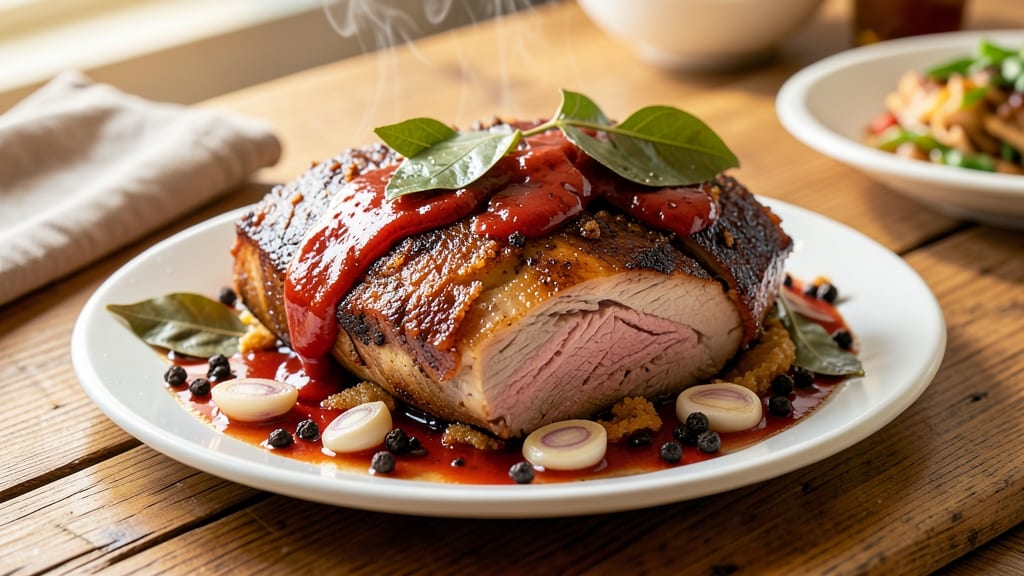
This Chamorro pork adobo recipe brings the rich flavors of Guam’s Spanish-influenced cuisine to your table, where tender pork shoulder transforms through slow vinegar braising into melt-in-your-mouth perfection. 🔥 The dish reflects centuries of culinary fusion—Chamorro, Spanish, and Filipino traditions—where sour vinegar and aromatic spices work magic on tough cuts, creating a dish that’s both comforting and deeply flavorful.
What sets this recipe apart is the balance of acidity and richness: the pork marinates overnight in a blend of vinegar, garlic, and black peppercorns, then slow-cooks until fork-tender while absorbing the tangy, savory broth.
I’ve adapted the traditional method to work in both a Dutch oven and an Instant Pot, so you can achieve restaurant-quality results no matter your kitchen setup. The key? Patience—the longer it braises, the more deeply the flavors meld.
By the time you serve this dish, your kitchen will smell like a Chamorro fiesta, with golden-brown pork that falls apart at the touch and a glossy sauce that clings to every bite.
The tender meat pairs beautifully with steamed rice and pickled saba (long beans), or serve it with traditional Chamorro fines—crispy fried plantains—for a complete meal that’s equal parts nostalgic and modern.
This recipe isn’t just about technique—it’s about preserving a piece of Guam’s culinary heritage while making it accessible for home cooks. Whether you’re cooking for a family gathering or a weeknight dinner, the result is a dish that tells a story with every bite.
Let’s get started on creating something truly special.
Ingredients for chamorro pork adobo
Six aromatic ingredients transform tough pork into melt-in-your-mouth Chamorro adobo perfection.
| Ingredient | Amount | Notes |
|---|---|---|
| Pork Shoulder 🥩 | 3 lb | Bone-in, cut into 2-inch chunks |
| White Vinegar 💧 | 1 ½ cups | Distilled preferred for tang |
| Brown Sugar 🍚 | ½ cup | Packed, light or dark |
| Garlic Cloves 🧄 | 8 cloves | Smashed, not minced |
| Black Peppercorns 🌶️ | 1 tbsp | Whole, lightly crushed |
| Bay Leaves 🌿 | 2 whole | Dried, standard size |
| Fresh Ginger 🌿 | 2 tbsp | Grated, peeled |
| Salt 🧂 | 1 ½ tsp | Kosher or sea salt |
| Cinnamon Sticks 🌳 | 2 whole | For aromatic depth |
| Orange Peel 🍊 | 1 tbsp | Finely chopped, no pith |
| Olive Oil 🫒 | 2 tbsp | For searing pork |
| Water 💧 | 1 cup | For balancing acidity |
| Fresh Cilantro 🌿 | ¼ cup | Chopped, for garnish |
The pork shoulder is non-negotiable here—bone-in cuts stay juicier, and Costco or local butcher shops often have the best prices for larger cuts. Look for good marbling, which ensures tenderness. If you're using a pre-cut roast, ask for 2-inch chunks—this size balances cooking time and texture. The vinegar matters too: distilled white vinegar has a cleaner tang than apple cider, but either works. I always buy a gallon at Trader Joe's—it's cheaper than small bottles and lasts forever. For the ginger, fresh is essential—dried just won't cut it here. Grab a small piece at the produce section and grate it yourself; pre-grated gets watery.
No brown sugar? White sugar works 1:1, though it won't caramelize as nicely. Short on garlic? Garlic powder at half the amount gets you close, but fresh is ideal. The black peppercorns should be whole—crushing them releases more flavor, but don't overdo it or you'll get bitterness. Running out of bay leaves? Dried thyme at one-third the amount substitutes well. The orange peel adds brightness—use the outer layer only, no bitter pith. For the olive oil, any good-quality brand works, but avoid the cheap stuff that smells like paint. If you're making this ahead, the marinade can sit in the fridge for up to 24 hours, but don't let the pork sit in it longer than overnight or it'll get mushy.
This dish tastes even better the next day as flavors meld—plan ahead! Store leftovers in the fridge for 4-5 days, or freeze portions for 3 months. I always make a double batch because it reheats beautifully for lunches. For serving, garnish with fresh cilantro and serve with steamed rice. The sauce thickens as it cools, so add a splash of water if it's too stiff when reheating. The pork should be fork-tender, not dry—if it's still tough, it needs more time. Patience is key here; don't rush the braising.
Why You'll Love This Recipe
- Here’s what sold me: those crushed garlic cloves and peppercorns turn the pork into something ridiculously flavorful. The slow cook makes the meat fall apart, and the sauce? Sticky, rich, and impossible to resist.
- One-Pot Magic: I swear by this recipe—just dump everything in a Dutch oven, let it simmer, and walk away. The vinegar and sugar marry into that perfect tangy-sweet balance without me babysitting the stove.
- Garlic Bomb: Here’s what sold me: those crushed garlic cloves and peppercorns turn the pork into something ridiculously flavorful. The slow cook makes the meat fall apart, and the sauce? Sticky, rich, and impossible to resist.
- Leftovers for Days: Between us, this recipe practically begs to be made in bulk. The pork stays tender for reheating, and the sauce thickens into a glaze that’s perfect on rice, toast, or even eggs the next morning.
Step-by-step instructions for Chamorro pork adobo
Here's how to transform tough pork shoulder into melt-in-your-mouth tender meat with bold citrus notes.
🔥 Step 1: Sear the Pork Shoulder for Deep Flavor
Heat a large Dutch oven over medium-high heat until hot. Add the 2 tablespoons olive oil and swirl to coat the bottom evenly. Working in batches if needed, add the 3 lb pork shoulder cut into 2-inch chunks, arranging them in a single layer. Let them sear undisturbed for 4-5 minutes until deep golden brown on all sides.
Don't rush this step—the caramelization creates the foundation for rich flavor. You'll know it's ready when the pork releases easily from the pan and has developed a crispy crust. Transfer the seared pork to a plate and set aside, leaving all the browned bits in the pot.
👨🍳 Step 2: Build the Aromatic Base
In the same Dutch oven, add the 8 smashed garlic cloves, 1 tablespoon lightly crushed black peppercorns, 2 whole bay leaves, 2 whole cinnamon sticks, and 1 tablespoon finely chopped orange peel. Cook for 1 minute until fragrant—you should smell the garlic sizzling and spices releasing their aroma.
This aromatic base is where the magic happens. The spices will infuse into the pork as it braises, creating layers of complex flavor. Be careful not to let the garlic burn, as it can turn bitter quickly. Stir occasionally to prevent any single component from scorching.
🥘 Step 3: Deglaze and Combine All Ingredients
Pour in the 1.5 cups white vinegar and scrape up all the browned bits from the bottom of the pot with a wooden spoon. This deglazing step captures all the meaty flavors that would otherwise stick to the pan. Let the mixture bubble gently for 2 minutes to cook off some of the vinegar's sharpness.
Add the 3 lb seared pork shoulder back to the pot along with the 2 tablespoons grated fresh ginger, 1.5 teaspoons salt, 0.5 cup packed brown sugar, and 1 cup water. Stir gently to combine, ensuring all the pork pieces are well-coated in the sauce. The brown sugar will help balance the acidity of the vinegar while adding subtle sweetness.
🔥 Step 4: Braise Until Fork-Tender
Bring the mixture to a gentle simmer over medium heat, then reduce heat to low. Cover with a tight-fitting lid and let it cook for 2.5-3 hours, turning the pork occasionally to ensure even cooking. The liquid should reduce significantly, coating the pork in a glossy, sticky sauce.
Here's the thing—pork shoulder needs patience. You'll know it's done when a fork slides in easily and the meat pulls apart with gentle pressure. The sauce should have thickened to a syrupy consistency, clinging beautifully to each piece of pork. If the sauce reduces too quickly, add a splash of water to maintain the balance.
⏰ Step 5: Rest and Garnish for Perfect Presentation
Once the pork reaches 203°F internal temperature, remove it from the heat and let it rest for 15-20 minutes covered. This resting period allows the juices to redistribute throughout the meat, ensuring each bite is incredibly tender. Skipping this step can result in dry, stringy pork.
Before serving, stir in the 0.25 cup chopped fresh cilantro and adjust the seasoning if needed. The cilantro adds a bright, fresh contrast to the rich, tangy sauce. Serve the pork adobo hot, spooning the sauce generously over each portion. The result should be fall-apart tender meat with a glossy, flavorful sauce that's perfectly balanced between sweet, tangy, and savory.
Pro Tips For Making Chamorro Pork Adobo
- Brown Sugar First: Toss the pork shoulder with brown sugar before adding vinegar—this caramelizes slightly during the initial sear, giving your adobo that deep, sticky sweetness instead of a flat, one-note flavor. (Yes, it’ll look messy, but that’s how you know it’s working.)
- Vinegar in Stages: Don’t dump all the white vinegar at once—add half upfront, then the rest after the pork has browned. This keeps the meat from turning rubbery too fast and lets the acid mellow out over time. (I learned this the hard way after a batch tasted like a science experiment gone wrong.)
- Peppercorns Whole: Crush the black peppercorns lightly—just enough to break them open, not into powder. Whole or lightly crushed peppercorns release flavor gradually, while over-crushing turns your adobo into a peppery punch. (Your future self will notice the difference.)
- Low-and-Slow Finish: Once the pork is tender, switch to the lowest heat setting and let it simmer uncovered for 10–15 minutes. This reduces the sauce to a glossy, concentrated glaze without burning it—no stirring required. (Sounds weird, but it works: the heat does the work for you.)
Make-ahead tips for this recipe
Marinade Prep Ahead
Combine the 1.5 cups white vinegar, 0.5 cup brown sugar, 2 tablespoons grated ginger, 1.5 teaspoons salt, and 1 tablespoon orange peel in a large bowl.
Store this marinade in an airtight container in the fridge for up to 3 days—it gets more flavorful as it sits. I often make this the night before and let it sit overnight for deeper flavor infusion. 💫
Pork Prep Shortcut
Buy your 3 lb pork shoulder from a trusted butcher and ask them to cut it into 2-inch chunks while you wait. This saves you 15 minutes of prep time. If you're short on time, use pre-minced garlic (though fresh is always better) and pre-grated ginger.
The key is to keep the marinating time consistent—4-6 hours minimum for best results.
Instant Pot Adaptation
For a quicker version, sear the pork in your Instant Pot using the sauté function, then add all marinade ingredients and cook on high pressure for 60 minutes. Release pressure naturally, then finish with a 15-minute natural release.
The texture will be slightly different but still incredibly tender. I use this method when I'm short on time but still want that restaurant-quality result. 🏃♀️
Sauce Thickening Tip
If you're making this ahead, the sauce will thicken as it cools. To reheat, add 2-3 tablespoons water and simmer for 5 minutes to restore the perfect consistency. The pork stays tender when reheated gently—never microwave it directly from the fridge, as that can dry it out.
I always reheat portions in a skillet over low heat for best results.
Storage Secrets
Store the fully cooked adobo in the fridge for up to 5 days or freeze for 3 months. For freezing, portion into airtight containers with a layer of sauce on top to prevent drying. When reheating from frozen, thaw overnight in the fridge first, then reheat gently.
The flavors actually improve after a day or two in the fridge—this is one of those dishes that tastes even better the next day. ❄️
Make-Ahead Serving
Plan to serve this dish at room temperature for gatherings—it reheats beautifully but tastes best when slightly cooled. Garnish with fresh cilantro just before serving to keep it vibrant.
I often prepare this for Sunday family dinners, letting it sit at room temperature for 1 hour before serving so everyone can enjoy the rich, complex flavors without waiting. The aroma alone will have your guests gathering around the table. 🍽️
Nutrition facts
Frequently asked questions
Can I use chicken or beef instead of pork for this recipe?
While traditional Chamorro adobo uses pork, you can absolutely adapt this recipe for chicken or beef! For chicken thighs, reduce cooking time to 1.5-2 hours since they cook faster. For beef chuck roast, increase to 3.5-4 hours for tender results. The key is adjusting the braising time—meat should reach 165°F for poultry or 203°F for beef.
Why does my adobo sauce turn too acidic?
The vinegar's tang can overpower if not balanced properly. To fix this, add 1-2 tablespoons brown sugar or 1 teaspoon honey to sweeten the sauce. For future batches, reduce vinegar to 1 cup and add ½ cup water to dilute the acidity while keeping the flavor. The sauce should taste complex, not harsh.
What's the best way to serve Chamorro pork adobo?
This dish shines with steamed jasmine rice to soak up the sauce, plus pickled saba (long beans) for crunch. For a complete Chamorro meal, add crispy fried plantains (fines) or a simple green salad. The sauce also works beautifully as a filling for rice bowls or tacos—just adjust seasoning to taste.
Can I make this in a slow cooker?
Brown the pork first, then transfer everything to a slow cooker. Cook on low for 8 hours or high for 5 hours, adding ½ cup water if needed. The slow cooker method is perfect for hands-off cooking—just stir occasionally to prevent sticking. The texture will be slightly more tender than Dutch oven braising.
How do I know when the pork is fully cooked?
Use a meat thermometer to check for 203°F internal temperature. The pork should also pull apart easily with two forks. If it's still tough, return it to the pot with ¼ cup water and cook another 30 minutes. The sauce should coat the back of a spoon—if it's too thin, simmer uncovered for 10 minutes to thicken.