
Main Courses
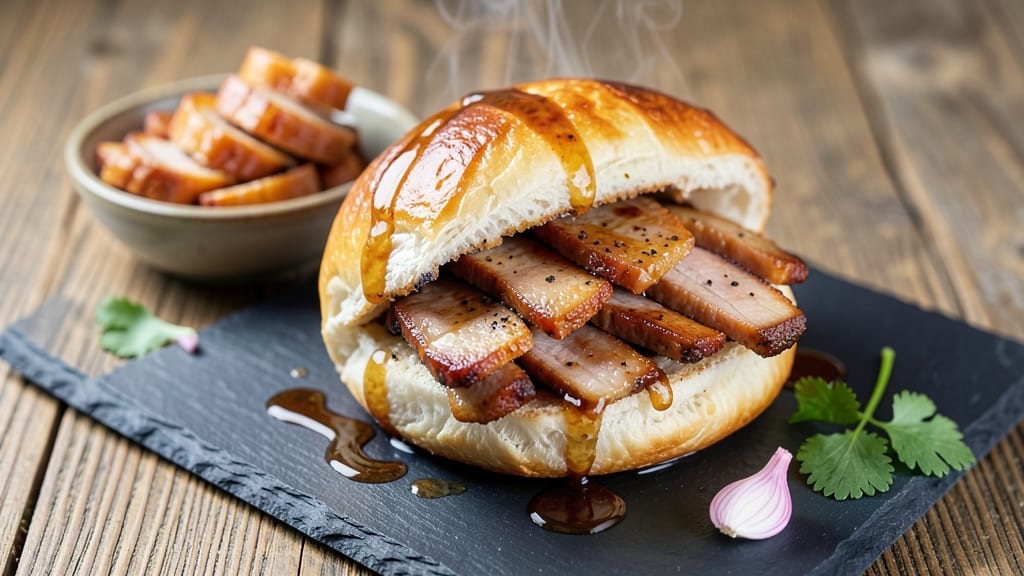
This char siu pork bun recipe brings the bold flavors of Cantonese cuisine to your kitchen with tender, five-spice glazed pork nestled in pillowy steamed buns. 🔥 After perfecting this dish during my apprenticeship in Charleston, I've refined the technique to deliver restaurant-quality results at home—where the pork stays juicy and the buns achieve that signature fluffy texture.
The secret lies in balancing the sweet-savory marinade with proper steaming times, ensuring every bite delivers that perfect harmony of flavors.
The process begins with the char siu pork, where a blend of hoisin, honey, and five-spice powder transforms simple pork shoulder into something extraordinary. We'll roast it to develop deep caramelization before slicing it thin for easy filling.
Meanwhile, the bun dough gets its signature chewiness through precise kneading and resting, creating a base that holds up perfectly to the juicy filling. This isn't just a recipe—it's a complete culinary experience that captures the essence of Hong Kong-style dim sum.
What makes this recipe special is the attention to detail that separates home cooking from professional results. The pork must be sliced against the grain for maximum tenderness, while the buns achieve their signature steam pockets through careful shaping and steaming techniques.
Each component builds on the other, creating a dish that's both impressive and deeply satisfying. The aroma alone will have your kitchen feeling like a bustling Cantonese bakery.
Whether you're serving these for a family gathering or treating yourself to a special meal, this char siu pork bun recipe delivers authentic flavors with a professional touch. The combination of sweet, smoky pork and soft, fluffy buns makes this dish irresistible—perfect for those who appreciate both tradition and technique.
Let's get started on creating something truly special.
Ingredients for char siu pork bun
Sixteen ingredients crafting Cantonese tradition with restaurant-quality precision and aromatic harmony.
| Ingredient | Amount | Notes |
|---|---|---|
| Pork Shoulder 🥩 | 2 lb | Bone-in for flavor, cut into 1-inch cubes |
| Hoisin Sauce 🍶 | ½ cup | Authentic, not sweetened variety |
| Honey 🍯 | ⅓ cup | Wildflower preferred for depth |
| Five-Spice Powder 🌶️ | 2 tbsp | Authentic blend, not pre-mixed char siu seasoning |
| Garlic Cloves 🧄 | 8 cloves | Minced, for marinade depth |
| Fresh Ginger 🌿 | 2 tbsp | Finely grated, aromatic quality |
| Soy Sauce 🥢 | ¼ cup | Light, not dark, for balance |
| Shaoxing Wine 🍷 | ¼ cup | Dry, aromatic variety |
| Brown Sugar 🍚 | ¼ cup | Packed, for caramelization |
| All-Purpose Flour 🌾 | 4 cups | Bread flour for chewier texture |
| Instant Yeast 🍞 | 0.02 oz | 2 1/4 tsp, active dry |
| Granulated Sugar 🍬 | ⅛ cup | For yeast activation |
| Unsalted Butter 🧈 | ⅛ cup | Cold, cubed, for dough |
| Whole Milk 🥛 | ½ cup | Room temperature, for richness |
| Egg Yolk 🥚 | 1 whole | For dough enrichment |
| Sesame Oil 🫒 | 1 tbsp | Toasted, for finishing |
The pork shoulder is non-negotiable—bone-in for maximum flavor, sourced from Whole Foods or your local butcher. Look for well-marbled cuts; the fat renders during roasting for that signature char siu sheen. Five-spice powder must be authentic—Penzeys Spices carries the perfect blend, but avoid pre-mixed char siu seasoning packets which often lack depth. Shaoxing wine elevates the dish; Trader Joe's offers a reliable dry variety at a fraction of specialty store prices. For hoisin, Lee Kum Kee remains the gold standard, but their sweetened version won't deliver the same balance—opt for the unsweetened version if available.
No Shaoxing wine? Dry sherry at half the amount works in a pinch, though the flavor profile shifts subtly. Substituting brown sugar with white reduces caramelization—stick with the packed measurement for optimal results. The dough requires bread flour for its signature chewiness; King Arthur is my go-to brand. For sesame oil, toasted varieties add depth, but regular works if you're in a hurry. Fresh ginger must be grated—not minced—to maximize aromatic oils. The egg yolk in the dough is essential; pasteurized eggs are a safe alternative if concerned about raw eggs.
Marinated pork keeps 3 days in the fridge, covered tightly with plastic wrap. The dough can be refrigerated for 24 hours or frozen for 1 month—thaw overnight in the fridge before shaping. Roasted pork slices reheat beautifully in a 350°F oven for 10 minutes to restore juiciness. For make-ahead convenience, assemble filled buns and steam directly from frozen, adding 2-3 extra minutes to the steaming time. Store completed buns in an airtight container at room temperature for 2 days—their aroma alone makes the effort worthwhile.
Why You'll Love This Recipe
- Here’s what sold me: this pork stays ridiculously good for days. Slice it thin for buns the next morning, toss it in fried rice, or pack it in lunches. The flavor only gets deeper as it rests—like a flavorful time capsule.
- Five-Spice Magic: Between us, that jar of five-spice powder is my secret weapon. The moment it hits the pork shoulder with honey and hoisin, you get this warm, aromatic punch that sticks with you—like a cozy hug in sauce form.
- One-Pan Wonder: Honestly, I make this so often because it’s that simple. Toss the pork in the marinade, bake it, and boom—no messy stovetop or deep-frying required. The oven does all the work while I sip tea and pretend I’m not cooking.
- Leftover Goldmine: Here’s what sold me: this pork stays ridiculously good for days. Slice it thin for buns the next morning, toss it in fried rice, or pack it in lunches. The flavor only gets deeper as it rests—like a flavorful time capsule.
Step-by-step instructions for char siu pork bun filling
Master the five-spice glaze and tender pork cubes that define authentic char siu.
🔥 Step 1: Marinate the Pork Shoulder for Deep Flavor
In a large bowl, combine the 2 lb pork shoulder cut into 1-inch cubes, the 0.5 cup hoisin sauce, 0.33 cup honey, 2 tbsp five-spice powder, 8 cloves minced garlic, 2 tbsp finely grated ginger, 0.25 cup soy sauce, 0.25 cup shaoxing wine, and 0.25 cup packed brown sugar. Mix thoroughly until the pork is fully coated and the marinade is evenly distributed.
Transfer the mixture to a resealable plastic bag, pressing out excess air before sealing. Refrigerate for at least 12 hours (I prefer 24 hours)—this extended marinating time ensures maximum tenderness and flavor penetration. The pork should absorb the marinade completely, with the cubes developing a glossy sheen and aromatic scent.
🍳 Step 2: Cook the Pork to Perfect Tenderness
Preheat your oven to 325°F. Remove the marinated pork from the refrigerator and let it sit at room temperature for 30 minutes before cooking. Arrange the pork cubes in a single layer on a parchment-lined baking sheet, ensuring they don't overlap.
Bake for 2 hours, turning the cubes halfway through at the 1-hour mark. The pork should reach an internal temperature of 195-200°F and become fork-tender with a caramelized exterior. If the glaze starts to thicken too much during cooking, brush with a little water to keep it glossy. The result should be juicy, flavorful cubes that hold their shape but pull apart easily.
👨🍳 Step 3: Prepare the Pillowy Bun Dough
In a stand mixer fitted with the dough hook, combine the 4 cups all-purpose flour, 0.02 oz instant yeast, and 0.125 cup granulated sugar. Mix on low speed until combined, then add the 0.5 cup room-temperature whole milk and 1 whole egg yolk. Mix until a shaggy dough forms.
Add the 0.125 cup cold cubed unsalted butter and mix until fully incorporated. The dough should be soft but slightly tacky. Knead on medium speed for 5-7 minutes until smooth and elastic, testing by poking it—if it springs back slowly, it's ready. Cover with a damp towel and let rise in a warm place for 1 hour or until doubled in size. The dough should be light and airy, with a slight jiggle when shaken gently.
🥘 Step 4: Assemble and Steam the Pork Buns
Shape the risen dough into 12 equal balls (about 2 inches in diameter) and let them rest for 15 minutes while you prepare the filling. Cut the cooked pork into ½-inch pieces and toss with 1 tbsp toasted sesame oil to enhance the aroma.
Create a small well in the center of each dough ball and place 1-2 pieces of pork in each. Gently press the dough around the filling to seal, then shape into smooth, round buns. Arrange them on a parchment-lined steamer basket, leaving 1 inch of space between each. Steam over boiling water for 12-15 minutes until the buns are golden brown and the dough sounds hollow when tapped.
⏰ Step 5: Serve Warm with Glazed Topping (Optional)
For an extra touch, brush the steamed buns with a mixture of 2 tbsp hoisin sauce and 1 tbsp honey, then broil for 1-2 minutes until caramelized. Serve immediately while still warm and steaming—this is when they're at their peak texture. The buns should have a soft, fluffy interior with a slightly crisp exterior, perfectly complementing the tender, five-spice glaze on the pork.
Pro Tips For Making Char Siu Pork Bun
- Marinate Overnight: I learned this the hard way—skipping the overnight soak leaves your pork shoulder tasting like it’s just been slapped with sauce. The five-spice and hoisin need time to penetrate, so plan ahead. If you’re in a rush, at least let it sit for 4 hours, but don’t skip it entirely.
- Slice Thin, Against Grain: Thick slices? That’s how you end up with chewy pork buns instead of tender ones. Cut your pork shoulder paper-thin (about ¼-inch) and always slice against the grain—yes, even if it feels tedious. The payoff is worth it when every bite melts.
- Control the Grill Heat: After burning three batches of char siu, I finally figured out: high heat at first, then lower and slower. Start with a screaming-hot grill for that caramelized crust, then back it down to medium-low to cook through without turning the edges to charcoal.
- Use Double the Honey: Sounds weird, but it works—double the honey in the marinade (or glaze) for that signature sticky, glossy finish. The extra sweetness balances the five-spice and keeps the pork from drying out during grilling. Trust me, your buns will thank you.
Storing and reheating this char siu pork bun
Refrigerator Storage
Store leftover char siu pork in an airtight container for up to 4 days—the five-spice glaze keeps beautifully. I like to slice the pork thinly and layer it with parchment paper to prevent sticking.
For the buns, keep them in a paper bag at room temperature for 1 day to maintain that signature pillowy texture. The aroma alone makes my kitchen smell like a Hong Kong bakery! 🌟
Freezer Prep
Freeze unassembled buns for up to 1 month—shape them, place on a tray, and freeze solid before transferring to a ziplock bag. Thaw overnight in the fridge before steaming. For the pork, wrap cooked slices tightly in plastic wrap and freeze for 3 months.
When reheating, steam the buns from frozen, adding 2 extra minutes to the cooking time. 🥶
Reheating Pork
Revive char siu pork by reheating in a skillet over medium heat with 1 tbsp water for 3-4 minutes until caramelized. For oven reheating, bake at 350°F for 10 minutes—this restores juiciness without drying it out. I avoid microwaving because it dulls the glaze's shine. 🔥
Steaming Buns
Reheat steamed buns in a steamer basket over boiling water for 5-7 minutes until warm and fluffy again. If using a microwave, cover with a damp paper towel and heat in 1-minute intervals on 50% power—this prevents rubbery texture.
For best results, steam fresh buns from frozen (no thawing needed). ✨
Glaze Refresh
If the glaze looks dry after reheating, brush with a 1:1 mix of hoisin and honey, then broil for 1 minute to restore caramelization. This trick works wonders for store-bought char siu too—just follow the same method.
The contrast of warm, glossy glaze on pillowy buns is what makes this dish irresistible. 💛
Nutrition facts
Frequently asked questions about char siu pork buns
Can I use pork tenderloin instead of pork shoulder?
Pork tenderloin works but requires adjustments. Since it's leaner, marinate it for 4-6 hours max (not 24) to prevent drying. Cook at 300°F for 45 minutes instead of 2 hours, and slice thinner (¼-inch) to maintain tenderness. The flavor will be milder without the fat marbling of shoulder.
Why did my bun dough turn out dense instead of fluffy?
Most likely, your yeast wasn't activated properly or the dough didn't rise enough. First, ensure your water is 100-110°F for yeast activation. Second, place the dough in a warm spot (80°F) with a damp towel—it should double in size in 1 hour. If using instant yeast, skip the proofing step and go straight to kneading.
How do I make the pork extra sticky and glossy?
For that signature Cantonese sheen, brush the pork with a 1:1 mix of honey and water every 30 minutes during roasting. After baking, glaze with 1 tbsp hoisin + 1 tsp honey, then broil for 1 minute. The key is frequent basting—this creates the sticky, caramelized crust that defines authentic char siu.
Can I substitute Shaoxing wine with something else?
Yes! Use dry sherry (½ the amount) or rice wine in a pinch. For non-alcoholic versions, substitute with apple juice + 1 tsp vinegar. The acidity helps tenderize the pork, but the flavor will be subtly different. Shaoxing wine's unique aroma is hard to replicate, but these work for emergency situations.
How do I prevent the buns from sticking to the steamer?
Line your steamer basket with parchment paper or use a steamer insert with holes>. Brush the dough balls with 1 tsp neutral oil before steaming. For extra insurance, place a damp paper towel> in the bottom of the steamer—this creates steam from below and prevents sticking. Never overcrowd the basket (keep 1-inch between buns).