
Main Courses
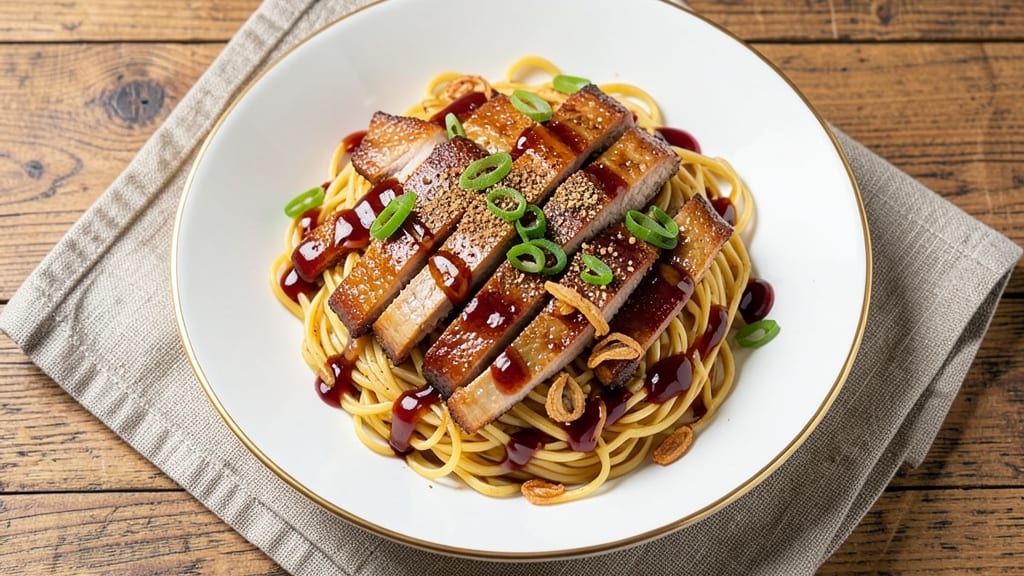
This char siu pork noodles recipe brings Cantonese street food magic to your kitchen with five-spice glazed pork that shatters over silky egg noodles. After perfecting this dish during my time in Charleston—where I adapted traditional techniques for Southern palates—I can confidently say this delivers restaurant-quality results at home.
The key? A proper char siu marinade that develops deep, aromatic flavors while keeping the meat tender enough to slice thinly for maximum crunch.
The process starts with marinating pork shoulder in a blend of hoisin, honey, and five-spice powder for at least 4 hours (overnight is ideal), then roasting until caramelized. While the pork rests, fresh egg noodles are stir-fried just until tender, preserving their delicate texture.
The final assembly brings together crispy pork slices, aromatic noodles, and a light drizzle of chili oil for that signature street food heat.
What you'll end up with is a dish that balances sweet, smoky, and umami flavors in every bite—the crispy char siu provides satisfying texture, while the noodles soak up all the savory goodness.
This is the kind of meal that transforms weeknight dinners into an authentic taste of Hong Kong's bustling streets. The best part? It comes together in under an hour once you've marinated the pork.
Serve immediately with quick-pickled cucumbers or a side of steamed bok choy for the full experience. The leftovers reheat beautifully, making this an excellent meal prep option for busy weeks. Let's get cooking!
Ingredients for char siu pork noodles
Five-spice, hoisin, and honey create the signature char siu flavor while fresh egg noodles soak up every savory bite.
| Ingredient | Amount | Notes |
|---|---|---|
| Pork Shoulder 🥩 | 1 ½ lb | Bone-in preferred for flavor |
| Hoisin Sauce 🍶 | ½ cup | Store-bought or homemade |
| Honey 🍯 | ¼ cup | Wildflower preferred for depth |
| Five-Spice Powder 🌶️ | 1 tbsp | Toasted for enhanced aroma |
| Garlic Cloves 🧄 | 6 cloves | Minced for marinade |
| Ginger Root 🌿 | 1 tbsp | Freshly grated, peeled |
| Sesame Oil 🫒 | 1 tbsp | Toasted for nutty aroma |
| Egg Noodles 🍜 | 8 oz | Fresh or dried, wide-cut |
| Chili Oil 🌶️ | 2 tbsp | Homemade or store-bought |
| Green Onions 🧅 | ¼ cup | Sliced, for garnish |
| Sesame Seeds 🌾 | 1 tbsp | Toasted for crunch |
| Diamond Crystal Kosher Salt 🧂 | 1 ½ tsp | For seasoning |
| Black Pepper 🌶️ | ½ tsp | Freshly cracked |
| Vegetable Oil 🫒 | 2 tbsp | High smoke point for roasting |
The pork shoulder is the star here—bone-in adds depth, but boneless works too. Grab pork shoulder from the butcher section (not pork loin—it's leaner and won't render enough fat). For the five-spice powder, Penzeys or Spicewalla have the best blends, but any quality five-spice will do. Toast it lightly in a dry pan before mixing into the marinade to wake up those flavors. If you're short on time, store-bought hoisin sauce (like Lee Kum Kee) works perfectly—just make sure it's thick and not too sweet.
No fresh ginger? Ground ginger at half the amount is fine, but you'll lose that bright, zesty kick. Substituting honey? Maple syrup or agave work in a pinch, though the flavor won't be identical. The egg noodles can be fresh (like Martini brand) or dried—just cook them al dente. For extra crunch, toast the sesame seeds in a dry pan for 30 seconds until fragrant. The chili oil? Homemade with Sichuan peppercorns is ideal, but any chili oil from the Asian aisle will do. If you're feeling adventurous, add a splash of Shaoxing wine to the marinade for extra depth.
Marinate the pork for at least 4 hours—overnight is best—and keep it in the fridge. The noodles should be cooked just until tender (2-3 minutes in boiling water if fresh). Leftover char siu pork keeps for 4-5 days in the fridge and reheats beautifully. Store the marinade scraps—they make killer stir-fry sauce later. The chili oil can be stored for up to 3 months in a cool, dark place. For meal prep, portion the noodles and pork separately—reheat the noodles first, then toss with the pork to keep them silky.
Why You'll Love This Recipe
- One-Pan Wonder: I swear by this recipe—just marinate the pork shoulder in hoisin, honey, and five-spice, then toss it all in one pan with noodles and garlic. Minimal chopping, no fuss, and the sticky-sweet aroma fills the kitchen before it even hits the plate.
- Sweet-Savory Magic: That balance of hoisin’s deep umami and honey’s caramelized sweetness? It’s what makes this dish ridiculously good. The five-spice powder adds warmth, while the garlic sizzles into crispy bites—every spoonful feels like a hug.
- Lunchbox Hero: Between us, this is my go-to for meal prep. The pork stays tender for days, and I just reheat it with fresh noodles—perfect for busy mornings or packed lunches. My kid still asks for it even after school lunches, and that’s the real test.
- Budget Stretch: Pork shoulder is affordable, and a little goes a long way. Double the batch, freeze half, and you’ve got a weeknight savior. Honestly, it’s one of those recipes where the ingredients cost less than takeout, but the flavor? Way better.
Step-by-step instructions for char siu pork noodles
Here's how to transform tender pork shoulder into smoky, caramelized char siu that melts over silky noodles in perfect harmony.
Marinate the Pork Shoulder Overnight
In a large bowl, combine the 1.5 lb pork shoulder, 0.5 cup hoisin sauce, 0.25 cup honey, 1 tbsp five-spice powder, 6 minced garlic cloves, 1 tbsp freshly grated ginger root, and 1 tbsp toasted sesame oil. Mix thoroughly until the pork is fully coated in the marinade. Real talk: the longer it marinates, the more flavorful the pork becomes.
Transfer the pork to a resealable plastic bag, pressing out as much air as possible to prevent drying. Refrigerate for at least 12 hours (I prefer 24 hours) to allow the marinade to deeply penetrate the meat. This step is non-negotiable for that authentic char siu flavor - the spices and hoisin need time to work their magic.
Roast the Char Siu to Perfect Doneness
Preheat your oven to 375°F. Remove the pork from the fridge and let it sit at room temperature for 30 minutes before cooking. Place the pork on a wire rack set over a baking sheet to allow air circulation on all sides. Roast for 50-60 minutes, turning occasionally, until the internal temperature reaches 195-200°F and the exterior develops a glossy, caramelized crust.
Here's the thing - you want the pork to be fork-tender but not falling apart. The edges should be deep mahogany brown with a sticky glaze. If it starts to brown too quickly, tent it loosely with foil to prevent over-browning while it continues cooking through. Let the pork rest for 10 minutes before slicing against the grain into thin strips.
Cook the Egg Noodles Al Dente
While the pork rests, bring a large pot of water to a rolling boil and salt it generously (it should taste like the sea). Add the 8 oz egg noodles and cook until 1 minute before the package instructions for al dente. This slight undercooking ensures they finish perfectly when tossed with the sauce. Reserve 1 cup of pasta water before draining - this starchy liquid is your secret weapon for creating a silky sauce.
Drain the noodles and immediately toss them with 1 tbsp toasted sesame oil to prevent sticking. Here's where it gets fun - the noodles should be hot but still slightly firm. If they feel too soft, they'll turn mushy when mixed with the sauce. Keep them warm while you prepare the finishing touches.
Assemble and Finish with Crunchy Toppings
In a large serving bowl, combine the sliced char siu pork with the cooked noodles. Drizzle with 2 tbsp chili oil and toss gently to distribute evenly. The chili oil should create a vibrant red sheen throughout the noodles. If the mixture feels dry, add reserved pasta water 1 tablespoon at a time until you reach your desired consistency - it should coat the noodles without being soupy.
Garnish with 0.25 cup sliced green onions and 1 tbsp toasted sesame seeds just before serving. The green onions add a fresh contrast to the rich pork, while the sesame seeds provide that essential crunch. Serve immediately while the noodles are still hot and the pork is juicy - every bite should deliver that perfect balance of sweet, smoky, and spicy flavors.
Pro Tips For Making Char Siu Pork Noodles
- Marinate Pork Overnight: I used to rush this step and ended up with dry, flavorless pork. The five-spice powder needs time to penetrate—at least 12 hours, preferably 24. Toss the shoulder in a mix of hoisin, honey, minced garlic, and spices, then refrigerate. The acidity in hoisin will tenderize it, and the flavors will meld into something addictive.
- Char the Pork in Batches: High heat is your friend here, but don’t crowd the pan. I learned this the hard way—overloading the skillet steams the pork instead of searing it, and you end up with mushy edges. Work in 2-inch-thick slices, 3-4 minutes per side, until the edges are deep caramelized and the internal temp hits 145°F.
- Balance Sweet and Spice: Hoisin and honey are the stars, but too much sugar can make the sauce cloying. For every 2 tablespoons of hoisin, add 1 teaspoon of five-spice powder and a splash of rice vinegar (about 1 tablespoon). The vinegar cuts through the sweetness and brightens the whole dish—trust me, it’s the thing that makes char siu sing.
- Use Leftover Char Siu Juice: After removing the pork, don’t dump those sticky, caramelized bits down the drain. Deglaze the pan with a splash of water, scrape up the fond, and toss it into your noodles. That’s where half the flavor lives—it’s the difference between "good" and "wow." Just 2 tablespoons of that sauce will elevate your broth or stir-fry.
Best sauces and condiments for these flavors
Hoisin Sauce Base
Start with a high-quality hoisin sauce—I recommend Lee Kum Kee for its balanced sweetness and umami depth. This sauce serves as the foundation for both the char siu marinade and the noodle sauce.
For extra richness, I sometimes add 1 tsp soy sauce and ½ tsp dark soy sauce to deepen the color and flavor profile. The dark soy sauce gives that signature caramelized sheen to the char siu pork. 💛
Chili Oil Essentials
The chili oil is what transforms this dish from good to restaurant-worthy. I make mine with Sichuan peppercorns (toasted and ground) and dried red chilies simmered in neutral oil.
For a quick version, use store-bought chili oil from the Asian aisle—just look for one with visible red chilies and no artificial colors. Add 1 tsp sugar to balance the heat if your chili oil is particularly fiery.
Sesame Oil Magic
Toasted sesame oil is non-negotiable for both the marinade and finishing touches. I heat 1 tbsp sesame oil in a dry pan over low heat for 30 seconds until it smells nutty and fragrant.
This enhances the aroma dramatically. Use half for the marinade and the rest to toss with the cooked noodles—it prevents sticking and adds that signature nutty depth. 🌾
Sweet-Savory Balance
For the perfect sweet-savory ratio, combine 2 tbsp hoisin sauce, 1 tbsp honey, and 1 tsp rice vinegar in a small bowl. This mixture works wonders as a finishing sauce for the noodles, cutting through the richness of the char siu.
I keep this blend ready in my fridge for quick assembly—it's a game-changer for leftovers too.
Umami Boosters
Elevate your noodle sauce with 1 tsp fish sauce or ½ tsp MSG (if you're okay with it). These add an extra layer of umami that makes the dish sing. For a vegetarian option, swap fish sauce for 1 tsp soy sauce and add ½ tsp mushroom powder for depth.
The key is to taste as you go—adjust seasonings gradually to avoid overpowering the delicate noodles.
Nutrition facts
Frequently asked questions
Can I substitute chicken or tofu for the pork in this recipe?
While you can technically use chicken breast or firm tofu, the texture won't be the same. Chicken breast becomes dry when marinated and roasted, while tofu absorbs flavors differently. For best results, stick with pork shoulder—its fat content renders beautifully during roasting, creating that signature caramelized crust. If you must substitute, use chicken thighs (they stay juicier) and reduce the marinating time to 6-8 hours.
How do I get the char siu pork extra crispy like restaurant versions?
The secret is in the roasting technique! After marinating, pat the pork dry with paper towels and sear it in a hot skillet for 2 minutes per side before roasting. This creates a better crust. Also, broil the pork for the last 2-3 minutes of cooking to intensify the caramelization. Just watch it closely—it can burn quickly!
Can I make this dish ahead of time?
Yes! Prepare the char siu pork up to 2 days ahead and store it in the fridge. Reheat gently in a skillet over low heat with a splash of water to prevent drying. For the noodles, cook them fresh before serving—they lose their perfect texture when reheated. Assemble the dish just before eating for the best experience.
What's the best way to slice the char siu pork thinly?
After resting the pork, slice it against the grain using a sharp chef's knife. For even thinner slices, chill the pork for 15 minutes first—it firms up and makes slicing easier. If you struggle with knife skills, use kitchen shears for clean, even strips. The goal is ¼-inch thick slices for that perfect crunch.
How can I adjust the heat level in this dish?
The chili oil controls the heat. For milder flavor, reduce it to 1 tbsp or swap for 1 tsp chili flakes mixed with oil. If you love spice, add ½ tsp gochujang (Korean chili paste) to the marinade. Always taste as you go—you can adjust heat at any stage, but you can't take it out once it's in!